




Latest Stories
Products Electronics & Computers
New Products
See the new products, including Pacific Defense's SDR4320VP, its newest ultra-wideband software-defined radio transceiver; Microchip Technology's Radiation-Tolerant ATA6571RT CAN FD Transceiver; Smalley's Nestawave™ — the spring that redefines compact power; and more.

Articles Defense
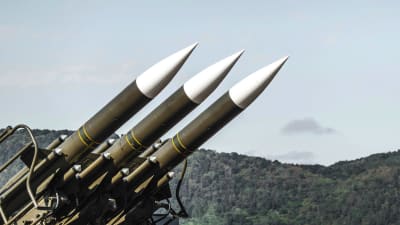
Smarter Pyrovalve Alternatives for Modern Missile and Munition Launcher Applications
If you’re exploring alternatives to your current pyrovalve, this article shares best practices to help guide your design: what to use instead, how to make the switch, and who can help you navigate the transition to ensure mission success.
Articles Mechanical & Fluid Systems
Aerospace Aluminum Laser Welding: Advancing Material Performance for the Future of Flight
Together, microsecond pulsing, alloy-specific pulse shaping, core-and-ring beam modulation, and controlled oscillation provide far greater precision than CW welding. Read on to learn how.

Articles Manned Systems
Model-Based Design Is Shaping the Next Phase of eVTOL Systems Development
During a recent interview with Aerospace & Defense Technology, Paul Barnard, Application Engineering Manager, MathWorks, provided insights on how the advanced air mobility (AAM) sector is tackling the complexities of eVTOL systems design, with a focus on batteries, avionics and other critical systems. Read on to learn more.

Articles RF & Microwave Electronics
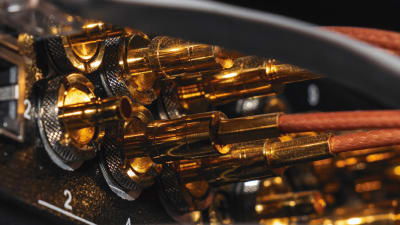
How RF-over-Fiber is Providing the Backbone of Next Generation Mil/Aero Networks
RF and fiber have long co-existed within modern military and aerospace systems, with each medium dedicated to separate, mission-critical roles. Increasingly, however, system designers are turning to RF-over-fiber (RFoF) architectures to bridge the gap between over-the-air RF interfaces and the long, interference-resistant transport advantages of fiber. Read on to learn more.
Articles Materials
Plasma Surface Activation for Stronger, More Durable CFRP Bonds in Aerospace
Achieving reliable adhesive bonds on CFRP surfaces remains a persistent engineering challenge. Plasma surface treatment has emerged as a pivotal solution, offering a fast, controllable, and non-destructive way to increase surface energy, improve wettability, and enhance adhesion across complex geometries. Read on to learn more.

Articles RF & Microwave Electronics
NASA Demonstrates a First-of-Its-Kind Space Communications
NASA's Space Communications and Navigation Program and the Johns Hopkins Applied Physics Laboratory have successfully tested wideband technology that allows spacecraft to communicate with both government and commercial networks for the first time. Read on to learn more.

Application Briefs Aerospace
The B-52’s New Active Electronically Scanned Array Radar System
Boeing delivered the first B-52 Radar Modernization Program flight test aircraft to the U.S. Air Force for testing with the 412th Test Wing at Edwards Air Force Base, California. The test aircraft is equipped with an APQ-188 active electronically scanned array radar system that is akin to those on fighter aircraft. Read on to learn more.

Application Briefs Power
The New Evio Hybrid Electric Regional Aircraft
Evio Inc. made its public debut in December with the launch of its Evio 810 hybrid-electric regional aircraft, having secured conditional purchase agreements and options for 450 aircraft, targeted to enter into service by the early 2030s. Read on to learn more.

Application Briefs Software
Factory-as-a-Service for Missile Production
Lockheed Martin and Hadrian signed a Memorandum of Understanding to accelerate the pace and value of advanced manufacturing at Lockheed. Read on to learn more about it.

Application Briefs Manned Systems
Preparing Germany’s New Surveillance Aircraft for Service
Hensoldt, Lufthansa Technik Defense, and Bombardier Defense have reached another key milestone in the Persistent German Airborne Surveillance System program: the first aircraft has arrived in Germany. Read on to learn more.

Briefs Test & Measurement
A Rainfield Simulator for Hypersonic Testing
The eventual goal is to be able to characterize and model vehicle reactions with rainfields at hypersonic velocity.

Briefs Aerospace
Next Generation Carbon Fiber Composites 3D Printer for Hypersonic Research
In collaboration with Auburn University’s Center for Polymers and Advanced Composites and the Department of Aerospace Engineering, the institute recently acquired a CF3D Enterprise Cell — a next-generation 3D carbon fiber composites printer set to define the future of the nation’s hypersonic programs. Read on to learn more.

Briefs Manufacturing & Prototyping
The Critical Impact Of SAE Aerospace Standards: Certified AS1895/7 and /23 Metal Seals
As the aerospace sector evolves to meet sustainability goals, enhance efficiency, and reduce lifecycle costs, the importance of durable, lightweight, and high-performance sealing solutions will only grow. Read on to learn more.

Products Software
New Products
See the new products, including Kontron's VX307C, a rugged 3U VPX computing module based on the Intel® Xeon® D-1700/1800 platform; Concurrent's Narvi, a rugged XMC form factor GPGPU and graphics processing card developed in collaboration with EIZO Rugged Solutions; ITT Cannon’s C5 Warrior connectors; and more.

Products Unmanned Systems
Aerospace & Defense Podcasts
Listen to four Aerospace & Defense Technology podcasts from the last month.

Articles Software
Future-Proofing the Tactical Edge: Converging AI, Edge Processing, and Hybrid Cloud for Modern Battlefield Operations
In the emerging era of information warfare, the cognitive tactical network — a system that senses, learns, and adapts autonomously — will define victory. Future-proofing the tactical edge is not optional; it is the strategic imperative for achieving dominance across the multidomain battlespace of tomorrow. Read on to learn more.

Articles Manned Systems
Digitally Transforming the Future of Defense: Collaborative Combat Aircraft
A very promising application of technologies is the Collaborative Combat Aircraft (CCAs) being developed for sixth-generation fighter aircraft. On top of an advanced crewed jet integrated with cutting-edge software and equipment, sixth-generation aircraft will be accompanied by several autonomous CCAs, supporting the crewed aircraft in a multitude of functions. Read on to learn more.

Articles Electronics & Computers
How Lightweight Coatings Protect Aerospace and Defense Electronics
While stresses such as altitude changes, vacuum, vibration, moisture and chemical exposure have the potential to wreak havoc on electronic components, conformal coatings have become essential to providing protection in the midst of these challenges. Read on to learn more.
Articles Manned Systems
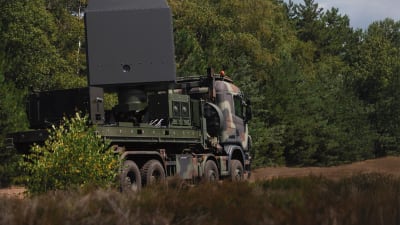
High-Flying Output: Key Machining Techniques for Structural Aircraft Components
Structural aircraft components and the methods for making them have changed significantly, driven by advancements in technology and new demands in the industry. Aerospace assemblies are becoming lighter and more complex, while every aspect of how these components are designed and made is evolving. Read on to learn more.

Articles Aerospace
How the US Space Force is Leveraging Commercial Antennas for Defense Applications
The U.S. Space Force (USSF) Space Systems Command (SSC) achieved a major milestone during a demonstration event in August, showcasing the Joint Antenna Marketplace (JAM) and successfully transferring the U.S. Naval Research Laboratory’s (NRL) Transmit/Receive Enterprise (TREx) Service from a research and development project into an SSC operational prototype. Read on to learn more.

Application Briefs Manned Systems
Helsing’s New CA-1 Europa Autonomous Fighter Jet
Defense technology startup Helsing unveiled its new CA-1 autonomous fighter jet powered by their proprietary artificial intelligence (AI) software Centaur during a launch ceremony in Germany last week. Read on to learn more about it.

Application Briefs Manned Systems
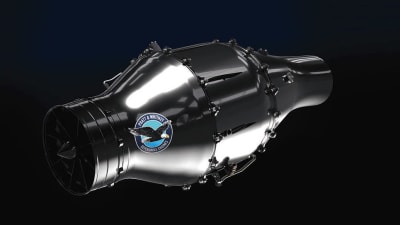
Collaborative Combat Aircraft Engine Testing
Raytheon’s Pratt & Whitney is developing a new family of engines, scalable from 500 to 1,800 pounds of thrust, that are capable of powering munitions and Collaborative Combat Aircraft. Read on to learn more.
Application Briefs Manufacturing & Prototyping
A New Clean Room for Missile and Satellite Propulsion Components
Moog Inc. announced the groundbreaking on its new clean room in Niagara Falls, New York. This will support the growing demand Moog is seeing for innovative satellite and missile propulsion components and systems from space and defense customers. Read on to learn more.
Application Briefs Power
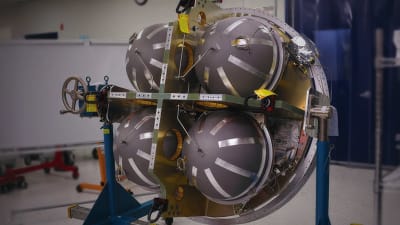
Integrated Electric Power Kits for Army Vehicles
Leonardo DRS has been awarded a contract by the U.S. Army to develop prototype Vehicle Integrated Power Kits (VIPKs) to support the growing need for easy-to-access, on-demand electrical power in the field. Read on to learn more.
Briefs RF & Microwave Electronics
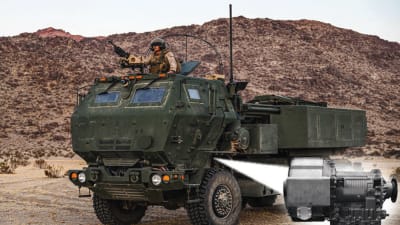
German Researchers Test Quantum Channels In-Flight
It is not easy to transmit individual photons precisely from an aircraft, capture them in a ground station and detect them successfully. Researchers have, however, now managed to do exactly that. They have even measured, multiple times, various quantum channels between an aircraft and a ground station, sent photons to an ion trap and tested technologies for quantum key distribution (QKD). Read on to learn more.
Briefs Green Design & Manufacturing
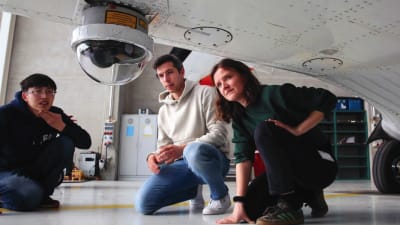
Novel Chromium–Molybdenum Metal Alloy Withstands Extreme Conditions
A new material might contribute to a reduction of the fossil fuels consumed by aircraft engines and gas turbines in the future. A research team from Karlsruhe Institute of Technology (KIT) has developed a refractory metal-based alloy with properties unparalleled to date. Read on to learn more about it.

Briefs Manned Systems
Electric Propulsion for a Nuclear-Powered Spacecraft
To develop spacecraft that can “maneuver without regret,” the U.S. Space Force is providing $35 million to a national research team, including engineers at the University of Washington. It will be the first to bring fast chemical rockets together with efficient electric propulsion powered by a nuclear microreactor. Read on to learn more.

Briefs Power
Controlling Heat Spikes in Electric Aircraft at Takeoff
Researchers at Embry Riddle Aeronautical University and Brazil’s Instituto Tecnológico de Aeronáutica (ITA) will combine forces on one of the main challenges of electric aircraft — controlling the heat spikes they generate at takeoff. Read on to learn more.

Top Stories
INSIDERAerospace
 How Airbus is Using w-DED to 3D Print Larger Titanium Airplane Parts
NewsUnmanned Systems
 Microvision Aquires Luminar, Plans Relationship Restoration, Multi-industry Push
INSIDERRF & Microwave Electronics
 A Next Generation Helmet System for Navy Pilots
ArticlesUnmanned Systems
 Accelerating Down the Road to Autonomy
INSIDERDesign
 New Raytheon and Lockheed Martin Agreements Expand Missile Defense Production
ArticlesUnmanned Systems
 CES 2026: Bosch is Ready to Bring AI to Your (Likely ICE-powered) Vehicle
Webcasts
Automotive
 Advantages of Smart Power Distribution Unit Design for Automotive...
Transportation
 Quiet, Please: NVH Improvement Opportunities in the Early Design...
Electronics & Computers
 Cooling a New Generation of Aerospace and Defense Embedded...
Automotive
 Battery Abuse Testing: Pushing to Failure
Connectivity
 A FREE Two-Day Event Dedicated to Connected Mobility
