




Smarter Pyrovalve Alternatives for Modern Missile and Munition Launcher Applications
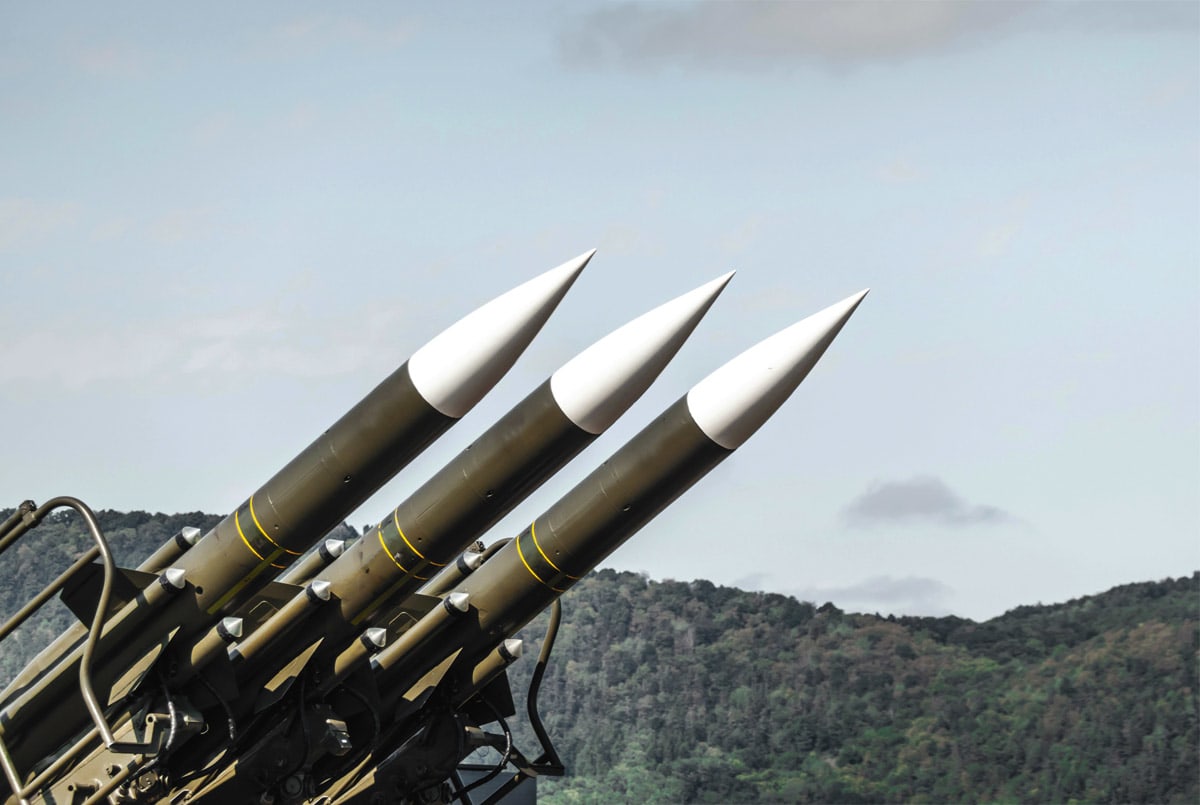
Pyrovalves (also known as pyrotechnic valves) have long been a staple in defense systems, particularly in missile and munition launcher applications.
The rapid growth of counter-UAS and missile defense systems makes this an ideal time to explore smarter alternatives to pyrovalves. One of the largest ongoing U.S. military efforts is the Missile Defense Agency’s (MDA) Scalable Homeland Innovative Enterprise Layered Defense (SHIELD) Multiple Award Indefinite Delivery/Indefinite Quantity (IDIQ) contract. In December, MDA issued two tranches of SHIELD awards to more than 2,100 companies, including major defense contractors and startups such as Lockheed Martin, Raytheon, Boeing, Shield AI, Anduril, and Virtualitics.
The SHIELD program is among several U.S. military initiatives supporting the Golden Dome missile defense system, which aims to create a multi-layered defense network — integrating air, land, sea, and space assets. This level of investment and adoption of advanced missile defense systems and munitions launchers opens new opportunities to consider smarter alternatives to pyrovalves.
Traditional pyrovalves come with notable drawbacks: they’re single-use, generate shock and debris, and require complex qualification and handling procedures. Modern defense programs are shifting toward safer and more cost-effective alternatives.
If you’re exploring alternatives to your current pyrovalve, this article shares best practices to help guide your design: what to use instead, how to make the switch, and who can help you navigate the transition to ensure mission success.
Why Should You Replace Your Pyrovalve?
Think of a pyrovalve like a fuse: simple in design and trusted in a variety of industries.

But that simplicity comes at a cost. Pyrovalves are one-timeuse devices that rely on explosives, making them tricky to integrate and test. Despite their reputation for reliability, pyrovalves often introduce a range of engineering and operational challenges.
Here are some of the most common hurdles they present:
Single-Use Nature: Once activated, a pyrovalve can’t be reused. This restricts testing flexibility and eliminates redundancy or valve ATP testing, which is critical in many defense applications.
Shock and Debris Generation: The explosive actuation can produce shock waves and foreign object debris (FOD) that may damage nearby sensitive components or contaminate fluid systems.
Thermal and Electromagnetic Interference (EMI) Sensitivity: Pyrovalves require electrical input to ignite their explosive charge, which generate localized heat. It also makes them vulnerable to EMI from both friendly and hostile sources. Mitigating heat and EMI interference often involves extra costs and design complexity.
Qualification Burden: Because pyrovalves rely on explosive activation, qualification testing tends to be destructive and costly, typically requiring full system mockups.
Logistics and Safety Concerns: Handling and storing explosive devices adds complexity, cost, and risk to supply chains and field operations. Strict safety protocols, specialized storage, and trained personnel are needed.
Pyrovalves have been a reliable choice for years. As engineering demands evolve and systems become more complex, there’s increasing interest in solutions that offer enhanced safety, adaptability, and reduced risk.

Modern valve technologies are designed to support these goals, providing new opportunities for performance and innovation.
What are the Most Effective Alternatives to Pyrovalves?
Passive and non-passive valve solutions deliver enhanced operational performance, addressing key limitations of legacy pyrovalve designs. Together, these options expand design flexibility and improve system performance within a variety of critical defense applications.
Passive Valve Solutions

Designed to meet long-duration storage and harsh environmental requirements, passive valves offer a compliant, low-risk alternative to pyrotechnic systems. They require no electrical input for actuation, instead relying on environmental triggers like pressure, temperature, or flow. Common examples of passive solutions include burst discs, thermal relief valves, and pressure-activated valves like check valves and pressure relief valves that are suitable for both hydraulic and pneumatic applications.
Passive valves are a dependable solution for missile systems, particularly in environments where submerged components must remain operational after long periods of storage. Their ability to maintain exceptionally tight leakage control and deliver flawless performance upon activation passive valves ideal for high stakes, mission-critical applications.
One good example of how passive valves can be used to replace pyrovalves is in small turbine-powered missiles. These systems typically rely on pyrovalves to keep the fuel tank sealed until the engine is called for operation. The pyrovalve sits at the fuel pump outlet, just before the turbojet engine, and stays shut during long-term storage (sometimes in excess of 20 years).

Instead of using electronics or explosives, a passive valve can do the same job by simply using pressure from the pump to open up when needed. It’s a cleaner, simpler setup – and since there’s no electrical or pyrotechnic components involved, you don’t have to worry about EMI.
Non-Passive Valve Solutions
Non-passive valves require electrical input and are ideal when more precise control is needed. These valves operate using pressure supplied by a charged bottle, compressor, or pump and are commonly found in systems where accuracy and responsiveness are critical.
Typical examples include:
Electromechanical valves
Shape memory alloy actuators
Magnetically-latched solenoid valves
Non-passive valves are frequently used in high pressure munition launchers, providing dependable control over gas discharge. Their value is especially evident in aerospace and defense systems, where performance, reliability, and control are paramount. These environments often demand features such as zero leakage, fast response times, and low power consumption.
What Approach is Appropriate for Your Application?
The right choice depends on your specific application and mission needs. Focus on lifecycle costs and maintainability. Passive systems are simple, reliable, and built to handle tough environments without needing power. Non-passive systems give you more control and flexibility, but they do require electrical input and a bit more infrastructure.
When you’re weighing options to replace your pyrovalve, make sure to consider:
Mission profile: Passive systems are ideal for straightforward, fail-safe operations; non-passive systems offer enhanced control.
Redundancy and testing: Non-passive valves can be reset and tested repeatedly, which is valuable in applications where reliability is crucial.
Environmental constraints: Passive valves tend to be more robust in extreme conditions.
System integration: Non-passive solutions may require additional power and control infrastructure.
Now that we’ve looked at how passive and non-passive valves compare, it’s worth seeing how both stack up against traditional pyrovalves. The chart in figure 1 below breaks down key factors like reliability, activation speed, testing options, and qualification requirements to help inform your choice.
How Easy is it to Replace a Pyrovalve?
A complete drop-in replacement for a pyrovalve is rarely possible. In most cases, only a partial redesign may be required (especially when transitioning to non-passive systems that involve electrical control or feedback). Success depends on how closely the alternative solution matches the pyrovalve’s form factor and function. A full redesign may be necessary if the system architecture must evolve to support new safety, control, or redundancy features.
A smart strategy to prove out the change is to test components individually before fully integrating them into your system. Look for fluid control supplier partners who can support you throughout the transition process, provide replacement analysis, or match standard pyrovalve fitting connections and fluidic interfaces.
Replacing your pyrovalve isn’t just about swapping components — it’s about partnering with experts who understand the complexities of defense systems and the critical role fluid control plays in mission success.
The Lee Company has been a trusted supplier for the defense industry for decades, with over 20 years of experience replacing pyrovalves in high stakes applications — from high pressure munition launchers and small turbojet engine fuel systems to bleed air systems for fuel tank pressurization and inerting. Our deep understanding of qualification standards and program success requirements ensures our solutions meet the rigorous demands of modern defense platforms.
Unlike pyrovalves, Lee components:
Don’t generate shock or debris
Enable non-destructive, repeatable testing
Are easier and more cost-effective to qualify
Require no special handling or storage
Are reusable and maintainable
This article was written by Jim Gabinetti, Project Specialist, The Lee Company (Westbrook, CT). For more information, visit here .
More From SAE Media Group
Aerospace & Defense Tech Briefs
UAV Fuel Management System
Aerospace & Defense Tech Briefs
Thermostatic Solutions for Temperature Control Applications
Aerospace & Defense Tech Briefs
New AFRL Chamber Enhances Equipment Performance in Extreme Environments
Aerospace & Defense Tech Briefs
Legacy in Action: The Enduring Role of MIL-STD-1553B
Aerospace & Defense Tech Briefs
A Supercomputer for Aerospace and Defense Systems Modeling and Simulation

Aerospace INSIDER
Rocket Factory In-A-Box Missile Propulsion Anytime, Anywhere

Aerospace & Defense Tech Briefs
U.S. Army Tests Innovative Autonomous Tactical Vehicle Prototype


Aerospace & Defense Tech Briefs
5 Startups Developing AI for Defense Application
Aerospace & Defense Tech Briefs
Robotic Rotational Molding Creates New Opportunities for Military and Aerospace Applications
Aerospace & Defense Tech Briefs
Reclaiming Readiness: Advancing US Defense Through Scalable Additive Manufacturing

Defense INSIDER
Conference to Focus on Counter-Drone Technology

Aerospace & Defense Tech Briefs
Five Missile-Tracking Satellites Launched
Defense INSIDER
U.S. Army Orders Next-Generation Missile Warning Systems
Aerospace & Defense Tech Briefs
Surviving the Challenge of Thermal Design in Aerospace Electronics
Aerospace Manufacturing and Machining INSIDER
Army Unveils New Prototype M1E3 Abrams Tank
Aerospace Manufacturing and Machining INSIDER
Lockheed Martin Breaks Ground on New Missile Facility
Aerospace & Defense Tech Briefs
Design Guidelines for Military and Aerospace PCBs
Tech Briefs
Thermostatic Control for Thermal Bypass Systems

Aerospace INSIDER
Honeywell Develops Cooling System Upgrade for F-35 Engine
Aerospace & Defense Tech Briefs
Bi-manual Dexterous Manipulation for Maritime Explosive Ordnance Disposal
Aerospace & Defense Tech Briefs
More Electric, Integrated Fuel Systems
Aerospace & Defense Tech Briefs
Factory-as-a-Service for Missile Production
Aerospace INSIDER
Navy Selects Lockheed Martin and Raytheon to Develop Hypersonic Missile
Top Stories
INSIDERManufacturing & Prototyping
 How Airbus is Using w-DED to 3D Print Larger Titanium Airplane Parts
NewsUnmanned Systems
 Microvision Aquires Luminar, Plans Relationship Restoration, Multi-industry Push
INSIDERAerospace
 A Next Generation Helmet System for Navy Pilots
ArticlesTransportation
 CES 2026: Bosch is Ready to Bring AI to Your (Likely ICE-powered) Vehicle
Road ReadyTransportation
 2026 Nissan Sentra Review: Putting the Pieces Together
NewsTransportation

Webcasts
Automotive
 Hydrogen Engines Are Heating Up for Heavy Duty
Automotive
 Advantages of Smart Power Distribution Unit Design for Automotive...
Automotive
 Quiet, Please: NVH Improvement Opportunities in the Early Design...
Energy
 Battery Abuse Testing: Pushing to Failure
Internet of Things
 A FREE Two-Day Event Dedicated to Connected Mobility
Defense
 SiPhog Technology: Enabling GPS‑Independent Flight for Uncrewed Aerial...