




Four Recent GE Aerospace Research Breakthroughs in Propulsion and Autonomous Flight
At the Air & Space Forces Association (AFA)’s 2025 Air, Space & Cyber Conference, GE Aerospace highlighted four recent research and development milestones related to propulsion and avionics technology the company is developing.
The milestones are spread across the diverse fields of hypersonic propulsion, fully autonomous flight, and small engines for unmanned flights. These aren’t incremental improvements to existing platforms, but major breakthroughs in next-generation engines and technologies that could redefine the frontiers of flight.
Rotating Detonation Combustion Engines
GE Aerospace’s engineers are charging ahead in the race to harness the extraordinary capabilities of hypersonics in the name of global security. Working out of Niskayuna, New York, they’ve just successfully demonstrated two rotating detonation combustion (RDC) engines : A missile-scale ramjet and a dual-mode ramjet for high-speed aircraft. The test campaign exceeded expectations, demonstrating robust operation and a threefold (3X) increase in engine airflow compared to previously flight-tested hypersonic technology demonstrators. The game changer is the state-of-the-art RDC technology , which burns fuel in waves of small, controlled explosions instead of standard combustion, allowing for higher thrust from smaller engine sizes and weights, and considerable efficiency gains. These hyper-efficient propulsion systems can travel much farther and much faster, dramatically compressing an adversary’s time and room to maneuver.
Unleashing the RDC technology within supersonic flow streams will help propel missiles and aircraft seamlessly across a range of flight Mach numbers, enabling the vehicle to fly in unpredictable, hard-to-track paths, providing exactly the kind of evasive measures sought by the U.S. Department of War. Expect more rapid developments: Engineers at the GE Aerospace Research Center are drawing on the speedy prototyping and digital engineering skills at GE Aerospace-Innoveering, a hypersonic propulsion company acquired in 2022. “In just 10 months, our team advanced from its legacy ramjet to a 3X scale demonstrator with RDC,” said Mark Rettig, Vice President and General Manager of Edison Works Business & Technology Development at GE Aerospace. “This rapid progress underscores the maturity of our technology and the strength of our roadmap toward integrated high-speed propulsion solutions.”
Supersonic Flight
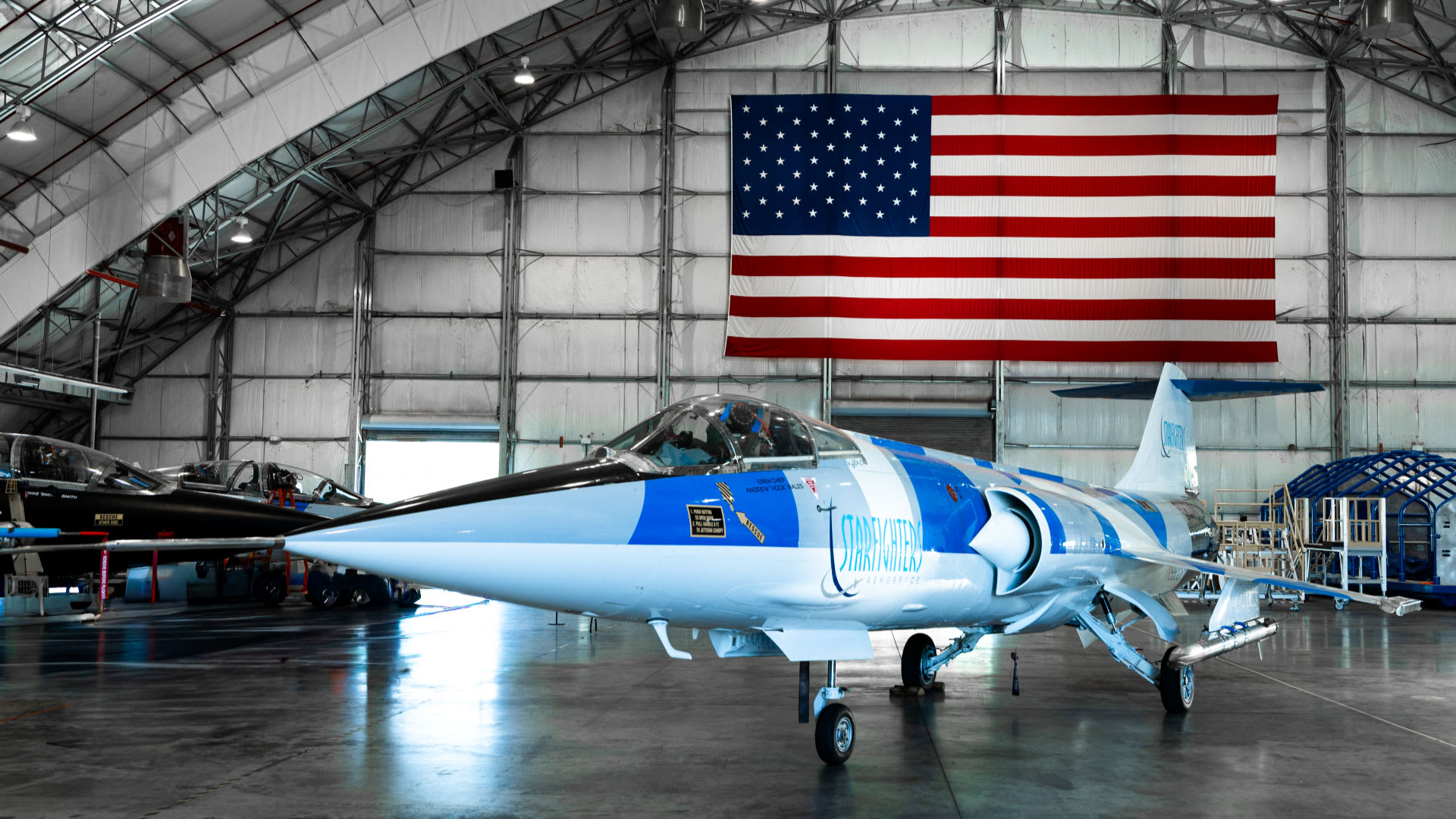
GE Aerospace engineers are also taking ramjet technology from the laboratory to the skies. In another industry-first, GE Aerospace has just completed supersonic captive-carry flight tests of its solid-fueled ramjet (SFRJ), known as the Atmospheric Test of Launched Airbreathing System (ATLAS), at the world-famous Kennedy Space Center. Carried aloft on a Starfighters F-104, the system completed three successful flights. ATLAS, funded through the Department of War’s Defense Production Act Title III, is a critical stepping stone in scaling SFRJ technology for operational needs. Here’s why: SFRJs are simpler and more compact than their liquid-fueled counterparts and promise extended range and speed for munitions and high-speed platforms.
“This marks a pivotal moment,” said Rettig. “Captive carry testing of reusable flight test hardware allows for more frequent testing in realistic atmospheric conditions to better understand system behavior.” To complement the Innoveering acquisition, GE Aerospace has also upgraded test infrastructure at its facilities in Bohemia and Niskayuna, New York, as well as Evendale, Ohio. The new capabilities and enhancements will enable higher-Mach, mission-relevant testing at scale.
Autonomous Flight
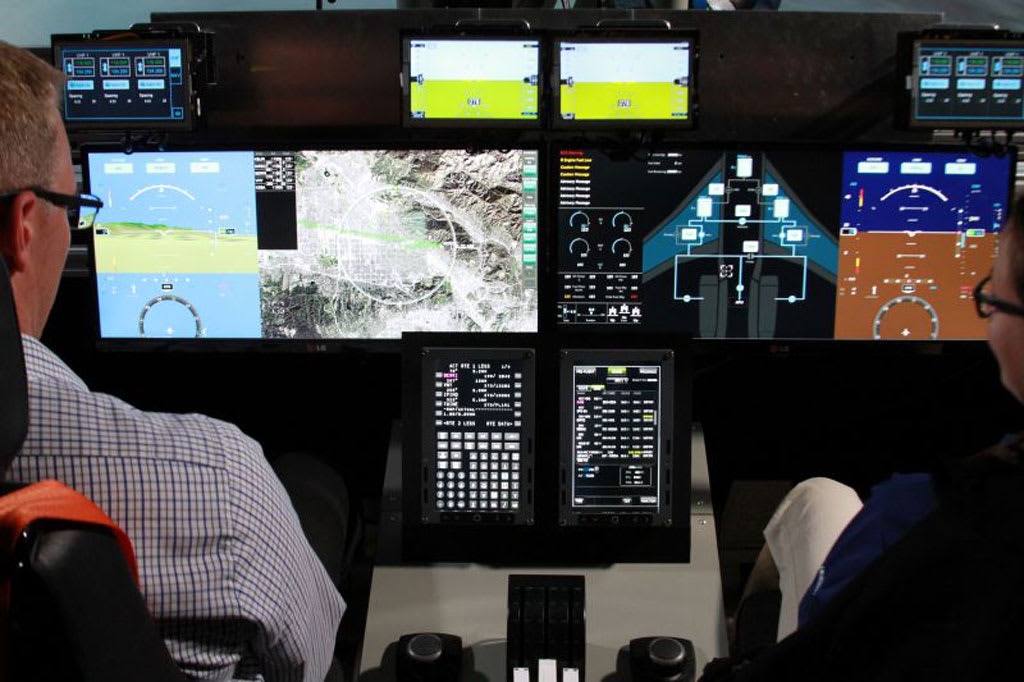
GE Aerospace is also answering the calls for reduced crew and uncrewed flight in both military and civil aviation. The company has signed an agreement with Boston-based aviation technology company Merlin to integrate their advanced autonomy software with GE Aerospace’s globally fielded Flight Management System (FMS) and Modular Open System architectures. By doing so, the two companies will introduce scalable and certifiable automation across legacy and next-generation aircraft.
The integrated system is targeting application on the KC-135 Center Console Refresh program, a United States Air Force initiative to modernize the aging Stratotanker’s cockpit by replacing obsolete fuel management and flight display systems with advanced digital solutions. This will lay the foundations for single-pilot operations and, eventually, a mission-assured, future-ready FMS package, extendable to transport and refueling platforms and broader aviation markets. More autonomous aircraft are not just bragging rights for GE Aerospace: Reduced crews or uncrewed flights have the potential to address the U.S.’s long-term security imperatives, and improve operational efficiencies across the aviation industry.
Big Deal, Small Packages
Propulsion and unmanned flight are the themes of another breakthrough. GE Aerospace and San Diego-based Kratos Defense Security Solutions have begun altitude testing the GEK800 small engine at Purdue University’s renowned Maurice J. Zucrow Laboratories. The tabletop-sized turbofan solution, which has already chalked up more than 50 successful ground starts, has been designed to power unmanned aerial systems, collaborative combat aircraft, and advanced missile platforms. The 800-pound engine ticks plenty of boxes for these uses, boasting high-performance in a cost-effective and rapidly deployable package.
“During altitude testing, we will collect data on the engine’s performance in a range of altitudes to assess its operability in simulated real-world conditions,” said Rettig. GE Aerospace and Kratos recently signed a teaming agreement, which paves the way for collaboration on other low-cost, expendable turbofan engines like the GEK1500, which will be based on the architecture and learnings from the GEK800.
Whether it’s hypersonic engines, robust autonomy systems, or affordable propulsion, GE Aerospace’s Defense and Systems businesses are at the vanguard of next-generation defense, delivering on their promise to innovate with urgency, reliability, and strategic impact.
More From SAE Media Group

Aerospace INSIDER
Quarterhorse Hypersonic Test Aircraft Completes First Flight
Aerospace INSIDER
NASA’s Quiet Supersonic Demonstrator Jet Completes First Flight
Tech Briefs
UCF’s Hypersonic Technology Advances



Aerospace INSIDER
Helsing Unveils New Autonomous Fighter Jet 'CA-1 Europa'
Aerospace Manufacturing and Machining INSIDER
Small Low-Cost Engines for Drones and Collaborative Combat Aircraft
Aerospace INSIDER
Anduril Completes First Semi-Autonomous Flight of CCA Prototype

Aerospace INSIDER
Paris Air Show: New Aerospace Technologies, Updates and Research

Tech Briefs
How Jet Engine Flow Can Be Controlled Optically
Aerospace INSIDER
Hermeus Rolls Out First Quarterhorse Hypersonic Test Aircraft
Aerospace INSIDER
Air Force Researchers Design, Build and Fly Drone in 24 Hours
Aerospace INSIDER
F-22 Pilot Controls Drone With Tablet
Aerospace INSIDER
Active Strake System Cuts Cruise Drag, Boosts Flight Efficiency
Aerospace INSIDER
Propulsion System Could Enable Mach 17 Speed
Aerospace INSIDER
Reliable Robotics to Provide Aircraft Automation Study for US Air Force
Autonomous Vehicle Engineering
Supersonic Spy Drone

Aerospace INSIDER
Two Startups Partner to Expand Hydrogen-Powered Drone Production

Aerospace INSIDER
These Four Companies Will Build DARPA High-Speed VTOL X-Plane Prototypes
Aerospace Manufacturing and Machining INSIDER
DARPA Completes Key Milestone on Hypersonic Air-breathing Weapons Program

Aerospace & Defense Tech Briefs
Rising Star Awards: Women in Engineering Aerospace Winner - Heather Cummings
Aerospace INSIDER
Time-Sensitive Networking for the Army’s HADES Jets
Aerospace & Defense Tech Briefs
Disruptive Flight Control Technology on Trial
Top Stories
NewsSensors/Data Acquisition
 Microvision Aquires Luminar, Plans Relationship Restoration, Multi-industry Push
INSIDERRF & Microwave Electronics
 A Next Generation Helmet System for Navy Pilots
INSIDERWeapons Systems
 New Raytheon and Lockheed Martin Agreements Expand Missile Defense Production
NewsAutomotive
 Ford Announces 48-Volt Architecture for Future Electric Truck
INSIDERAerospace
 Active Strake System Cuts Cruise Drag, Boosts Flight Efficiency
ArticlesTransportation

Webcasts
Aerospace
 Cooling a New Generation of Aerospace and Defense Embedded...
Energy
 Battery Abuse Testing: Pushing to Failure
Power
 A FREE Two-Day Event Dedicated to Connected Mobility
Automotive
 Quiet, Please: NVH Improvement Opportunities in the Early Design Cycle
Electronics & Computers
 Advantages of Smart Power Distribution Unit Design for Automotive &...
Unmanned Systems
 Sesame Solar's Nanogrid Tech Promises Major Gains in Drone Endurance