




Air Force Validates Software Architecture for Collaborative Combat Aircraft Program
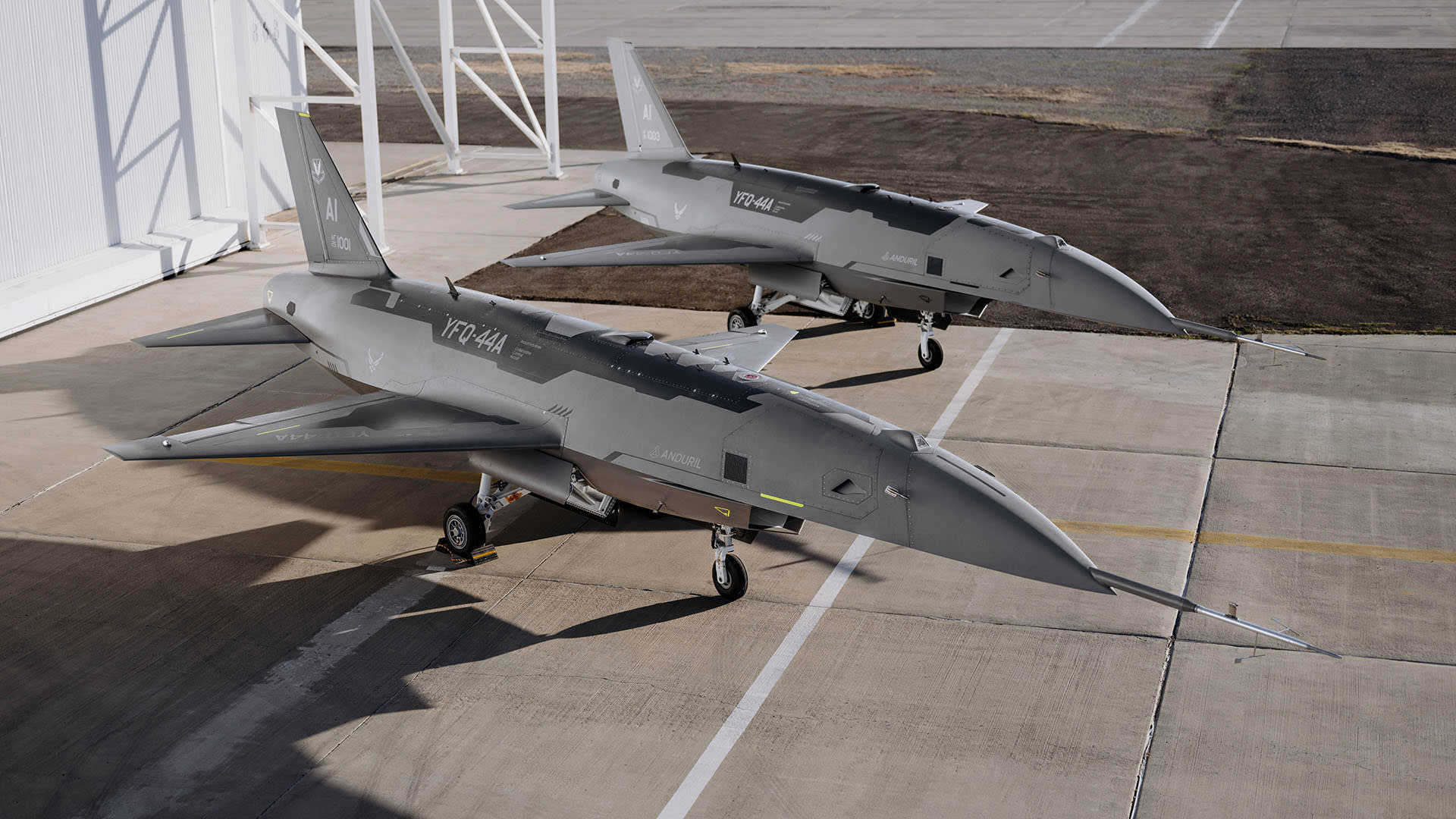
The U.S. Air Force has achieved another development milestone for its Collaborative Combat Aircraft (CCA) program by demonstrating the performance of autonomous software capabilities across multiple airframes.
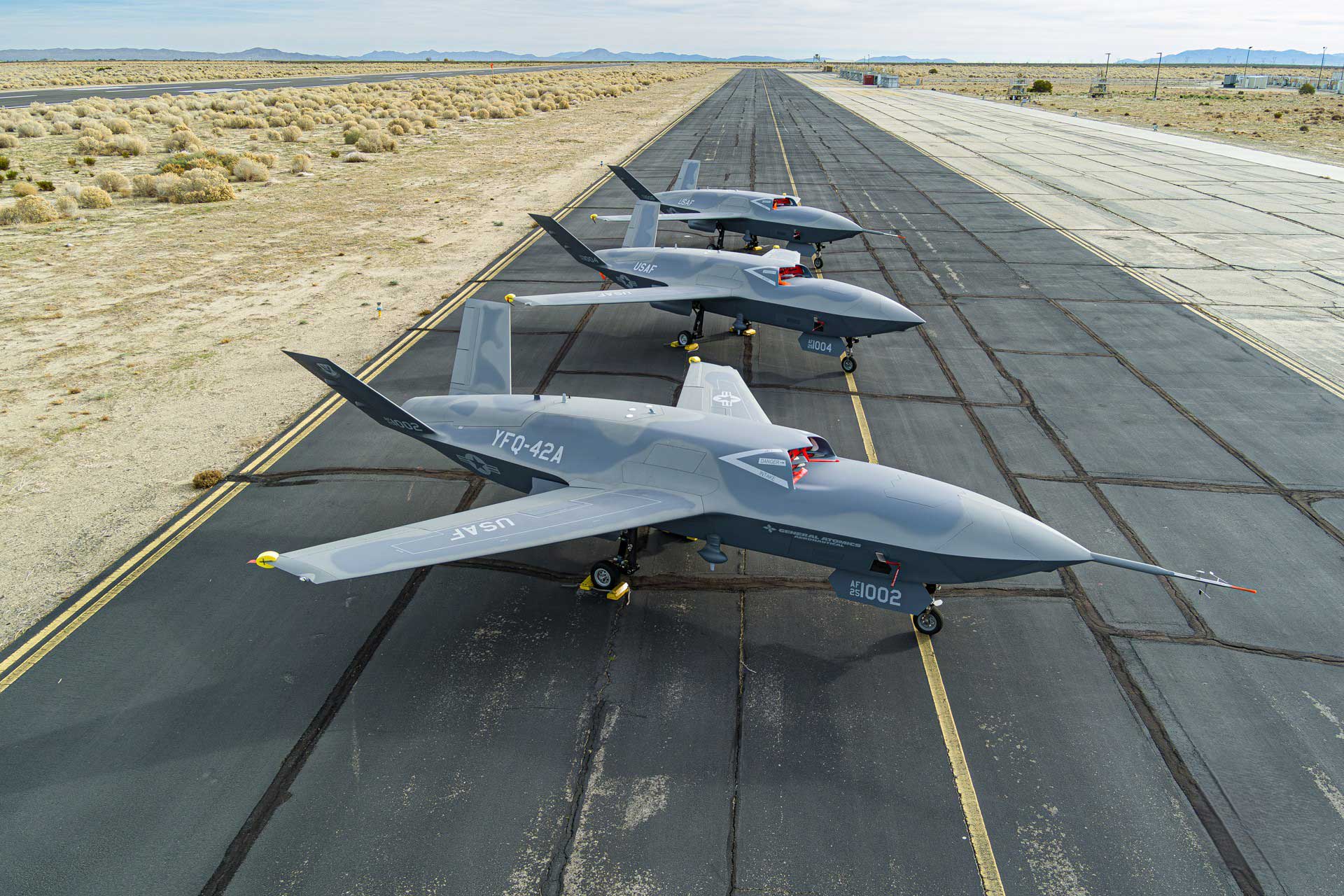
The CCA program centers on a new generation of uncrewed fighter aircraft designed to operate alongside crewed platforms in future conflicts. In a recent press release, the Air Force confirmed successful implementation of the Autonomy Government Reference Architecture (A‑GRA) on both the YFQ‑42 platform being developed by General Atomics and Anduril’s YFQ‑44, the second uncrewed fighter being built as part of the program.
The A‑GRA is a baseline architecture, developed by a consortium that includes the Air Force, to standardize interfaces and reference code for autonomous capabilities integrated into platforms like the CCA. The consortium also created a software development kit that mission autonomy providers use to develop autonomy software with specific behaviors. Aircraft manufacturers — Anduril and General Atomics for the CCA effort — are responsible for integrating mission and flight autonomy software that complies with A‑GRA, according to an August 2024 Air Force Life Cycle Management presentation given by Lt. Gen. Donna Shipton.
The mission autonomy vendors for the CCA program are Collins Aerospace and Shield AI. In a Feb. 12 press release, General Atomics confirmed the successful performance of Collins’ software on its YFQ‑42A CCA, which recently conducted its first semi‑autonomous flight. According to the announcement, GA‑ASI used Collins’ Sidekick Collaborative Mission Autonomy software to enable data exchanges between the autonomy stack and the aircraft’s mission systems to execute commands.
“The autonomy capabilities showcased in this flight highlight our dedicated investment to advance collaborative mission autonomy,” said Ryan Bunge, Vice President and General Manager for Strategic Defense Solutions at Collins Aerospace, an RTX business. “The rapid integration of Sidekick onto this General Atomics platform and its immediate ability to support a broad spectrum of combat‑relevant behaviors underscores the strength and flexibility of our open-systems approach.”
Separately, Shield AI announced its selection for Anduril’s YFQ‑44A, noting that its Hivemind autonomy software has been integrated into the aircraft and is supporting system‑level testing ahead of flight demonstrations. Hivemind is an artificial intelligence system that Shield AI says can go beyond traditional autopilots by “rerouting around no‑fly zones, avoiding or engaging obstacles, responding to unexpected conditions, and completing missions safely and effectively without human intervention.”
Beyond the YFQ‑44A, Hivemind has supported uncrewed flights on multiple aircraft and drones, including the X‑62A VISTA modified fighter jet, the Airbus UH‑72 Lakota, and the U.S. Navy’s BQM‑177 test aircraft.
“Delivering mission autonomy in real‑world combat conditions is hard, which is why Shield AI has spent more than a decade building Hivemind and the technical and operational foundation to do it right,” said Christian Gutierrez, Vice President of Hivemind Solutions at Shield AI.
Air Force officials also emphasized A‑GRA’s alignment with the Modular Open System Approach (MOSA), which aims to prevent vendor lock‑in. The A‑GRA validation milestone is the latest demonstration of MOSA‑aligned investment within the service, following its recent selection of Curtiss‑Wright Defense Solutions to provide mission‑computer upgrades for the C‑17 Globemaster III fleet.
“Verifying A‑GRA across multiple partners is critical to our acquisition strategy,” said Col. Timothy Helfrich, Portfolio Acquisition Executive for Fighters and Advanced Aircraft. “It proves that we are not locked into a single solution or a single vendor. We are instead building a competitive ecosystem where the best algorithms can be deployed rapidly to the warfighter on any A‑GRA–compliant platform, regardless of the vendor providing the algorithm. We are seeing the vision of a modular, adaptable force come to life.”
More From SAE Media Group
Aerospace INSIDER
The Future of Collaborative Combat Aircraft


Aerospace & Defense Tech Briefs
The New Airbus Wingman Aircraft
Aerospace INSIDER
GA-ASI Announces Gray Eagle 25M for Multi-Domain Operations
Aerospace INSIDER
Two Startups Partner to Expand Hydrogen-Powered Drone Production
Aerospace & Defense Tech Briefs
VISTA X-62
Aerospace & Defense Tech Briefs
From the Editor: New Year, New Editor
Aerospace & Defense Tech Briefs
UAV Ground Control Station

Defense INSIDER
AgilePod Flies on U.S. Air Force MQ-9 Reaper
Aerospace & Defense Tech Briefs
Platform Agnostic In-flight Connectivity


Aerospace & Defense Tech Briefs
AI Algorithms Fly Valkyrie XQ-58A
Aerospace INSIDER
Osprey MK III Completes First Autonomous Flight
Defense INSIDER
Swarms of Autonomous Aerial Vehicles Test New Dogfighting Skills

Aerospace & Defense Tech Briefs
MUSHER Demonstrates Manned-Unmanned Aircraft Teaming Applications
Aerospace INSIDER
Honeywell Launches New System to Counter Drone Swarms
Aerospace & Defense Tech Briefs
AI Algorithms Pilot X-62A in First Aerial Dogfight
Aerospace INSIDER
Air Force Researchers Design, Build and Fly Drone in 24 Hours
Aerospace INSIDER
Helsing Unveils New Autonomous Fighter Jet 'CA-1 Europa'
Aerospace INSIDER
Anduril Completes First Semi-Autonomous Flight of CCA Prototype
Aerospace INSIDER
L3Harris Starts Low Rate Production Of New F-16 Viper Shield
Aerospace INSIDER
AFMC Completes First Ever Flight of F-35 with F-22 Software
Aerospace Manufacturing and Machining INSIDER
A New AI-Piloted VTOL Fighter Jet for Contested Environments
Top Stories
INSIDERManufacturing & Prototyping
 How Airbus is Using w-DED to 3D Print Larger Titanium Airplane Parts
NewsUnmanned Systems
 Microvision Aquires Luminar, Plans Relationship Restoration, Multi-industry Push
INSIDERDesign
 A Next Generation Helmet System for Navy Pilots
ArticlesSoftware
 Accelerating Down the Road to Autonomy
INSIDERDesign
 New Raytheon and Lockheed Martin Agreements Expand Missile Defense Production
ArticlesTransportation
 CES 2026: Bosch is Ready to Bring AI to Your (Likely ICE-powered) Vehicle
Webcasts
Transportation
 Advantages of Smart Power Distribution Unit Design for Automotive...
Unmanned Systems
 Quiet, Please: NVH Improvement Opportunities in the Early Design...
Electronics & Computers
 Cooling a New Generation of Aerospace and Defense Embedded...
Automotive
 Battery Abuse Testing: Pushing to Failure
Communications
 A FREE Two-Day Event Dedicated to Connected Mobility
