




L3Harris Starts Low Rate Production Of New F-16 Viper Shield
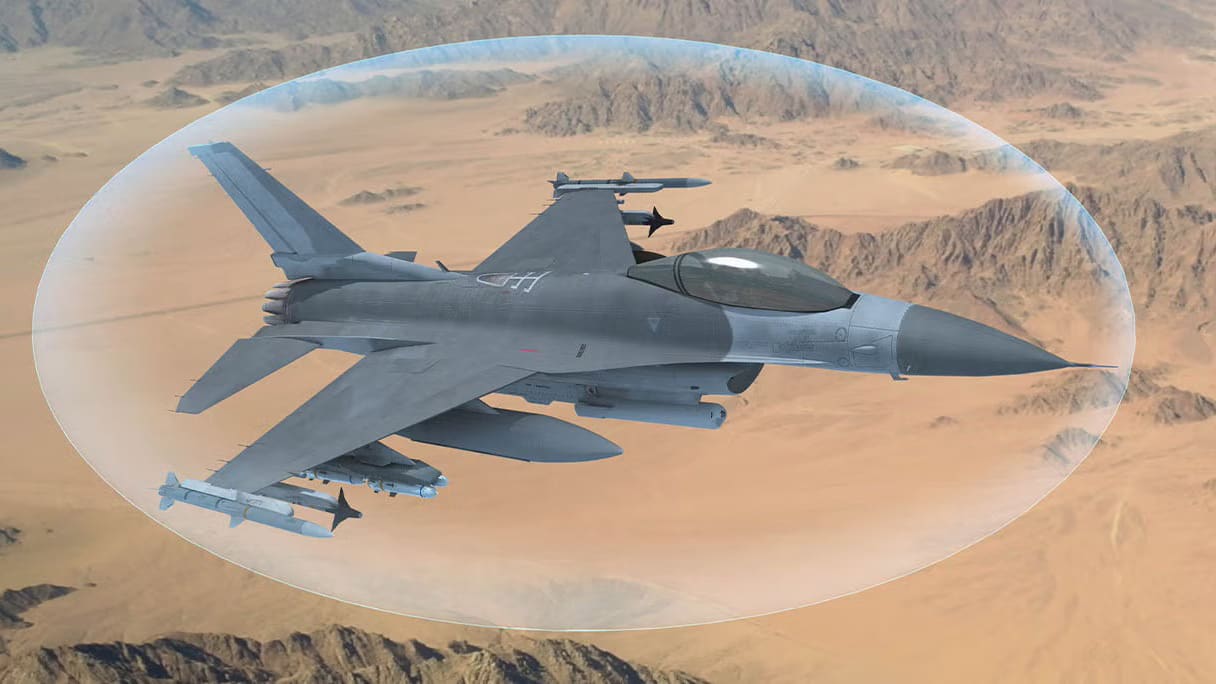
L3Harris is ready to start low-rate initial production of the Viper Shield, a next-generation software-defined electronic warfare (EW) upgrade for the U.S. Air Force fleet of F-16 fighter jets.
The new AN/ALQ-254(V)1 Viper Shield recently completed a Production Readiness Review (PRR), according to a company update about the system. The PRR is a comprehensive evaluation process that examines multiple facets of a program, such as design integrity, manufacturing processes, quality assurance protocols and supply chain logistics. The review is especially important for Foreign Military Sales (FMS) programs, where international customers rely on high-quality standards and thorough system validation.
Through the process, Viper Shield demonstrated its readiness to transition from initial production to the low-rate initial production of 219 systems for seven partner nations.
Related: Are Military Avionics Systems Ready for AI?
“Protecting allies in electromagnetic spectrum environments is critical to maintaining global security and stability," said Michael Rigoni, Air Force Colonel and Electronic Warfare Program Manager, F-16 System Program Office, Wright-Patterson Air Force Base, Ohio. "L3Harris' success in this PRR moves Viper Shield into low-rate initial production with full rate expected in Q1 ’26 and demonstrates its commitment to providing global F-16 fighter pilots a high-quality electronic warfare suite to meet those challenges.”
Viper Shield’s software-defined technology components enable unprecedented digital radar threat warning and robust digital countermeasure capabilities in a fully integrated, internally mounted system. Its advanced digital radar warning receiver (DRWR) technology integrates seamlessly with the aircraft’s new APG-83 active electronically scanned array (AESA) radar to deliver greater situational awareness. The digital radio frequency memory (DRFM)-based jamming system provides enhanced capability against advanced threats.

The open-system design accommodates seamless addition of combat-proven EW applications, providing state-of-the-art capability to address emerging and future threats. Enhanced system performance provides improved probability of intercept against agile threats. A new pilot and vehicle interface provides the pilot with full situational awareness and easier interaction with the system. New sophisticated technology prevents any EW interference to and from a wingman.
Viper Shield is designed with fewer critical components than previous generation EW systems. This not only results in a smaller form factor and reduced weight, but also a higher mean time between failure and lower lifecycle costs. The modular design supports swapping line replaceable units (LRUs) in the field. The design is also forward-looking by provisioning for future growth and enhancements.
In addition to passing the PRR, Viper Shield continues to undergo extensive testing and validation to ensure it performs effectively in extreme operational environments and conditions. This is vital for enhancing the operational capabilities of F-16 fleets, providing customers with advanced protection and resilience. The emphasis on hardware reliability and Manufacturing Readiness Levels (MRL) has allowed L3Harris to scale up production to meet the growing demand.
Completion of the PRR follows the first flight of the new EW system on a single-seat Block 70 F-16 at Edwards Air Force Base, California. The flight included a series of risk reduction tests related to the mission computer and other avionic subsystems compatibility, as well as interoperability with the APG-83 active electronically scanned array (AESA) fire control radar.
Viper Shield will be integrated across all F-16 Blocks with minimal modifications to the aircraft, and is fully configurable with the aircraft’s current mission modular computer and the next generation mission computer.
More From SAE Media Group

Aerospace INSIDER
First F-15Es Equipped With EPAWSS Ready for Flight
Aerospace INSIDER
UK Air Force Funds Production of Typhoon Jet's New Radar
Aerospace INSIDER
Germany's New Military Surveillance Jet Completes First Flight
Aerospace INSIDER
F-22 Pilot Controls Drone With Tablet
Tech Briefs
Next-Generation Radar for the F-35 Lightning II
Defense INSIDER
Advanced Subsystems Improve Performance of Eurofighter Radar Mk1
Aerospace & Defense Tech Briefs
High-Speed Data Cables for Fighter Aircraft
Aerospace Manufacturing and Machining INSIDER
Northrop Grumman Developing Next Generation F-35 Radar Upgrade
Defense INSIDER
New PhantomStrike Radar Completes First Flight Test
Defense INSIDER
New Combat Pod System Wakes Up with Software Updates
Aerospace INSIDER
AFMC Completes First Ever Flight of F-35 with F-22 Software
Aerospace INSIDER
Boeing to Develop Two New E-7 Variants for US Air Force
Aerospace & Defense Tech Briefs
F-16 Upgrades
Aerospace INSIDER
AI-Powered Radar Warning Receiver for Fourth Generation Aircraft

Aerospace INSIDER
FAA to Replace Aging Network of Ground-Based Radars
Aerospace INSIDER
Helsing Unveils New Autonomous Fighter Jet 'CA-1 Europa'
Aerospace INSIDER
Bombardier to Start Building New Army HADES Prototype Spy Plane

Aerospace & Defense Tech Briefs
Raytheon to Upgrade B-52 with AESA Radars
Aerospace & Defense Tech Briefs
Designing Electronic Warfare to Regain Airborne Military Dominance
Aerospace INSIDER
F-35 Completes First Flight with Technology Refresh 3 Upgrades

Aerospace INSIDER
EA-37B Compass Call: The US Air Force's New Electronic Attack Aircraft

Aerospace Manufacturing and Machining INSIDER
Army Launches CMOSS Prototyping Competition for Computer Chassis and Cards
Aerospace INSIDER
DARPA AI Algorithms Transition from Simulator to Flying Modified F-16

Aerospace & Defense Tech Briefs
Using an Open Architecture Approach to Military Avionics
Top Stories
INSIDERManufacturing & Prototyping
 How Airbus is Using w-DED to 3D Print Larger Titanium Airplane Parts
INSIDERManned Systems
 FAA to Replace Aging Network of Ground-Based Radars
NewsTransportation
 CES 2026: Bosch is Ready to Bring AI to Your (Likely ICE-powered) Vehicle
NewsSoftware
 Accelerating Down the Road to Autonomy
EditorialDesign
 DarkSky One Wants to Make the World a Darker Place
INSIDERMaterials
 Can This Self-Healing Composite Make Airplane and Spacecraft Components Last...
Webcasts
Defense
 How Sift's Unified Observability Platform Accelerates Drone Innovation
Automotive
 E/E Architecture Redefined: Building Smarter, Safer, and Scalable...
Power
 Hydrogen Engines Are Heating Up for Heavy Duty
Electronics & Computers
 Advantages of Smart Power Distribution Unit Design for Automotive...
Unmanned Systems
 Quiet, Please: NVH Improvement Opportunities in the Early Design...
