




Advanced Subsystems Improve Performance of Eurofighter Radar Mk1
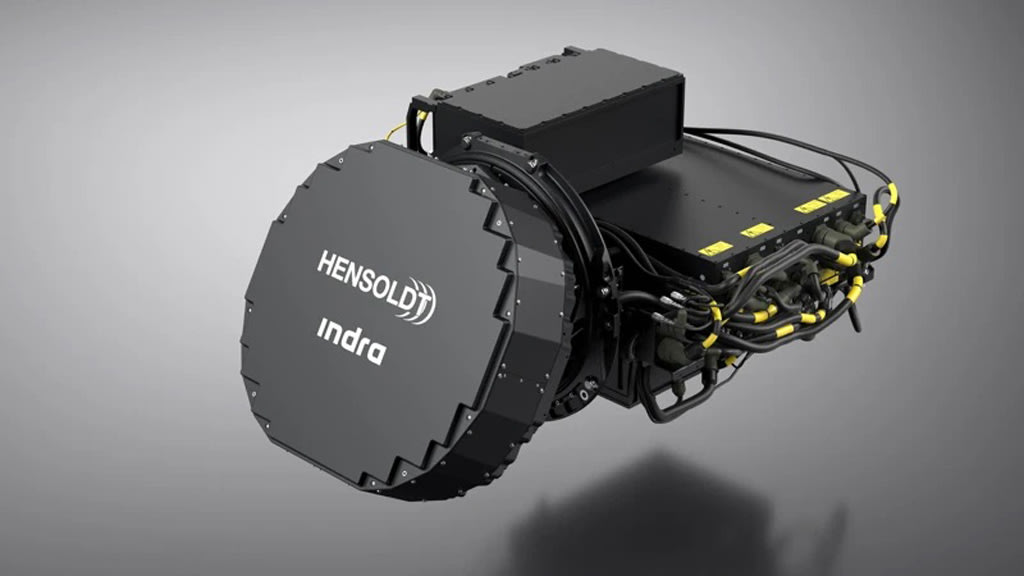
Eurofighter Common Radar System Mark 1 (ECRS) is the next-generation Eurofighter radar system to be fielded by the air forces of Germany and Spain. Based on a multi-channel AESA and high-end processor, ECRS Mk1 will uplift the capabilities of the Eurofighter, which Airbus produces for the German and Spanish air forces. ECRS Mk1 architecture is designed to enhance the full range of fighter missions including Advanced Air-to-Air, High-Resolution Air-to-Ground as well as both passive and active electronic warfare capabilities. It has been contracted in 2020.
In April 2024, the German and Spanish air forces decided to introduce advanced subsystems for the Processor and the Antenna Power Supply & Control (APSC) into the ECRS Mk1 Step 1.
“In less than 13 months, we have completed the production of the first radars with this new hardware and a comprehensive assessment phase is well advanced. The new APSC and Processor give Mk1 a significant boost in performance, both for ultra-fast mode switching, real-time mission flexibility, and future autonomous task-based and AI-supported operations”, explains Dr. William Gautier, Technical Director Eurofighter Radar at HENSOLDT. “This new hardware is integrated with a robustly refactored software that enables full exploitation of AESA multi-channel technology. Also, thanks to its modern architecture and design ECRS Mk1 is sustainable by Customers in the long run.”
The first radar models will be used to perform extensive qualification and flight testing. The Mk1 Step 1 will demonstrate its performance during flight tests onboard Germany’s ATRA Flying Testbed.
Following evaluations and tests during first half of 2025, HENSOLDT and Indra plan to release series production of the Mk1 Step 1 during summer 2025. ECRS Mk1 will be installed on Eurofighter Quadriga jets at the Airbus Defence and Space facility in Manching, Germany.
Mk1 Step 1 will provide robust air-to-air capability to the German and Spanish air forces. Further software upgrades will evolve the Mk1 radar into a full multi-role radar including air-to-ground and electronic warfare tasks. Those will also enable task-based operation to reduce pilot workload whilst improving system performance.
“The new processor architecture also brings major improvements, including increased computational throughput, enhanced parallel processing capabilities, and support for advanced signal processing algorithms,” said Borja Miño, Technical Director Eurofighter Radar at Indra. “These enhancements not only improve current performance but also provide the necessary headroom for future software evolutions and sensor fusion capabilities.”
More From SAE Media Group
Aerospace INSIDER
Northrop's New Multifunction Active Electronically Scanned Array
Tech Briefs
Next-Generation Radar for the F-35 Lightning II
Aerospace INSIDER
L3Harris Starts Low Rate Production Of New F-16 Viper Shield
Aerospace INSIDER
UK Air Force Funds Production of Typhoon Jet's New Radar

Aerospace Manufacturing and Machining INSIDER
Northrop Grumman Developing Next Generation F-35 Radar Upgrade
Aerospace & Defense Tech Briefs
Australian Air Surveillance Radar Upgrade
Aerospace INSIDER
First F-15Es Equipped With EPAWSS Ready for Flight
Aerospace INSIDER
Germany's New Military Surveillance Jet Completes First Flight
Aerospace & Defense Tech Briefs
High-Speed Data Cables for Fighter Aircraft
Aerospace INSIDER
New Cognitive 'MIMO' Drone Radar Completes Flight Testing in Germany

Aerospace INSIDER
Eurofighter Typhoons to Receive Touchscreen Cockpit Display Upgrades
Defense INSIDER
New PhantomStrike Radar Completes First Flight Test
Aerospace & Defense Tech Briefs
The B-52’s New Active Electronically Scanned Array Radar System
Aerospace INSIDER
Helsing AI Agent Completes Saab Gripen E Test Flight
Aerospace & Defense Tech Briefs
B-52 Radar Modernization
Aerospace & Defense Tech Briefs
Raytheon to Upgrade B-52 with AESA Radars
Aerospace INSIDER
Helsing Unveils New Autonomous Fighter Jet 'CA-1 Europa'
Aerospace & Defense Tech Briefs
Eurofighter Common Radar System Upgrade
Aerospace INSIDER
F-22 Pilot Controls Drone With Tablet
Aerospace INSIDER
AI Pilots X-62A in First Aerial Dogfight
Aerospace Manufacturing and Machining INSIDER
Army Launches CMOSS Prototyping Competition for Computer Chassis and Cards

Aerospace & Defense Tech Briefs
The Marines New Installation Counter UAS System
Aerospace INSIDER
AI-Powered Radar Warning Receiver for Fourth Generation Aircraft
Defense INSIDER
New Combat Pod System Wakes Up with Software Updates

Aerospace & Defense Tech Briefs
F-16 Upgrades
Aerospace & Defense Tech Briefs
Electronic Warfare Combat Training Pod
Top Stories
NewsRF & Microwave Electronics
 Microvision Aquires Luminar, Plans Relationship Restoration, Multi-industry Push
INSIDERAerospace
 A Next Generation Helmet System for Navy Pilots
INSIDERDesign
 New Raytheon and Lockheed Martin Agreements Expand Missile Defense Production
INSIDERMaterials
 How Airbus is Using w-DED to 3D Print Larger Titanium Airplane Parts
NewsPower
 Ford Announces 48-Volt Architecture for Future Electric Truck
ArticlesAR/AI

Webcasts
Electronics & Computers
 Cooling a New Generation of Aerospace and Defense Embedded...
Automotive
 Battery Abuse Testing: Pushing to Failure
Power
 A FREE Two-Day Event Dedicated to Connected Mobility
Unmanned Systems
 Quiet, Please: NVH Improvement Opportunities in the Early Design Cycle
Automotive
 Advantages of Smart Power Distribution Unit Design for Automotive &...
Energy
 Sesame Solar's Nanogrid Tech Promises Major Gains in Drone Endurance