




Helsing AI Agent Completes Saab Gripen E Test Flight

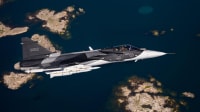
Saab, in collaboration with German startup Helsing, has completed the first three flights integrating Helsing’s Artificial Intelligence (AI) agent ‘Centaur’ into a Gripen E fighter jet. As part of Saab’s ‘Project Beyond’, the flights, where the first flight, was conducted on May 28, mark a significant advance in bringing AI capabilities to military aircraft. It is also yet another proof point of Gripen E´s unparalleled ability to rapidly update software without disregarding safety requirements.
During the flights, the Gripen E gave control to Centaur which successfully autonomously executed complex manoeuvres in a beyond visual range (BVR) combat environment and cued the pilot to fire.
“This is an important achievement for Saab, demonstrating our qualitative edge in sophisticated technologies by making AI deliver in the air. The swift integration and successful flight testing of Helsing’s AI in a Gripen E exemplifies the accelerated capability gain you can get from our fighter. We are excited to continue developing and refining how this and other AI agents can be used, while once again showing how our fighters will outperform faster than the opponent can evolve,” said Peter Nilsson, Head of Advanced Programs, from Saab’s Aeronautics Business Area.
Thanks to the unique design of Gripen E, the fighter can fly with the AI software onboard and fully integrated without being restricted to solely military test ranges or have to rely on an experimental X-plane to do flight trials with the software.
“Within Project Beyond and other programmes, we utilise the power of software to rapidly explore and blur the lines between “now” and the future; in software there are no generations, only speed,” says Peter Nilsson.
The team tested Centaur’s adaptability by varying starting distances, speeds, aspects, and even disabling C2 data to assess its robustness.
Saab’s and Helsing’s joint “Project Beyond” team was set up using Gripen E to explore how trustworthy AI can be used against future threats. The team will now analyse the flight data and continue training the AI agent to further enhance its BVR capabilities, with a further series of flights throughout the remainder of the year.
The project, fully sponsored by Swedish Defence Material Administration (FMV), is part of the Swedish Concept program for Future Fighter Systems.
More From SAE Media Group
Aerospace INSIDER
Helsing Unveils New Autonomous Fighter Jet 'CA-1 Europa'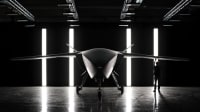
Aerospace & Defense Tech Briefs
Helsing’s New CA-1 Europa Autonomous Fighter Jet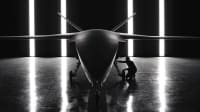

Aerospace INSIDER
AI Pilots X-62A in First Aerial Dogfight
Aerospace INSIDER
Sweden Taps GKN, Saab to Design Concepts for Future Fighter Jet
Aerospace INSIDER
A-10 Warthog to Get New Mission Computer
Aerospace INSIDER
Eurofighter Typhoons to Receive Touchscreen Cockpit Display Upgrades
Aerospace INSIDER
AFMC Completes First Ever Flight of F-35 with F-22 Software

Aerospace INSIDER
AI Algorithms Fly Uncrewed XQ-58A Valkyrie Drone for Three Hour Sortie
Aerospace & Defense Tech Briefs
AI Algorithms Pilot X-62A in First Aerial Dogfight
Aerospace INSIDER
DARPA AI Algorithms Transition from Simulator to Flying Modified F-16
Aerospace & Defense Tech Briefs
Platform Agnostic In-flight Connectivity
Aerospace INSIDER
Anduril Completes First Semi-Autonomous Flight of CCA Prototype
Aerospace & Defense Tech Briefs
Are Military Avionics Systems Ready for Artificial Intelligence?
Aerospace Manufacturing and Machining INSIDER
A New AI-Piloted VTOL Fighter Jet for Contested Environments

Aerospace & Defense Tech Briefs
Excalibur Flight Test and Modification
Aerospace & Defense Tech Briefs
Airbus Will Lean on Start-Ups and Research Institutes for Europe’s Future Combat Air System
Aerospace INSIDER
F-35 Completes First Flight with Technology Refresh 3 Upgrades
Aerospace & Defense Tech Briefs
VISTA X-62
Tech Briefs
AI Goes From Simulator to Flying an F-16
Aerospace INSIDER
WATCH: Air Force Research Lab's First Flight of XQ-67A Drone
Aerospace INSIDER
Airbus Achieves Autonomous In-Flight Control of Drone From Tanker
Aerospace INSIDER
Turkey's KAAN Combat Aircraft Completes First Flight
Aerospace INSIDER
Bombardier to Start Building New Army HADES Prototype Spy Plane
Aerospace INSIDER
The B-21 Raider Starts Flight Testing
Top Stories
NewsRF & Microwave Electronics
 Microvision Aquires Luminar, Plans Relationship Restoration, Multi-industry Push
INSIDERAerospace
 A Next Generation Helmet System for Navy Pilots
INSIDERDesign
 New Raytheon and Lockheed Martin Agreements Expand Missile Defense Production
INSIDERMaterials
 How Airbus is Using w-DED to 3D Print Larger Titanium Airplane Parts
NewsPower
 Ford Announces 48-Volt Architecture for Future Electric Truck
ArticlesAR/AI

Webcasts
Electronics & Computers
 Cooling a New Generation of Aerospace and Defense Embedded...
Automotive
 Battery Abuse Testing: Pushing to Failure
Power
 A FREE Two-Day Event Dedicated to Connected Mobility
Unmanned Systems
 Quiet, Please: NVH Improvement Opportunities in the Early Design Cycle
Automotive
 Advantages of Smart Power Distribution Unit Design for Automotive &...
Energy
 Sesame Solar's Nanogrid Tech Promises Major Gains in Drone Endurance