




General Atomics Collaborative Combat Aircraft Completes First Test Flight

In a major step toward a new era of airpower, the U.S. Air Force reached a key development milestone in its Collaborative Combat Aircraft (CCA) program, with one of its prototype platforms taking flight in less than two years from program launch — signaling a paradigm shift in the way the Air Force acquires new weapon systems.
The aircraft, designated YFQ-42A and developed in partnership with General Atomics, flew at a California test location, contributing valuable data to continued evaluations of platform airworthiness, flight autonomy and mission system integration. This supports the Department’s broader initiative to field large quantities of modular, affordable, and operationally relevant uncrewed aircraft designed to fly alongside crewed fifth and sixth-generation aircraft.
“This milestone showcases what’s possible when innovative acquisition meets motivated industry,” said Secretary of the Air Force Troy Meink. “In record time, CCA went from concept to flight — proving we can deliver combat capability at speed when we clear barriers and align around the warfighter.”
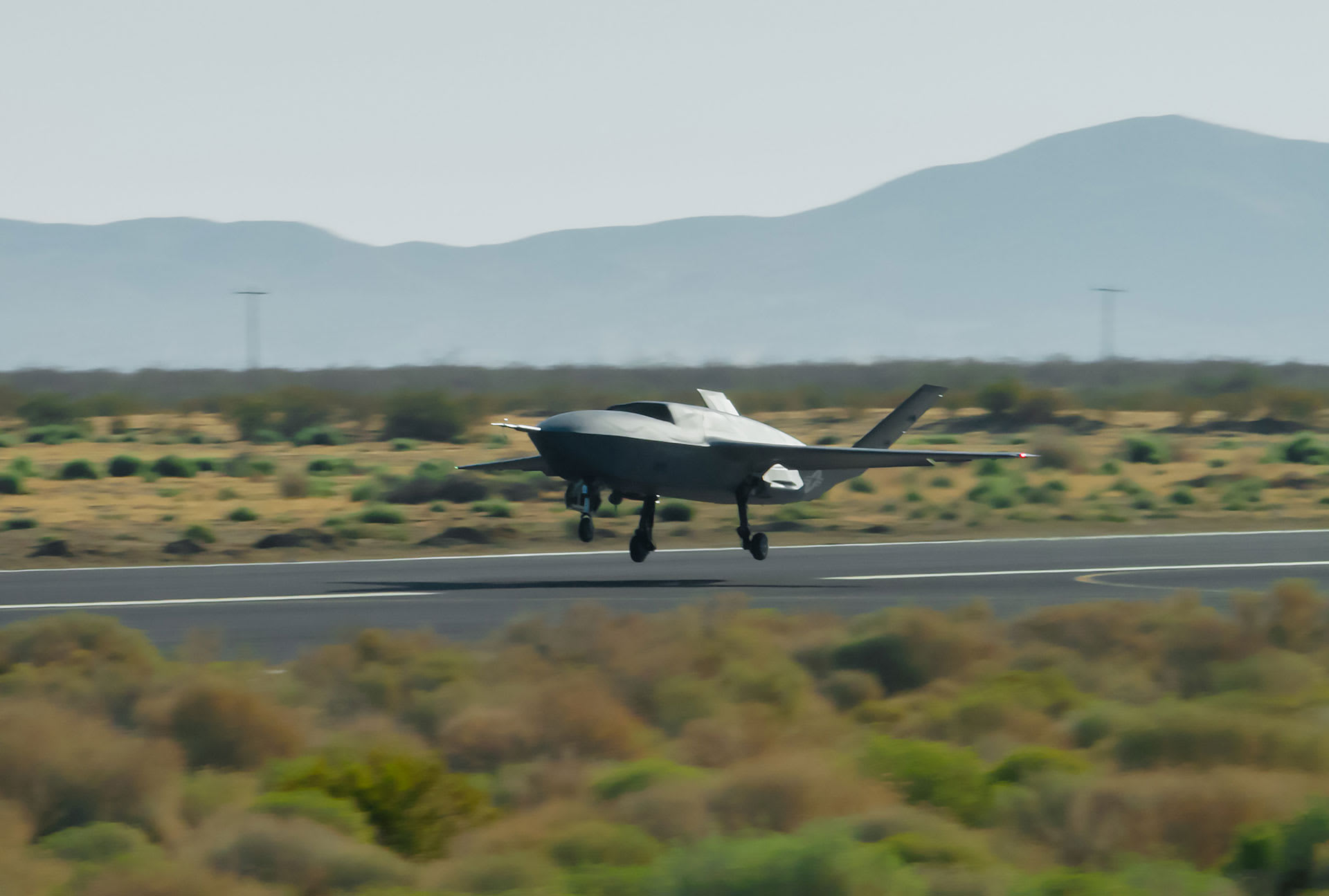
The Air Force first selected Anduril Industries and General Atomics as the two finalists for its CCA program in May 2024 . The two companies were selected from a pool of five companies that were working on the initial phase of CCA designs that also included Boeing, Lockheed Martin and Northrop Grumman. The CCA program aims to deliver at least 1,000 CCAs, prioritizing cost-effective scalability. The Air Force is on track to make a competitive production decision for the first increment of CCA in fiscal year 2026, and field a fully operational capability before the end of the decade.
CCA is a key component of the Next Generation Air Dominance Family of Systems and reflects a new model for software-defined, modular airpower. The program is structured to leverage development from multiple vendor development solutions, reduce risk through competition, and integrate open-system architectures that allow the continuous iteration of autonomy and mission systems capabilities and delivery of enhanced capability at the speed of relevance.
“This is More Air Force in action,” said Air Force Chief of Staff Gen. David Allvin. “We’re not just moving fast — we’re learning fast. CCA will help us rethink the battlespace, extend reach, flexibility and lethality in combat operations, and optimize warfighter performance through human-machine teaming.”
To deliver CCA to the warfighter with unprecedented speed, the program is executing a multi-faceted learning campaign. This includes rigorous vendor-led developmental testing, independent evaluations at Edwards Air Force Base, California, and operational assessments by the Experimental Operations Unit at Nellis AFB, Nevada. This integrated approach ensures the force is prepared to seamlessly field and employ this capability-enhancing readiness and enabling rapid transition of combat power upon delivery of the first production aircraft.
More From SAE Media Group
Aerospace INSIDER
WATCH: Air Force Research Lab's First Flight of XQ-67A Drone
Aerospace INSIDER
Anduril Completes First Semi-Autonomous Flight of CCA Prototype
Aerospace INSIDER
Helsing Unveils New Autonomous Fighter Jet 'CA-1 Europa'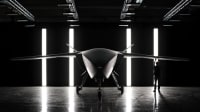
Aerospace INSIDER
AI Algorithms Fly Uncrewed XQ-58A Valkyrie Drone for Three Hour Sortie
Aerospace INSIDER
AFMC Completes First Ever Flight of F-35 with F-22 Software
Aerospace & Defense Tech Briefs
GA-ASI Maximizes Fuel Capacity for MQ-25 Entry
Aerospace Manufacturing and Machining INSIDER
A New AI-Piloted VTOL Fighter Jet for Contested Environments
Aerospace INSIDER
Quarterhorse Hypersonic Test Aircraft Completes First Flight
Aerospace & Defense Tech Briefs
Aitech Defense Will Provide Data Interface Technology for Boeing’s Unmanned MQ-25 Refueling Platform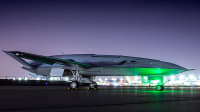
Aerospace INSIDER
F-22 Pilot Controls Drone With Tablet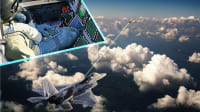
Aerospace Manufacturing and Machining INSIDER
GA-ASI Installs First V-Tail from GKN Aerospace onto MQ-9B RPA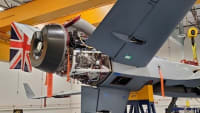
Aerospace INSIDER
How the Air Force's B-21 Raider is Advancing Across Test and Production
Aerospace & Defense Tech Briefs
The B-52’s New Active Electronically Scanned Array Radar System
Aerospace INSIDER
Archer Delivers First Midnight eVTOL to US Air Force
Aerospace INSIDER
F-35 Completes First Flight with Technology Refresh 3 Upgrades
Defense INSIDER
AFWERX Tests Alternative Navigation System on Osprey MK III
Aerospace & Defense Tech Briefs
Maintainers Design a $400 Maintenance Fixture to save the U.S. Air Force $500k per Year
Tech Briefs
Autonomous Aircraft: See the XQ-67A Fly
Aerospace & Defense Tech Briefs
VISTA X-62
Aerospace INSIDER
A-10 Warthog to Get New Mission Computer
Aerospace & Defense Tech Briefs
Autonomous Collaborative Platform

Aerospace INSIDER
Two Startups Partner to Expand Hydrogen-Powered Drone Production
Aerospace INSIDER
German Air Force Starts Flight Testing New Heron ISR Drone
Defense INSIDER
Sikorsky Converts Black Hawk into U-Hawk Autonomous Helicopter
Defense INSIDER
Second Vendor F-35 Canopy Testing Completed
Aerospace INSIDER
Production Ready B-21 Bomber on Track for First Flight This Year
Top Stories
INSIDERWearables
 A Next Generation Helmet System for Navy Pilots
INSIDERWeapons Systems
 New Raytheon and Lockheed Martin Agreements Expand Missile Defense Production
NewsAutomotive
 Ford Announces 48-Volt Architecture for Future Electric Truck
INSIDERAerospace
 Active Strake System Cuts Cruise Drag, Boosts Flight Efficiency
ArticlesTransportation
 Accelerating Down the Road to Autonomy
NewsUnmanned Systems
 Microvision Aquires Luminar, Plans Relationship Restoration, Multi-industry Push
Webcasts
Electronics & Computers
 Cooling a New Generation of Aerospace and Defense Embedded...
Power
 Battery Abuse Testing: Pushing to Failure
Communications
 A FREE Two-Day Event Dedicated to Connected Mobility
Unmanned Systems
 Quiet, Please: NVH Improvement Opportunities in the Early Design Cycle
Transportation
 Advantages of Smart Power Distribution Unit Design for Automotive &...
Aerospace
 Sesame Solar's Nanogrid Tech Promises Major Gains in Drone Endurance