




GA-ASI Maximizes Fuel Capacity for MQ-25 Entry
The integrated fuel tank structure improves fuel carriage and delivery capacity for General Atomics’ entry in the MQ-25 competition
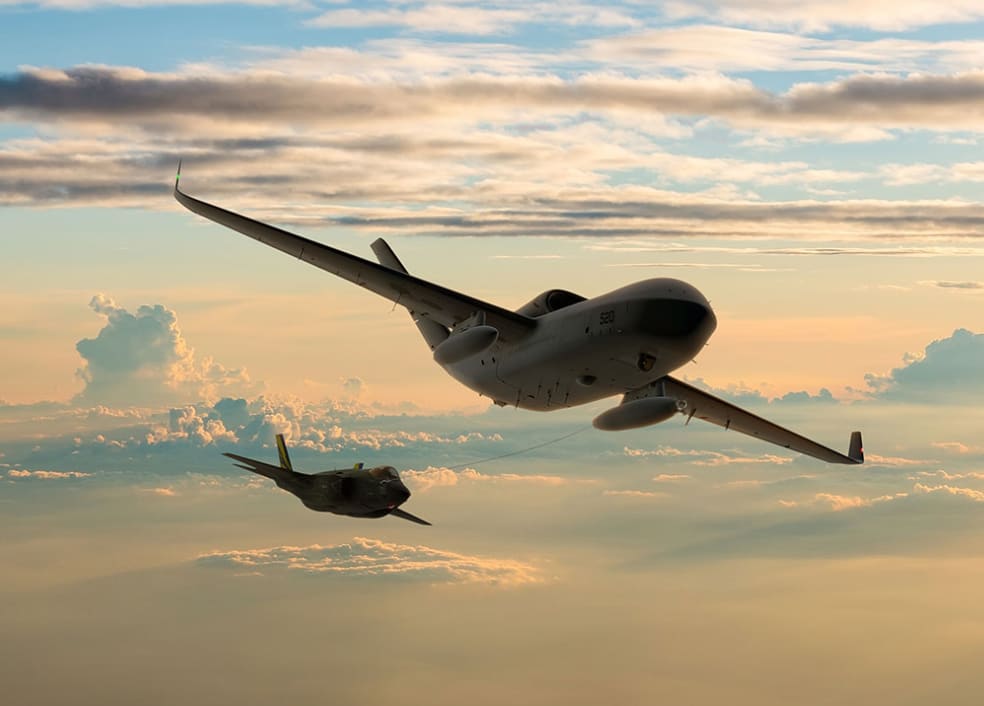
General Atomics Aeronautical Systems, Inc. (GA-ASI) of Poway, Calif. is using an integrated fuel tank structure to maximize fuel offload for the company’s proposed MQ-25 design for the U.S. Navy.

The MQ-25 “Stingray” unmanned, carrier-based, aerial refueling aircraft is an unmanned combat aerial system (UCAV) that the Navy plans to field by the early- to mid-2020s. While the MQ-25 will mainly serve as an aerial refueling platform for Navy aircraft, it is likely that the chosen entry will also possess limited intelligence, surveillance, and reconnaissance (ISR) capabilities.
In October 2017, the Navy released the final request for proposals for the MQ-25. At the time, the main competitors were Boeing , General Atomics, Lockheed Martin , and Northrop Grumman ; although, Northrop Grumman withdrew from the competition at the end of October 2017.
GA-ASI’s MQ-25 design – dubbed the Sea Avenger – is based on an enlarged version of their Predator C Avenger long-endurance, medium-to-high-altitude remotely piloted aircraft (RPA) system.
GA-ASI applied its knowledge of advanced composite aircraft structures to develop integrated fuel tanks in a large-scale wing box test article and a full-scale wing skin pre-production validation article.
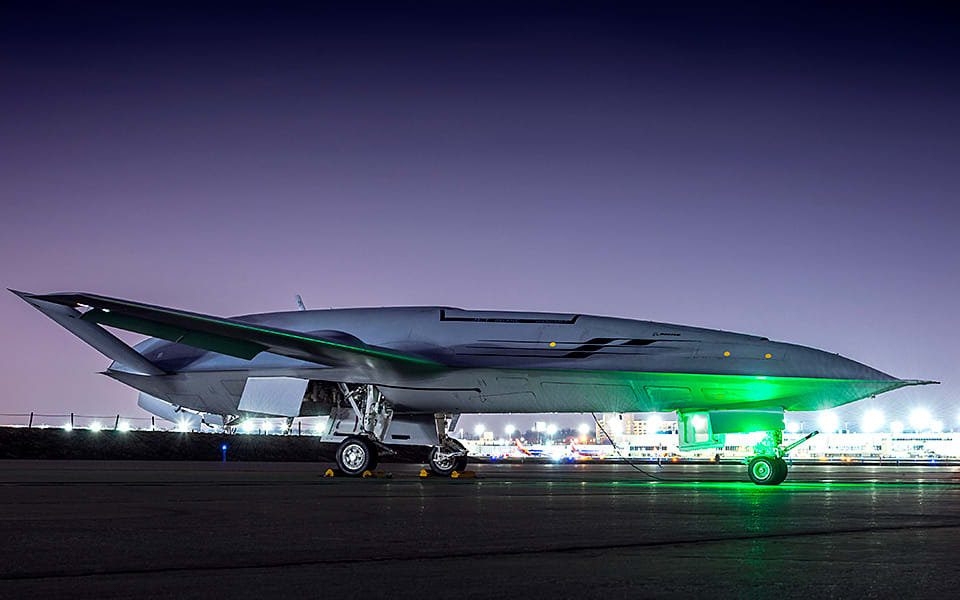
The wing box tested to failure via wing bending at GA-ASI’s Adelanto, Calif. structural test facility last year. In April, the company verified the production readiness of the co-cured wing and tail components using both non-destructive and destructive inspections.
“The integral fuel tank wing box test article will reduce technical and schedule risk for the program,” said David R. Alexander, president of aircraft systems at GA-ASI. “Specifically, through extensive validation of fuel containment sealing methods, advanced non-linear buckling finite element analysis models and thick composite laminate construction, we have accelerated engineering design consideration prior to the detail design phase and production.”
A full-scale inner-wing skin demonstration article built in March at GA-ASI’s Spanish Fork, Utah facility verified the MQ-25 tooling concepts, lamination approach, and processes. The team validated the outer mold line tooling approach for the build process which enables accelerated engineering and tooling fabrication for the MQ-25 program.

GA-ASI’s Predator C-based wing-body-tail design will compete against two flying wing designs: Lockheed Martin’s RQ-170 Sentinel-based prototype and an iteration of the Boeing Phantom Ray .
William Kucinski is content editor at SAE International, Aerospace Products Group in Warrendale, Pa. Previously, he worked as a writer at the NASA Safety Center in Cleveland, Ohio and was responsible for writing the agency’s System Failure Case Studies. His interests include literally anything that has to do with space, past and present military aircraft, and propulsion technology.
Contact him regarding any article or collaboration ideas by e-mail at
More From SAE Media Group
Aerospace & Defense Tech Briefs
The CH-7: China’s Latest Unmanned Combat Air Vehicle
Aerospace & Defense Tech Briefs
Maintainers Design a $400 Maintenance Fixture to save the U.S. Air Force $500k per Year
Aerospace & Defense Tech Briefs
Aitech Defense Will Provide Data Interface Technology for Boeing’s Unmanned MQ-25 Refueling Platform
Aerospace & Defense Tech Briefs
Boeing's Latest Contract Secures New Wings for Remaining A-10 Fleet
Aerospace & Defense Tech Briefs
Curtiss-Wright Will Provide Data Technology Support for Boeing’s MQ-25 Unmanned Air Refueling Platform
Aerospace & Defense Tech Briefs
MTSI’s Latest Project Gives Fixed-Wing Aircraft Vertical Cargo Lift Capabilities
Aerospace & Defense Tech Briefs
Boeing Wins MQ-25 Contract
Aerospace & Defense Tech Briefs
The Air Force’s New Unmanned Wingmate Completes Inaugural Flight
Aerospace & Defense Tech Briefs
Boeing Aerospace & Autonomy Center to Focus on Designing, Building, Flying Autonomous Aircraft
Aerospace & Defense Tech Briefs
J-10B Fighter Aircraft Debuts Chinese Thrust Vectoring Technology
Aerospace & Defense Tech Briefs
Airbus and Dassault Aviation Will Start Development of the “New Generation Fighter” for European FCAS Program
Aerospace & Defense Tech Briefs
General Atomics Plans First Trans-Atlantic Flight of Medium-Altitude, Long-Range Remotely Piloted Aircraft
Aerospace & Defense Tech Briefs
UAV Turbines Designs Purpose-Built Microturbine Engine for Class 3 and 4 UAVs
Aerospace & Defense Tech Briefs
Sikorsky-Boeing’s FVL Contender Takes Flight
Aerospace & Defense Tech Briefs
Textron Systems, Textron Aviation Defense Demonstrate Simulated Manned-Unmanned Teaming Capability
Aerospace & Defense Tech Briefs
Boeing’s CAV Makes First Outdoor Flight
Aerospace & Defense Tech Briefs
Future of British Air Power: The Next-Gen Tempest
Aerospace & Defense Tech Briefs
First F-35 Crash; Pilot Safe
Aerospace & Defense Tech Briefs
BAE Systems Will Supply Flight Control and Target Identification Systems for Boeing’s Carrier-Based MQ-25
Aerospace & Defense Tech Briefs
Collins Aerospace Will Provide Avionics and Synthetic Vision for the Supersonic X-59 QueSST
Aerospace & Defense Tech Briefs
Airbus Zephyr S Breaks World Flight Endurance Record During Maiden Flight
Aerospace & Defense Tech Briefs
NASA and AeroVironment Are Building a Helicopter for Mars
Aerospace & Defense Tech Briefs
SES to Outfit Sikorsky UH-60A Black Hawk Helicopters with Unitech Composites Weapons Pylons
Aerospace & Defense Tech Briefs
General Atomics Moves Toward Global RPA Flight Certification for MQ-9B SkyGuardian
Aerospace & Defense Tech Briefs
Old Bird Learns New Tricks
Aerospace & Defense Tech Briefs
Honeywell Wins $1.04 Billion U.S. Air Force Power Systems Contract
Aerospace & Defense Tech Briefs
Abaco’s FORCE2 Flight Computer Enables National and International Ground Control Station Certification
Aerospace & Defense Tech Briefs
Martin UAV VTOL Unmanned Aircraft Taps Persistent Systems Wave Relay Data Link Technology
Aerospace & Defense Tech Briefs
Vertical Flight Society Applauds EVTOL Innovation, Bell Nexus UAM Concept
Aerospace & Defense Tech Briefs
Air Force Tests Fully Autonomous UAS Control System
Top Stories
NewsRF & Microwave Electronics
 Microvision Aquires Luminar, Plans Relationship Restoration, Multi-industry Push
INSIDERAerospace
 A Next Generation Helmet System for Navy Pilots
INSIDERDesign
 New Raytheon and Lockheed Martin Agreements Expand Missile Defense Production
INSIDERMaterials
 How Airbus is Using w-DED to 3D Print Larger Titanium Airplane Parts
NewsPower
 Ford Announces 48-Volt Architecture for Future Electric Truck
ArticlesAR/AI

Webcasts
Electronics & Computers
 Cooling a New Generation of Aerospace and Defense Embedded...
Automotive
 Battery Abuse Testing: Pushing to Failure
Power
 A FREE Two-Day Event Dedicated to Connected Mobility
Unmanned Systems
 Quiet, Please: NVH Improvement Opportunities in the Early Design Cycle
Automotive
 Advantages of Smart Power Distribution Unit Design for Automotive &...
Energy
 Sesame Solar's Nanogrid Tech Promises Major Gains in Drone Endurance