




Collins Aerospace Will Provide Avionics and Synthetic Vision for the Supersonic X-59 QueSST
The supersonic aircraft will use multi-spectral infrared technology as its forward-facing eyes.
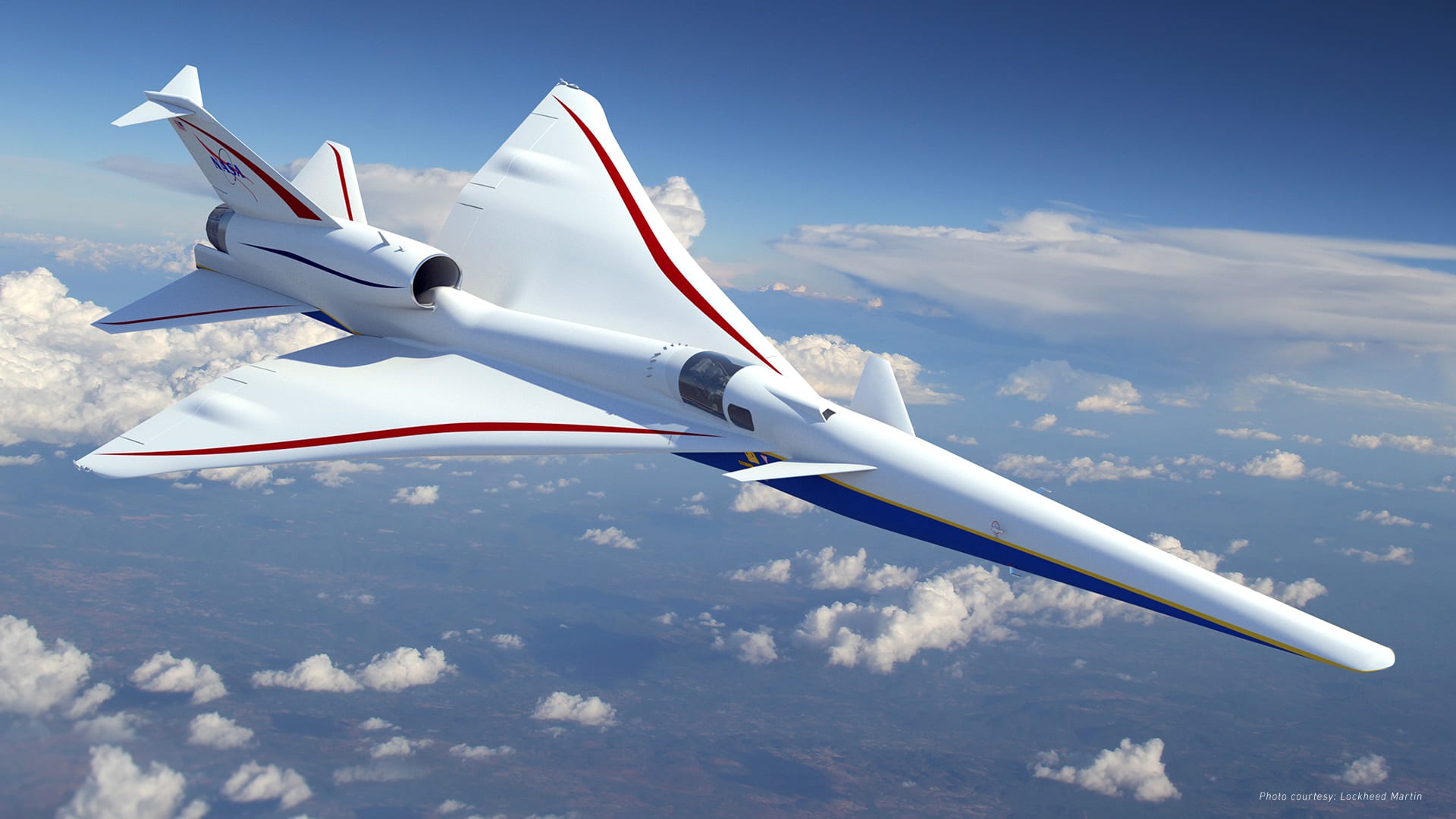
Lockheed Martin Corporation has chosen Cedar Rapids, Iowa-based Collins Aerospace (formerly Rockwell Collins) to supply the avionics and developmental engineering support for the experimental X-59 Quiet Supersonic Technology (QueSST) aircraft. The X-59, developed for NASA 's Low-Boom Flight Demonstrator program, will receive a version of Collins Aerospace’s Pro Line Fusion avionics tailored to its specific requirements, including touchscreen primary flight displays with tailored multi-function windows, head-up display (HUD) symbology, ARC-210 communication radios, and a suite of navigation and surveillance equipment.
The X-59 utilizes a long and slender airframe to achieve supersonic speeds without causing a high decibel sonic boom. The unconventional design precludes the use of a forward-looking window or viewport, so Collins Aerospace is additionally providing a dual multi-spectral enhanced vision system (EVS-3600).

Collins Aerospace originally developed its EVS capabilities to aid pilots landing in adverse weather conditions. The technology enables a “synthetic vision” output from advanced visual sensors leveraging long wave, infrared technology that can display real-time images of airport environments, light emitting diode (LED) runway lighting, and obstacles including vehicles, animals, and aircraft.
SAE International outlines the use of synthetic vision applications aboard aircraft in its Human Engineering Considerations for Airborne Implementation of Enhanced Synthetic Vision Systems ARP5677 standard.
Read more about synthetic vision
“Our industry-leading avionics, combined with one of the most advanced EVS cameras in the market, will add to the safety and efficiency of this forward-leaning aircraft,” says Dave Schreck, vice president and general manager for Military Avionics and Helicopters at Collins Aerospace. “We look forward to working with Lockheed Martin and NASA to play an integral role in making quiet supersonic travel over land possible for passengers.”
Production began on the X-59 late last year and the aircraft is expected to take its first flight in 2021. It is designed to cruise at 55,000 feet at a speed of about 940 miles per hour and create a sound about as loud as a car door closing, or 75 perceived level decibel (PLdB), instead of a sonic boom. The aircraft will be used to collect data on the acceptability of the quiet sonic boom, helping NASA establish an acceptable commercial supersonic noise standard to overturn current regulations banning supersonic travel over land.
Lockheed Martin, based in Bethesda, Maryland, was selected for the design, build and flight test of the Low-Boom Flight Demonstrator in 2018. The company plans to house a System Integration Lab for the Pro Line Fusion avionics at its facility in Palmdale, California and codevelop the software applications side-by-side with Collins Aerospace, a subsidiary of Farmington, Connecticut-based United Technologies Corporation.
William Kucinski is content editor at SAE International, Aerospace Products Group in Warrendale, Pa. Previously, he worked as a writer at the NASA Safety Center in Cleveland, Ohio and was responsible for writing the agency’s System Failure Case Studies. His interests include literally anything that has to do with space, past and present military aircraft, and propulsion technology.
Contact him regarding any article or collaboration ideas by e-mail at
More From SAE Media Group
Aerospace & Defense Tech Briefs
Collins Aerospace Provides Avionics for C-130H Modernization Program
Aerospace & Defense Tech Briefs
L3 Makes Its C-130 Modernization Package Available to Global Operators
Aerospace & Defense Tech Briefs
General Atomics Moves Toward Global RPA Flight Certification for MQ-9B SkyGuardian
Aerospace & Defense Tech Briefs
Lockheed Martin’s Next-Gen, 360-Degree Vision System Flies on the Bell V-280 Valor
Aerospace & Defense Tech Briefs
Abaco’s FORCE2 Flight Computer Enables National and International Ground Control Station Certification
Aerospace & Defense Tech Briefs
Air Mobility Innovations Take Center Stage at Aerospace Systems and Technology Conference
Aerospace & Defense Tech Briefs
Stratos Aircraft Evolves Carbon-Fiber Very Light Jet, Offers Limited Number of Kit Aircraft
Aerospace & Defense Tech Briefs
Astronautics to Upgrade Cockpit Displays on U.S. Customs and Border Protection P-3 Orions
Aerospace & Defense Tech Briefs
Aerion and Honeywell Collaborate on Revolutionary Flight Deck for Supersonic Bizjet
Aerospace & Defense Tech Briefs
Connected Aircraft Technologies Benefit Manufacturers, Airlines, and Travelers
Aerospace & Defense Tech Briefs
Sikorsky’s Autonomous Black Hawk Helicopter Takes Flight
Aerospace & Defense Tech Briefs
Curtiss-Wright Black Boxes Receive European Approval

Aerospace & Defense Tech Briefs
Industry Invited to Participate in AeroTech Aerospace and Defense Technical Program
Aerospace & Defense Tech Briefs
SAE International Launches Aerospace Technology Symposium at Japan Aerospace 2018
Aerospace & Defense Tech Briefs
FLYHT and Spectralux Avionics Integrate Systems to Deliver FANS-Over-Iridium Satellite Communications to Airlines
Aerospace & Defense Tech Briefs
Martin UAV VTOL Unmanned Aircraft Taps Persistent Systems Wave Relay Data Link Technology
Aerospace & Defense Tech Briefs
NASA’s Next X-Plane Passes Major Review
Aerospace & Defense Tech Briefs
SAE International Extends Call for Abstracts, Seeks Submissions for AeroTech Conference
Aerospace & Defense Tech Briefs
Boeing’s Next EcoDemonstrator Test Bed Will Be a 777
Aerospace & Defense Tech Briefs
Lockheed Martin Skunk Works Begins Manufacturing X-59 Supersonic Aircraft Parts
Automotive Engineering
Automated Vehicle Safety Series Addresses Design, Testing, Verification, and Validation
Aerospace & Defense Tech Briefs
Rockford Xellerix to Support Pilatus PC-24 Electrification
Aerospace & Defense Tech Briefs
Aitech Defense Will Provide Data Interface Technology for Boeing’s Unmanned MQ-25 Refueling Platform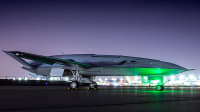
Aerospace & Defense Tech Briefs
Curtiss-Wright and Honeywell Team to Develop Cloud-Enabled Flight Recorders of the Future

Aerospace & Defense Tech Briefs
Bell Nexus Full-Scale Air Taxi Design Debuts, Taps Novel VTOL, Hybrid Propulsion, Energy Storage, and Avionics Technologies
Aerospace & Defense Tech Briefs
Aircraft, Engine Orders Reach $98B, Focus on Flying Farther, Faster, Greener at Farnborough Airshow
Aerospace & Defense Tech Briefs
Gulfstream G500 Earns FAA Type and Production Certificates
Aerospace & Defense Tech Briefs
BendixKing and Airwork Are Developing Cockpit Upgrades for the Often Overlooked Small- and Medium-Sized Helicopter Market
Transcript
No transcript is available for this video.
Top Stories
NewsSensors/Data Acquisition
 Microvision Aquires Luminar, Plans Relationship Restoration, Multi-industry Push
INSIDERRF & Microwave Electronics
 A Next Generation Helmet System for Navy Pilots
INSIDERWeapons Systems
 New Raytheon and Lockheed Martin Agreements Expand Missile Defense Production
NewsAutomotive
 Ford Announces 48-Volt Architecture for Future Electric Truck
INSIDERAerospace
 Active Strake System Cuts Cruise Drag, Boosts Flight Efficiency
ArticlesTransportation

Webcasts
Aerospace
 Cooling a New Generation of Aerospace and Defense Embedded...
Energy
 Battery Abuse Testing: Pushing to Failure
Power
 A FREE Two-Day Event Dedicated to Connected Mobility
Automotive
 Quiet, Please: NVH Improvement Opportunities in the Early Design Cycle
Electronics & Computers
 Advantages of Smart Power Distribution Unit Design for Automotive &...
Unmanned Systems
 Sesame Solar's Nanogrid Tech Promises Major Gains in Drone Endurance