




Astronautics to Upgrade Cockpit Displays on U.S. Customs and Border Protection P-3 Orions
The new glass cockpit equipment will keep the legacy aircraft compatible with modern system and will provide the opportunity for future avionics upgrades
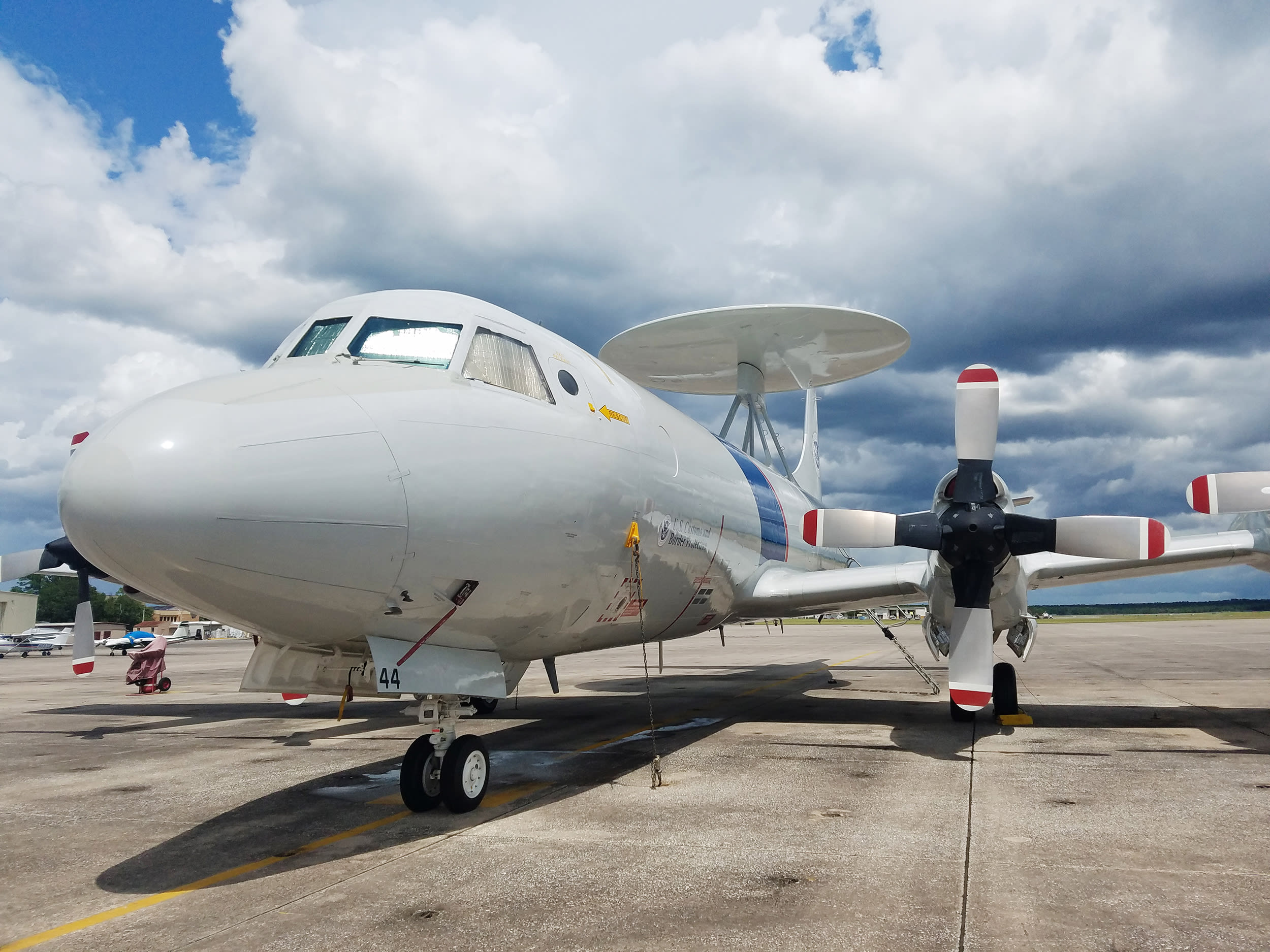
Milwaukee-based Astronautics Corporation of America will update the U.S. Customs and Border Protection (CBP) agency’s Air and Marine Operations (AMO) fleet of Lockheed Martin P-3 Orion turboprop maritime surveillance aircraft with new primary flight and navigation displays. The purchase order, which was submitted by Lockheed Martin, includes upgrades for both CBP P-3 Orion variants: the P-3 Orion Long Range Tracker (LRT) and the P-3 Orion Airborne Early Warning (AEW) aircraft.
Each of the CBP’s 14 P-3 aircraft will receive Astronautics’ AFD 6800 electronic flight instrument system (EFIS), including four modern 6- by 8-inch digital multifunction displays, wiring harnesses, and additional spare displays for maintenance and repair. The four liquid crystal display (LCD) screens will be split into pairs of primary flight displays and navigation displays for the pilot and copilot.

In order to minimize training and display certification, the company will port existing software from current Astronautics EFIS displays that were installed in the late 1990s. Prior to those first-generation glass cockpit instruments, the P-3 flew with original Astronautics attitude direction and horizontal situation indicators.
Learn more about glass cockpits
“Astronautics is able to deliver the highest reliability displays tailored to meet our customers’ missions, ensuring they are able to operate wherever they need, whenever they need,” explains Robert Koelling, Astronautics director of business development. “For the U.S. Customs and Border Protection, Astronautics provided an incremental, modular plan for upgrading its P-3 fleet that limited aircraft downtime and met budget and schedule needs.”

The new displays will provide an improved viewing angle and color rendering using light emitting diode (LED) backlights that run cooler with less power and support more vibrant color. The AFD 6800 architecture supports night vision goggle integration and later transition to aircraft synthetic vision.
System delivery is expected in the summer of 2019.
The Orion P-3
The Orion P-3 – a high-endurance, all-weather, tactical aircraft – was first introduced to the U.S. Navy in 1962 to track Soviet submarines during the Cold War. Since then, the P-3 has continued to fill long-range aerial patrols and surveillance missions.

The CBP currently operates P-3 aircraft in AMO law enforcement configuration out of Corpus Christi, Texas and Jacksonville, Florida. The CPB uses the aircraft to patrol the southern U.S. coastal boarder and Caribbean and Eastern Pacific waters. The aircraft’s specialized detection capabilities allow crews to identify emerging threats in an area that is almost 14 times the size of the continental U.S.
The cockpit update follows a CBP P-3 service life extension plan (SLEP) overhaul initiated in 2006 and completed in 2016. At the time of the 2006 analysis, the CBP’s P-3 Orion LRT aircraft had less than eight years of remaining service life and the P-3 Orion AEW aircraft had less than three years.
Each of the 14 aircraft was stripped to bare metal for comprehensive airframe fatigue inspection. Then each aircraft received new wings, tail, and paint.
Astronautics Corporation of America
Since its founding in 1959, Astronautics has designed, developed, and manufactured secure avionics equipment and systems for the commercial and military aerospace industry. Astronautics is the parent company of Kearfott Corporation , headquartered in Woodland Park, New Jersey.
William Kucinski is content editor at SAE International, Aerospace Products Group in Warrendale, Pa. Previously, he worked as a writer at the NASA Safety Center in Cleveland, Ohio and was responsible for writing the agency’s System Failure Case Studies. His interests include literally anything that has to do with space, past and present military aircraft, and propulsion technology.
Contact him regarding any article or collaboration ideas by e-mail at
More From SAE Media Group
Aerospace & Defense Tech Briefs
L3 Makes Its C-130 Modernization Package Available to Global Operators
Aerospace & Defense Tech Briefs
Collins Aerospace Provides Avionics for C-130H Modernization Program
Aerospace & Defense Tech Briefs
Collins Aerospace Will Provide Avionics and Synthetic Vision for the Supersonic X-59 QueSST
Aerospace & Defense Tech Briefs
Aitech Defense Will Provide Data Interface Technology for Boeing’s Unmanned MQ-25 Refueling Platform
Aerospace & Defense Tech Briefs
Sikorsky’s Autonomous Black Hawk Helicopter Takes Flight
Aerospace & Defense Tech Briefs
Abaco’s FORCE2 Flight Computer Enables National and International Ground Control Station Certification
Aerospace & Defense Tech Briefs
Aerion and Honeywell Collaborate on Revolutionary Flight Deck for Supersonic Bizjet
Aerospace & Defense Tech Briefs
BendixKing and Airwork Are Developing Cockpit Upgrades for the Often Overlooked Small- and Medium-Sized Helicopter Market
Aerospace & Defense Tech Briefs
General Atomics Moves Toward Global RPA Flight Certification for MQ-9B SkyGuardian
Aerospace & Defense Tech Briefs
Lockheed Martin’s Next-Gen, 360-Degree Vision System Flies on the Bell V-280 Valor
Aerospace & Defense Tech Briefs
Gulfstream G500 Earns FAA Type and Production Certificates
Aerospace & Defense Tech Briefs
OA-X Phase Two Kicks Off
Aerospace & Defense Tech Briefs
Collins Aerospace Brings Next Gen Avionics to Portuguese C-130s
Aerospace & Defense Tech Briefs
Curtiss-Wright Black Boxes Receive European Approval
Aerospace & Defense Tech Briefs
South Africa’s Paramount Group Will Provide New Mission System for Combat Version of the Aermacchi M-345 Jet Trainer

Aerospace & Defense Tech Briefs
Airbus Will Lean on Start-Ups and Research Institutes for Europe’s Future Combat Air System
Aerospace & Defense Tech Briefs
Rockford Xellerix to Support Pilatus PC-24 Electrification
Aerospace & Defense Tech Briefs
FLYHT and Spectralux Avionics Integrate Systems to Deliver FANS-Over-Iridium Satellite Communications to Airlines
Aerospace & Defense Tech Briefs
Curtiss-Wright Will Provide Data Technology Support for Boeing’s MQ-25 Unmanned Air Refueling Platform

Aerospace & Defense Tech Briefs
Airbus and Dassault Aviation Will Start Development of the “New Generation Fighter” for European FCAS Program
Aerospace & Defense Tech Briefs
NATS Will Test AI at Heathrow to Reduce Weather-Related Flight Delays
Aerospace & Defense Tech Briefs
When It Comes to Fifth-Generation Assets, Air Force Values Virtual Training over Live Flying
Aerospace & Defense Tech Briefs
US Army Tests Avionics in Effort to Upgrade Black Hawk Helicopters from Analog to Digital Glass Cockpit
Aerospace & Defense Tech Briefs
Stratos Aircraft Evolves Carbon-Fiber Very Light Jet, Offers Limited Number of Kit Aircraft
Aerospace & Defense Tech Briefs
Ahead of USAF T-X Decision, Leonardo Finds Market for T-100’s Little Brother – the Single-Engine Aermacchi M-345
Aerospace & Defense Tech Briefs
Lockheed Martin Flies FireHerc Firefighting Variant of C-130J Turboprop in Farnborough
Aerospace & Defense Tech Briefs
FAA Certifies AeroVonics' Economical Avionics Upgrade for Light General Aviation Aircraft
Aerospace & Defense Tech Briefs
Connected Aircraft Technologies Benefit Manufacturers, Airlines, and Travelers
Transcript
00:00:24
>> The source in-transit zone. The wild and lawless open
ocean of the Caribbean and Eastern Pacific Ocean, where smugglers of illegal narcotics and immigrants attempt to transit
their illicit cargo from Central and South America
north to the United States. This expanse of endless
ocean is the place where the pirates of the twenty-first
century make their first moves to unload their booty
of uncut cocaine
00:00:48 and heroin, marijuana, or illegal migrants
to the next stop along the line of the international
criminal chain. This is also where U.S. Customs and Border Protection meets
them head on, stopping them, and breaking links in that chain
one by one. The tool of choice – the P3
Orion Aircraft, CBP's eyes over the ocean.
>> We're in the heart
of the hunting ground,
00:01:18 per se, of looking for drug runners, this location offers us
a great opportunity to be able to go out, to prosecute, be able to come back, refuel,
go back out if necessary.
>> Most of the conveyances
we follow nowadays are going to be
surface conveyances, either small vessels,
high-speed vessels, so we call them "Go Fast." They're modified fishing boats; two, three, sometimes
even single engine.
00:01:48
>> Chasing a [INAUDIBLE]
submersible, which is one of these [INAUDIBLE]
submarines that they'll have out. We have a fishing boat
with that all we [INAUDIBLE] are chasing a
tanker or a container ship. You have to go down range and try to intercept these loads while they're still large,
before they're dispersed. We're the best asset for that. People on this airplane
00:02:32 have been doing this job
for years and decades. It's what we do all the time. It's what we're really good at.
>> The P-3 aircraft is flown
by very experienced CBP pilots. They guide this aircraft
over the ocean to a designated target search area commonly referred
to as "the box." And behind them is a massive
array of sensory equipment, which is the technological heart
of the P-3 mission. Now, once the aircraft
reaches the box,
00:03:06 CBP officers and agents, who are detection experts, use that powerful radar
to search for, pinpoint, trap and monitor
any suspicious targets that they find in the air
and on the ocean.
>> You know, when you get a good case and you bring home
that knowledge that you did something to stop bad people from bringing bad things
into our country, I feel very, very happy
about what I'm doing.
00:03:33 If anything looks suspicious, and that's just according to knowledge that we've gained
throughout the years, of what looks legitimate
and what's not looking legitimate. Also aircraft, aircraft usually
give themselves away by not doing what they're telling
everybody that they're doing, or going into areas
of possible suspect activity.
>> The P-3 platform comes
with two kinds of radar; one is an airborne,
early detection radar system that was put on top of a P3
that came from an E2.
00:04:13 The other radar system
is a surface search radar, primarily, that looks for the vessels
and vessel traffic that is approaching
from the littoral waters of our Central
and South American countries. Combined, they do a very thorough job
of looking for air and surface targets as they approach
from those countries and destined for the United States.
>> This airplane and sister ship have
the ability to patrol thousands and thousands of miles of open
ocean on any given flight.
00:04:57 During the eight hours that we'll operate today, we'll transit well over a thousand miles, and we have both the Caribbean and the Pacific hunting for narcotics . The farther away from America we can stop it, the more difficult we can make it for people who want to bring that up, I think the better the American public is. We're certain we're the most capable platform for taking this fight on well south and north,
00:05:22 away from our shores. That's the advantage that we bring.
>> U.S. Customs and Border
Protection's Air and Marine operation's P-3 program. Watching, stopping and protecting
the United States of America, 24-7. To learn more about
a career with Air and Marine Operations, visit CBP.gov/Careers.
Top Stories
NewsRF & Microwave Electronics
 Microvision Aquires Luminar, Plans Relationship Restoration, Multi-industry Push
INSIDERAerospace
 A Next Generation Helmet System for Navy Pilots
INSIDERDesign
 New Raytheon and Lockheed Martin Agreements Expand Missile Defense Production
INSIDERMaterials
 How Airbus is Using w-DED to 3D Print Larger Titanium Airplane Parts
NewsPower
 Ford Announces 48-Volt Architecture for Future Electric Truck
ArticlesAR/AI

Webcasts
Electronics & Computers
 Cooling a New Generation of Aerospace and Defense Embedded...
Automotive
 Battery Abuse Testing: Pushing to Failure
Power
 A FREE Two-Day Event Dedicated to Connected Mobility
Unmanned Systems
 Quiet, Please: NVH Improvement Opportunities in the Early Design Cycle
Automotive
 Advantages of Smart Power Distribution Unit Design for Automotive &...
Energy
 Sesame Solar's Nanogrid Tech Promises Major Gains in Drone Endurance