




US Army Tests Avionics in Effort to Upgrade Black Hawk Helicopters from Analog to Digital Glass Cockpit
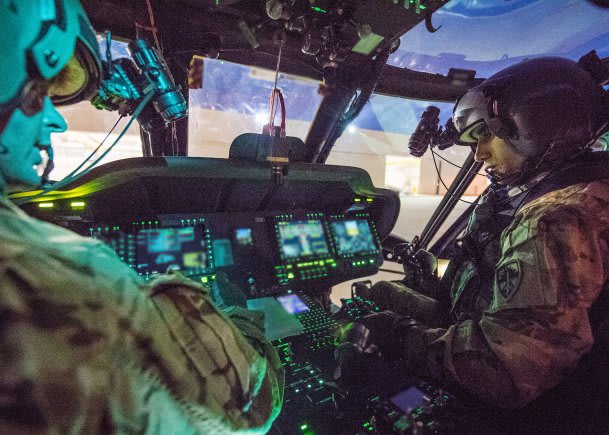
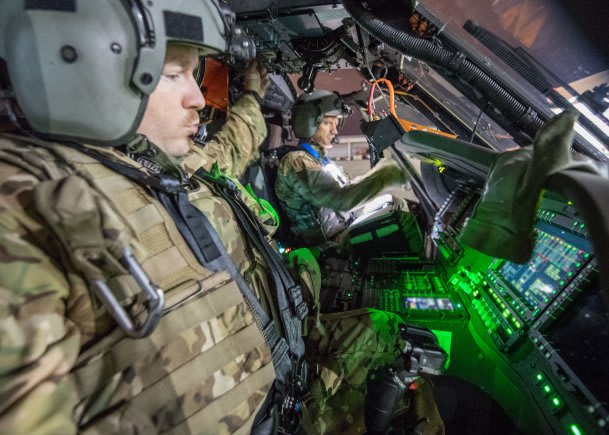
US Army officials and engineers continue work to modernize the defense organization’s fleet of Sikorsky UH-60 Black Hawk helicopter with a more modern digital cockpit, conducting a Limited User Test with two prototype aircraft at Redstone Arsenal, Ala. They selected for a Limited User Evaluation (LUE) a Crew Mission Station (CMS) aligned with The Open Group Future Airborne Capability Environment (FACE) technical standard that combines Core Avionics & Industrial Inc.’s (CoreAVI’s) compositor and graphics driver suite, Avalex smart display, Intel hardware, Wind River operating system, and Presagis server.
Soldiers from the 82d Airborne Division flew multiple air movement, air assault, and external load missions under day, night, night--vision goggle, and simulated instrument meteorological modes of flight on the Sikorsky Utility Helicopter (UH-) model 60V from Lockheed Martin during the event. The missions are designed to simulate a realistic operational environment to enable soldiers to test and provide feedback on the new capabilities, and to ensure the UH-60V lives up to Army aviators’ operational expectations.
The prototype CMS is running CoreAVI’s safety-critical ArgusCore OpenGL SC 1.0.1 graphics library suite and EGL_EXT_Compositor on Intel i7 hardware with embedded HD5000 graphics displayed on Avalex’s 6-by-8-inch smart display integrated with ARINC 661 server from Presagis. The CMS could be the first system evaluated by warfighters using the EGL_EXT_Compositor extension, taking advantage of its flexible graphics windowing capabilities within a multiple guest operating system (OS) architecture.
The system uses the Wind River VxWorks 653 Multi-core Edition on Intel and supports multiple processes within each guest OS virtual machine. The CMS is planned to be the first known implementation of the display management services as defined in Future Airborne Capability Environment (FACE) Technical Standard (TS) Edition 3.0.
The Open Group Technical Standard for the Future Airborne Capability Environment (FACE), called the FACE standard, defines the software computing environment and interfaces designed to support the development of portable components across general-purpose, safety, and security profiles. FACE uses industry standards for distributed communications, programming languages, graphics, operating systems, and other areas as appropriate. The goal of FACE is to reduce software development and integration costs and reduce time to field new avionics capabilities.
The FACE technical standard “promotes portability of software through well-defined open interfaces helping reduce the time needed to add new and enhanced applications to the CMS,” officials say.
The system uses a data model aligned to FACE technical standard edition 2.1 produced with the TES-SAVi AWESUM FAME FACE Data Model tool suite from Tucson Embedded Systems (TES). AWESUM FAME provides advanced data model features, data model migration to the latest FACE Technical Standard Edition 3.0, and auto-generation of software, documentation, and TSS/IDL, as well as helps streamline model development, integration, and deployment, officials say.
“Adding capabilities into our legacy platforms has been costly in both time and money,” explains Joe Carter, U.S. Army PEO Aviation Acting CIO/G6 and The Open Group FACE Consortium Steering Committee Chairman. “Utilizing the FACE Approach, PM Utility and AMRDEC collaborated with CoreAVI and Wind River to develop and rapidly integrate a graphics compositor solution enabled by software aligned to the FACE Technical Standard. We are excited that this new capability will be put in warfighters’ hands as part of the CMS LUE and we view this as additional evidence the FACE Approach is working to help us prevent vendor lock, increase innovation and reduce cost.”
“The CMS could be the inaugural utilization by warfighters of CoreAVI’s EGL_EXT_Compositor extension,” says CoreAVI CEO Damian Fozard. “CoreAVI is happy to work together with the US Army to assist in realizing a system that supports more rapid integration of future advanced capabilities.”
“Wind River is proud to be the virtualization foundation of this revolutionary avionics capability,” adds Chip Downing, senior director of aerospace and defense at Wind River. “This solution proves that new military platforms based upon open architecture platforms, such as those aligned to the FACE Technical Standard, can rapidly compress the time of reaching the warfighters for new avionics capabilities.”
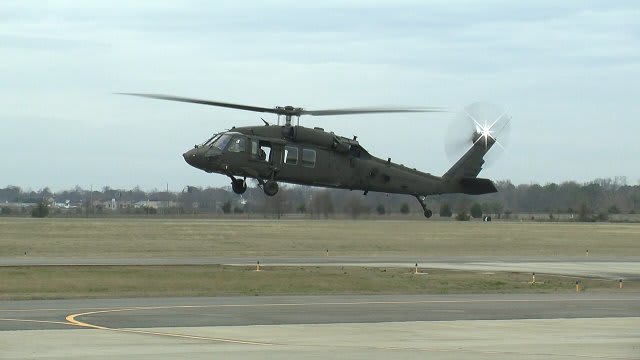
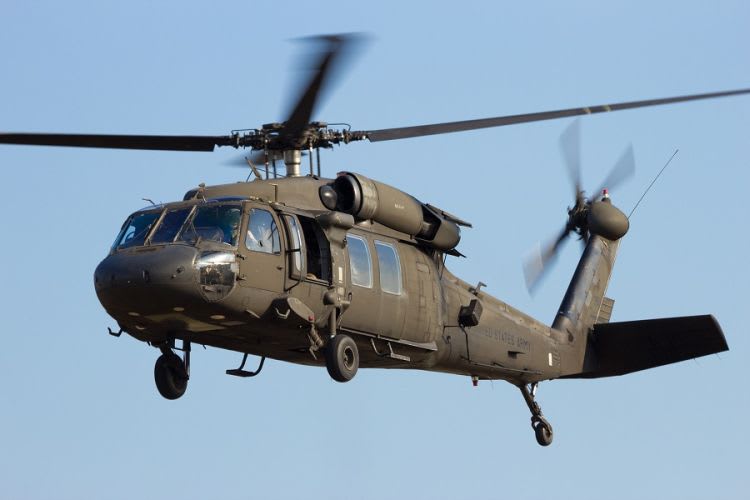
Army officials intend to upgrade the Black Hawk utility tactical transport helicopter from a UH-60L to a UH-60V by incorporating a modern, digital cockpit with such key capabilities as: an integrated global positioning system (GPS) navigation receiver and open system, as well as FACE-aligned software to enable the Army to implement new capabilities cheaper and faster.
"Compared to the UH-60L, the UH-60V will provide a significant operation upgrade to our Army Aviators," PEO Aviation's UH-60V product manager, Lt. Col. Andrew Duus. "The UH-60V replaces the analog gauges with multi-functional displays which allow for a moving map, improved situational awareness and reduced pilot workload.”
The modernization program has the potential to reduce obsolescence and increase commonality and interoperability, Army officials say.
Data was collected throughout the LUT, corroborated with onboard video and audio instrumentation, and subsequently used by an aviation test team from the U.S. Army Operational Test Command (USAOTC), which applied post-mission surveys and after-action reviews. The data supports an independent evaluation by the U.S. Army Evaluation Center, and informs a low-rate initial production decision by the Utility Helicopter Program Office.
USAOTC officials plan the initial operational test and evaluation for the UH-60V in late 2019.
AMRDEC, part of the U.S. Army Research, Development, and Engineering Command, develops technology and engineering solutions for America’s warfighters and employs nearly 11,000 civilian scientists, researchers, and engineers.
RDECOM, a major subordinate command of the U.S. Army Materiel Command, is the Army’s premier providers of materiel readiness – technology, acquisition support, materiel development, logistics power projection, and sustainment – to the total force, across the spectrum of joint military operations.
Courtney E. Howard is editorial director and content strategist at SAE International, Aerospace Products Group. Contact her by e-mail at
More From SAE Media Group
Aerospace & Defense Tech Briefs
Industry Invited to Participate in AeroTech Aerospace and Defense Technical Program
Aerospace & Defense Tech Briefs
Air Mobility Innovations Take Center Stage at Aerospace Systems and Technology Conference
Aerospace & Defense Tech Briefs
Bell Nexus Full-Scale Air Taxi Design Debuts, Taps Novel VTOL, Hybrid Propulsion, Energy Storage, and Avionics Technologies
Aerospace & Defense Tech Briefs
Connected Aircraft Technologies Benefit Manufacturers, Airlines, and Travelers
Aerospace & Defense Tech Briefs
Sikorsky’s Autonomous Black Hawk Helicopter Takes Flight
Aerospace & Defense Tech Briefs
Collins Aerospace Provides Avionics for C-130H Modernization Program
Aerospace & Defense Tech Briefs
L3 Makes Its C-130 Modernization Package Available to Global Operators
Aerospace & Defense Tech Briefs
AdaCore Boosts Support of Open Avionics Environments, Standards with FACE Consortium
Aerospace & Defense Tech Briefs
Curtiss-Wright Black Boxes Receive European Approval
Aerospace & Defense Tech Briefs
Lockheed Martin’s Next-Gen, 360-Degree Vision System Flies on the Bell V-280 Valor
Aerospace & Defense Tech Briefs
Quality Management Experts Provide Guidance on AS9100 Standard, Equipment Calibration
Aerospace & Defense Tech Briefs
SAE International Extends Call for Abstracts, Seeks Submissions for AeroTech Conference
Aerospace & Defense Tech Briefs
NASA Chooses CoreAVI Vulkan API for X-59 QueSST Supersonic, Low-Boom Aircraft
Aerospace & Defense Tech Briefs
Barker Approaches Aircraft as System of Systems in Latest SAE International Book
Off-Highway Engineering
Addressing Electromagnetic Compatibility in the Context of Aircraft Electrification
Aerospace & Defense Tech Briefs
General Atomics Moves Toward Global RPA Flight Certification for MQ-9B SkyGuardian
Aerospace & Defense Tech Briefs
Abaco’s FORCE2 Flight Computer Enables National and International Ground Control Station Certification
Aerospace & Defense Tech Briefs
AIA Predicts Flying Air Taxis, Supersonic Air Travel, and Space Industry for 2050
Aerospace & Defense Tech Briefs
Astronautics to Upgrade Cockpit Displays on U.S. Customs and Border Protection P-3 Orions
Aerospace & Defense Tech Briefs
Aireon to Launch Free, Real-Time Emergency Aircraft Location Service
Aerospace & Defense Tech Briefs
When It Comes to Fifth-Generation Assets, Air Force Values Virtual Training over Live Flying
Automotive Engineering
Nvidia Partners with AdaCore to Secure Self-Driving Firmware
Aerospace & Defense Tech Briefs
US Government Accountability Office Finds Gaps in Military Helicopter Mishap Data
Automotive Engineering
Will ‘Recalls’ Become ‘Upgrades’?
Aerospace & Defense Tech Briefs
SAE International Launches Aerospace Technology Symposium at Japan Aerospace 2018
Aerospace & Defense Tech Briefs
Connect Them All
Aerospace & Defense Tech Briefs
Avoiding EMI
Aerospace & Defense Tech Briefs
Automation Streamlines Accreditation to Speed Aerospace and Defense Technology Deployment
Aerospace & Defense Tech Briefs
SAE International Establishes a New AI Standards Committee at Le Bourget
Aerospace & Defense Tech Briefs
Collins Aerospace Taps Wind River Helix Virtualization Platform to Future-Proof Avionics
Top Stories
NewsSensors/Data Acquisition
 Microvision Aquires Luminar, Plans Relationship Restoration, Multi-industry Push
INSIDERRF & Microwave Electronics
 A Next Generation Helmet System for Navy Pilots
INSIDERWeapons Systems
 New Raytheon and Lockheed Martin Agreements Expand Missile Defense Production
NewsAutomotive
 Ford Announces 48-Volt Architecture for Future Electric Truck
INSIDERAerospace
 Active Strake System Cuts Cruise Drag, Boosts Flight Efficiency
ArticlesTransportation

Webcasts
Aerospace
 Cooling a New Generation of Aerospace and Defense Embedded...
Energy
 Battery Abuse Testing: Pushing to Failure
Power
 A FREE Two-Day Event Dedicated to Connected Mobility
Automotive
 Quiet, Please: NVH Improvement Opportunities in the Early Design Cycle
Electronics & Computers
 Advantages of Smart Power Distribution Unit Design for Automotive &...
Unmanned Systems
 Sesame Solar's Nanogrid Tech Promises Major Gains in Drone Endurance