




Collins Aerospace Taps Wind River Helix Virtualization Platform to Future-Proof Avionics

Future airspace will be filled with unmanned aircraft systems (UAS) or drones, commercial aircraft, helicopters, and more. Several prototypes are currently targeting urban air mobility (UAM) platforms, such as air taxis, and revolutionary aircraft models like next-generation commercial supersonic aircraft . Add to this autonomous swarm technologies, enabling manned-unmanned teaming, and systems for future vertical lift and it’s clear that the technology wave can easily become overwhelming.

Adopting new capabilities is crucial for maintaining market leadership and ensuring technological superiority, but it needs to be strategically mapped out to ensure overall affordability and minimized risk. This is especially important at the macro level, across programs. The challenge here is designing systems that remain relevant as technology progresses and market needs shift. The main objectives are to write once and reuse many times, upgrade without entirely redesigning the system, and prepare for the future even when it is largely unknown.
The aerospace industry faces unique challenges when it comes to coupling the promise of innovation with the culture of safety developed over many decades. While government regulators remain key for ensuring safety, the applications that the platform can host can be of different levels of certification and criticality.
Visit SAE International's Advanced Manufacturing Knowledge Hub to learn how Collins Aerospace is leveraging virtualization technologies -- including the Wind River Helix™ Virtualization Platform -- that are scalable, support the transition to heterogenous systems, and help aerospace manufacturers evolve business models to support new technology insertions, such as open source-based applications and new proprietary intellectual property (IP), while reusing legacy IP in new safety-critical systems.
More From SAE Media Group
Aerospace & Defense Tech Briefs
Air Mobility Innovations Take Center Stage at Aerospace Systems and Technology Conference
Aerospace & Defense Tech Briefs
Bell Nexus Full-Scale Air Taxi Design Debuts, Taps Novel VTOL, Hybrid Propulsion, Energy Storage, and Avionics Technologies
Aerospace & Defense Tech Briefs
SAE International Launches Aerospace Technology Symposium at Japan Aerospace 2018
Aerospace & Defense Tech Briefs
Battery Technology Is Still the Key Barrier to Better Urban Air Mobility
Aerospace & Defense Tech Briefs
Personal Air Transport Drives Need for Advanced VTOL Technologies, Standards
Aerospace & Defense Tech Briefs
Vertical Aerospace Is Honeywell’s Latest Partner in the UAM Industry

Aerospace & Defense Tech Briefs
Vertical Flight Society Applauds EVTOL Innovation, Bell Nexus UAM Concept
Aerospace & Defense Tech Briefs
Deloitte Issues Report on Viability of EVTOL UAM Transportation
Aerospace & Defense Tech Briefs
SAE International Extends Call for Abstracts, Seeks Submissions for AeroTech Conference
Aerospace & Defense Tech Briefs
First Airbus A330-800 Airliner Goes Airborne in Maiden Flight, Enters Flight Test Phase
Aerospace & Defense Tech Briefs
Industry Invited to Participate in AeroTech Aerospace and Defense Technical Program
Aerospace & Defense Tech Briefs
Abaco’s FORCE2 Flight Computer Enables National and International Ground Control Station Certification
Aerospace & Defense Tech Briefs
Curtiss-Wright Black Boxes Receive European Approval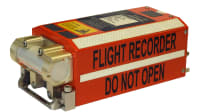
Aerospace & Defense Tech Briefs
CityAirbus Urban Air Mobility Vehicle Completes First Flight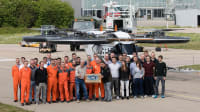
Aerospace & Defense Tech Briefs
The EVTOL Disruption Goes Viral
Aerospace & Defense Tech Briefs
Transport Canada Grants Astro Aerospace a Flight Test Certificate for Autonomous Urban Air Mobility Vehicle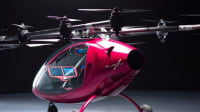

Aerospace & Defense Tech Briefs
Sikorsky’s Autonomous Black Hawk Helicopter Takes Flight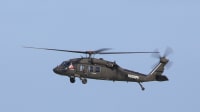
Aerospace & Defense Tech Briefs
GE Aviation’s AiRXOS Launches New Air Mobility Portfolio and Management Tools Purpose Built for the Urban Air Mobility Market

Aerospace & Defense Tech Briefs
Connected Aircraft Technologies Benefit Manufacturers, Airlines, and Travelers
Aerospace & Defense Tech Briefs
GoFly Prize Invites Innovators to Shape Future of Flight, Compete for $1.8M in Prizes
Aerospace & Defense Tech Briefs
Curtiss-Wright and Honeywell Team to Develop Cloud-Enabled Flight Recorders of the Future
Aerospace & Defense Tech Briefs
Connect Them All
Aerospace & Defense Tech Briefs
Like a Good Neighbor, Impossible Aerospace Flew over to a Nearby Construction Fire to Help Locate Hotspots for First Responders
Aerospace & Defense Tech Briefs
Boeing Debuts First Hypersonic Passenger Aircraft Concept
Aerospace & Defense Tech Briefs
US Army Tests Avionics in Effort to Upgrade Black Hawk Helicopters from Analog to Digital Glass Cockpit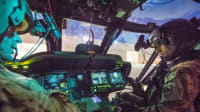
Aerospace & Defense Tech Briefs
SAE International Issues, Revises Technical Reports for Aerospace Engineering
Aerospace & Defense Tech Briefs
Barker Approaches Aircraft as System of Systems in Latest SAE International Book
Top Stories
NewsRF & Microwave Electronics
 Microvision Aquires Luminar, Plans Relationship Restoration, Multi-industry Push
INSIDERAerospace
 A Next Generation Helmet System for Navy Pilots
INSIDERDesign
 New Raytheon and Lockheed Martin Agreements Expand Missile Defense Production
INSIDERMaterials
 How Airbus is Using w-DED to 3D Print Larger Titanium Airplane Parts
NewsPower
 Ford Announces 48-Volt Architecture for Future Electric Truck
ArticlesAR/AI

Webcasts
Electronics & Computers
 Cooling a New Generation of Aerospace and Defense Embedded...
Automotive
 Battery Abuse Testing: Pushing to Failure
Power
 A FREE Two-Day Event Dedicated to Connected Mobility
Unmanned Systems
 Quiet, Please: NVH Improvement Opportunities in the Early Design Cycle
Automotive
 Advantages of Smart Power Distribution Unit Design for Automotive &...
Energy
 Sesame Solar's Nanogrid Tech Promises Major Gains in Drone Endurance