




Battery Technology Is Still the Key Barrier to Better Urban Air Mobility

During a panel session titled “Flying Cars – Will You Have One In Your Garage?” Mark Moore, former NASA engineer and current engineering director of aviation at Uber , recalled Orville Wright’s thoughts on aviation: that it can have a daily impact on our lives.
“We’re in a new age of Wright Brothers-like flight where there’s all sorts of new opportunities,” said Moore. “Some of these small companies are going to turn into future aerospace giants because they have the agility and the ability to execute and attract talent that big companies don’t have right now. We’re in a very exciting time of disruption in aerospace, especially in regard to the urban air mobility market.”
The potential of daily on-demand aviation in and around cities is a major goal of many aerospace start-ups, including those that participated in the panel at SAE International’s AeroTech Americas 2019 event in Charleston, South Carolina. Companies like Zeva Aero , Detroit Flying Cars , and Varon Vehicles , are continuing to develop various vehicle types, whether they generate lift during forward flight or use a multi-rotor vertical flight approach, to make widespread personal urban air mobility (UAM) a reality in the coming years.
When asked “What is the biggest challenge facing UAM?” most engineers agreed that battery technology is still the enabler and barrier.
William Kucinski is content editor at SAE International, Aerospace Products Group in Warrendale, Pa. Previously, he worked as a writer at the NASA Safety Center in Cleveland, Ohio and was responsible for writing the agency’s System Failure Case Studies. His interests include literally anything that has to do with space, past and present military aircraft, and propulsion technology.
Contact him regarding any article or collaboration ideas by e-mail at
More From SAE Media Group
Aerospace & Defense Tech Briefs
Astro’s Elroy Urban Air Mobility Vehicle to Get a New Stablemate This Summer
Aerospace & Defense Tech Briefs
Air Mobility Innovations Take Center Stage at Aerospace Systems and Technology Conference
Aerospace & Defense Tech Briefs
GE Aviation’s AiRXOS Launches New Air Mobility Portfolio and Management Tools Purpose Built for the Urban Air Mobility Market


Aerospace & Defense Tech Briefs
Personal Air Transport Drives Need for Advanced VTOL Technologies, Standards
Aerospace & Defense Tech Briefs
Vertical Flight Society Applauds EVTOL Innovation, Bell Nexus UAM Concept
Aerospace & Defense Tech Briefs
CityAirbus Urban Air Mobility Vehicle Completes First Flight
Aerospace & Defense Tech Briefs
Vertical Aerospace Is Honeywell’s Latest Partner in the UAM Industry
Aerospace & Defense Tech Briefs
Deloitte Issues Report on Viability of EVTOL UAM Transportation
Aerospace & Defense Tech Briefs
Bell Nexus Full-Scale Air Taxi Design Debuts, Taps Novel VTOL, Hybrid Propulsion, Energy Storage, and Avionics Technologies
Aerospace & Defense Tech Briefs
AIA Predicts Flying Air Taxis, Supersonic Air Travel, and Space Industry for 2050
Aerospace & Defense Tech Briefs
Transport Canada Grants Astro Aerospace a Flight Test Certificate for Autonomous Urban Air Mobility Vehicle
Aerospace & Defense Tech Briefs
SAE International Extends Call for Abstracts, Seeks Submissions for AeroTech Conference
Aerospace & Defense Tech Briefs
Air Force Tests Fully Autonomous UAS Control System

Aerospace & Defense Tech Briefs
Collins Aerospace Taps Wind River Helix Virtualization Platform to Future-Proof Avionics
Aerospace & Defense Tech Briefs
Like a Good Neighbor, Impossible Aerospace Flew over to a Nearby Construction Fire to Help Locate Hotspots for First Responders
Aerospace & Defense Tech Briefs
Honeywell Acquires TruTrak and Expands General Aviation Avionics Portfolio
Aerospace & Defense Tech Briefs
Boeing’s CAV Makes First Outdoor Flight
Aerospace & Defense Tech Briefs
Abaco’s FORCE2 Flight Computer Enables National and International Ground Control Station Certification
Aerospace & Defense Tech Briefs
Industry Invited to Participate in AeroTech Aerospace and Defense Technical Program
Aerospace & Defense Tech Briefs
OXIS Energy and Bye Aerospace Partner to Develop Advanced Lithium Sulfur Battery Cells for Aviation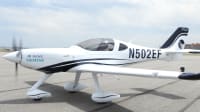
Aerospace & Defense Tech Briefs
Impossible Aerospace US-1 Makes Long-Distance Flight over Nevada Salt Flats
Aerospace & Defense Tech Briefs
Bye Aerospace’s Sun Flyer Is Now the “EFlyer”
Aerospace & Defense Tech Briefs
AirMap and Skyguide Deploy Swiss National Flight Information Management System for Drones
Aerospace & Defense Tech Briefs
Connected Aircraft Technologies Benefit Manufacturers, Airlines, and Travelers
Aerospace & Defense Tech Briefs
New Zealand Will Become a Testbed for Airbus Unmanned Aircraft and Space Technology
Aerospace & Defense Tech Briefs
Curtiss-Wright Black Boxes Receive European Approval
Aerospace & Defense Tech Briefs
F-35 and F-16 Ground Collision Avoidance Software Team Takes Collier Trophy
Top Stories
NewsRF & Microwave Electronics
 Microvision Aquires Luminar, Plans Relationship Restoration, Multi-industry Push
INSIDERAerospace
 A Next Generation Helmet System for Navy Pilots
INSIDERDesign
 New Raytheon and Lockheed Martin Agreements Expand Missile Defense Production
INSIDERMaterials
 How Airbus is Using w-DED to 3D Print Larger Titanium Airplane Parts
NewsPower
 Ford Announces 48-Volt Architecture for Future Electric Truck
ArticlesAR/AI

Webcasts
Electronics & Computers
 Cooling a New Generation of Aerospace and Defense Embedded...
Automotive
 Battery Abuse Testing: Pushing to Failure
Power
 A FREE Two-Day Event Dedicated to Connected Mobility
Unmanned Systems
 Quiet, Please: NVH Improvement Opportunities in the Early Design Cycle
Automotive
 Advantages of Smart Power Distribution Unit Design for Automotive &...
Energy
 Sesame Solar's Nanogrid Tech Promises Major Gains in Drone Endurance