




Boeing’s CAV Makes First Outdoor Flight
The autonomous cargo air vehicle is designed to transport up to 500 pounds using electric propulsion.

Boeing has successfully completed the first outdoor flight test of its electric vertical takeoff and landing (eVTOL) cargo air vehicle (CAV). The unmanned aerial vehicle (UAV) operated in a safe and controlled environment, successfully took off, hovered, transitioned to forward flight, and then landed safely.
Initially unveiled in 2018, the CAV has evolved from an initial concept built in three months by fifty engineers to a prototype air vehicle. Powered by 12 propellers in a six dual-rotor arrangement, the CAV is designed to carry a payload up to 500 pounds.
William Kucinski is content editor at SAE International, Aerospace Products Group in Warrendale, Pa. Previously, he worked as a writer at the NASA Safety Center in Cleveland, Ohio and was responsible for writing the agency’s System Failure Case Studies. His interests include literally anything that has to do with space, past and present military aircraft, and propulsion technology.
Contact him regarding any article or collaboration ideas by e-mail at
More From SAE Media Group
Aerospace & Defense Tech Briefs
Transport Canada Grants Astro Aerospace a Flight Test Certificate for Autonomous Urban Air Mobility Vehicle
Aerospace & Defense Tech Briefs
CityAirbus Urban Air Mobility Vehicle Completes First Flight
Aerospace & Defense Tech Briefs
Astro’s Elroy Urban Air Mobility Vehicle to Get a New Stablemate This Summer
Aerospace & Defense Tech Briefs
Alakai Technologies Unveils the World’s First Hydrogen-Powered Urban Air Mobility Vehicle
Aerospace & Defense Tech Briefs
Like a Good Neighbor, Impossible Aerospace Flew over to a Nearby Construction Fire to Help Locate Hotspots for First Responders
Aerospace & Defense Tech Briefs
Deloitte Issues Report on Viability of EVTOL UAM Transportation
Aerospace & Defense Tech Briefs
Vertical Aerospace Is Honeywell’s Latest Partner in the UAM Industry
Aerospace & Defense Tech Briefs
LIFT Aircraft Unveils Personal Multirotor Aircraft for Experiential Entertainment
Aerospace & Defense Tech Briefs
Impossible Aerospace US-1 Makes Long-Distance Flight over Nevada Salt Flats

Aerospace & Defense Tech Briefs
MTSI’s Latest Project Gives Fixed-Wing Aircraft Vertical Cargo Lift Capabilities
Aerospace & Defense Tech Briefs
Air Force Tests Fully Autonomous UAS Control System
Aerospace & Defense Tech Briefs
AirMap and Skyguide Deploy Swiss National Flight Information Management System for Drones
Aerospace & Defense Tech Briefs
Boeing Aerospace & Autonomy Center to Focus on Designing, Building, Flying Autonomous Aircraft
Aerospace & Defense Tech Briefs
Boeing, SparkCognition Partner on Safe Integration of Autonomous Air Vehicles in Airspace
Aerospace & Defense Tech Briefs
Honeywell Targets Urban Air Mobility Market with New Hybrid Turboshaft Engine
Automotive Engineering
Boeing Completes Autonomous Synchronized Flight Tests in Australia
Automotive Engineering
Wing’s UAS Delivery Service Has FAA Certification
Aerospace & Defense Tech Briefs
Dart Aerospace’s Latest Emergency Float System Receives Certification in the U.S. and Europe
Aerospace & Defense Tech Briefs
Vertical Flight Society Applauds EVTOL Innovation, Bell Nexus UAM Concept
Aerospace & Defense Tech Briefs
UAV Turbines Designs Purpose-Built Microturbine Engine for Class 3 and 4 UAVs
Aerospace & Defense Tech Briefs
Lockheed Martin and Drone Racing League Pit AI-Enabled UAS Against Human Pilots

Aerospace & Defense Tech Briefs
Battery Technology Is Still the Key Barrier to Better Urban Air Mobility
Aerospace & Defense Tech Briefs
Boeing Unveils New Unmanned Cargo Air Vehicle Prototype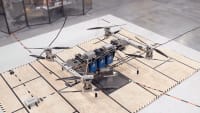
Aerospace & Defense Tech Briefs
Dragonfly Will Be NASA’s Next Solar System Explorer
Automotive Engineering
DIN and SAE International Release a Primer for Automated Vehicle Terminology
Aerospace & Defense Tech Briefs
Raytheon, UTC Merger Will Direct $8B R&D Budget Toward Hypersonics, Cybersecurity, AI, and Next-Gen Connected Aircraft
Top Stories
NewsRF & Microwave Electronics
 Microvision Aquires Luminar, Plans Relationship Restoration, Multi-industry Push
INSIDERAerospace
 A Next Generation Helmet System for Navy Pilots
INSIDERDesign
 New Raytheon and Lockheed Martin Agreements Expand Missile Defense Production
INSIDERMaterials
 How Airbus is Using w-DED to 3D Print Larger Titanium Airplane Parts
NewsPower
 Ford Announces 48-Volt Architecture for Future Electric Truck
ArticlesAR/AI

Webcasts
Electronics & Computers
 Cooling a New Generation of Aerospace and Defense Embedded...
Automotive
 Battery Abuse Testing: Pushing to Failure
Power
 A FREE Two-Day Event Dedicated to Connected Mobility
Unmanned Systems
 Quiet, Please: NVH Improvement Opportunities in the Early Design Cycle
Automotive
 Advantages of Smart Power Distribution Unit Design for Automotive &...
Energy
 Sesame Solar's Nanogrid Tech Promises Major Gains in Drone Endurance