




Cepton Technology’s Newest Highspeed Lidar Sensor Can Spot a Tow Hitch on a Vehicle Traveling 50 Miles per Hour
The SORA P60 lidar sensor pairs with SORA-Edge computing hardware to send vehicle and environment data over Ethernet, Wi-Fi or 4G LTE to a central processing server.

Cepton Technologies, Inc. , a San Jose, California-based 3D lidar developer, has added a line scanning lidar (light detection and ranging) sensors to its SORA line-up for autonomous vehicles. The SORA-P60 uses Cepton’s Micro-Motion Technology (MMT) to achieve an industry leading 1,200 scan lines per second, to provide accurate 3D scans and to enable automated classification of objects and volumetric scanning. The sensor is currently installed at an undisclosed highway tolling facility in the United States.
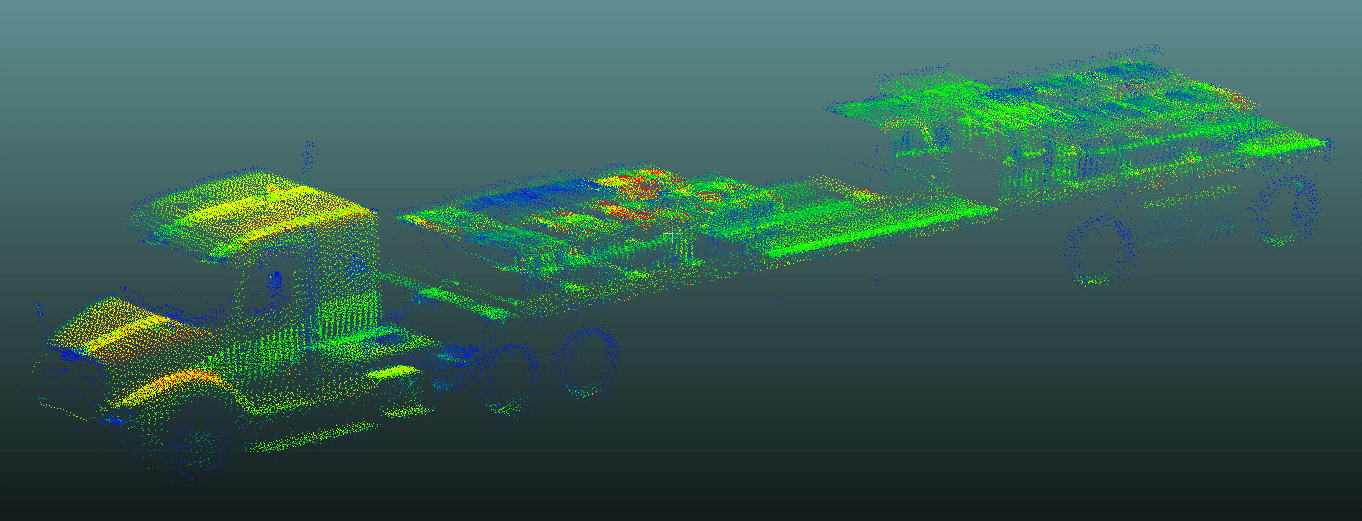

When combined with Cepton’s edge-computing hardware, SORA-Edge, the new SORA-P60 lidar sensor becomes a powerful, mobile object classification and volumetric measurement device which can send vehicle and environment data over Ethernet, Wi-Fi or 4G LTE to a central processing server. This technology opens up the possibility of scanning fast moving objects, both for automotive and aerospace applications.
Active electro-optical sensors, or lidar technology, is a fast-moving business area for self-driving car and unmanned aerial vehicle (UAV) markets, enabling adaptive drive assistance systems (ADAS) for automatic driving and vehicle protection systems.
There are still many unsettled areas regarding sensor design and automated driving. One major concern is the standardization of tests and procedures for verifying, simulating, and calibrating these automated driving sensors. This topic and more are covered in detail in SAE International’s SAE EDGE™ Research Report: Unsettled Topics Concerning Sensors for Automated Road Vehicles.
William Kucinski is content editor at SAE International, Aerospace Products Group in Warrendale, Pa. Previously, he worked as a writer at the NASA Safety Center in Cleveland, Ohio and was responsible for writing the agency’s System Failure Case Studies. His interests include literally anything that has to do with space, past and present military aircraft, and propulsion technology.
Contact him regarding any article or collaboration ideas by e-mail at
More From SAE Media Group
Automotive Engineering
Nvidia’s New Level 2+ Autonomy Platform Is Making Cars Safer Today

Automotive Engineering
Part Two of the SAE International AutoDrive Challenge Kicks off Today
Off-Highway Engineering
DENSO Boosts Its Mobility-As-A-Service and Connected Technologies with New Seattle R&D Lab
Automotive Engineering
Automated Vehicle Safety Series Addresses Design, Testing, Verification, and Validation

Off-Highway Engineering
Beep and Bestmile Partner on Self-Driving Fleets in Florida
Off-Highway Engineering
USPS Tests Autonomous Semi-Trailers for Long-Haul Mail Logistics
Off-Highway Engineering
MOBI Rolls out the First Blockchain-Enabled Vehicle Identity (VID) Mobility Standard

Automotive Engineering
Elektrobit Lends Software to Baidu’s Apollo Autonomous Driving Project
Aerospace & Defense Tech Briefs
DARPA’s Latest Drone Swarm Sprint Focuses on Virtual Environments
Off-Highway Engineering
Peloton Develops a Level 4 Automated Platooning System, but Keeps the Driver in Charge
Off-Highway Engineering
WCX 2019: IAMTS Association Will Establish Standardization and Testing for Connected Vehicles
Autonomous Vehicle Engineering
Data Drives Driverless Truck Launch
Autonomous Vehicle Engineering
The ‘Buzz’ in Driverless Shuttling
Automotive Engineering
Valeo Debuts New Lidars, EV Tech at CES 2022
Aerospace & Defense Tech Briefs
Curtiss-Wright Black Boxes Receive European Approval
Off-Highway Engineering
Europe’s Blockchain-Based Smart E-Mobility Challenge Will Conclude This May in Germany

Aerospace & Defense Tech Briefs
AIA Predicts Flying Air Taxis, Supersonic Air Travel, and Space Industry for 2050
Off-Highway Engineering
Argus Makes Fleet Protection Cybersecurity Available to Both Automotive and Aircraft Fleets
ADAS & Autonomous Vehicle Engineering
AV Life After Argo AI
Off-Highway Engineering
ZF Advancing ADAS, Autonomy with Next-Gen Sensors
Autonomous Vehicle Engineering
New Roles for Lidar in Autonomy’s Lower Levels
Aerospace & Defense Tech Briefs
Martin UAV VTOL Unmanned Aircraft Taps Persistent Systems Wave Relay Data Link Technology

Automotive Engineering
New R&D Boss Details RoboSense’s LiDAR Strategy
Automotive Engineering
DIN and SAE International Release a Primer for Automated Vehicle Terminology
Top Stories
NewsRF & Microwave Electronics
 Microvision Aquires Luminar, Plans Relationship Restoration, Multi-industry Push
INSIDERAerospace
 A Next Generation Helmet System for Navy Pilots
INSIDERDesign
 New Raytheon and Lockheed Martin Agreements Expand Missile Defense Production
INSIDERMaterials
 How Airbus is Using w-DED to 3D Print Larger Titanium Airplane Parts
NewsPower
 Ford Announces 48-Volt Architecture for Future Electric Truck
ArticlesAR/AI

Webcasts
Electronics & Computers
 Cooling a New Generation of Aerospace and Defense Embedded...
Automotive
 Battery Abuse Testing: Pushing to Failure
Power
 A FREE Two-Day Event Dedicated to Connected Mobility
Unmanned Systems
 Quiet, Please: NVH Improvement Opportunities in the Early Design Cycle
Automotive
 Advantages of Smart Power Distribution Unit Design for Automotive &...
Energy
 Sesame Solar's Nanogrid Tech Promises Major Gains in Drone Endurance