




NASA Chooses CoreAVI Vulkan API for X-59 QueSST Supersonic, Low-Boom Aircraft
NASA will use CoreAVI’s VkCore SC to help develop and deploy NASA’s windowless cockpit display system, the eXternal Vision System (XVS), which replaces the pilot’s front window view with leading-edge sensor display technology.

Aerospace engineers at NASA Langley Research Center in Hampton, Virginia, working on the NASA X-59 Quiet SuperSonic Technology (QueSST) aircraft in collaboration with Lockheed Martin engineers sought a safety-critical compute application programming interface (API) that supports safety certifications and powerful graphics and compute capabilities.
They chose the VkCore SC safety-critical Vulkan driver from Core Avionics & Industrial Inc. ( CoreAVI ) in Tampa, Fla., for deployment into the X-59 supersonic aircraft in concert with the VxWorks 7 real-time operating system (RTOS) from Wind River , a provider of embedded software for intelligent connected systems and part of Intel Corp., in Alameda, Calif.
The X-59 experimental aircraft, part of NASA’s Low-Boom Flight Demonstration mission, will achieve supersonic speeds and significantly reduce the noise generated by a sonic boom. NASA has contracted Lockheed Martin in Bethesda, Md., to build the X-59 supersonic aircraft.
CoreAVI’s VkCore SC is designed for RTCA DO-178C/ED-12C Design Assurance Level (DAL) A certification and available with complete certification evidence, officials say. It offers flexible, powerful graphics and compute capabilities in one driver, and will incorporate CoreAVI’s TrueCore 2.0 Safety Monitor to ensure the health and integrity of the system’s GPU and support the GPU’s certification to the highest DAL levels, they add.
NASA will use CoreAVI’s VkCore SC to help develop and deploy NASA’s windowless cockpit display system, the eXternal Vision System (XVS), which replaces the pilot’s front window view with leading-edge sensor display technology. Vulkan capabilities will help enable advanced synthetic vision, object detection, and various sensor fusion capabilities.
“The X-59 QueSST will represent state-of-the-art technology in supersonic aircraft,” NASA Aerospace Engineer Trey Arthur explains. “Working with CoreAVI gives us an opportunity to build the latest in safety-critical graphics and computing technologies into the X-59.”
“VkCore SC is the future of safety-critical graphics,” says Dan Joncas, executive vice president of sales and marketing at CoreAVI. “CoreAVI is excited to provide NASA and Lockheed Martin with all the graphics and compute tools to enable their eXternal Vision System in this innovative and revolutionary platform.”
"I’m confident that the contributions the X-59 QueSST will make to our nation and the world will ensure its place among the greatest NASA X-planes ever flown,” says Jaiwon Shin, NASA’s associate administrator for aeronautics.
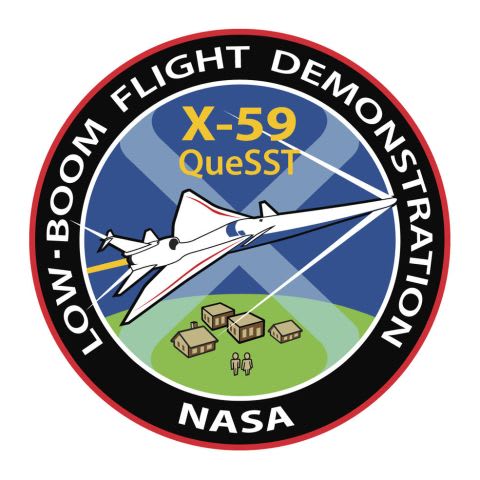
Now under construction by Lockheed Martin Aeronautics Company at its Skunk Works plant in Palmdale, Calif., the X-59 QueSST is designed so that when flying supersonic, people on the ground will hear nothing more than a sonic thump – if anything at all.
Once fully tested and pronounced safe to fly within the National Airspace, the X-59 in late 2022 will begin making supersonic flights over select communities to measure residents’ reactions to any noise they might hear.
The scientifically valid data gathered from these community overflights will be presented to U.S. and international regulators, who will use the information to help them come up with rules based on noise levels that enable new commercial markets for supersonic flight over land.
Core Avionics & Industrial Inc. (CoreAV"), a Channel One company, is a global provider of products and services designed to enable complete solutions for safety-critical applications. A supplier of real-time and safety-critical graphics and video drivers, compute drivers, "program-ready" embedded graphics processors, and DO-254/ED-80 certifiable commercial off-the-shelf (COTS) hardware intellectual property (IP), CoreAVI’s suite of products enables commercial graphics processing units (GPUs), system on chip (SoC) components, and COTS hardware designs to meet the requirements of long-term, high-reliability and safety-critical embedded systems with long-term support. CoreAVI’s products may be purchased with certification data kits for the most stringent levels of RTCA DO-254/DO-178C and EUROCAE ED-80/ED-12C.
Courtney E. Howard is editorial director and content strategist at SAE International, Aerospace Products Group. Contact her by e-mail at
More From SAE Media Group
Aerospace & Defense Tech Briefs
Collins Aerospace Will Provide Avionics and Synthetic Vision for the Supersonic X-59 QueSST
Aerospace & Defense Tech Briefs
US Army Tests Avionics in Effort to Upgrade Black Hawk Helicopters from Analog to Digital Glass Cockpit
Aerospace & Defense Tech Briefs
Aerion and Honeywell Collaborate on Revolutionary Flight Deck for Supersonic Bizjet
Aerospace & Defense Tech Briefs
L3 Makes Its C-130 Modernization Package Available to Global Operators
Aerospace & Defense Tech Briefs
Collins Aerospace Provides Avionics for C-130H Modernization Program
Aerospace & Defense Tech Briefs
Connected Aircraft Technologies Benefit Manufacturers, Airlines, and Travelers
Aerospace & Defense Tech Briefs
Industry Invited to Participate in AeroTech Aerospace and Defense Technical Program
Aerospace & Defense Tech Briefs
Abaco’s FORCE2 Flight Computer Enables National and International Ground Control Station Certification
Aerospace & Defense Tech Briefs
Curtiss-Wright Black Boxes Receive European Approval
Aerospace & Defense Tech Briefs
Air Mobility Innovations Take Center Stage at Aerospace Systems and Technology Conference
Aerospace & Defense Tech Briefs
BendixKing and Airwork Are Developing Cockpit Upgrades for the Often Overlooked Small- and Medium-Sized Helicopter Market

Aerospace & Defense Tech Briefs
General Atomics Moves Toward Global RPA Flight Certification for MQ-9B SkyGuardian

Aerospace & Defense Tech Briefs
Collins Aerospace Brings Next Gen Avionics to Portuguese C-130s
Automotive Engineering
Wind River, Collins Aerospace Explore the Future of AI/ML in Avionics
Aerospace & Defense Tech Briefs
Gulfstream G500 Earns FAA Type and Production Certificates
Aerospace & Defense Tech Briefs
Avoiding EMI
Aerospace & Defense Tech Briefs
FAA Certifies AeroVonics' Economical Avionics Upgrade for Light General Aviation Aircraft
Aerospace & Defense Tech Briefs
Lockheed Martin’s Next-Gen, 360-Degree Vision System Flies on the Bell V-280 Valor
Aerospace & Defense Tech Briefs
Aerion Taps Siemens’ Xcelerator Portfolio to Enable Next-Generation Global Transportation Networks
Aerospace & Defense Tech Briefs
Video Graphics Modules
Aerospace & Defense Tech Briefs
NASA to Test Quiet Thump Supersonic Propulsion Technique, Measure Sound Levels and Community Response
Aerospace & Defense Tech Briefs
NASA’s Next X-Plane Passes Major Review
Aerospace & Defense Tech Briefs
Textron Systems, Textron Aviation Defense Demonstrate Simulated Manned-Unmanned Teaming Capability
Aerospace & Defense Tech Briefs
Curtiss-Wright and Honeywell Team to Develop Cloud-Enabled Flight Recorders of the Future
Aerospace & Defense Tech Briefs
Astronautics to Upgrade Cockpit Displays on U.S. Customs and Border Protection P-3 Orions
Aerospace & Defense Tech Briefs
Bell Nexus Full-Scale Air Taxi Design Debuts, Taps Novel VTOL, Hybrid Propulsion, Energy Storage, and Avionics Technologies
Aerospace & Defense Tech Briefs
FLYHT and Spectralux Avionics Integrate Systems to Deliver FANS-Over-Iridium Satellite Communications to Airlines
Aerospace & Defense Tech Briefs
Lockheed Martin Skunk Works Begins Manufacturing X-59 Supersonic Aircraft Parts
Top Stories
NewsRF & Microwave Electronics
 Microvision Aquires Luminar, Plans Relationship Restoration, Multi-industry Push
INSIDERAerospace
 A Next Generation Helmet System for Navy Pilots
INSIDERDesign
 New Raytheon and Lockheed Martin Agreements Expand Missile Defense Production
INSIDERMaterials
 How Airbus is Using w-DED to 3D Print Larger Titanium Airplane Parts
NewsPower
 Ford Announces 48-Volt Architecture for Future Electric Truck
ArticlesAR/AI

Webcasts
Electronics & Computers
 Cooling a New Generation of Aerospace and Defense Embedded...
Automotive
 Battery Abuse Testing: Pushing to Failure
Power
 A FREE Two-Day Event Dedicated to Connected Mobility
Unmanned Systems
 Quiet, Please: NVH Improvement Opportunities in the Early Design Cycle
Automotive
 Advantages of Smart Power Distribution Unit Design for Automotive &...
Energy
 Sesame Solar's Nanogrid Tech Promises Major Gains in Drone Endurance