




US Government Accountability Office Finds Gaps in Military Helicopter Mishap Data
The GAO found three areas of concern regarding data handling that has hindered the Department of Defense’s ability to analyze mishap data and provide service wide corrective actions.
This month, during an ongoing review of military training for rotary-wing aircraft, the US Government Accountability Office (GAO) published a report highlighting gaps in the Department of Defense’s (DoD’s) approach for collecting, reporting, and analyzing aviation mishap data to inform aviation risk-management decisions.
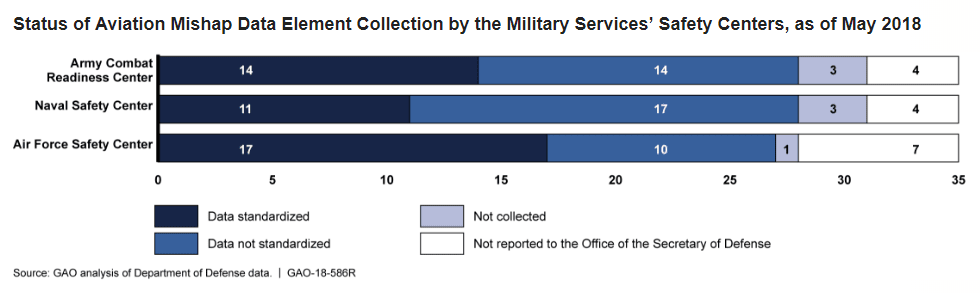
According to the DoD, an aviation mishap is an unplanned event or series of events involving DoD aircraft or military flight operations that result in damage to DoD or public property on illness or injury to military, civilian, or non-DoD personnel caused by DoD activities. During the review, the GAO audited mishap data collected by the Army Combat Readiness Center, the Naval Safety Center – which manages Marine Corps aviation safety, and the Air Force Safety Center (safety centers) and shared with the Office of the Secretary of Defense (OSD). The GAO also learned during the review that the DoD is considering reorganizing certain policy and oversight functions related to aviation mishaps.
Non-standardized mishap data
In conflict with current DoD instruction, the GAO specifically found that the safety centers did not collect standardized data as part of their mishap investigations and, depending on the service branch, the safety centers only collected 10 to 17 of the 35 data elements required by the OSD, with those missing data elements either unaccounted for or collected in a non-standard format.
According to officials, the safety centers utilize separate, service-specific data systems that evolved independently over time to collect data to meet the unique requirements for each military service and developed and upgrade their data systems over time based on individual service branch needs. Some safety centers pointed to upgrade delays affecting their compliance.
No consensus on reporting causal factors
This same lack of consensus led the safety centers to not report all agreed-upon data elements to OSD, including the causal factors related to aviation mishaps. The disagreement between the safety centers and OSD on data also included the reporting of contributing human factors, such as mental awareness, that may have caused mishaps.
According to OSD officials, because of the lack of reporting, the OSD has been unable to conduct analysis on patterns in human factors – including those that may “cross cut,” or have an impact on more than one, military service.
Inconsistent training data
Further – while recent studies suggest that training shortfalls are a potential indicator of aviation mishap trends – the safety centers do not consistently report, nor does the DoD consistently collect and analyze training data from all mishap investigations, such the pilot’s recent flying experience or training proficiency in the task or mission performed during the mishap.
Moving forward
The DoD is limited in its ability to compare mishap data across the military services and has had limited access to mishap causal data. According to the GAO, this further limits DoD’s ability to conduct analyses on patterns in mishaps that apply across the military services.
The GAO made three recommendations for the safety centers and DoD, including take interim steps to ensure that standardized aviation mishap data elements are collected by the safety centers; update department-wide and service instructions and policies to clarify the responsibility of the OSD for conducting analysis and its access to the military services’ information on human factors that contributed to aviation mishaps; and identify relevant training-related data to collect as part of any update of the aviation mishap data elements and incorporate these data into future analyses.
The GAO’s final report, expected in early 2019, will include information related to rotary-wing aviation mishaps, along with any additional findings.
William Kucinski is content editor at SAE International, Aerospace Products Group in Warrendale, Pa. Previously, he worked as a writer at the NASA Safety Center in Cleveland, Ohio and was responsible for writing the agency’s System Failure Case Studies. His interests include 'literally anything that has to do with space,' past and present military aircraft, and propulsion technology. And also sportscars.
Contact him regarding any article or collaboration ideas by e-mail at
More From SAE Media Group
Aerospace & Defense Tech Briefs
Curtiss-Wright and Honeywell Team to Develop Cloud-Enabled Flight Recorders of the Future
Aerospace & Defense Tech Briefs
Aireon to Launch Free, Real-Time Emergency Aircraft Location Service
Aerospace & Defense Tech Briefs
Lockheed Martin’s Next-Gen, 360-Degree Vision System Flies on the Bell V-280 Valor
Aerospace & Defense Tech Briefs
Curtiss-Wright Black Boxes Receive European Approval
Aerospace & Defense Tech Briefs
Sikorsky’s Autonomous Black Hawk Helicopter Takes Flight
Aerospace & Defense Tech Briefs
NASA Crash Landing Is a Complete Success
Aerospace & Defense Tech Briefs
SAE International Extends Call for Abstracts, Seeks Submissions for AeroTech Conference
Automotive Engineering
Airbus’ Connected Cabin Concept Is Materializing with First Round of Partnerships
Aerospace & Defense Tech Briefs
US Army Tests Avionics in Effort to Upgrade Black Hawk Helicopters from Analog to Digital Glass Cockpit
Aerospace & Defense Tech Briefs
When It Comes to Fifth-Generation Assets, Air Force Values Virtual Training over Live Flying
Aerospace & Defense Tech Briefs
AIA Predicts Flying Air Taxis, Supersonic Air Travel, and Space Industry for 2050
Aerospace & Defense Tech Briefs
Industry Invited to Participate in AeroTech Aerospace and Defense Technical Program
Aerospace & Defense Tech Briefs
Gaming Tech Helps Apache Maintainers Reduce Training Time
Aerospace & Defense Tech Briefs
General Atomics Moves Toward Global RPA Flight Certification for MQ-9B SkyGuardian
Aerospace & Defense Tech Briefs
Sikorsky, Boeing Debut Future Vertical Lift Dual-Rotor Design with SB>1 DEFIANT Helicopter
Aerospace & Defense Tech Briefs
GE Aviation, Teradata Partner on Data Analytics, Edge Connectivity for Airlines
Aerospace & Defense Tech Briefs
SAE International Launches Aerospace Technology Symposium at Japan Aerospace 2018
Aerospace & Defense Tech Briefs
SAE International Establishes a New AI Standards Committee at Le Bourget
Aerospace & Defense Tech Briefs
SAE Course Delivers an Introduction to the Latest Aviation Cybersecurity Essentials
Aerospace & Defense Tech Briefs
Airbus Aerial Harnesses Satellites, UAS, Helicopters, Data Analytics, and AI to Support Hurricane Recovery Efforts
Aerospace & Defense Tech Briefs
L3 Makes Its C-130 Modernization Package Available to Global Operators
Aerospace & Defense Tech Briefs
Aitech Defense Will Provide Data Interface Technology for Boeing’s Unmanned MQ-25 Refueling Platform
Aerospace & Defense Tech Briefs
Abaco’s FORCE2 Flight Computer Enables National and International Ground Control Station Certification
Aerospace & Defense Tech Briefs
Connected Aircraft Technologies Benefit Manufacturers, Airlines, and Travelers
Aerospace & Defense Tech Briefs
Airlines for America and SAE International Recognize Lufthansa Technik, 3D.aero for Nondestructive Testing Innovation
Aerospace & Defense Tech Briefs
SAE International Issues, Revises Technical Reports for Aerospace Engineering
Aerospace & Defense Tech Briefs
Curtiss-Wright Will Provide Data Technology Support for Boeing’s MQ-25 Unmanned Air Refueling Platform
Aerospace & Defense Tech Briefs
Dart Aerospace’s Latest Emergency Float System Receives Certification in the U.S. and Europe
Aerospace & Defense Tech Briefs
Sikorsky-Boeing’s FVL Contender Takes Flight
Aerospace & Defense Tech Briefs
NATS Will Test AI at Heathrow to Reduce Weather-Related Flight Delays
Top Stories
NewsSensors/Data Acquisition
 Microvision Aquires Luminar, Plans Relationship Restoration, Multi-industry Push
INSIDERRF & Microwave Electronics
 A Next Generation Helmet System for Navy Pilots
INSIDERWeapons Systems
 New Raytheon and Lockheed Martin Agreements Expand Missile Defense Production
NewsAutomotive
 Ford Announces 48-Volt Architecture for Future Electric Truck
INSIDERAerospace
 Active Strake System Cuts Cruise Drag, Boosts Flight Efficiency
ArticlesTransportation

Webcasts
Aerospace
 Cooling a New Generation of Aerospace and Defense Embedded...
Energy
 Battery Abuse Testing: Pushing to Failure
Power
 A FREE Two-Day Event Dedicated to Connected Mobility
Automotive
 Quiet, Please: NVH Improvement Opportunities in the Early Design Cycle
Electronics & Computers
 Advantages of Smart Power Distribution Unit Design for Automotive &...
Unmanned Systems
 Sesame Solar's Nanogrid Tech Promises Major Gains in Drone Endurance