




The CH-7: China’s Latest Unmanned Combat Air Vehicle
Currently under development, the China Aerospace Science and Technology Corporation Cai Hong 7 pays homage to unmanned aerial vehicle design of the recent past
[This Friday post is part of our “Composite coverage: real lightweight stuff” series and a departure from SAE International’s traditional reporting approach. Let us know if you like our fun, conversational, and most likely irreverent coverage of legitimate news and notable events.]
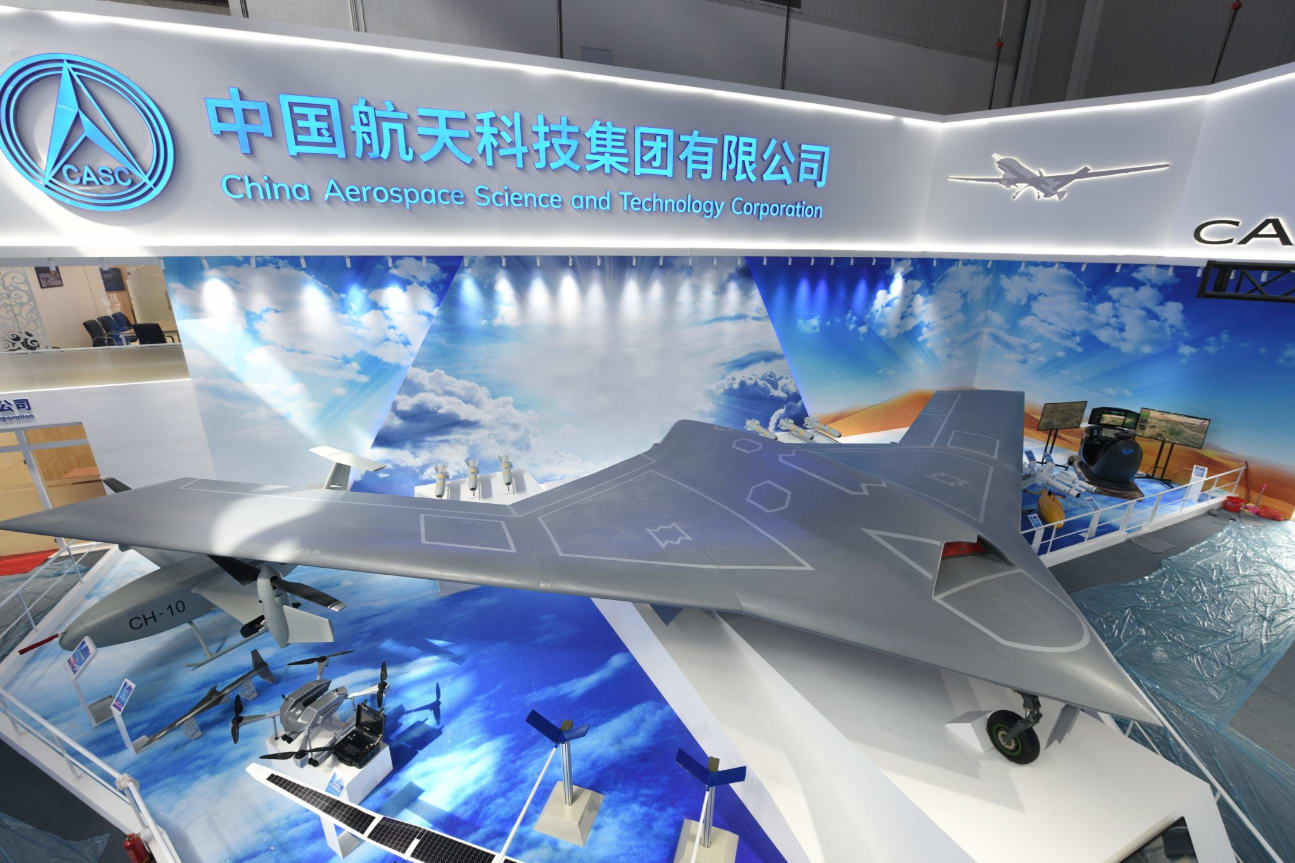
The China International Aviation & Aerospace Exhibition held in Zhuhai, commonly known as Airshow China, is the country’s go-to event for debuting the their latest military and aerospace hardware. One those aircraft debuts – which might look familiar to engineers at Northrop Grumman – is the China Aerospace Science and Technology Corporation (CASC) Cai Hong 7 unmanned combat air vehicle (UCAV).
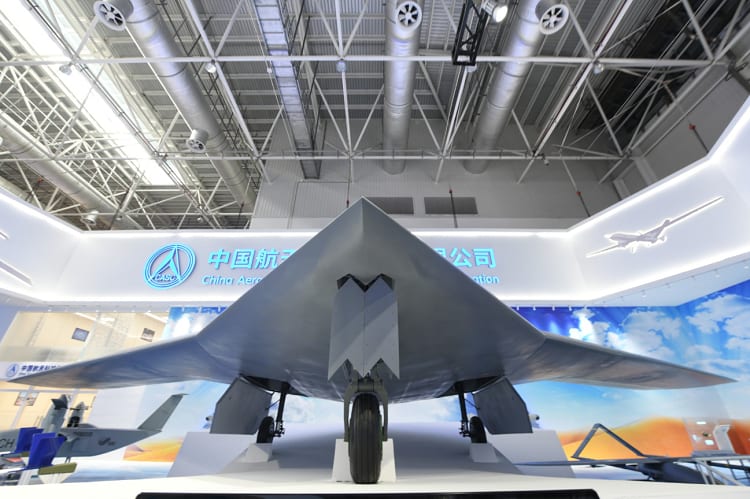
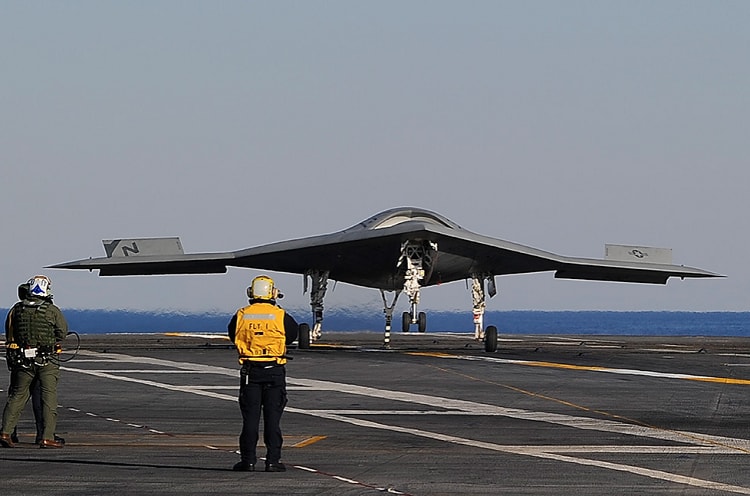
The Cai Hong 7 – “Rainbow 7” or CH-7 – is still under development by the China Academy of Aerospace Aerodynamics (CAAA), a subsidiary of Beijing-based CASC. The design is a tailless “flying wing” with a dorsally-mounted central turbofan housing and stealth or low observable profile similar to the Northrop Grumman X-47B UCAV . Chinese media stated that the CH-7 is designed to “detect and destroy hostile strategic targets” with other reports suggesting that the two rear landing gear bays also serve as internal payload bays for electronic warfare systems, guided bombs, and various air-to-surface missiles. Payload capacity was not disclosed, though a maximum takeoff weight (MTOW) of 13,000 kilograms (28660 pounds) was listed.
Read all of SAE International’s coverage of Airshow China 2018.
For reference, the X-47B UCAV has an MTOW is 20,215 kilograms (44,567 pounds) and can carry up to 2,000 kilograms (4,500 pounds) of ordnance. The lighter weight CH-7 will likely carry less. During the CH-7 debut, CASC presenters described a cruise altitude between 10,000 to 13,000 meters (32,808 to 42,650 feet) – on par with the X-47B – at a subsonic speed of 740 kilometers per hour (460 miles per hour) with a maximum airspeed of 926 kilometers per hour (575 miles per hour). Although range and endurance were not disclosed, likely CH-7 roles will include intelligence, surveillance, target acquisition, and reconnaissance (ISTAR) and air defense.
A history of… compliments?
While there is some slight visual disparity between the CH-7 and the X-47B, that is not the case for one of CASC’s last UCAV, the fixed-wing CH-4.
The CH-4, almost identical to the General Atomics MQ-9 Reaper, was first produced in 2015 and just recently completed its first live fire test earlier this year. Beyond the physical parallels to United States hardware, CASC is also similarly pursuing active teaming and intelligence sharing, processing, and distribution between its CH-4 UCAVs.
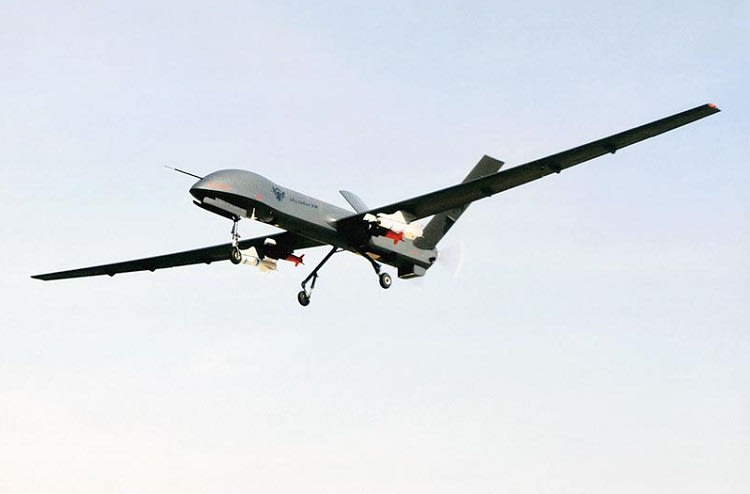
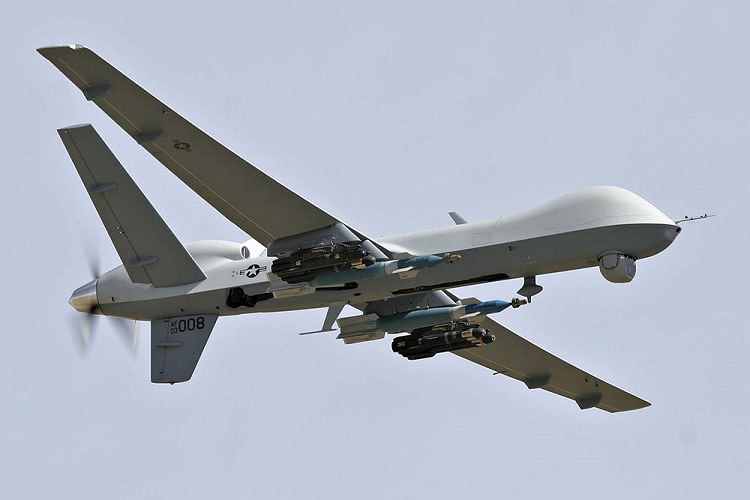
Chengdu Aircraft Industrial Group (Chengdu) of Sichuan, China – a subsidiary of the Beijing-based Aviation Industry Corporation of China (AVIC) has been developing and testing its own variants of the of the MQ-9 lookalike since 20011. Chengdu’s Wing Loong – or Pterodactyl I – is operated by 10 international customers.
AVIC is part of the State-owned Assets Supervision and Administration Commission (SASAC), the same entity that owns CASC.
And just yesterday, during the 2018 China International Aviation & Aerospace Exhibition, the People’s Liberation Army Air Force (PLAAF) of China announced that it was acquired an updated Wing Long version of the aircraft for operational deployment.
William Kucinski is content editor at SAE International, Aerospace Products Group in Warrendale, Pa. Previously, he worked as a writer at the NASA Safety Center in Cleveland, Ohio and was responsible for writing the agency’s System Failure Case Studies. His interests include literally anything that has to do with space, past and present military aircraft, and propulsion technology.
Contact him regarding any article or collaboration ideas by e-mail at
More From SAE Media Group
Aerospace & Defense Tech Briefs
GA-ASI Maximizes Fuel Capacity for MQ-25 Entry
Aerospace & Defense Tech Briefs
Maintainers Design a $400 Maintenance Fixture to save the U.S. Air Force $500k per Year
Aerospace & Defense Tech Briefs
Boeing's Latest Contract Secures New Wings for Remaining A-10 Fleet
Aerospace & Defense Tech Briefs
J-10B Fighter Aircraft Debuts Chinese Thrust Vectoring Technology
Aerospace & Defense Tech Briefs
Airbus and Dassault Aviation Will Start Development of the “New Generation Fighter” for European FCAS Program
Aerospace & Defense Tech Briefs
Aitech Defense Will Provide Data Interface Technology for Boeing’s Unmanned MQ-25 Refueling Platform
Aerospace & Defense Tech Briefs
Boeing Wins MQ-25 Contract
Aerospace & Defense Tech Briefs
General Atomics Plans First Trans-Atlantic Flight of Medium-Altitude, Long-Range Remotely Piloted Aircraft
Aerospace & Defense Tech Briefs
NASA and AeroVironment Are Building a Helicopter for Mars
Aerospace & Defense Tech Briefs
The Air Force’s New Unmanned Wingmate Completes Inaugural Flight
Aerospace & Defense Tech Briefs
AeroVironment Releases New Puma 3
Aerospace & Defense Tech Briefs
UAV Turbines Designs Purpose-Built Microturbine Engine for Class 3 and 4 UAVs
Aerospace & Defense Tech Briefs
SES to Outfit Sikorsky UH-60A Black Hawk Helicopters with Unitech Composites Weapons Pylons
Aerospace & Defense Tech Briefs
Boeing Completes Assembly of the First 777X
Aerospace & Defense Tech Briefs
Curtiss-Wright Will Provide Data Technology Support for Boeing’s MQ-25 Unmanned Air Refueling Platform
Aerospace & Defense Tech Briefs
Martin UAV VTOL Unmanned Aircraft Taps Persistent Systems Wave Relay Data Link Technology
Aerospace & Defense Tech Briefs
General Atomics Moves Toward Global RPA Flight Certification for MQ-9B SkyGuardian
Aerospace & Defense Tech Briefs
Sikorsky-Boeing’s FVL Contender Takes Flight
Aerospace & Defense Tech Briefs
Stratolaunch Composite Air-Launch Aircraft Pulls the Wheels up During Latest Taxi Test
Aerospace & Defense Tech Briefs
Future of British Air Power: The Next-Gen Tempest
Aerospace & Defense Tech Briefs
Airbus Zephyr S Breaks World Flight Endurance Record During Maiden Flight
Aerospace & Defense Tech Briefs
Textron Systems, Textron Aviation Defense Demonstrate Simulated Manned-Unmanned Teaming Capability
Automotive Engineering
NASA Picks Lockheed to Build Low-Boom X-Plane
Aerospace & Defense Tech Briefs
BAE Systems Will Supply Flight Control and Target Identification Systems for Boeing’s Carrier-Based MQ-25
Aerospace & Defense Tech Briefs
Multispectral Airborne Reconnaissance System
Aerospace & Defense Tech Briefs
Abaco’s FORCE2 Flight Computer Enables National and International Ground Control Station Certification
Aerospace & Defense Tech Briefs
General Atomics MQ-9B SkyGuardian Lands at RAF Fairford, Makes History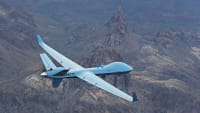
Aerospace & Defense Tech Briefs
Lockheed Martin Flies FireHerc Firefighting Variant of C-130J Turboprop in Farnborough
Aerospace & Defense Tech Briefs
SAE International Launches Aerospace Technology Symposium at Japan Aerospace 2018
Aerospace & Defense Tech Briefs
MTSI’s Latest Project Gives Fixed-Wing Aircraft Vertical Cargo Lift Capabilities
Transcript
00:00:27 It is successful in accordance with our standards, as the taxiing distance before the taking-off and after landing and the landing point were all within the limits permitted by our calculation.
Top Stories
NewsSensors/Data Acquisition
 Microvision Aquires Luminar, Plans Relationship Restoration, Multi-industry Push
INSIDERRF & Microwave Electronics
 A Next Generation Helmet System for Navy Pilots
INSIDERWeapons Systems
 New Raytheon and Lockheed Martin Agreements Expand Missile Defense Production
NewsAutomotive
 Ford Announces 48-Volt Architecture for Future Electric Truck
INSIDERAerospace
 Active Strake System Cuts Cruise Drag, Boosts Flight Efficiency
ArticlesTransportation

Webcasts
Aerospace
 Cooling a New Generation of Aerospace and Defense Embedded...
Energy
 Battery Abuse Testing: Pushing to Failure
Power
 A FREE Two-Day Event Dedicated to Connected Mobility
Automotive
 Quiet, Please: NVH Improvement Opportunities in the Early Design Cycle
Electronics & Computers
 Advantages of Smart Power Distribution Unit Design for Automotive &...
Unmanned Systems
 Sesame Solar's Nanogrid Tech Promises Major Gains in Drone Endurance