




Future of British Air Power: The Next-Gen Tempest
The Tempest will use the current RAF Eurofighter Typhoon as testbed for next-gen capabilities, eventually replacing Typhoon in 2040.
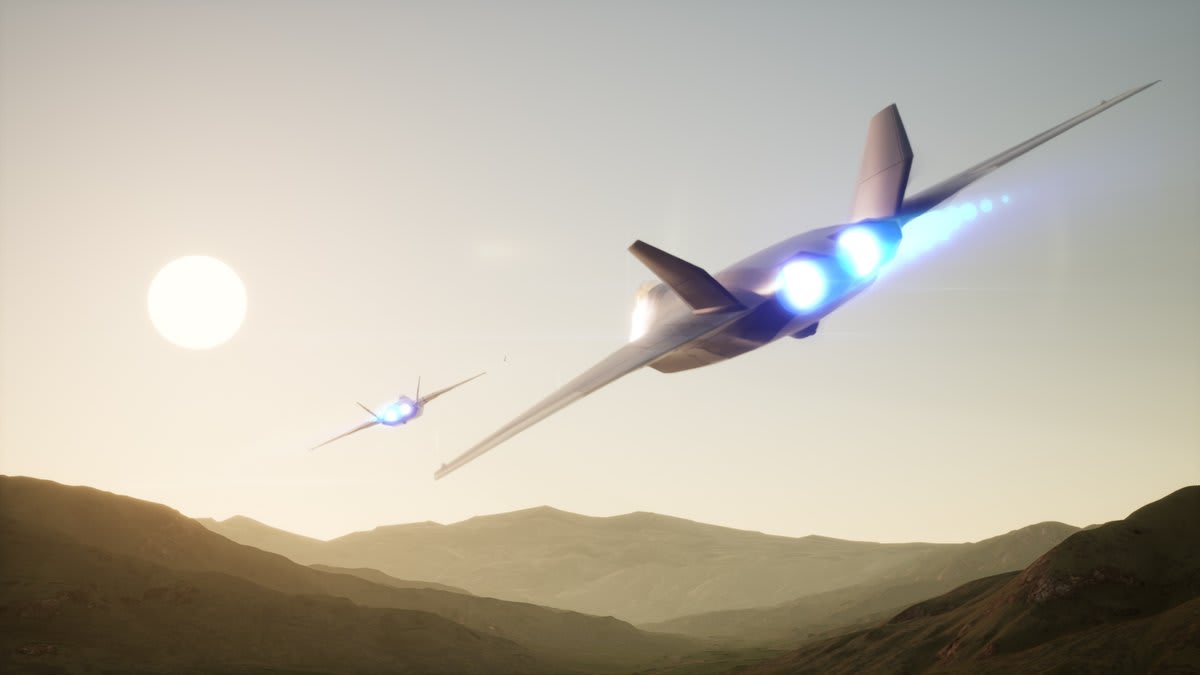
Today marked the debut of the United Kingdom’s new, next-generation fighter jet concept model dubbed the “Tempest.” The unveiling was coordinated with the launch of the U.K.’s Combat Air Strategy by U.K. Defense Secretary Gavin Williamson at the 2018 Farnborough International Airshow .

According to the presentation, the future Tempest fighter will be a piloted aircraft that can alternatively be flown as an unmanned aircraft system (UAS) – commonly referred to as a drone. It will employ a stealth design similar to that of current fifth-generation fighters, with an angular profile difficult to detect by radar. The design includes a helmet-mounted virtual cockpit environment.
Initial reports also suggest that it will be the first British-designed jet to carry directed-energy weapons – or lasers – for defense against adversary aircraft and missiles.
The new fighter jet is being designed to leverage drone-swarming technology, integrate artificial intelligence deep-learning systems, and share sensor data with other aircraft and assets to coordinate operations – or cooperative engagement capability (CEC).

The Tempest concept is a joint effort between BAE Systems , Leonardo , MBDA , and Rolls-Royce for the U.K. Royal Air Force (RAF) Rapid Capabilities Office and combines the respective expertise – air combat systems and integration; sensors, electronics and avionics; weapon systems; and propulsion systems – of the four collaborating companies.
A specific challenge for engine-maker Rolls-Royce will be designing the variable cycle engine (VCE) for the Tempest, of which each aircraft will have two. The VCE, which Rolls-Royce has been researching and developing for nearly a decade, is designed to transition between subsonic, transonic, and supersonic flight modes with optimal efficiency. To manage the specific drag, thrust, and airflow characteristics of the engine during various speeds, the resultant Rolls-Royce VCE design for the Tempest may involve geometry-changing intake and exhaust ducting.
“The Combat Air Strategy will bring together the best of our people, industry and international partners to support the RAF lift-off into the next century of air power,” Chief of the Air Staff Air Chief Marshal Sir Stephen Hillier said at the event.

“Team Tempest demonstrates our commitment in ensuring that we continue to build our capabilities, draw upon our experience and history to bring forward a compelling vision for the next-generation fighter jet. In last 100 years, the RAF has led the way and today’s announcement is a clear demonstration of what lies ahead,” added Hillier.
The U.K. Ministry of Defence (MOD) will be investing approximately £2 billion (approximately $3.66 billion) in development of the Tempest by 2025, with a goal of delivering the first operational units in 2035.
The Tempest’s namesake, the Hawker Tempest – an iteration of the Hawker Typhoon – was introduced in 1944 and used by the RAF during WWII. As the fastest single-engine propeller-driven aircraft of the war (at low altitudes), it was the ideal aircraft for intercepting the feared V-1 flying bomb.
Similarly, the new Tempest fighter will ultimately replace the current Eurofighter Typhoon ; however, MOD officials indicate the Typhoon will remain funded and in service until at least 2040 and will serve as a technology driver for upgraded avionics, weapon systems, and radar that will eventually be incorporated into the Tempest. The first of these upgraded Typhoons has already been delivered to the RAF under BAE Systems’ Project Centurion effort.
According to Williamson, the U.K., while currently excluded from the recent Franco-German Future Combat Air System (FCAS) fighter program, was not against forming a Tempest partnership with other nations. (Leonardo is an Italian company.)
The FCAS is a potential replacement for the Typhoon and Dassault Rafale for the German and French Air Forces, respectively.


In response, Airbus – key developer of the FCAS concept – made a surprise statement: “Airbus welcomes the U.K.'s commitment of funding for the future fighter project. We look forward to continuing collaborative discussions with all relevant European players.”
William Kucinski is content editor at SAE International, Aerospace Products Group in Warrendale, Pa. Previously, he worked as a writer at the NASA Safety Center in Cleveland, Ohio and was responsible for writing the agency’s System Failure Case Studies. His interests include literally anything that has to do with space, past and present military aircraft, and propulsion technology.
Contact him regarding any article or collaboration ideas by e-mail at
More From SAE Media Group
Aerospace & Defense Tech Briefs
Maintainers Design a $400 Maintenance Fixture to save the U.S. Air Force $500k per Year
Aerospace & Defense Tech Briefs
Aitech Defense Will Provide Data Interface Technology for Boeing’s Unmanned MQ-25 Refueling Platform
Aerospace & Defense Tech Briefs
J-10B Fighter Demonstrates Thrust-Vectoring Supermaneuverability at Airshow China
Aerospace & Defense Tech Briefs
General Atomics Plans First Trans-Atlantic Flight of Medium-Altitude, Long-Range Remotely Piloted Aircraft
Aerospace & Defense Tech Briefs
Airbus and Dassault Aviation Will Start Development of the “New Generation Fighter” for European FCAS Program
Aerospace & Defense Tech Briefs
BAE Systems Will Supply Flight Control and Target Identification Systems for Boeing’s Carrier-Based MQ-25
Aerospace & Defense Tech Briefs
Safran and MTU Aero Engines to Co-Develop Engine for Sixth-Generation FCAS Fighter
Aerospace & Defense Tech Briefs
UAV Turbines Designs Purpose-Built Microturbine Engine for Class 3 and 4 UAVs
Aerospace & Defense Tech Briefs
Curtiss-Wright Will Provide Data Technology Support for Boeing’s MQ-25 Unmanned Air Refueling Platform
Aerospace & Defense Tech Briefs
GA-ASI Maximizes Fuel Capacity for MQ-25 Entry
Aerospace & Defense Tech Briefs
Boeing Wins MQ-25 Contract
Aerospace & Defense Tech Briefs
Boeing Completes Assembly of the First 777X
Aerospace & Defense Tech Briefs
The Air Force’s New Unmanned Wingmate Completes Inaugural Flight
Aerospace & Defense Tech Briefs
Collins Aerospace Will Provide Avionics and Synthetic Vision for the Supersonic X-59 QueSST
Aerospace & Defense Tech Briefs
SAE International Launches Aerospace Technology Symposium at Japan Aerospace 2018
Aerospace & Defense Tech Briefs
MTSI’s Latest Project Gives Fixed-Wing Aircraft Vertical Cargo Lift Capabilities
Aerospace & Defense Tech Briefs
Collins Aerospace Provides Avionics for C-130H Modernization Program
Aerospace & Defense Tech Briefs
Pratt & Whitney Receives $437M for Continued Adaptive Engine Development
Aerospace & Defense Tech Briefs
Stratos Aircraft Evolves Carbon-Fiber Very Light Jet, Offers Limited Number of Kit Aircraft
Aerospace & Defense Tech Briefs
The CH-7: China’s Latest Unmanned Combat Air Vehicle
Aerospace & Defense Tech Briefs
Sikorsky, Boeing Debut Future Vertical Lift Dual-Rotor Design with SB>1 DEFIANT Helicopter
Automotive Engineering
T-X Competition to End in September with Selection of New USAF Trainer Aircraft
Aerospace & Defense Tech Briefs
Airbus Zephyr S Breaks World Flight Endurance Record During Maiden Flight
Aerospace & Defense Tech Briefs
Transport Canada Grants Astro Aerospace a Flight Test Certificate for Autonomous Urban Air Mobility Vehicle
Aerospace & Defense Tech Briefs
Raytheon, UTC Merger Will Direct $8B R&D Budget Toward Hypersonics, Cybersecurity, AI, and Next-Gen Connected Aircraft
Aerospace & Defense Tech Briefs
Vertical Aerospace Is Honeywell’s Latest Partner in the UAM Industry
Aerospace & Defense Tech Briefs
NASA’s Next X-Plane Passes Major Review
Aerospace & Defense Tech Briefs
ANSYS Will Help Airbus Develop AI-Enabled Flight Controls for the FCAS Program’s Autonomous Wingmen
Aerospace & Defense Tech Briefs
Boeing to Modernize Spanish Chinook Fleet with Autonomous-Ready Avionics and Flight Control Systems
Aerospace & Defense Tech Briefs
Boeing Debuts First Hypersonic Passenger Aircraft Concept
Top Stories
NewsSensors/Data Acquisition
 Microvision Aquires Luminar, Plans Relationship Restoration, Multi-industry Push
INSIDERRF & Microwave Electronics
 A Next Generation Helmet System for Navy Pilots
INSIDERWeapons Systems
 New Raytheon and Lockheed Martin Agreements Expand Missile Defense Production
NewsAutomotive
 Ford Announces 48-Volt Architecture for Future Electric Truck
INSIDERAerospace
 Active Strake System Cuts Cruise Drag, Boosts Flight Efficiency
ArticlesTransportation

Webcasts
Aerospace
 Cooling a New Generation of Aerospace and Defense Embedded...
Energy
 Battery Abuse Testing: Pushing to Failure
Power
 A FREE Two-Day Event Dedicated to Connected Mobility
Automotive
 Quiet, Please: NVH Improvement Opportunities in the Early Design Cycle
Electronics & Computers
 Advantages of Smart Power Distribution Unit Design for Automotive &...
Unmanned Systems
 Sesame Solar's Nanogrid Tech Promises Major Gains in Drone Endurance