




Pratt & Whitney Receives $437M for Continued Adaptive Engine Development
The additional funding is related to risk reduction activities as Adaptive Engine Transition Program technologies mature.

Pratt & Whitney , a division of United Technologies Corp. based in East Hartford, Conn., was awarded a $437-million contract modification by the U.S. Air Force Life Cycle Management Center (AFLCMC) for the Adaptive Engine Transition Program (AETP). Through AETP, Pratt & Whitney was tasked with designing, fabricating, integrating, and testing complete, flight-weight adaptive engines – the contract modification allocates funding for “risk reduction” activities related to adaptive engine development.
Modern military turbofan engines have two airstreams – one that passes through the core of the engine, and another that bypasses the core. The development of a third stream provides an extra source of air flow to improve propulsive efficiency and lower fuel burn, or to deliver additional air flow through the core for higher thrust and cooling air.
Utilizing a third stream of air that can be modulated to adapt the engine's performance across the flight envelope means a fighter can have the best of both worlds by accessing an on-demand increase in thrust or smoothly shift to highly efficient operations during cruise. This capability provides an optimal balance for combat scenarios requiring both high-end acceleration and increased range.
“We look forward to continuing the maturation of adaptive engine technologies in collaboration with the U.S. Air Force for the next generation of combat aircraft,” says Chris Flynn, vice president of Military Development Programs at Pratt & Whitney. “In addition to providing a seamless transition between high thrust and fuel efficiency, adaptive propulsion can enable an unprecedented range of capability growth in mission systems and heat dissipation capacity at the air vehicle level. We are committed to giving the warfighter a technological advantage.”
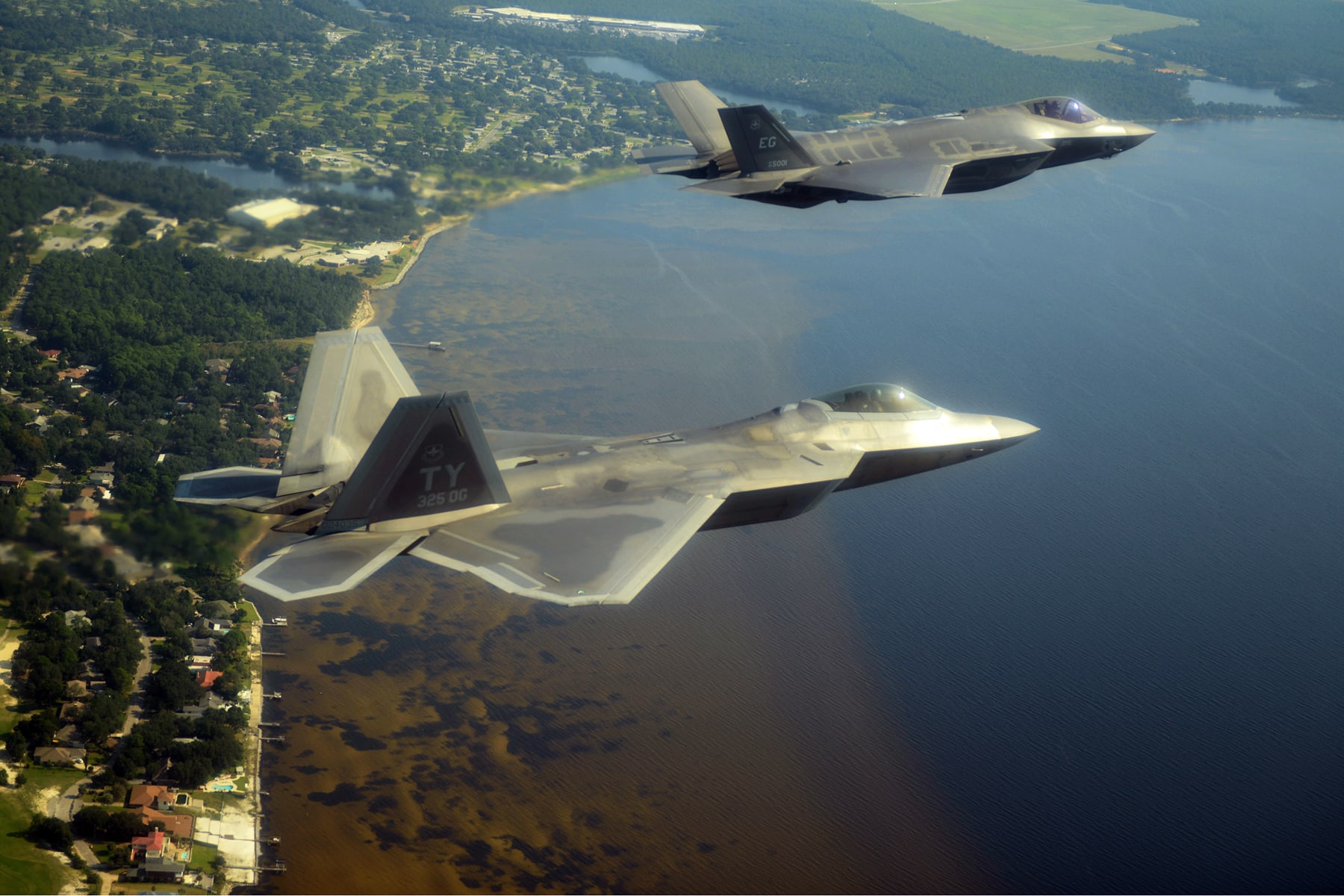
Last year, Pratt & Whitney successfully completed testing of an adaptive three-stream fan in an engine with an F135 core as part of the U.S. Air Force Research Laboratory (AFRL) Adaptive Engine Technology Development (AETD) program. The F135 advanced turbofan engine powers the multirole Lockheed Martin F-35 Lightning II fighter aircraft and is a derivative version of the proven F119-PW-100 engine, which powers the Lockheed Martin F-22 Raptor tactical fighter aircraft.
The goal of the AETD program was to achieve a 25 percent reduction in fuel consumption and a 10 percent improvement in thrust levels compared to modern fifth-generation combat aircraft engines.
Over the coming months, Pratt & Whitney will leverage experience from design and test activities completed during AETD efforts to ensure the AETP program refines the technologies necessary to meet future mission requirements of air superiority.
The AETP contract is now currently cumulatively valued at nearly $1.5 billion, according to the Department of Defense . The majority of the contract work will occur in East Hartford, with an expected completion date of February 28, 2022.
Along with a demand-modulated engine architecture, Pratt & Whitney is also maturing an adaptive technology suite that includes control systems as well as power and thermal management systems to enable enhanced range, persistence, survivability, and maintainability capabilities for advanced weapon systems.
William Kucinski is content editor at SAE International, Aerospace Products Group in Warrendale, PA. Previously, he worked as a writer at the NASA Safety Center in Cleveland, OH, and was responsible for writing the agency’s System Failure Case Studies. His interests include literally anything that has to do with space, past and present military aircraft, and propulsion technology.
Contact him regarding any article or collaboration ideas by e-mail at
More From SAE Media Group
Aerospace & Defense Tech Briefs
Mitsubishi Heavy Industries Aero Engines Completes Assembly of First Pratt & Whitney GTF PW1200G Engine
Aerospace & Defense Tech Briefs
Parker Aerospace and GKN Aerospace to Develop Passive Cooling Solutions for Next-Generation Aircraft Engines
Aerospace & Defense Tech Briefs
Maintainers Design a $400 Maintenance Fixture to save the U.S. Air Force $500k per Year
Aerospace & Defense Tech Briefs
Safran and MTU Aero Engines to Co-Develop Engine for Sixth-Generation FCAS Fighter
Aerospace & Defense Tech Briefs
Maintaining the Data-Rich Pratt & Whitney GTF Engine
Aerospace & Defense Tech Briefs
Lockheed Martin Announces Latest Hypersonic Progress at Le Bourget
Aerospace & Defense Tech Briefs
Boeing’s 777X Finally Gets Its Engines
Aerospace & Defense Tech Briefs
J-10B Fighter Demonstrates Thrust-Vectoring Supermaneuverability at Airshow China
Aerospace & Defense Tech Briefs
Three-Stream Engine Architecture Eyed for Next-Gen Military Aircraft
Aerospace & Defense Tech Briefs
Raytheon, DARPA Push Forward with Hypersonic Weapon Design
Aerospace & Defense Tech Briefs
United Technologies Completes Acquisition of Rockwell Collins, Sheds Non-Aero Business Units
Aerospace & Defense Tech Briefs
GE Aviation Debuts Affinity, First Civil Supersonic Engine in 55 Years
Aerospace & Defense Tech Briefs
NASA’s Next X-Plane Passes Major Review
Aerospace & Defense Tech Briefs
New Boeing, Safran Joint Venture Dedicated to Developing Aircraft Auxiliary Power Units
Aerospace & Defense Tech Briefs
Generation Orbit’s GOLauncher1 Is Officially the Air Force’s X-60A Hypersonic Flight Research Vehicle
Aerospace & Defense Tech Briefs
Early Growing Pains Have Not Stopped Pratt & Whitney’s GTF Engine Orders
Aerospace & Defense Tech Briefs
Collins Aerospace Will Provide Avionics and Synthetic Vision for the Supersonic X-59 QueSST
Aerospace & Defense Tech Briefs
GE Aviation Delivers Improved Turbine Engine During U.S. Army Preliminary Design Review
Aerospace & Defense Tech Briefs
Boeing Completes Assembly of the First 777X
Aerospace & Defense Tech Briefs
Ceramic Matrix Composites in Aircraft Engines Projected to Double over Five Years, Stratview Research Predicts

Aerospace & Defense Tech Briefs
Northrop Grumman Will Fit Its Scramjet Combustors to Raytheon’s Hypersonic Missile
Automotive Engineering
Pratt & Whitney Develops Digitally Curated Maintenance Solutions for General Aviation
Tech Briefs
How Jet Engine Flow Can Be Controlled Optically
Aerospace & Defense Tech Briefs
Old Bird Learns New Tricks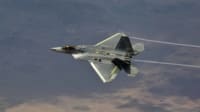
Aerospace & Defense Tech Briefs
2050 Aircraft Engine Designs Go Radical, Part 1
Aerospace & Defense Tech Briefs
UAV Turbines Designs Purpose-Built Microturbine Engine for Class 3 and 4 UAVs
Aerospace & Defense Tech Briefs
MTSI’s Latest Project Gives Fixed-Wing Aircraft Vertical Cargo Lift Capabilities
Aerospace & Defense Tech Briefs
Boeing Debuts First Hypersonic Passenger Aircraft Concept
Aerospace & Defense Tech Briefs
Future of British Air Power: The Next-Gen Tempest
Top Stories
NewsRF & Microwave Electronics
 Microvision Aquires Luminar, Plans Relationship Restoration, Multi-industry Push
INSIDERAerospace
 A Next Generation Helmet System for Navy Pilots
INSIDERDesign
 New Raytheon and Lockheed Martin Agreements Expand Missile Defense Production
INSIDERMaterials
 How Airbus is Using w-DED to 3D Print Larger Titanium Airplane Parts
NewsPower
 Ford Announces 48-Volt Architecture for Future Electric Truck
ArticlesAR/AI

Webcasts
Electronics & Computers
 Cooling a New Generation of Aerospace and Defense Embedded...
Automotive
 Battery Abuse Testing: Pushing to Failure
Power
 A FREE Two-Day Event Dedicated to Connected Mobility
Unmanned Systems
 Quiet, Please: NVH Improvement Opportunities in the Early Design Cycle
Automotive
 Advantages of Smart Power Distribution Unit Design for Automotive &...
Energy
 Sesame Solar's Nanogrid Tech Promises Major Gains in Drone Endurance