




Generation Orbit’s GOLauncher1 Is Officially the Air Force’s X-60A Hypersonic Flight Research Vehicle
The X-60A has the potential to increase United States Air Force hypersonic capabilities while also serving as a low-cost testbed for microgravity and planetary science research.
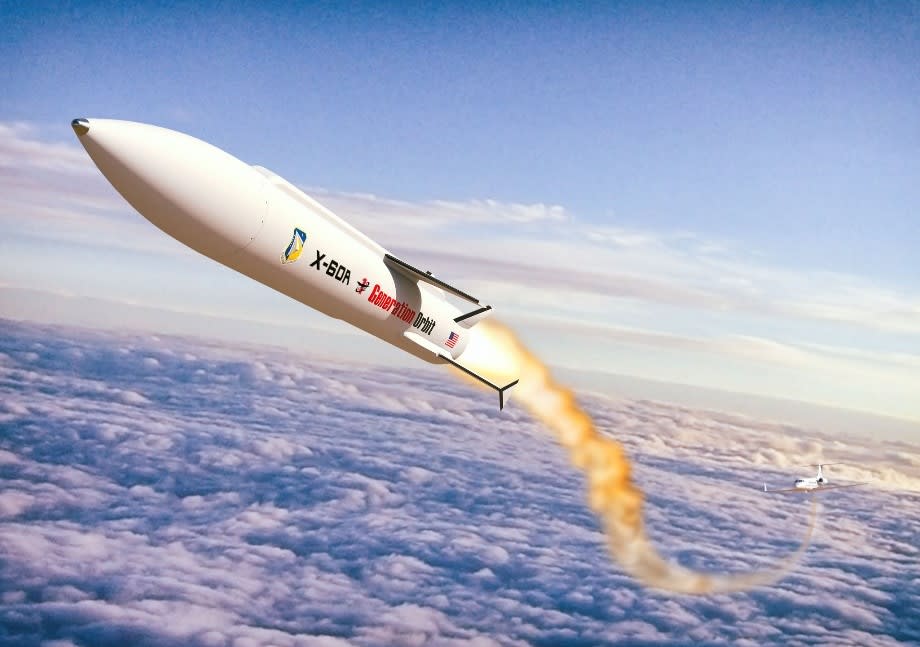
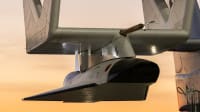
The United States Air Force (USAF) has designated the GOLauncher1 (GO1) hypersonic flight research vehicle as X-60A. The vehicle is currently being developed by Atlanta-based Generation Orbit Launch Services, Inc . under contract to the Air Force Research Laboratory (AFRL) Aerospace Systems Directorate High Speed Systems Division.
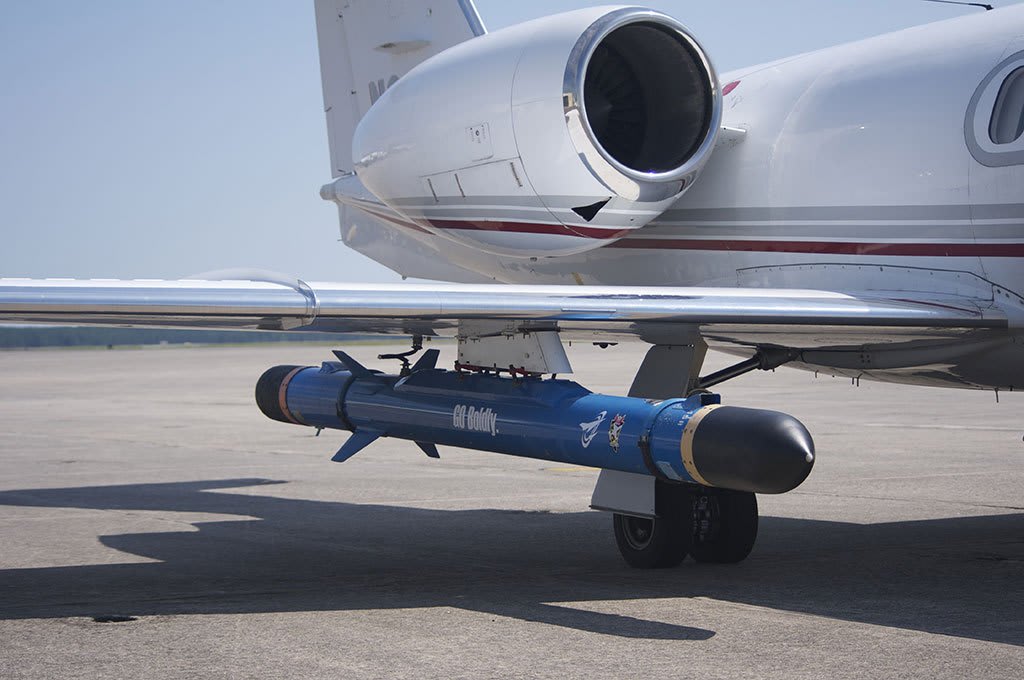
The X-60A is an air-dropped, liquid oxygen and kerosene propelled rocket, specifically designed for hypersonic flight research. The vehicle propulsion system is the 5,000 pound-force (lbf) sea level thrust Hadley liquid rocket engine, produced by Colorado-based Ursa Major Technologies . By using liquid propulsion, the single-stage X-60A retains the performance of traditional solid rocket booster engines while permitting flexibility, from high-altitude microgravity – up to 300 kilometers with 7 minutes of microgravity – to suppressed, high-Mach suborbital trajectories for high dynamic pressure environments for captive carry and free-flyer hypersonic experiments.

The system is designed to mature technologies including scramjet propulsion, high temperature materials, and autonomous control by providing affordable and regular access to high dynamic pressure flight conditions between Mach 5 – the beginning of the hypersonic flight envelope – and Mach 8.
The vehicle was successfully hot fire tested at the Cecil Spaceport at the Jacksonville International Airport in Florida earlier this past June. The hot fire test validated integration of propellant tanks, valves, pressurization system, and flight controls and demonstrated the throttling capabilities of the system necessary to meet the thrust levels for Mach 6 cruise at 80,000 to 90,000 feet.
The first flight of X-60A is planned for late 2019.
“The X-60A is like a flying wind tunnel to capture data that complements our current ground test capability,” says Col. Colin Tucker, Military Deputy, office of the Deputy Assistant Secretary of the Air Force for Science, Technology, and Engineering. “We’ve long needed this type of test vehicle to better understand how materials and other technologies behave while flying at more than five times the speed of sound. It enables faster development of both our current hypersonic weapon rapid prototypes and evolving future systems.”

According to Generation Orbit, while advances in computational methods and ground test facilities have matured technologies like scramjet engines; light-weight, high-temperature composite structures; and autonomous flight controls, flight research and testing is still the key linchpin in transitioning these technologies to operational systems. AFRL’s motivation for the X-60A program is to increase the frequency of flight testing while lowering the cost of maturing hypersonic technologies in relevant flight conditions.
This is the first USAF Small Business Innovative Research (SBIR) program to receive an experimental “X” designation. It also comes after developments in Russia’s hypersonic missile test program earlier this year.
Japan has also recently announced the development of its own hypersonic missile.
However, Generation Orbit’s profile for the GOLauncher1 includes capabilities high-altitude planetary and climate science.
By utilizing new space commercial development, licensing, and operations practices, Generation Orbit’s hypersonic vehicle may provide the USAF, United States government agencies, and suborbital research communities with a platform to more rapidly mature technologies.
William Kucinski is content editor at SAE International, Aerospace Products Group in Warrendale, Pa. Previously, he worked as a writer at the NASA Safety Center in Cleveland, Ohio and was responsible for writing the agency’s System Failure Case Studies. His interests include 'literally anything that has to do with space,' past and present military aircraft, and propulsion technology. And also sportscars.
Contact him regarding any article or collaboration ideas by e-mail at
More From SAE Media Group
Aerospace & Defense Tech Briefs
Raytheon, DARPA Push Forward with Hypersonic Weapon Design
Aerospace & Defense Tech Briefs
Three Stages of Separation: Bidding Farewell to the Delta II Launch Vehicle
Aerospace & Defense Tech Briefs
Orbex Debuts Innovative Smallsat Launch Vehicle
Aerospace & Defense Tech Briefs
Northrop Grumman Will Fit Its Scramjet Combustors to Raytheon’s Hypersonic Missile
Aerospace & Defense Tech Briefs
OmegA Rocket Sustains Explosion During First Static Test, Northrop Grumman Maintains Test Was a Success
Tech Briefs
How Jet Engine Flow Can Be Controlled Optically
Aerospace & Defense Tech Briefs
NASA Selects Frontier Aerospace to Continue Development of New Deep Space Thruster
Aerospace & Defense Tech Briefs
Lockheed Martin’s “Non-Operational” Space Fence Detects Indian Anti-Satellite Operations While Still in Test Mode
Aerospace & Defense Tech Briefs
Northrop Grumman Acquires Orbital ATK, Adds Solid Rocket Motors to Space Portfolio
Aerospace & Defense Tech Briefs
NASA Budget Amendment to Help Send Americans to Moon by 2024, Then Mars
Aerospace & Defense Tech Briefs
Stratolaunch Composite Air-Launch Aircraft Pulls the Wheels up During Latest Taxi Test
Aerospace & Defense Tech Briefs
Pratt & Whitney Receives $437M for Continued Adaptive Engine Development
Aerospace & Defense Tech Briefs
Techstars and Starburst Start New Space Technology Business Accelerator
Aerospace & Defense Tech Briefs
Lockheed Martin Announces Latest Hypersonic Progress at Le Bourget
Aerospace & Defense Tech Briefs
JAXA Launches HTV7 Unmanned Cargo Spacecraft on Resupply Mission to ISS
Aerospace & Defense Tech Briefs
SAE International Extends Call for Abstracts, Seeks Submissions for AeroTech Conference
Aerospace & Defense Tech Briefs
Can the Air Force Reach a 24-Hour Launch Window?
Aerospace & Defense Tech Briefs
Space Launch Providers Submit Proposals for National Security Space Launch Program
Aerospace & Defense Tech Briefs
AIA Predicts Flying Air Taxis, Supersonic Air Travel, and Space Industry for 2050
Aerospace & Defense Tech Briefs
Prototype Hypersonic Defense Engine
Aerospace & Defense Tech Briefs
Industry Invited to Participate in AeroTech Aerospace and Defense Technical Program
Aerospace & Defense Tech Briefs
New University-Led Air Force Center of Excellence Focuses on Securing Autonomous Systems Operating in Contested Environments
Tech Briefs
UCF’s Hypersonic Technology Advances
Defense INSIDER
Adranos Secures Government Contracts for Hypersonic Research
Aerospace & Defense Tech Briefs
Rocket Engine Technology
Aerospace & Defense Tech Briefs
Northrop Grumman Wins $792M to Deliver Intermediate, Heavy Versions of OmegA Space Launch Vehicle
Aerospace & Defense Tech Briefs
Stratolaunch All-Composite Aircraft Achieves First Flight
Aerospace & Defense Tech Briefs
NASA, Boeing, SpaceX to Launch ‘New Era in Human Spaceflight’
Aerospace & Defense Tech Briefs
NASA and AeroVironment Are Building a Helicopter for Mars
Transcript
No transcript is available for this video.
Top Stories
NewsRF & Microwave Electronics
 Microvision Aquires Luminar, Plans Relationship Restoration, Multi-industry Push
INSIDERAerospace
 A Next Generation Helmet System for Navy Pilots
INSIDERDesign
 New Raytheon and Lockheed Martin Agreements Expand Missile Defense Production
INSIDERMaterials
 How Airbus is Using w-DED to 3D Print Larger Titanium Airplane Parts
NewsPower
 Ford Announces 48-Volt Architecture for Future Electric Truck
ArticlesAR/AI

Webcasts
Electronics & Computers
 Cooling a New Generation of Aerospace and Defense Embedded...
Automotive
 Battery Abuse Testing: Pushing to Failure
Power
 A FREE Two-Day Event Dedicated to Connected Mobility
Unmanned Systems
 Quiet, Please: NVH Improvement Opportunities in the Early Design Cycle
Automotive
 Advantages of Smart Power Distribution Unit Design for Automotive &...
Energy
 Sesame Solar's Nanogrid Tech Promises Major Gains in Drone Endurance