




T-X Competition to End in September with Selection of New USAF Trainer Aircraft
Officials will soon award a 350-unit contract to one of three competing aircraft teams.

According to officials, the U.S. Air Force (USAF) will select a new trainer aircraft by September 30 – before the end of the 2018 fiscal year. The aircraft will be one of the three remaining next-gen trainer candidates from the USAF’s ongoing T-X competition, either the clean-sheet T-X from Boeing and Saab , the T-50A from Lockheed Martin and Korea Aerospace Industries, Ltd. (KAI), or the T-100 from Leonardo DRS .
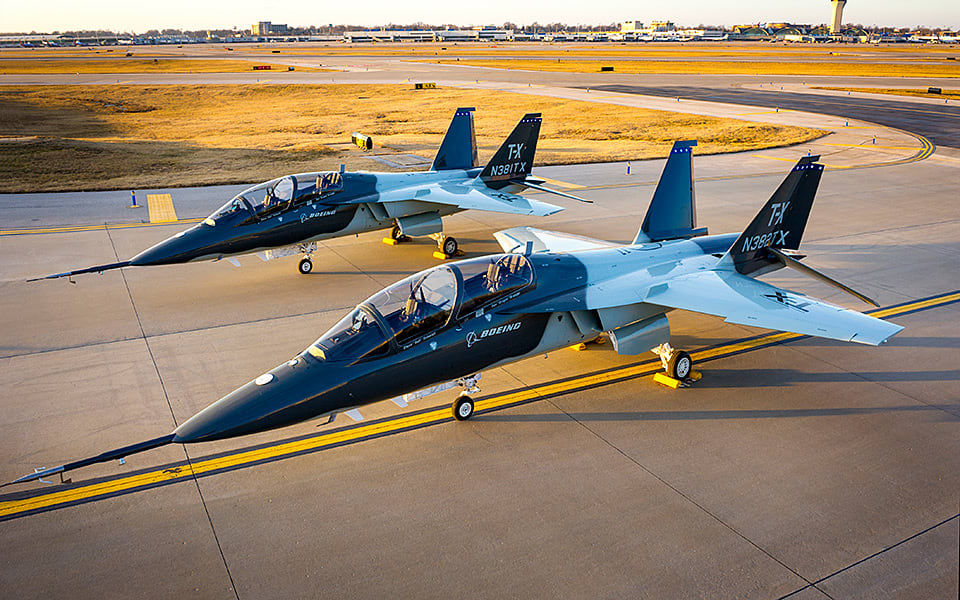
The USAF will replace its aging fleet of Northrop T-38 Talon supersonic jet trainers with 350 new aircraft from the T-X competition, spending approximately $16 billion to acquire and maintain the new trainers over the course of their service life – one of the largest USAF contracts in recent times.
The seasoned T-38 has been in use since 1961, training nearly 50,000 pilots who would later fly aircraft like the Boeing B-52 Stratofortress , Lockheed SR-71 Blackbird , McDonell Douglass F-15 Eagle , and Fairchild Republic A-10 Thunderbolt II . However, as the USAF transitions employs more and more cutting-edge technologies, a next-gen trainer is needed to better facilitate fifth-gen fighter aircraft pilot training for the Lockheed Martin F-22 Raptor and F-35 Lighting II .
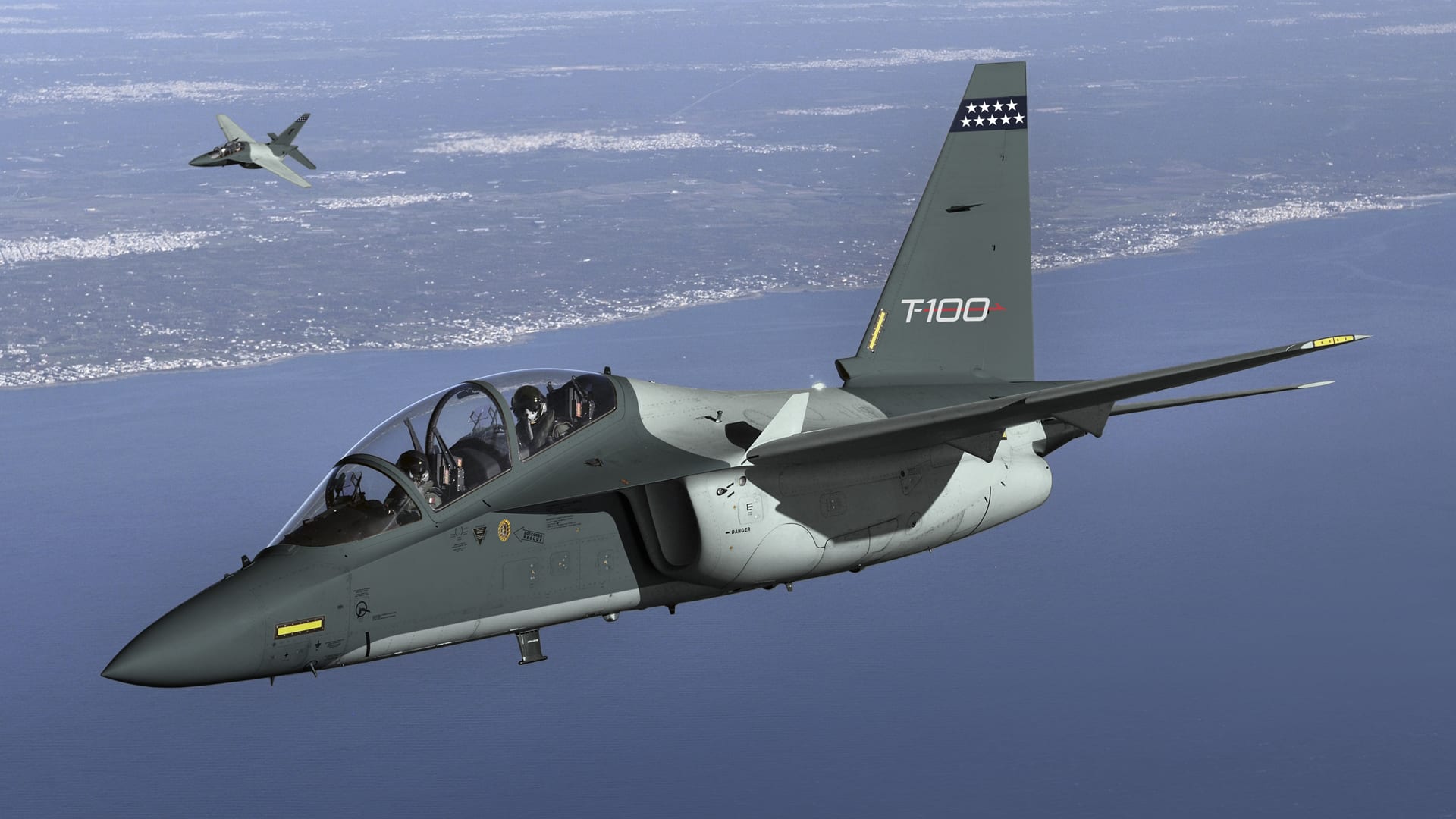
The winning T-X aircraft will serve as a platform to acclimate pilots to aircraft with extreme agility, full-sensor fusion, integrated avionics, supercruise, and consolidated and integrated battlespace management technologies.
Industry analysts currently favor the Lockheed/KAI T-50A – based on KAI’s T-50 trainer used by South Korea’s Republic of Korea Air Force and co-developed by Lockheed Martin, manufacturer of the F-22 and F-35; and the Boeing/Saab T-X – which, as a completely new design – benefited from additional development time due to the T-X competition’s repeatedly protracted award announcement.
While speculation has floated that the T-X award announcement would occur during the Air Force Association ’s Air, Space & Cyber (ASC) Conference from Sept. 17-19, those close to the program hinted at a decision coming through the following week of Sept. 24.
William Kucinski is content editor at SAE International, Aerospace Products Group in Warrendale, Pa. Previously, he worked as a writer at the NASA Safety Center in Cleveland, Ohio and was responsible for writing the agency’s System Failure Case Studies. His interests include 'literally anything that has to do with space,' past and present military aircraft, and propulsion technology. And also sportscars.
Contact him regarding any article or collaboration ideas by e-mail at
More From SAE Media Group
Aerospace & Defense Tech Briefs
Honeywell Wins $1.04 Billion U.S. Air Force Power Systems Contract
Aerospace & Defense Tech Briefs
Ahead of USAF T-X Decision, Leonardo Finds Market for T-100’s Little Brother – the Single-Engine Aermacchi M-345
Aerospace & Defense Tech Briefs
Old Bird Learns New Tricks
Aerospace & Defense Tech Briefs
Boeing's Latest Contract Secures New Wings for Remaining A-10 Fleet
Aerospace & Defense Tech Briefs
Boeing Wins MQ-25 Contract
Aerospace & Defense Tech Briefs
First F-35 Crash; Pilot Safe
Aerospace & Defense Tech Briefs
GA-ASI Maximizes Fuel Capacity for MQ-25 Entry
Aerospace & Defense Tech Briefs
Future of British Air Power: The Next-Gen Tempest
Aerospace & Defense Tech Briefs
Airbus and Dassault Aviation Will Start Development of the “New Generation Fighter” for European FCAS Program
Aerospace & Defense Tech Briefs
Maintainers Design a $400 Maintenance Fixture to save the U.S. Air Force $500k per Year
Aerospace & Defense Tech Briefs
The Air Force’s New Unmanned Wingmate Completes Inaugural Flight
Aerospace & Defense Tech Briefs
J-10B Fighter Demonstrates Thrust-Vectoring Supermaneuverability at Airshow China
Aerospace & Defense Tech Briefs
OA-X Phase Two Kicks Off
Aerospace & Defense Tech Briefs
J-10B Fighter Aircraft Debuts Chinese Thrust Vectoring Technology
Aerospace & Defense Tech Briefs
Astronautics to Upgrade Cockpit Displays on U.S. Customs and Border Protection P-3 Orions
Aerospace & Defense Tech Briefs
Air Force Begins 3D Printing Nonstructural Aircraft Parts
Aerospace & Defense Tech Briefs
Collins Aerospace Provides Avionics for C-130H Modernization Program
Aerospace & Defense Tech Briefs
New Design Wins over Upgrades for Next US Air Force Military Jet Trainer Aircraft
Aerospace & Defense Tech Briefs
Japan Signs on for Second Boeing KC-46 Military Tanker and Transport Aircraft
Aerospace & Defense Tech Briefs
General Atomics Plans First Trans-Atlantic Flight of Medium-Altitude, Long-Range Remotely Piloted Aircraft
Aerospace & Defense Tech Briefs
New, Clean-Sheet Military Aircraft Design Beats Upgrades to Win US Air Force T-X Contract
Aerospace & Defense Tech Briefs
Boeing Wins $2.9B for 18 KC-46A Military Tanker Aircraft Based on 767 Jet Airliner
Aerospace & Defense Tech Briefs
Boeing KC-46 Program Completes Flight Testing Required for First Delivery to U.S. Air Force
Aerospace & Defense Tech Briefs
Aitech Defense Will Provide Data Interface Technology for Boeing’s Unmanned MQ-25 Refueling Platform
Aerospace & Defense Tech Briefs
Curtiss-Wright Will Provide Data Technology Support for Boeing’s MQ-25 Unmanned Air Refueling Platform
Aerospace & Defense Tech Briefs
The F-35 Is Getting Life-Saving Automatic Ground Collision Avoidance Systems from the F-16
Aerospace & Defense Tech Briefs
South Africa’s Paramount Group Will Provide New Mission System for Combat Version of the Aermacchi M-345 Jet Trainer
Aerospace & Defense Tech Briefs
MTSI’s Latest Project Gives Fixed-Wing Aircraft Vertical Cargo Lift Capabilities
Aerospace & Defense Tech Briefs
A-10C Pilots Will Get 3D-Audio to Increase Situational Awareness
Aerospace & Defense Tech Briefs
Airbus Zephyr S Breaks World Flight Endurance Record During Maiden Flight
Transcript
00:00:02 are likely to on Planet Eric ticket a cup [Applause] this airplane is absolutely what we need just flew an hour mission went out did the embedded training where we were able to simulate an air-to-air engagement with five bandits of which none of them were actually airborne and get the
00:00:44 results on a radar along with the targeting pod and all of this is simulated so there are no costs than any of those but they were absolutely perfect and they are the kind of things that we need to do in iff today the t-50 with its simulator training with its ability to link to ground-based trainers with its live virtual
00:01:20 constructive training excels all other trainers on the market the heart of this training has got to be the ground-based training system I think it's the heart of the whole system we just flew with the distributed training for one hour the person in the in the simulator we can talk to them while we were airborne we had five bogeys to shoot down we also had ground targets it's all simulated
00:01:50 that's all very advanced when we graduate a pilot out of iff to go to f-35 or f-22 he's already experienced radars he's already experienced targeting pods air to ground he's already experienced air refueling and in addition to that he's been pulling G's and airman ooh marine environments so he is exactly ready to go to that f-35 or the f-22 and we don't
00:02:20 have to teach them all from day one so we can save all sorts of time and all sorts of money and more importantly wear and tear on the 5th gen aircraft that we need to last as long as we can possibly get in July it's roll rates its maneuverability its feel in the air to me translates directly one for one with what students will feel when they move
00:02:46 into the single-seat f-22 or the single-seat up 35 this is an easier plane to fly it's an easier plane to land so we can take a lot of those hours and put them in a simulator and get a really advanced student graduate ready to go into the IFF and follow-on into a 15 fighter which is the future I truly believe as students experience
00:03:15 the total t-50 training system not just the airplane but the ground-based training system including the simulators that we have that actually linked up with airplanes in the air they're going to begin to experience what it's like to operate in a net-centric environment in fighters we always talked about force multipliers to me this training system becomes a training multiplier
00:03:39 there is no comparison as to the way we're going to train compared to the way we train today this is their this is what the Air Force needs to do the mission for the 21st century of training fight [Applause] and I can miss our plucky - one owed wonderful judge to one base outsider
Top Stories
INSIDERManufacturing & Prototyping
 How Airbus is Using w-DED to 3D Print Larger Titanium Airplane Parts
INSIDERManned Systems
 FAA to Replace Aging Network of Ground-Based Radars
NewsTransportation
 CES 2026: Bosch is Ready to Bring AI to Your (Likely ICE-powered) Vehicle
NewsSoftware
 Accelerating Down the Road to Autonomy
EditorialDesign
 DarkSky One Wants to Make the World a Darker Place
INSIDERMaterials
 Can This Self-Healing Composite Make Airplane and Spacecraft Components Last...
Webcasts
Defense
 How Sift's Unified Observability Platform Accelerates Drone Innovation
Automotive
 E/E Architecture Redefined: Building Smarter, Safer, and Scalable...
Power
 Hydrogen Engines Are Heating Up for Heavy Duty
Electronics & Computers
 Advantages of Smart Power Distribution Unit Design for Automotive...
Unmanned Systems
 Quiet, Please: NVH Improvement Opportunities in the Early Design...
