




First F-35 Crash; Pilot Safe

On September 28, a day after the first Lockheed Martin F-35B combat strike, an F-35B stationed at United States Marine Corps (USMC) Air Station Beaufort crashed a short distance from the base. The aircraft was part of the 2nd Marine Aircraft Wing belonging to Marine Fighter Attack Training Squadron 501 (VMFAT-501).
According to the Marine Corps, the U.S. Marine pilot safely ejected before the aircraft crashed. There were no civilian injuries.
The cause of the crash is under investigation. Marines from Marine Corps Air Station Beaufort are working with local authorities currently conducting standard mishap operations to secure the crash site and ensure the safety of all personnel in the surrounding area.
The F-35 Lighting II is a single-seat, single-engine, fifth-generation multirole fighter developed by Bethesda, Md.-based Lockheed Martin. The F-35B is a short takeoff and vertical landing (SVOTL) version of the aircraft equipped with a vertical flight system that directs thrust from the aircraft’s engine towards the ground through a nozzle near the middle of the airframe.
The F-35B is used exclusively by the USMC in the U.S.
The crash occurred the same day as the U.S. Department of Defense and Lockheed Martin finalized an $11.5-billion contract for the production and delivery of 141 F-35 aircraft at the lowest per aircraft price in program history.
In Low-Rate Initial Production Lot 11 (LRIP 11), the F-35B unit cost was lowered to $115.5 million. This represents a 5.7 percent reduction from the $122.4 million it cost for the aircraft in LRIP 10.
Despite last week’s crash, the latest contract is a demonstration of the program's progress and maturity, as industry and the government now set their sights on future acquisition approaches for the next production lots to further reduce costs.
In total, more than 320 F-35 aircraft operate from 15 air bases around the globe and have cumulatively surpassed more than 155,000 flight hours.
William Kucinski is content editor at SAE International, Aerospace Products Group in Warrendale, Pa. Previously, he worked as a writer at the NASA Safety Center in Cleveland, Ohio and was responsible for writing the agency’s System Failure Case Studies. His interests include 'literally anything that has to do with space,' past and present military aircraft, and propulsion technology. And also sportscars.
Contact him regarding any article or collaboration ideas by e-mail at
More From SAE Media Group
Aerospace & Defense Tech Briefs
Old Bird Learns New Tricks
Aerospace & Defense Tech Briefs
The Air Force’s New Unmanned Wingmate Completes Inaugural Flight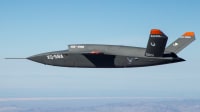
Aerospace & Defense Tech Briefs
The F-35 Is Getting Life-Saving Automatic Ground Collision Avoidance Systems from the F-16
Aerospace & Defense Tech Briefs
MTSI’s Latest Project Gives Fixed-Wing Aircraft Vertical Cargo Lift Capabilities
Aerospace & Defense Tech Briefs
GA-ASI Maximizes Fuel Capacity for MQ-25 Entry
Aerospace & Defense Tech Briefs
Boeing's Latest Contract Secures New Wings for Remaining A-10 Fleet
Aerospace & Defense Tech Briefs
New Boeing Facility Will Improve V-22 Quality, Safety
Aerospace & Defense Tech Briefs
Ahead of USAF T-X Decision, Leonardo Finds Market for T-100’s Little Brother – the Single-Engine Aermacchi M-345
Aerospace & Defense Tech Briefs
J-10B Fighter Demonstrates Thrust-Vectoring Supermaneuverability at Airshow China
Aerospace & Defense Tech Briefs
Honeywell Wins $1.04 Billion U.S. Air Force Power Systems Contract
Aerospace & Defense Tech Briefs
Sikorsky’s Autonomous Black Hawk Helicopter Takes Flight
Aerospace & Defense Tech Briefs
Aitech Defense Will Provide Data Interface Technology for Boeing’s Unmanned MQ-25 Refueling Platform
Aerospace & Defense Tech Briefs
J-10B Fighter Aircraft Debuts Chinese Thrust Vectoring Technology
Aerospace & Defense Tech Briefs
Lockheed Martin’s Next-Gen, 360-Degree Vision System Flies on the Bell V-280 Valor
Aerospace & Defense Tech Briefs
Maintainers Design a $400 Maintenance Fixture to save the U.S. Air Force $500k per Year
Aerospace & Defense Tech Briefs
Curtiss-Wright Black Boxes Receive European Approval
Aerospace & Defense Tech Briefs
Airbus and Dassault Aviation Will Start Development of the “New Generation Fighter” for European FCAS Program
Aerospace & Defense Tech Briefs
Lockheed Martin and Arconic Collaborate on 3D Printing and Advanced Aerospace Materials
Aerospace & Defense Tech Briefs
Curtiss-Wright Will Provide Data Technology Support for Boeing’s MQ-25 Unmanned Air Refueling Platform
Aerospace & Defense Tech Briefs
When It Comes to Fifth-Generation Assets, Air Force Values Virtual Training over Live Flying
Aerospace & Defense Tech Briefs
Boeing Wins MQ-25 Contract
Aerospace & Defense Tech Briefs
Air Force Begins 3D Printing Nonstructural Aircraft Parts
Aerospace & Defense Tech Briefs
Artificial Intelligence Could Reduce CV-22 Osprey Maintenance
Aerospace & Defense Tech Briefs
U.S. DoD Orders 255 Lockheed Martin F-35 Military Combat Aircraft in $22.7B Deal
Aerospace & Defense Tech Briefs
Pratt & Whitney Receives $437M for Continued Adaptive Engine Development
Aerospace & Defense Tech Briefs
L3 Makes Its C-130 Modernization Package Available to Global Operators
Aerospace & Defense Tech Briefs
Raytheon, UTC Merger Will Direct $8B R&D Budget Toward Hypersonics, Cybersecurity, AI, and Next-Gen Connected Aircraft
Aerospace & Defense Tech Briefs
OA-X Phase Two Kicks Off
Aerospace & Defense Tech Briefs
General Atomics Plans First Trans-Atlantic Flight of Medium-Altitude, Long-Range Remotely Piloted Aircraft
Aerospace & Defense Tech Briefs
Astronautics to Upgrade Cockpit Displays on U.S. Customs and Border Protection P-3 Orions
Transcript
No transcript is available for this video.
Top Stories
INSIDERManufacturing & Prototyping
 How Airbus is Using w-DED to 3D Print Larger Titanium Airplane Parts
INSIDERManned Systems
 FAA to Replace Aging Network of Ground-Based Radars
NewsTransportation
 CES 2026: Bosch is Ready to Bring AI to Your (Likely ICE-powered) Vehicle
NewsSoftware
 Accelerating Down the Road to Autonomy
EditorialDesign
 DarkSky One Wants to Make the World a Darker Place
INSIDERMaterials
 Can This Self-Healing Composite Make Airplane and Spacecraft Components Last...
Webcasts
Defense
 How Sift's Unified Observability Platform Accelerates Drone Innovation
Automotive
 E/E Architecture Redefined: Building Smarter, Safer, and Scalable...
Power
 Hydrogen Engines Are Heating Up for Heavy Duty
Electronics & Computers
 Advantages of Smart Power Distribution Unit Design for Automotive...
Unmanned Systems
 Quiet, Please: NVH Improvement Opportunities in the Early Design...
