




New PhantomStrike Radar Completes First Flight Test

Raytheon has successfully completed the first flight test of its PhantomStrike radar on its Multi-Program Testbed aircraft in Ontario, California. PhantomStrike successfully tracked several airborne targets and accurately mapped the terrain.
PhantomStrike is a first-of-its-kind fully air-cooled, fire-control radar that's designed to provide long-range threat detection, tracking and targeting. At nearly half the cost of a typical fire control radar, it delivers superior radar capability due to its faster, more agile digital beam, advanced target detection and resistance to jamming.
"The threat environment is evolving, and this test demonstrates how PhantomStrike can make enhanced situational awareness available to a broader set of our partners and allies – offering unparalleled performance and potential U.S. weapons integration – at an affordable price," said Bryan Rosselli, president of Advanced Products and Solutions at Raytheon. "This next-generation radar dramatically changes how we identify and respond to threats."
PhantomStrike is a gallium nitride (GaN) powered radar that enables aircrew to see farther. It's designed for a range of platforms, including uncrewed and light-attack aircraft, fighter jets, helicopters and ground-based towers. It harnesses the fire control power of a fighter in its lightest form factor ever – weighing nearly half of a modern active electronically scanned array (AESA) radar.
Production of the radars takes place in Forest, Mississippi; Tucson, Arizona; and Scotland, with support from Raytheon UK.
More From SAE Media Group
Aerospace INSIDER
First F-15Es Equipped With EPAWSS Ready for Flight
Aerospace INSIDER
L3Harris Starts Low Rate Production Of New F-16 Viper Shield
Aerospace INSIDER
Northrop's New Multifunction Active Electronically Scanned Array
Tech Briefs
Next-Generation Radar for the F-35 Lightning II
Aerospace & Defense Tech Briefs
TRML-4D Radar for Ukrainian Air Defense
Aerospace & Defense Tech Briefs
B-52 Radar Modernization
Defense INSIDER
Advanced Subsystems Improve Performance of Eurofighter Radar Mk1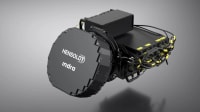
Aerospace Manufacturing and Machining INSIDER
Northrop Grumman Developing Next Generation F-35 Radar Upgrade
Aerospace & Defense Tech Briefs
High-Speed Data Cables for Fighter Aircraft
Aerospace & Defense Tech Briefs
The B-52’s New Active Electronically Scanned Array Radar System
Aerospace & Defense Tech Briefs
Raytheon to Upgrade B-52 with AESA Radars
Aerospace & Defense Tech Briefs
Next Generation Air and Missile Defense Radar
Aerospace & Defense Tech Briefs
S-Band Radar Systems


Aerospace & Defense Tech Briefs
Airborne Early Warning and Control Sensor
Aerospace & Defense Tech Briefs
The Marines New Installation Counter UAS System
Aerospace INSIDER
AI-Powered Radar Warning Receiver for Fourth Generation Aircraft
Aerospace & Defense Tech Briefs
F/A-18 Infrared Search and Rescue System
Aerospace INSIDER
UK Air Force Funds Production of Typhoon Jet's New Radar
Defense INSIDER
Scalable Agile Beam Radar Migrates to Multiple Platforms
Aerospace INSIDER
EA-37B Compass Call: The US Air Force's New Electronic Attack Aircraft
Defense INSIDER
Patriot Missile Hits Target in Test of Upgraded ICBS Radar
Aerospace & Defense Tech Briefs
3D Radar


Aerospace INSIDER
Boeing to Develop Two New E-7 Variants for US Air Force
Aerospace Manufacturing and Machining INSIDER
A New AI-Piloted VTOL Fighter Jet for Contested Environments
Aerospace INSIDER
Germany's New Military Surveillance Jet Completes First Flight
Aerospace & Defense Tech Briefs
Australian Air Surveillance Radar Upgrade
Top Stories
NewsRF & Microwave Electronics
 Microvision Aquires Luminar, Plans Relationship Restoration, Multi-industry Push
INSIDERAerospace
 A Next Generation Helmet System for Navy Pilots
INSIDERDesign
 New Raytheon and Lockheed Martin Agreements Expand Missile Defense Production
INSIDERMaterials
 How Airbus is Using w-DED to 3D Print Larger Titanium Airplane Parts
NewsPower
 Ford Announces 48-Volt Architecture for Future Electric Truck
ArticlesAR/AI

Webcasts
Electronics & Computers
 Cooling a New Generation of Aerospace and Defense Embedded...
Automotive
 Battery Abuse Testing: Pushing to Failure
Power
 A FREE Two-Day Event Dedicated to Connected Mobility
Unmanned Systems
 Quiet, Please: NVH Improvement Opportunities in the Early Design Cycle
Automotive
 Advantages of Smart Power Distribution Unit Design for Automotive &...
Energy
 Sesame Solar's Nanogrid Tech Promises Major Gains in Drone Endurance