




Boeing to Develop Two New E-7 Variants for US Air Force
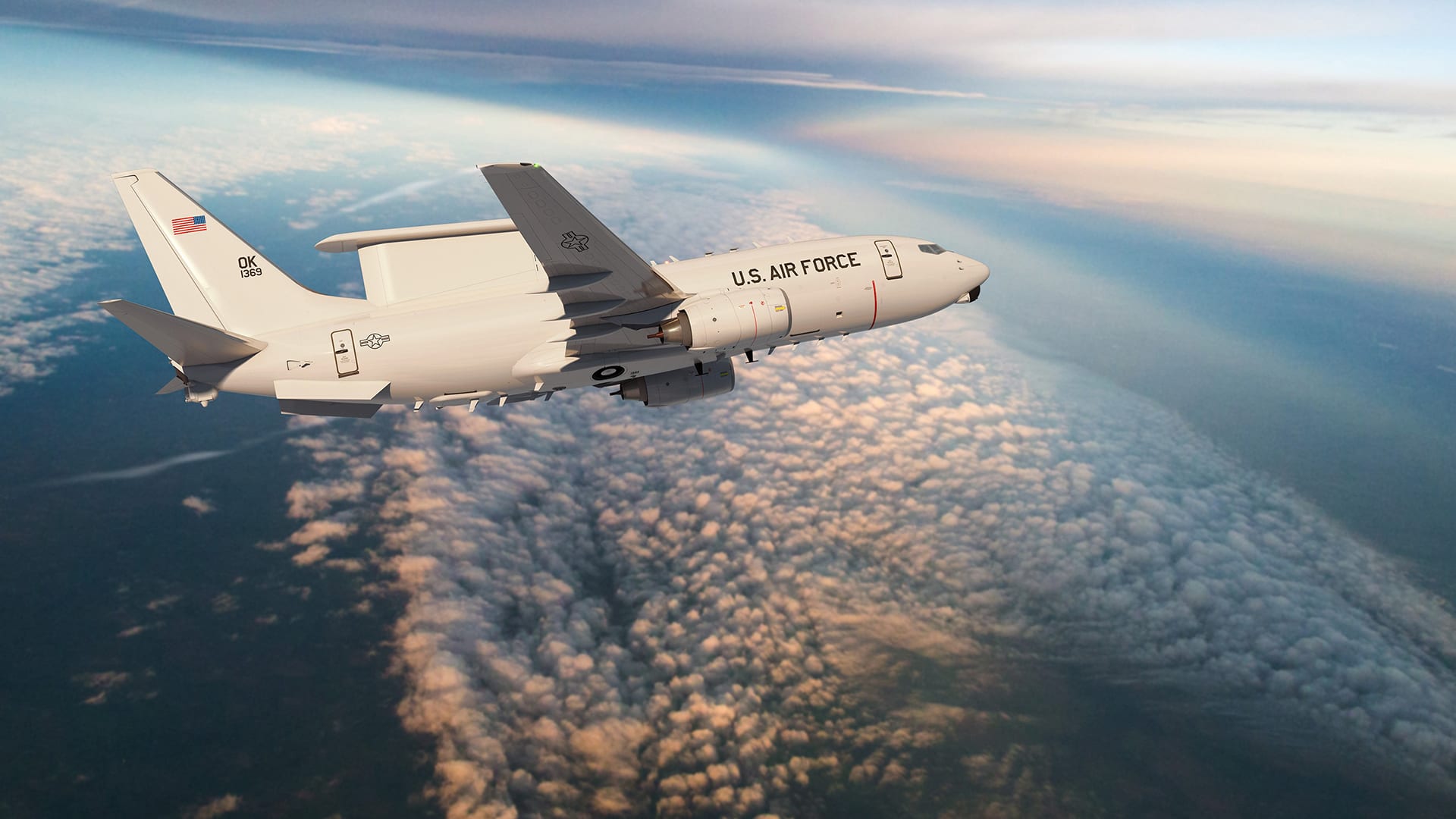
Boeing will begin development of two new U.S. variants of the E-7 Airborne Early Warning & Control (AEW&C) aircraft through a $1.2 billion "Undefinitized Contract Action."
The E-7 provides a fully integrated, combat-proven, flexible command and control node that delivers multi-domain awareness in the most challenging operational environments. The E-7’s open systems architecture and agile software design enable the aircraft's capabilities to evolve and remain ahead of future threats.
“The E-7 is a proven platform,” said Stu Voboril, E-7 Program Vice President and General Manager. “It is the only advanced aircraft that is capable of meeting the U.S. Air Force’s near-term Airborne Early Warning & Control requirement while enabling integration across the joint force.”
The E-7 tracks multiple airborne and maritime threats simultaneously with 360-degree coverage via the Multi-role Electronically Scanned Array (MESA) sensor. MESA provides the warfighter with critical domain awareness to detect and identify adversarial targets at long range and dynamically adjusts to emerging tactical situations.
Other E-7 operators include the Royal Australian Air Force, Republic of Korea Air Force, Turkish Air Force and the United Kingdom’s Royal Air Force.
The E-7 uses a well-established supply chain which significantly reduces maintenance and logistics costs and increases mission readiness on day one. Converted from the Next-Generation 737-700, the E-7 capitalizes on existing commercial derivative aircraft design, certification and modification processes, allowing E-7s to be fielded to meet Air Force needs.
More From SAE Media Group
Tech Briefs
Next-Generation Radar for the F-35 Lightning II
Aerospace INSIDER
First F-15Es Equipped With EPAWSS Ready for Flight
Aerospace INSIDER
A-10 Warthog to Get New Mission Computer
Aerospace INSIDER
L3Harris Starts Low Rate Production Of New F-16 Viper Shield

Aerospace & Defense Tech Briefs
Airborne Early Warning and Control Sensor
Aerospace & Defense Tech Briefs
High-Speed Data Cables for Fighter Aircraft
Aerospace INSIDER
EA-37B Compass Call: The US Air Force's New Electronic Attack Aircraft

Aerospace INSIDER
AFMC Completes First Ever Flight of F-35 with F-22 Software

Defense INSIDER
New Combat Pod System Wakes Up with Software Updates
Aerospace & Defense Tech Briefs
B-52 Radar Modernization

Aerospace Manufacturing and Machining INSIDER
Northrop Grumman Developing Next Generation F-35 Radar Upgrade
Aerospace & Defense Tech Briefs
Electronic Warfare Combat Training Pod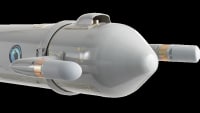
Aerospace INSIDER
Air-to-Air Refueling Milestone for E-7A Wedgetail and KC-46A

Aerospace INSIDER
Northrop's New Multifunction Active Electronically Scanned Array

Aerospace & Defense Tech Briefs
F/A-18 Infrared Search and Rescue System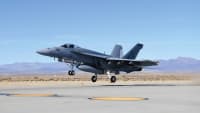

Defense INSIDER
AgilePod Flies on U.S. Air Force MQ-9 Reaper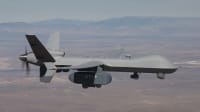
Aerospace Manufacturing and Machining INSIDER
Embraer Launches A-29N Super Tucano in NATO Configuration
Aerospace INSIDER
How the Air Force's B-21 Raider is Advancing Across Test and Production
Aerospace INSIDER
Egypt’s Apache Helicopter Fleet to Get Upgraded Sensor Systems
Aerospace INSIDER
The B-21 Raider Starts Flight Testing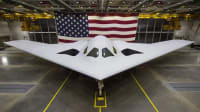
Aerospace INSIDER
Production Ready B-21 Bomber on Track for First Flight This Year
Aerospace INSIDER
MQ-1C Completes First Air-Launched Effect Flight Demonstration
Aerospace & Defense Tech Briefs
Advanced Airborne Defensive Laser for Incorporation on Strike Fighter Aircraft
Top Stories
NewsRF & Microwave Electronics
 Microvision Aquires Luminar, Plans Relationship Restoration, Multi-industry Push
INSIDERAerospace
 A Next Generation Helmet System for Navy Pilots
INSIDERDesign
 New Raytheon and Lockheed Martin Agreements Expand Missile Defense Production
INSIDERMaterials
 How Airbus is Using w-DED to 3D Print Larger Titanium Airplane Parts
NewsPower
 Ford Announces 48-Volt Architecture for Future Electric Truck
ArticlesAR/AI

Webcasts
Electronics & Computers
 Cooling a New Generation of Aerospace and Defense Embedded...
Automotive
 Battery Abuse Testing: Pushing to Failure
Power
 A FREE Two-Day Event Dedicated to Connected Mobility
Unmanned Systems
 Quiet, Please: NVH Improvement Opportunities in the Early Design Cycle
Automotive
 Advantages of Smart Power Distribution Unit Design for Automotive &...
Energy
 Sesame Solar's Nanogrid Tech Promises Major Gains in Drone Endurance