




Air Force Gets Strategic Mission System Capability Utilizing OpenVPX Standards

Collins Aerospace has been selected by the U.S. Air Force to develop a modern Very Low Frequency (VLF) receiver that will help modernize its strategic mission capability. The company was awarded a 30-month, $42 million Period of Performance (POP) contract.
“Collins has been providing its VLF terminals for decades, and this new equipment has been designed to meet rigorous future Air Force strategic requirements,” said John Sapp, vice president and general manager, Integrated Solutions for Collins Aerospace. “Our new modern OpenVPX architecture will provide them with expanded capability to ensure our warfighters are equipped to meet our nation’s greatest threats.”
The new product line features the VLF receiver, which will be used to disseminate command and control orders and provide presidential direction to strategic forces. The receiver is Open Mission System (OMS) and Modular Open Systems Approach (MOSA) compliant, while incorporating modern OpenVPX architecture ruggedized specifically for extreme operational environments. The VLF receiver’s open architecture will enable the U.S. Air Force to own the technical baseline and support decades of future growth. It is architected to support other airborne and ground platforms that are part of the Air Force’s strategic capability.
The VLF receiver also provides a launch program to transition technologies developed on the Software Programmable OMS Compliant (SPOC) program to a fielded system. SPOC’s OMS infrastructure backbone is combined with VLF Radio Frequency subassemblies to create the core Line Replaceable Unit (LRU) within the new receiver.
More From SAE Media Group



Aerospace INSIDER
Boeing to Develop Two New E-7 Variants for US Air Force
Electronics & Sensors INSIDER
New Transmitter Could Make Wireless Devices More Energy-Efficient
Aerospace INSIDER
Northrop's New Multifunction Active Electronically Scanned Array
Aerospace & Defense Tech Briefs
New Products

Aerospace & Defense Tech Briefs
New Products




Tech Briefs
How Much Do You Know About GPS and its History?
Aerospace & Defense Tech Briefs
Common Tactical Edge Network
Tech Briefs
Readers Select 2023 Products of the Year
Defense INSIDER
MAPS GEN II: Navigation System Upgrades for Army Vehicles
Aerospace Manufacturing and Machining INSIDER
Army Launches CMOSS Prototyping Competition for Computer Chassis and Cards

Autonomous Vehicle Engineering
TCU Testing at the Heart of Vehicle Connectivity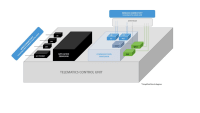
Aerospace & Defense Tech Briefs
NAVKITE PNT System
Defense INSIDER
MQ-25, H-1 Test Next-Gen Satellite Communications
Tech Briefs
Hyper-Distributed RFID Antenna (HYDRA) System
Aerospace & Defense Tech Briefs
New Products


Aerospace & Defense Tech Briefs
Persistent Systems Auto-Tracking Antenna Adds Aircraft to Network, Enhances Data Sharing
Aerospace & Defense Tech Briefs
Defeating Commercial Drone Threats with Open-Source SDR
Tech Briefs
New on the Market: August 2022
Top Stories
NewsRF & Microwave Electronics
 Microvision Aquires Luminar, Plans Relationship Restoration, Multi-industry Push
INSIDERAerospace
 A Next Generation Helmet System for Navy Pilots
INSIDERDesign
 New Raytheon and Lockheed Martin Agreements Expand Missile Defense Production
INSIDERMaterials
 How Airbus is Using w-DED to 3D Print Larger Titanium Airplane Parts
NewsPower
 Ford Announces 48-Volt Architecture for Future Electric Truck
ArticlesAR/AI

Webcasts
Electronics & Computers
 Cooling a New Generation of Aerospace and Defense Embedded...
Automotive
 Battery Abuse Testing: Pushing to Failure
Power
 A FREE Two-Day Event Dedicated to Connected Mobility
Unmanned Systems
 Quiet, Please: NVH Improvement Opportunities in the Early Design Cycle
Automotive
 Advantages of Smart Power Distribution Unit Design for Automotive &...
Energy
 Sesame Solar's Nanogrid Tech Promises Major Gains in Drone Endurance