




MQ-1C Completes First Air-Launched Effect Flight Demonstration
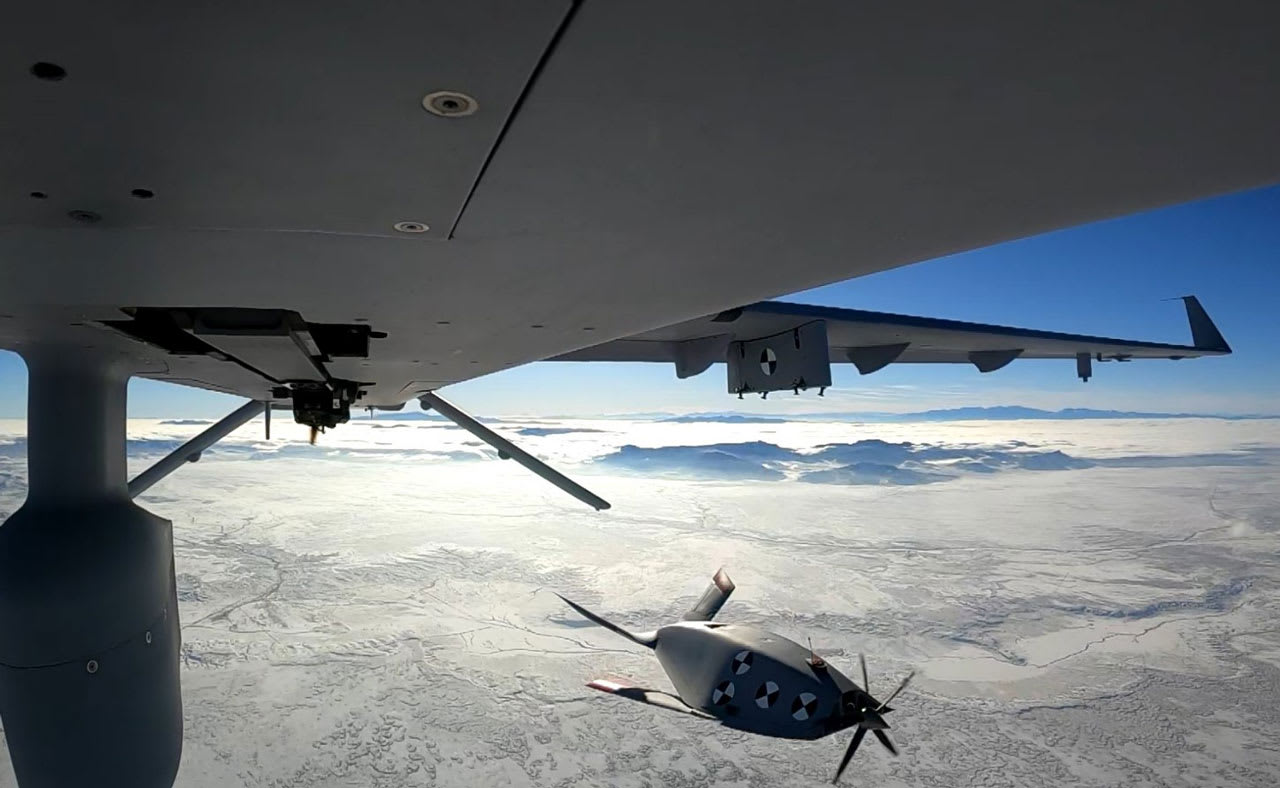
General Atomics Aeronautical Systems, Inc. (GA-ASI) flew a new survivable Air-Launched Effect (ALE) for the first time as part of a flight demonstration based out of the Dugway Proving Grounds, Utah, on Dec. 8, 2022. The ALE, known as Eaglet, was launched from a U.S. Army MQ-1C Gray Eagle Extended Range (GE-ER) Unmanned Aircraft System (UAS). The Eaglet flight was jointly funded by GA-ASI and the U.S. Army Combat Capabilities Development (DEVCOM) Army Research Laboratory (ARL) and Aviation & Missile Center (AvMC).
“The first flight of the Eaglet was an important milestone for the GA-ASI/U.S. Army team,” said GA-ASI President David R. Alexander. “Eaglet is intended to be a low-cost, survivable UAS with the versatility to be launched from a Gray Eagle, rotary-wing aircraft, or ground vehicles. It enables extended reach of sensors and increased lethality while providing survivability for manned aircraft.”
Eaglet fits into the ‘ALE Large’ category, which encompasses larger, more powerful sensors or payloads. Because of its design, Eaglet is capable of carrying a diverse range of payloads in support of multiple Army missions.
Eaglet design extends battlefield options for commanders while reducing their decision cycles. Gray Eagle can carry Eaglet for thousands of kilometers before launching it while being controlled through unmanned-unmanned teaming or as a component of advanced teaming command and control concepts.
Eaglet can work in concert with other long-range payloads carried by Gray Eagles, helicopters, or other platforms to support deep sensing in Multi-Domain Operations.
With this successful flight of the Eaglet, GA-ASI will work with the U.S. Department of Defense (DoD) to feature it in other exercises to further determine its potential. The Eaglet is the newest entry into GA-ASI’s Evolution Series of advanced UAS concepts.
More From SAE Media Group
Aerospace INSIDER
GA-ASI Announces Gray Eagle 25M for Multi-Domain Operations

Aerospace INSIDER
Anduril Completes First Semi-Autonomous Flight of CCA Prototype
Aerospace INSIDER
F-22 Pilot Controls Drone With Tablet
Aerospace & Defense Tech Briefs
Textron Systems, Textron Aviation Defense Demonstrate Simulated Manned-Unmanned Teaming Capability

Aerospace & Defense Tech Briefs
Reconnaissance Vehicle Sensor Suite Upgrade
Aerospace INSIDER
Two Startups Partner to Expand Hydrogen-Powered Drone Production
Aerospace INSIDER
VSR700 Unmanned Helicopter Performs Autonomous Flight Testing with DGA
Aerospace & Defense Tech Briefs
Remotely Piloted Air Systems
Aerospace Manufacturing and Machining INSIDER
Small Low-Cost Engines for Drones and Collaborative Combat Aircraft
Aerospace INSIDER
A-10 Warthog to Get New Mission Computer

Aerospace & Defense Tech Briefs
Vertical Takeoff and Landing Drone
Aerospace & Defense Tech Briefs
Convertible Drones
Aerospace & Defense Tech Briefs
Unmanned Autonomous Helicopter
Defense INSIDER
AgilePod Flies on U.S. Air Force MQ-9 Reaper
Tech Briefs
Experimental Hybrid Drone Transforms in Flight
Aerospace & Defense Tech Briefs
Unmanned Aerial Vehicle

Aerospace INSIDER
BAE Systems Acquires Developer of Electric Heavy Lift Quadcopters
Aerospace INSIDER
German Air Force Starts Flight Testing New Heron ISR Drone
Aerospace INSIDER
AI Algorithms Fly Uncrewed XQ-58A Valkyrie Drone for Three Hour Sortie
Aerospace INSIDER
AFMC Completes First Ever Flight of F-35 with F-22 Software
Aerospace & Defense Tech Briefs
Enabling Off-the-Shelf Autonomous Naval Warfare
Aerospace & Defense Tech Briefs
Unmanned Hover Plane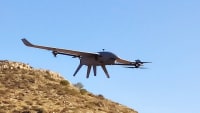
Aerospace INSIDER
Drone Traffic Management System Wins NASA Invention of the Year
Aerospace INSIDER
Army’s “Robo-Raven” UAV Flies with Flapping Wings
Top Stories
NewsSensors/Data Acquisition
 Microvision Aquires Luminar, Plans Relationship Restoration, Multi-industry Push
INSIDERRF & Microwave Electronics
 A Next Generation Helmet System for Navy Pilots
INSIDERWeapons Systems
 New Raytheon and Lockheed Martin Agreements Expand Missile Defense Production
NewsAutomotive
 Ford Announces 48-Volt Architecture for Future Electric Truck
INSIDERAerospace
 Active Strake System Cuts Cruise Drag, Boosts Flight Efficiency
ArticlesTransportation

Webcasts
Aerospace
 Cooling a New Generation of Aerospace and Defense Embedded...
Energy
 Battery Abuse Testing: Pushing to Failure
Power
 A FREE Two-Day Event Dedicated to Connected Mobility
Automotive
 Quiet, Please: NVH Improvement Opportunities in the Early Design Cycle
Electronics & Computers
 Advantages of Smart Power Distribution Unit Design for Automotive &...
Unmanned Systems
 Sesame Solar's Nanogrid Tech Promises Major Gains in Drone Endurance