




UAV Ground Control Station
General Atomics Aeronautical Systems, Inc.
San Diego, CA
858-762-6700
www.ga-asi.com
The U.S. Air Force’s new Block 50 Ground Control Station (GCS) – developed by General Atomics Aeronautical Systems, Inc. (GA-ASI) – for the first time controlled an MQ-9 Reaper® on January 8th from the GA-ASI Gray Butte Flight Operations Facility near Palmdale, Calif.

The Block 50 GCS cockpit for Remotely Piloted Aircraft (RPA) is designed with improved capabilities through an optimized Human Machine Interface (HMI) that significantly enhances aircrew situational awareness and allows for single seat operations. It integrates multi-level security feeds with onboard sensors to display a comprehensive picture of the battlespace and incorporates improved information assurance capabilities that protect against cybersecurity risks.
The design of the Block 50 provides separation of flight critical components to increase flight safety posture and enable rapid testing and integration of new mission capabilities.
According to General Atomics, features of the new Block 50 GCS include:
An intuitive glass cockpit design that reduces operator workload and increases effectiveness of mission execution through electronic checklists and integrated mission data information displays;
Demonstrated Single Seat operations;
An increase in modularity and interface definition to aid in overcoming Diminishing Manufacturing Sources (DMS);
One-deep line-replaceable unit (LRU) access to reduce maintenance down time and increase operational availability (Ao); and
A new Multi-Level Secure (MLS) Integrated Communication System (ICS) for improved situational awareness, leveraging an upgraded network infrastructure for sharing information throughout a globally connected GCS and Squadron Operating Center (SOC) network.
Designated MQ-9 Reaper® by its U.S. Air Force and Royal Air Force customers, the turboprop-powered, multi-mission remotely piloted aircraft (RPA) is actually a variation of the highly successful Predator B UAV. First flown in 2001, Predator B is a highly sophisticated development built on the experience gained with the company's battle-proven Predator RPA. Predator B has an endurance of over 27 hours, speeds of 240 KTAS, can operate up to 50,000 feet, and has a 3,850 pound (1746 kilogram) payload capacity that includes 3,000 pounds (1361 kilograms) of external stores. Powered by the flight-certified and proven Honeywell TPE331-10 turboprop engine with Digital Electronic Engine Control (DEEC), Predator B is equipped with a fault-tolerant flight control system and triple redundant avionics system architecture.
For Free Info Visit Here .
More From SAE Media Group
Aerospace & Defense Tech Briefs
Collins Aerospace Provides Avionics for C-130H Modernization Program
Aerospace & Defense Tech Briefs
Remotely Piloted Air Systems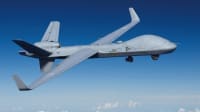
Aerospace & Defense Tech Briefs
Flight Computer
Aerospace & Defense Tech Briefs
General Atomics Moves Toward Global RPA Flight Certification for MQ-9B SkyGuardian
Aerospace & Defense Tech Briefs
Unmanned Aerial System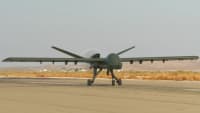
Aerospace & Defense Tech Briefs
Textron Systems, Textron Aviation Defense Demonstrate Simulated Manned-Unmanned Teaming Capability
Aerospace & Defense Tech Briefs
General Atomics Plans First Trans-Atlantic Flight of Medium-Altitude, Long-Range Remotely Piloted Aircraft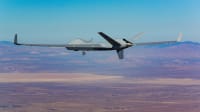
Aerospace & Defense Tech Briefs
Autonomous Collaborative Platform
Aerospace & Defense Tech Briefs
Industry Invited to Participate in AeroTech Aerospace and Defense Technical Program
Aerospace & Defense Tech Briefs
The Altair/Predator B: An Earth Science Aircraft for the 21st Century
Aerospace & Defense Tech Briefs
Curtiss-Wright Black Boxes Receive European Approval
Aerospace & Defense Tech Briefs
Remotely Piloted Aircraft
Aerospace & Defense Tech Briefs
Abaco’s FORCE2 Flight Computer Enables National and International Ground Control Station Certification
Aerospace & Defense Tech Briefs
Connected Aircraft Technologies Benefit Manufacturers, Airlines, and Travelers
Aerospace & Defense Tech Briefs
Multispectral Airborne Reconnaissance System
Aerospace & Defense Tech Briefs
Lockheed Martin’s Next-Gen, 360-Degree Vision System Flies on the Bell V-280 Valor
Aerospace & Defense Tech Briefs
L3 Makes Its C-130 Modernization Package Available to Global Operators
Aerospace & Defense Tech Briefs
General Atomics MQ-9B SkyGuardian Lands at RAF Fairford, Makes History
Aerospace & Defense Tech Briefs
Integrated Flight Deck
Aerospace & Defense Tech Briefs
Aitech Defense Will Provide Data Interface Technology for Boeing’s Unmanned MQ-25 Refueling Platform
Aerospace & Defense Tech Briefs
Attack Reconnaissance Helicopter
Aerospace & Defense Tech Briefs
SAE International Extends Call for Abstracts, Seeks Submissions for AeroTech Conference
Aerospace & Defense Tech Briefs
Sonobuoy Dispensing & Remote Processing System
Aerospace & Defense Tech Briefs
Update on NASA’s Unmanned Aerial Vehicle
Aerospace & Defense Tech Briefs
Modified USAF T-1A Aircraft
Aerospace & Defense Tech Briefs
Aerion and Honeywell Collaborate on Revolutionary Flight Deck for Supersonic Bizjet
Aerospace & Defense Tech Briefs
Vertical Aerospace Is Honeywell’s Latest Partner in the UAM Industry
Aerospace & Defense Tech Briefs
Martin UAV VTOL Unmanned Aircraft Taps Persistent Systems Wave Relay Data Link Technology
Aerospace & Defense Tech Briefs
BAE Systems Will Supply Flight Control and Target Identification Systems for Boeing’s Carrier-Based MQ-25
Aerospace & Defense Tech Briefs
Effectiveness of Inter-Vehicle Communications and On-Board Processing for Close Unmanned Autonomous Vehicle Flight Formations
Top Stories
NewsRF & Microwave Electronics
 Microvision Aquires Luminar, Plans Relationship Restoration, Multi-industry Push
INSIDERAerospace
 A Next Generation Helmet System for Navy Pilots
INSIDERDesign
 New Raytheon and Lockheed Martin Agreements Expand Missile Defense Production
INSIDERMaterials
 How Airbus is Using w-DED to 3D Print Larger Titanium Airplane Parts
NewsPower
 Ford Announces 48-Volt Architecture for Future Electric Truck
ArticlesAR/AI

Webcasts
Electronics & Computers
 Cooling a New Generation of Aerospace and Defense Embedded...
Automotive
 Battery Abuse Testing: Pushing to Failure
Power
 A FREE Two-Day Event Dedicated to Connected Mobility
Unmanned Systems
 Quiet, Please: NVH Improvement Opportunities in the Early Design Cycle
Automotive
 Advantages of Smart Power Distribution Unit Design for Automotive &...
Energy
 Sesame Solar's Nanogrid Tech Promises Major Gains in Drone Endurance