




U.S. Army Tests Innovative Autonomous Tactical Vehicle Prototype
U.S. Army soldiers recently evaluated the off-road delivery capabilities of Overland AI’s “ULTRA” autonomous vehicle during a demonstration exercise in Vaziani, Georgia.
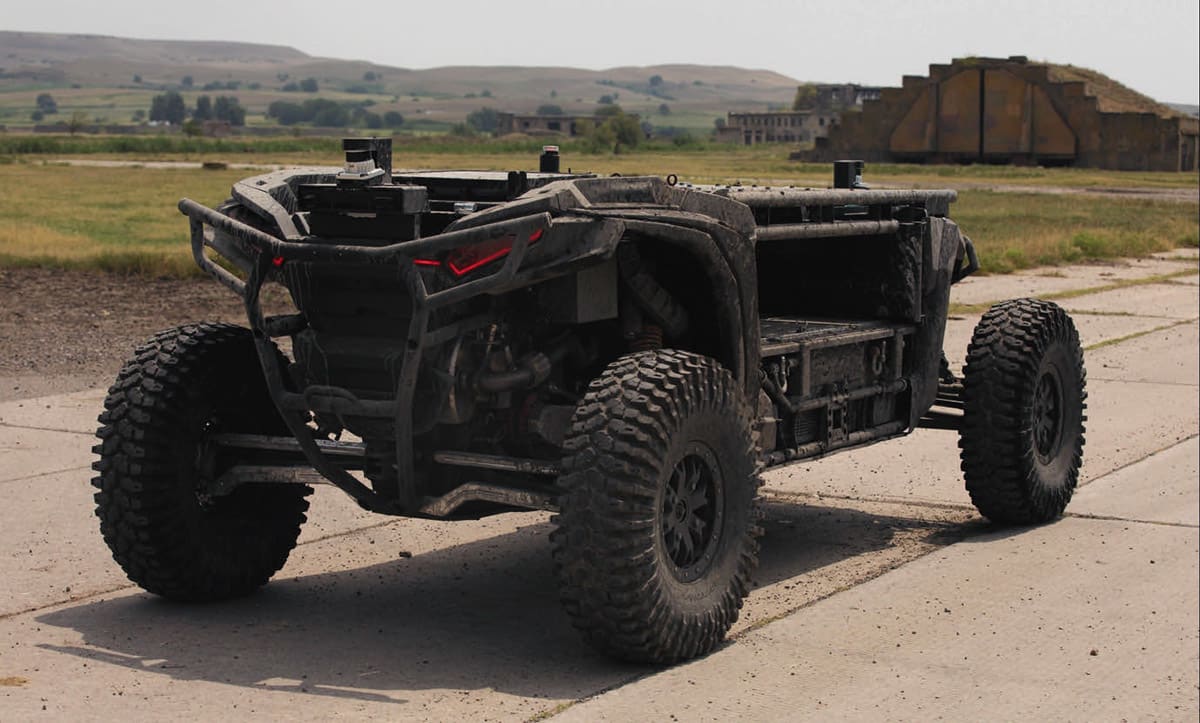
In an effort to cut costs and improve supply delivery efficiency, the U.S. Army assessed the Overland AI ULTRA Fully Autonomous Tactical Vehicle prototype during exercise Agile Spirit 25 at the Combat Training Center, Vaziani Training Area, Georgia, in July.
“Agile Spirit 25 is the 12th iteration of a biennial multinational exercise designed to enhance readiness, interoperability and combined operational capabilities, which promotes our countries’ shared goal of security and stability in the Black Sea Region,” said Col. Will Cox, Co-exercise Director for Agile Spirit 25.
Cox clarified that U.S. Army Europe and Africa set a key objective to work on innovation and experimentation, improving processes and overall safety on the battlefield. The U.S. Army has evaluated multiple autonomous vehicle providers for potential contracts to integrate cutting-edge technologies to advance military capabilities. For Agile Spirit 25, the U.S. Army put a fully autonomous vehicle with artificial intelligence (AI) to the test.
“We’re trying to keep soldiers off the front lines and keep our warfighters safe,” said Adam Ungar, Senior Program Manager at Overland AI.
As Ungar explained, an autonomous vehicle can be deployed in harm’s way instead of service members to save lives. The value of autonomous vehicles is immeasurable as their use could directly prevent casualties.
“Uncrewed systems are radically changing the character of war,” said Byron Boots, Co-founder and CEO at Overland AI. “We are developing autonomous ground vehicles like ULTRA to provide safety by taking the warfighter out of harm’s way.”
Overland AI personnel sought to understand U.S. Army soldiers’ needs on the battlefield during Agile Spirit 25, running resupply tests for 60mm and 120mm mortar units. The U.S. Army Soldiers with 1st Squadron, 91st Cavalry Regiment, 173rd Airborne Brigade had practiced with the system months before Agile Spirit 25 and quickly adapted to the system’s controls and functions.
“I actually did some training on it [the ULTRA] back in Germany about two months ago,” said Pfc. Jonathan Brooks, a mortarman with 1st Squadron, 91st Cavalry Regiment, 173rd Airborne Brigade.
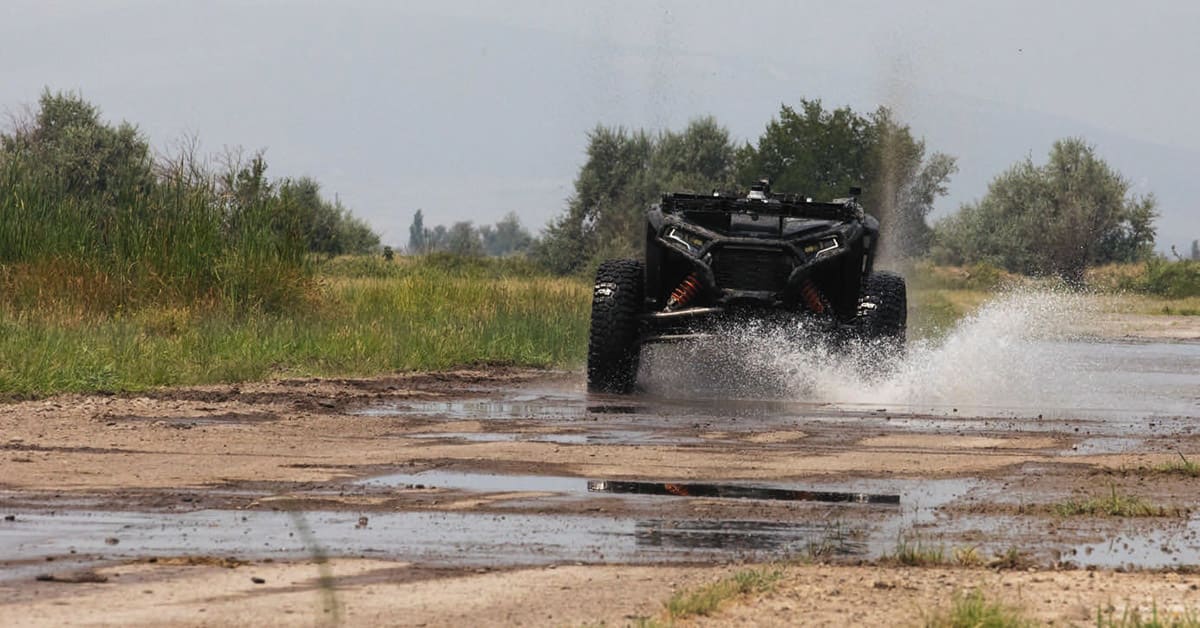
Brooks shared that he initially had mixed feelings about the ULTRA. He found the concept fascinating yet was apprehensive about the details of AI integration. Seeing it in action, he was amazed by its capabilities and saw that the AI was an assisting tool, not an uncontrollable entity. Its cameras and sensors are advanced, detecting changes in terrain and altering its course to find a clear path.
“ULTRA was built to be modular and mission-adaptable from the start,” said Chris Merz, Director of Product, Overland AI. “We are actively developing variants that support casualty evacuation, counter-unmanned aircraft systems, and terrain shaping operations.”
Merz explained that in August 2025, Overland AI personnel will demonstrate a C-UAS and intelligence, surveillance and reconnaissance-enabled ULTRA for the undersecretary of defense for research and engineering, as well as the Army and United States Special Operations Command.
Jonathan Fauth, Lead Exercise Planner for EUCOM-directed exercise Agile Spirit 2025, explained that all objectives in U.S. Army Europe and Africa exercises are to better understand how technology can be used in a practical scenario on realistic battlefields.
“Exercises are the way we practice and test those capabilities,” said Fauth. “We break something, we fix it, then we come back and do it again.”
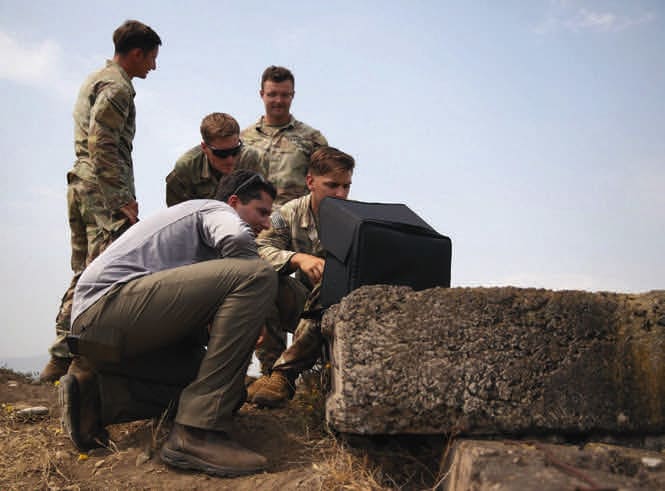
Military teams have complete oversight of the ULTRA as long as it has connectivity and a re-transmitting signal via the internet and/or satellites. Teams can also pre-program commands for the ULTRA, including traveling in certain patterns or to precise locations.
“I would love to see more of it [the ULTRA] in the future,” said Spc. Jack Padberg, a mortarman with 1st Squadron, 91st Cavalry Regiment, 173rd Airborne Brigade. “I think it can help us, as mortars, a lot.”
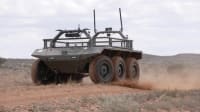
The ULTRA is an all-wheel, off-road drive vehicle with a maximum speed of 35 miles per hour. It can deliver up to 1,000 pounds with a cruising range of 100 miles at 20 miles per hour (terrain dependent).
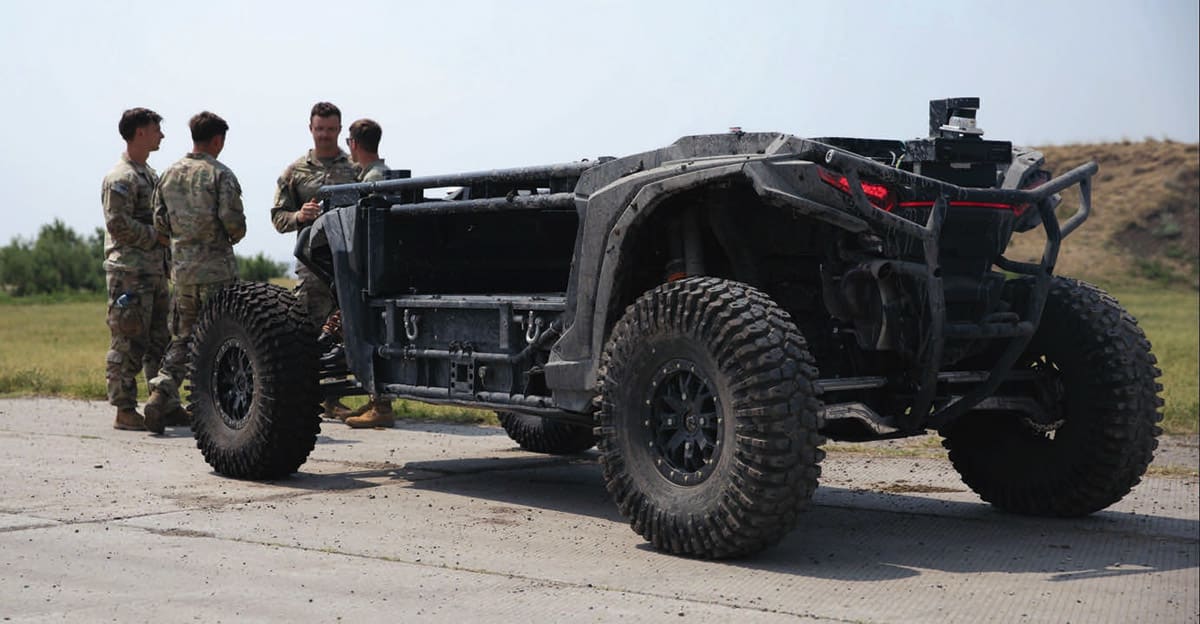
“ULTRA is designed to be attritable and costs more than an order of magnitude less than a traditional crewed combat vehicle,” said Boots. “Removing the need to protect a human operator allows for lighter, more affordable systems that can be deployed at scale. This represents both a financial shift and a moral one that enables commanders to deliver effects without putting Soldiers at unnecessary risk.”
Ungar stated that, beyond delivering any weapons payload for the U.S. military and mounting surveillance/reconnaissance systems, Overland AI’s ambition for the ULTRA is to practice medical evacuation and breaching capabilities.
“Breaching complex obstacles is among the most dangerous tasks for any unit,” said Chris Higgins, Director of Business Development at Overland AI. “We have been working closely alongside multiple engineer brigades to develop uncrewed solutions that leverage autonomy for breaching operations. These systems are being developed in partnership with the Army to ensure that robots, not humans, are first through the breach.”
This article was written by Sgt. Ehron Ostendorf, U.S. Army, for Joint Base San Antonio, it has been edited. For more information, visit here .
More From SAE Media Group

Aerospace & Defense Tech Briefs
Thailand Army Vehicle Computer System Upgrades
Aerospace & Defense Tech Briefs
Counter Unmanned Aircraft System
Aerospace INSIDER
Bombardier to Start Building New Army HADES Prototype Spy Plane
Aerospace & Defense Tech Briefs
Effectiveness of Inter-Vehicle Communications and On-Board Processing for Close Unmanned Autonomous Vehicle Flight Formations
Aerospace Manufacturing and Machining INSIDER
Counter UAS Systems Tested Against Swarms of 50 Drones in Latest Yuma Exercise
Aerospace INSIDER
New Anduril, Skydio Drones Start Field Testing in Romania


Aerospace Manufacturing and Machining INSIDER
A New AI-Piloted VTOL Fighter Jet for Contested Environments
Defense INSIDER
Electronic Warfare Creates Battlefield on a Different Wavelength
Aerospace INSIDER
GA-ASI Announces Gray Eagle 25M for Multi-Domain Operations
Aerospace & Defense Tech Briefs
Autonomous Collaborative Platform
Aerospace INSIDER
New Drones and Software Selected for DoD's Replicator 1.2
Aerospace Manufacturing and Machining INSIDER
Army Unveils New Prototype M1E3 Abrams Tank
Aerospace & Defense Tech Briefs
Preparing Germany’s New Surveillance Aircraft for Service

Aerospace & Defense Tech Briefs
Autonomous Surveillance Technologies Relating to Dismounted Soldiers
Aerospace & Defense Tech Briefs
5 Startups Developing AI for Defense Application

Aerospace & Defense Tech Briefs
Aerospace & Defense Podcasts
Defense INSIDER
MILSATCOM and the United States Space Force


Defense INSIDER
Army Rebuilding Short-Range Air Defense
Defense INSIDER
Tiny UAS Could Be Warfighters’ Eyes in the Sky
Aerospace INSIDER
Army Starts Testing Prototype Modular Turreted Mortar System
Top Stories
NewsRF & Microwave Electronics
 Microvision Aquires Luminar, Plans Relationship Restoration, Multi-industry Push
INSIDERAerospace
 A Next Generation Helmet System for Navy Pilots
INSIDERDesign
 New Raytheon and Lockheed Martin Agreements Expand Missile Defense Production
INSIDERMaterials
 How Airbus is Using w-DED to 3D Print Larger Titanium Airplane Parts
NewsPower
 Ford Announces 48-Volt Architecture for Future Electric Truck
ArticlesAR/AI

Webcasts
Electronics & Computers
 Cooling a New Generation of Aerospace and Defense Embedded...
Automotive
 Battery Abuse Testing: Pushing to Failure
Power
 A FREE Two-Day Event Dedicated to Connected Mobility
Unmanned Systems
 Quiet, Please: NVH Improvement Opportunities in the Early Design Cycle
Automotive
 Advantages of Smart Power Distribution Unit Design for Automotive &...
Energy
 Sesame Solar's Nanogrid Tech Promises Major Gains in Drone Endurance