




International Military Trial Tests Robotic Combat Vehicles in Australia
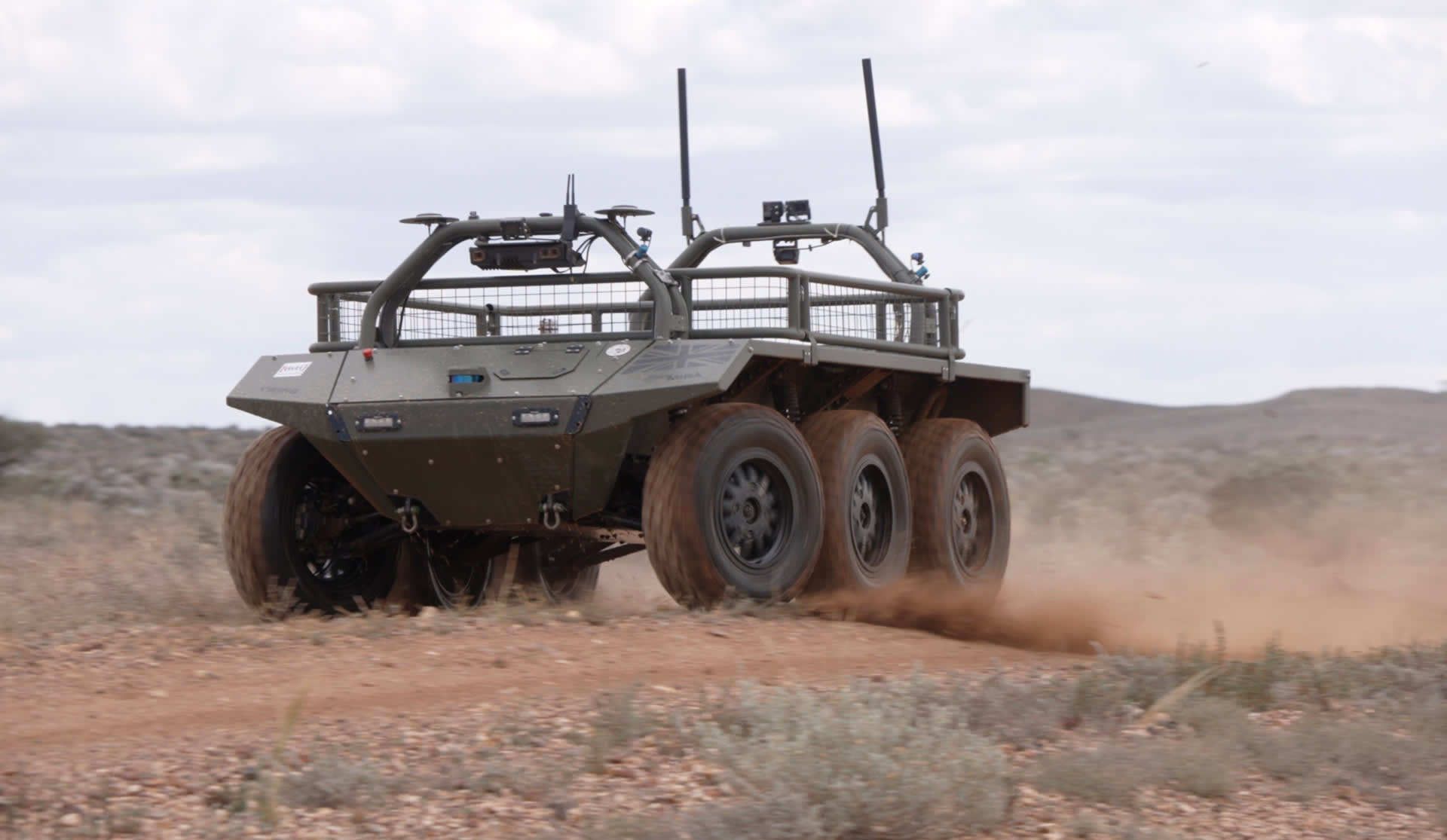
Defense scientists representing Australia, the U.K., and the U.S. have successfully demonstrated the integration of advanced autonomy and artificial intelligence (AI) to test the resilience of autonomous assets in a contested environment.
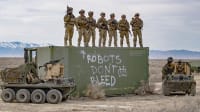
Conducted at the Cultana Training Area in South Australia in late 2023, the Trusted Operation of Robotic Vehicles in a Contested Environment (TORVICE) trial combined innovation and technology to test the use of AI in uncrewed robotic vehicles.
A network of robotic ground vehicles developed by several U.K. and U.S.-based manufacturers were configured to represent autonomous multi-domain launchers and uncrewed ground vehicles conducting long range precision fires and associated missions. The vehicles carried no weapons during the trial.
Australian scientists then subjected the vehicles to electronic warfare, electro optical and position, navigation, and timing attacks.
TORVICE is part of the United States, United Kingdom, and Australia's commitment to the AUKUS Advanced Capabilities Pillar, known as Pillar II, under the Artificial Intelligence and Autonomy Working Group. AUKUS is a trilateral security partnership for the Pacific region between Australia, the U.K. and the U.S., according to the Department of Defense (DoD).
The trial is part of an ongoing series pursuing a trilateral program of work on a range of leading-edge technologies and capabilities to promote security and stability in the Indo-Pacific region.
"The TORVICE project builds upon the work the AUKUS partners demonstrated in Salisbury in April. During this exercise, we performed rigorous red teaming of our autonomous/AI systems to assess and mitigate vulnerabilities and to improve their resilience in contested and complex environments," said Dr. Kimberly Sablon, the U.S. Department of Defense's Principal Director for Trusted Artificial Intelligence and Autonomy.
Guy Powell, Principal Adviser, Land Autonomy, U.K. Defence Science and Technology Laboratory, said networked autonomy would be critical to future warfighting.
“Robotic and autonomous systems have the potential to transform the battlefield providing a force multiplier while reducing risk to warfighters,” he said. “TORVICE allows us to understand robotic autonomous systems' operation in a contested environment and increase resilience of these systems. Working across three nations will accelerate development of robust capable systems.”
Shane Canney, Chief Land and Integrated Force, Defence Science and Technology Group, said interoperability with AUKUS partners on land, at sea, in the air and in cyber space would support the ADF to maintain its strategic military edge.
“Understanding how robotic vehicles react in contested environments accelerates our collective know-how and helps improve the system to overcome such attacks,” Dr. Canney said. “Transitioning trusted robotic capabilities into the hands of our warfighters safely and ethically is a priority.”
More From SAE Media Group
Defense INSIDER
US Army Tests Ground Robotics in Multinational Exercise
Defense INSIDER
Japanese Army to Test First Unmanned Ground Vehicles
Aerospace & Defense Tech Briefs
Autonomous Ground Reconnaissance Vehicles
Defense INSIDER
This Robot Dog Detects Nuclear Material and Chemical Weapons
Aerospace & Defense Tech Briefs
Counter-UAS Technology
Defense INSIDER
DoD Signs New Strategy for Countering Unmanned Systems
Defense INSIDER
Army Receives New Robot Combat Vehicle Prototypes

Aerospace & Defense Tech Briefs
Assessing the Effectiveness of a Combat UGV Swarm in Urban Operations
Tech Briefs
Giving Autonomous Vehicles the Ability to Reason

Aerospace & Defense Tech Briefs
Counter-Drone Technology
Aerospace & Defense Tech Briefs
Thailand Army Vehicle Computer System Upgrades
Aerospace & Defense Tech Briefs
U.S. Army Tests Innovative Autonomous Tactical Vehicle Prototype
Defense INSIDER
JPADS Brings New Sustainment Capability to Future Fight
Aerospace & Defense Tech Briefs
Armed Medium-Sized UGV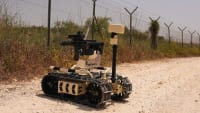
Aerospace & Defense Tech Briefs
Effectiveness of Inter-Vehicle Communications and On-Board Processing for Close Unmanned Autonomous Vehicle Flight Formations
Off-Highway Engineering
Kodiak Adapts Autonomous Tech for Military Vehicles
Aerospace & Defense Tech Briefs
Autonomous Air Defense Production
Defense INSIDER
Army Envisions Smarter Robots In Its Future
Aerospace & Defense Tech Briefs
Register Now: Counter UAS Technology 2021
Aerospace & Defense Tech Briefs
DARPA’s Latest Drone Swarm Sprint Focuses on Virtual Environments
Defense INSIDER
Conference to Focus on Counter-Drone Technology
Aerospace & Defense Tech Briefs
Low-Impact CUAS System
Defense INSIDER
Australia to Acquire New Class of Nuclear Submarines
Aerospace & Defense Tech Briefs
Counter Unmanned Aircraft System
Top Stories
NewsAutomotive
 Microvision Aquires Luminar, Plans Relationship Restoration, Multi-industry Push
INSIDERDesign
 A Next Generation Helmet System for Navy Pilots
INSIDERWeapons Systems
 New Raytheon and Lockheed Martin Agreements Expand Missile Defense Production
NewsPower
 Ford Announces 48-Volt Architecture for Future Electric Truck
INSIDERAerospace
 Active Strake System Cuts Cruise Drag, Boosts Flight Efficiency
ArticlesTransportation

Webcasts
Aerospace
 Cooling a New Generation of Aerospace and Defense Embedded...
Test & Measurement
 Battery Abuse Testing: Pushing to Failure
Internet of Things
 A FREE Two-Day Event Dedicated to Connected Mobility
Transportation
 Quiet, Please: NVH Improvement Opportunities in the Early Design Cycle
Electronics & Computers
 Advantages of Smart Power Distribution Unit Design for Automotive &...
Aerospace
 Sesame Solar's Nanogrid Tech Promises Major Gains in Drone Endurance