




NASA Demonstrates a First-of-Its-Kind Space Communications
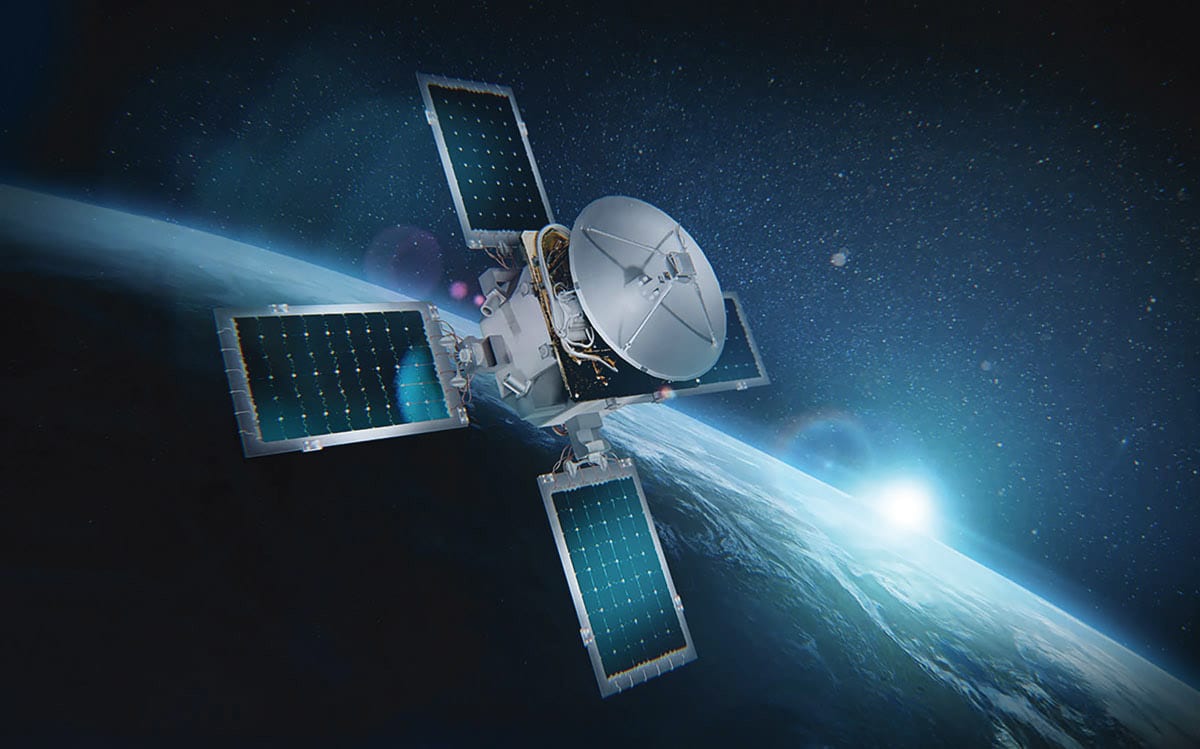
NASA’s Space Communications and Navigation (SCaN) Program and the Johns Hopkins Applied Physics Laboratory in Laurel, Maryland, have successfully tested wideband technology that allows spacecraft to communicate with both government and commercial networks for the first time.
Launched July 23, 2025, aboard a SpaceX Falcon 9 rideshare mission, the Polylingual Experimental Terminal (PExT) is demonstrating multilingual wideband terminal technology. Hosted on a satellite from York Space Systems, PExT enhances a spacecraft’s communications subsystem, enabling mission controllers to track and exchange data more efficiently across a broad range of networks and frequencies.
“This demonstration marks a historic step forward in modernizing space communications,” said Bobby Braun, Head of APL’s Space Exploration Sector. “PExT serves as another example of how APL’s pedigree in space technology can significantly benefit NASA and our nation.”
Blending Pop Culture, Science, and Technology
PExT works similarly to cellular network technology, where a phone has a primary wireless network but can roam to networks managed by other companies without interruption. NASA and APL aim to provide a comparable framework, allowing spacecraft equipped with the terminal flying in low Earth orbit to connect seamlessly to relay satellites running on commercial and government networks.
During the demonstration, the terminal established connections with NASA’s Tracking and Data Relay Satellite (TDRS) fleet and multiple commercial networks to showcase its capabilities. In a nod to pop culture, engineers also demonstrated low-latency and high-data-rate communications by playing the video game DOOM and the Rick Astley music video that spawned the popular “rickroll” meme in real time on the terminal.
“This demonstration brings unprecedented capability to new space missions by enabling communications that are untethered from the constraints of individual service providers and enabled by multilingual access to hybrid networks,” said Chris Haskins, Principal Investigator for PExT at APL. “It also shows how government, academia, and industry can partner effectively to develop and demonstrate groundbreaking and critical space capabilities.”
PExT advances NASA’s goals for how spacecraft will communicate while in low Earth orbit. In the future, this technology could expand to cislunar space, the region between Earth’s geosynchronous orbit and the Moon, as well as the Earth-Moon Lagrange points. Because of the flexible capabilities of wideband technology and the innovative nature of the mission, NASA has extended the PExT demonstration for an additional 12 months. Extended mission operations will include new direct-to-Earth tests with the Swedish Space Corporation, scheduled to begin in early 2026.
The PExT team is working with commercial industry to transition wideband technology and the PExT terminal to the broader space community, similar to APL’s transfer of the Frontier Radio, a software-defined radio used on multiple space missions before being licensed to Rocket Lab USA in 2021 for commercial use.
For decades, NASA’s TDRS constellation has ensured reliable communications between spacecraft in orbit and scientists and engineers on the ground. By 2031, NASA will transition near-Earth communications services for robotic science missions from government-owned to commercially sourced infrastructure.
This article was written by Brett Molina, Space Public Affairs Officer, The Johns Hopkins University Applied Physics Laboratory (Laurel, MD). For more information, contact Brett,
More From SAE Media Group
NASA Spinoff
Keeping the Connection
Tech Briefs
How Can the Private Sector Support Space?


NASA Spinoff
Communicating via Long-Distance Lasers

Aerospace & Defense Tech Briefs
NASA Eyes GPS at the Moon for Artemis Missions
Tech Briefs
Test Your Knowledge About Small Satellites
Aerospace INSIDER
Three Companies to Build New Multi-Orbit Logistics Prototype Spacecraft
Aerospace & Defense Tech Briefs
Laser-Based System Could Expand Space-to-Ground Communication

Tech Briefs
Wave Energy Modeling for Safer Space Travel
Tech Briefs
7 Space Sustainability Startups

Aerospace & Defense Tech Briefs
In-Orbit Commercial Spacecraft Undocking
NASA Spinoff
Make Way for Satellites
Aerospace INSIDER
Boeing to Develop New Space Force Nuclear Communications Satellites
Tech Briefs
Videos of the Month
Aerospace INSIDER
Airbus Demonstrates Very High-Speed Optical Link Between Space and Earth


Tech Briefs
Spacecraft to Remove Orbital Debris
Tech Briefs
A Turning Point in Space Exploration
Aerospace INSIDER
Leonardo to Design Next Generation Atomic Clock for Galileo Satellites
Tech Briefs
Commercial Lunar Landers Ready for the Moon


Aerospace & Defense Tech Briefs
Communicating Via Long-Distance Lasers
Aerospace & Defense Tech Briefs
NanoAvionics Satellite Suffers Space Debris Impact, Selfie Image Shows Damage
Aerospace & Defense Tech Briefs
New Zealand and LeoLabs Establish the First Low-Earth Orbit Regulatory Platform
Top Stories
INSIDERDesign
 How Airbus is Using w-DED to 3D Print Larger Titanium Airplane Parts
NewsAutomotive
 Microvision Aquires Luminar, Plans Relationship Restoration, Multi-industry Push
INSIDERRF & Microwave Electronics
 A Next Generation Helmet System for Navy Pilots
ArticlesDesign
 CES 2026: Bosch is Ready to Bring AI to Your (Likely ICE-powered) Vehicle
Road ReadyAutomotive
 2026 Nissan Sentra Review: Putting the Pieces Together
NewsUnmanned Systems

Webcasts
Power
 Hydrogen Engines Are Heating Up for Heavy Duty
Electronics & Computers
 Advantages of Smart Power Distribution Unit Design for Automotive...
Transportation
 Quiet, Please: NVH Improvement Opportunities in the Early Design...
Energy
 Battery Abuse Testing: Pushing to Failure
Connectivity
 A FREE Two-Day Event Dedicated to Connected Mobility
Aerospace
 SiPhog Technology: Enabling GPS‑Independent Flight for Uncrewed Aerial...