




How Lightweight Coatings Protect Aerospace and Defense Electronics

From satellites and commercial aircraft to uncrewed aerial vehicles (UAVs), the reliability of aerospace and defense electronics depends on their ability to perform flawlessly in extreme conditions. While stresses such as altitude changes, vacuum, vibration, moisture and chemical exposure have the potential to wreak havoc on electronic components, conformal coatings have become essential to providing protection in the midst of these challenges.
Applied as thin, lightweight films that follow the contours of printed circuit boards (PCBs) and components, conformal coatings create a barrier between the electronics and the harsh environments in which they must perform. The coatings’ ability to provide dielectric insulation, chemical protection and moisture resistance ensures that mission-critical electronics remain functional on the ground, in the sea, in flight or in orbit.
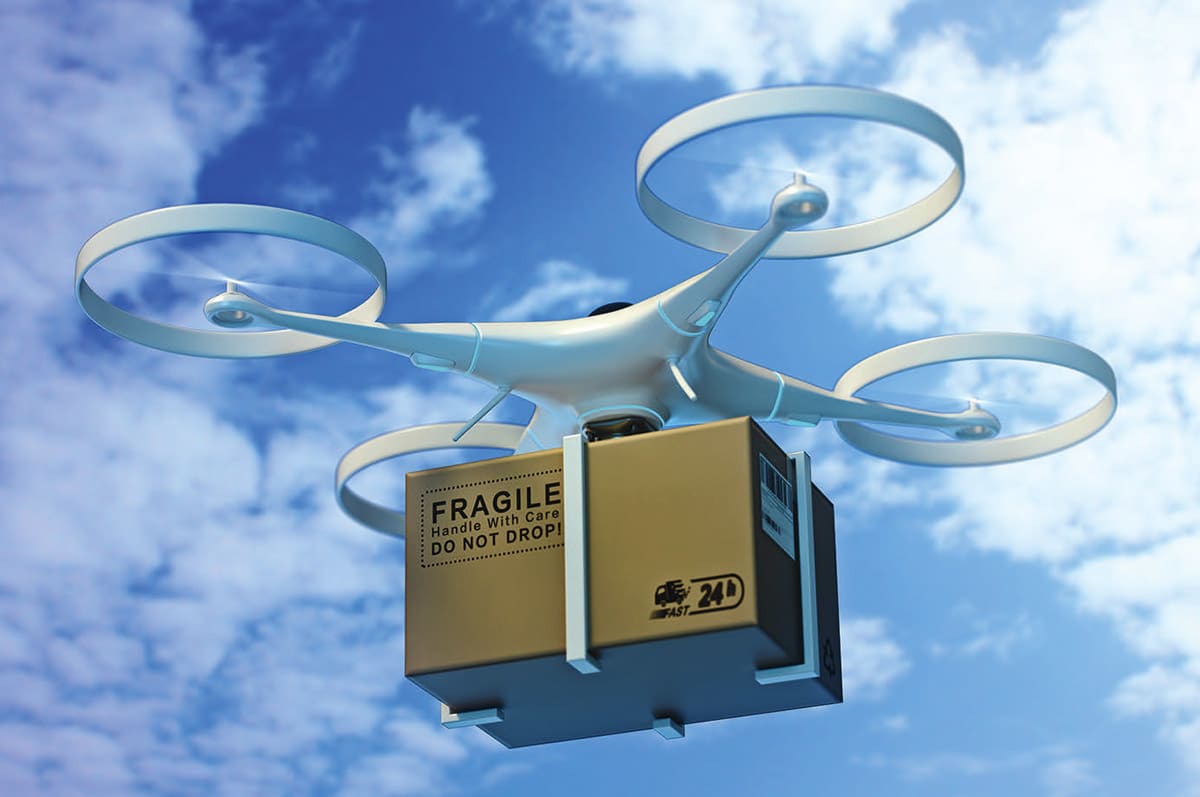
Both Parylene and liquid conformal coatings (e.g., acrylics, silicones, urethanes and epoxies) are commonly used in the aerospace and defense industries to protect electronics. While each of these coating families offers unique properties and characteristics, they both are known to provide thin, high-performance protection to ensure the functionality of electronics systems that operate in demanding conditions.
Key Properties of Conformal Coatings for Aerospace and Defense Applications
In aerospace and defense industries, component-level and overall system weight matters. For applications that are the most weight-sensitive, conformal coatings are an excellent protection option because they add minimal mass to electronics. Both Parylene and liquid coatings can be applied as thin films, often measured in microns and mils. Parylenes, in particular, are deposited in a gas-phase deposition process that allows the coating to “grow” evenly across every surface, resulting in a pinhole-free, uniform layer that protects even the smallest components, including crevices, without leaving air-gaps, bridging or pooling effects.
Aerospace and defense electronics frequently operate at high voltages and in electrically “noisy” environments where arcing, corona discharge or signal leakage could prove catastrophic. Conformal coatings also provide the crucial electrical protection that these systems need. Parylene coatings, for example, exhibit dielectric strengths as high as 7,000 volts per mil (0.001") for Parylene N and approximately 5,600 volts per mil for Parylene C, maintaining consistent electrical characteristics even at high frequencies. Liquid coatings also provide excellent electrical insulation, particularly urethane and silicone coatings, which are widely used on control systems and avionics boards to protect against high-voltage events.

Defense and aerospace systems, including radar, communication and navigation systems, often operate at high frequencies; therefore, coatings must perform reliably in the RF spectrum. Parylene coatings’ low dielectric constants and low dissipation factors, particularly Parylene HT® and ParyFree®, make them an ideal dielectric barrier for radar applications, phased-array antennas and high-speed signal processing assemblies. Parylenes’ RF transparency further enables environmental protection without altering impedance or degrading signal integrity.
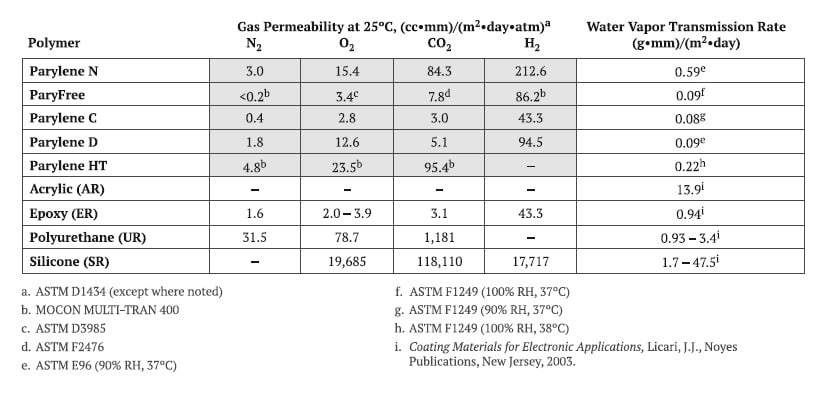
In addition to electrical protection, coatings must protect against environmental moisture, condensation and vapor ingress, which can cause corrosion and short circuits. Likewise, exposure to corrosive fluids, such as de-icing agents or various fuels, can corrode unprotected surfaces. Parylene C, for example, exhibits an exceptionally low water vapor transmission rate (WVTR), and boards coated with ParyFree showed no corrosion or salt deposits after 144 hours of salt fog exposure per ASTM B117 [see graphic]. Liquid coatings, particularly urethanes and silicones, also resist corrosion and chemical degradation, offering protection in fuel or salt environments such as naval aviation and coastal defense systems.
The thermal stability of a protective coating is also a critical property for engineers to consider when designing products and systems. Aerospace electronics are regularly exposed to wide temperature swings, from high-temperature engine compartments to cryogenic lows in space. Silicone coatings remain flexible and adherent from -65°C to 200°C, accommodating thermal cycling without cracking. For harsh environments, Parylene HT, a fluorinated variant of Parylene, provides long-term performance up to 350°C and short-term stability up to 450°C. It is also UV stable, making it ideal for components that experience prolonged outdoor exposure.
For electronics operating in high-altitude environments or within the vacuum of space, material outgassing must be considered as coating materials that release trapped gases can contaminate optical systems, sensors or propulsion components. Parylene coatings, applied in a solvent-free/catalyst-free process, meet requirements established in NASA’s ASTM E595 outgassing standard. They exhibit total mass loss and collected volatile condensable material values well below NASA’s thresholds, confirming their suitability on components within spacecraft, satellites and other high-altitude applications.
Finally, defense and aviation components and electronics must survive exposure to fuels, hydraulic fluids, lubricants and other aggressive chemicals. The chemical inertness of the Parylenes, as well as the corrosion resistance of urethane and silicone coatings, ensures the long-term performance of electronics under these harsh chemical conditions.
Protecting Aerospace and Defense Systems
The electronics inside aircraft, spacecraft and defense platforms are responsible for navigation, communication, power management and munitions control, among other critical tasks. The failure of a single component on a single board can jeopardize an entire mission, making reliable coating protection essential.
Avionics and flight control systems: High-density PCBs and sensors are exposed to rapid altitude and temperature changes; by protecting such systems against moisture and electrical discharge, coatings ensure reliable system operation when failure is not an option.
Radar and communication systems: Phased-array radar modules, RF amplifiers and microwave circuits rely on Parylenes’ low dielectric constants and high dielectric strengths, which make them excellent insulators in RF and high-voltage applications.
Uncrewed aerial vehicles (UAVs) and urban air mobility (UAM) platforms: Coatings deliver the ultra-lightweight protection necessary to extend flight duration and efficiency. They protect circuit boards, sensors and battery management electronics from condensation, humidity and airborne contaminants while maintaining optimal product weight.
Spacecraft and satellite systems: Outgassing control and resistance to vacuum-induced stress are essential when choosing a protective coating solution. The molecular stability and near-zero outgassing characteristics of Parylenes make them ideal for optical payloads, sensors and power electronics that must operate reliably for years in orbit.
Commercial avionics: Flight management systems, communication modules, cabin electronics and many other systems and their components depend on conformal coatings for moisture, chemical and corrosion protection. In these cases, liquid coatings often provide a cost-effective, reworkable solution, while Parylenes meet the needs of high-value or high-risk assemblies where dielectric and/or barrier performance are critical.

Engineering for Reliable System Performance
Component and system protection is best accommodated, and generally most cost effective, when it is considered early in the design phase. Engineers who plan for coating application early in development achieve greater reliability and manufacturing efficiency. Surface cleanliness and preparation are critical to consider, because contaminants, residues and flux can hinder coating adhesion, which leads to voids in the coating. Component spacing is also important to consider depending on the type of coating being used; liquid coatings generally require some room to flow, whereas Parylenes can penetrate tight spaces due to their vapor-phase deposition. Understanding which areas of a PCB or component must remain uncoated (e.g., connectors, heat sinks, etc.) is important as that determines whether masking and/or selective coating is required.
Selecting the best material for a specific application is important. Parylenes are a preferred choice for high-reliability, high-altitude and vacuum applications, while liquid coatings often provide solid performance in environments where selective application or re-workability are required. Depending on which coating is selected by the engineer, coating thickness becomes a consideration as well. Thicker liquid coatings, for example, may improve moisture and dielectric protection but may negatively affect mechanical flexibility. Parylene thicknesses that average between 5 and 25 microns typically achieve desired coating properties.

Ultimately, the goal for aerospace and defense engineers is to match coating properties to application requirements. For example, a radar system operating at high frequency demands a low-dielectric coating with RF transparency, a satellite requires low outgassing and radiation stability, and a UAV control board may need the lightest possible coating with moisture resistance. By understanding the environmental and functional stresses of each system, designers can select the coating that ensures both performance and longevity.
High performance and long-term reliability are often what define success in aerospace and defense electronics. Every flight control, communication system and sensor array may operate under harsh conditions that will quickly destroy systems if they are not appropriately protected. Lightweight, conformal coatings – be it gas-deposited Parylene coatings or spray, dip or brush-applied liquid coatings, provide the level of protection that makes high reliability operation possible.
By providing high dielectric strength, low outgassing, moisture and chemical resistance and long-term thermal and UV stability, these coatings preserve the integrity of electronics and substrates that are used in flight, defense and exploration applications. When selected and integrated based on an application’s environment, conformal coatings become a mission-enabling technology, ensuring that aerospace and defense electronics perform when reliability matters most.
This article was written by Tim Seifert, Specialty Coating Systems (Indiana, IN), Aerospace & Defense Market Segment Manager. For more information, visit here .
More From SAE Media Group
Aerospace & Defense Tech Briefs
Advances in Lightweight Electronics Protection

Aerospace Manufacturing and Fabrication
Developing a Conformal Coating Process for Aerospace Applications
Aerospace & Defense Tech Briefs
Design Guidelines for Military and Aerospace PCBs
Aerospace & Defense Tech Briefs
Making a Material Difference in Aerospace & Defense Electronics
Aerospace & Defense Tech Briefs
Testing EMI Materials for Battlefield Applications
Aerospace & Defense Tech Briefs
The Future of EMI Shielding Is Lightweight, Flexible, and Ready for Flight
Medical Design Briefs
OEM Toll Processing Advances High-Value Products
Aerospace & Defense Tech Briefs
Outsourcing Plasma Treatments for Surface Modification

Medical Design Briefs
LED-Optimized Medical Electronics Coating

Medical Design Briefs
Vote for Medical Design Briefs 2023 Annual Readers’ Choice Awards
Motion Design INSIDER
Computer-Guided Drawing Machine Fabricates Paper Metamaterials

Electronics & Sensors INSIDER
Blocking Electromagnetic Radiation with the Flip of a Switch
Photonics & Imaging Technology
Large Format Windows: From Material to Mission
Aerospace INSIDER
New Coating Repels Ice from Any Surface

Aerospace & Defense Tech Briefs
Shielding Aerospace Systems from Electromagnetic Interference
Aerospace INSIDER
A New Quantum Materials Research System
Aerospace & Defense Tech Briefs
Cold Spray Technology

NASA Spinoff
Space-Grade Insulation Keeps Beer Colder on Earth
Aerospace & Defense Tech Briefs
Continuous Sputter Deposition Coating of Long Monofilaments
Top Stories
INSIDERManufacturing & Prototyping
 How Airbus is Using w-DED to 3D Print Larger Titanium Airplane Parts
INSIDERManned Systems
 FAA to Replace Aging Network of Ground-Based Radars
NewsTransportation
 CES 2026: Bosch is Ready to Bring AI to Your (Likely ICE-powered) Vehicle
NewsSoftware
 Accelerating Down the Road to Autonomy
EditorialDesign
 DarkSky One Wants to Make the World a Darker Place
INSIDERMaterials
 Can This Self-Healing Composite Make Airplane and Spacecraft Components Last...
Webcasts
Defense
 How Sift's Unified Observability Platform Accelerates Drone Innovation
Automotive
 E/E Architecture Redefined: Building Smarter, Safer, and Scalable...
Power
 Hydrogen Engines Are Heating Up for Heavy Duty
Electronics & Computers
 Advantages of Smart Power Distribution Unit Design for Automotive...
Unmanned Systems
 Quiet, Please: NVH Improvement Opportunities in the Early Design...
Power

Similar Stories
ArticlesMaterials
 Developing a Conformal Coating Process for Aerospace Applications
BriefsElectronics & Computers
 Novel Whisker Mitigating Composite Conformal Coat Assessment
ArticlesElectronics & Computers
 The Future of EMI Shielding Is Lightweight, Flexible, and Ready for Flight
ArticlesPhotonics/Optics
 Combating Infrared Threats on the Battlefield
ArticlesElectronics & Computers
 Advanced Silicones for ADAS in Light Vehicles
ArticlesDefense
 Thermal Simulation and Testing of Expanded Metal Foils for Lightning Protection