




Digitally Transforming the Future of Defense: Collaborative Combat Aircraft

Augustine’s Law predicts “In the year 2054, the entire defense budget of the United States will purchase just one aircraft. This aircraft will have to be shared by the Air Force and Navy three days each per week except for leap year, when it will be made available to the Marines for the extra day.”
While the world is not on course for the $800 billion aircraft as Augustine predicted, the aerospace & defense industry must take steps to bring new technology to the battlefield without the $800 billion price tag. The development of robotic aircraft or drones is one way to deliver new capability faster for less cost.

A very promising application of such technologies is the Collaborative Combat Aircraft (CCAs) being developed for sixth-generation fighter aircraft. On top of an advanced crewed jet integrated with cutting-edge software and equipment, sixth-generation aircraft will be accompanied by several autonomous CCAs, supporting the crewed aircraft in a multitude of functions.
Reduced cost, faster time to capability and mission variability are just some of the advantages of CCAs. However, the complexity inherent to their design and that of the aircraft they support present new challenges that can hinder their deployment. To ensure CCAs can be ready on time and avoid bringing Augustine’s Law into fruition, A&D companies require new methods of product development powered by digital transformation.
The Rapid Rise of CCAs
CCAs are expected to fly in the skies very soon. The first family of CCAs, the YFQ-42 and the YFQ-44 are expected to fly for the first time before the end of 2025. A major factor in this rapid deployment lies in the parallel development of the CCAs with the sixth-generation aircraft they are meant to support, largely thanks to systems engineering methodologies.
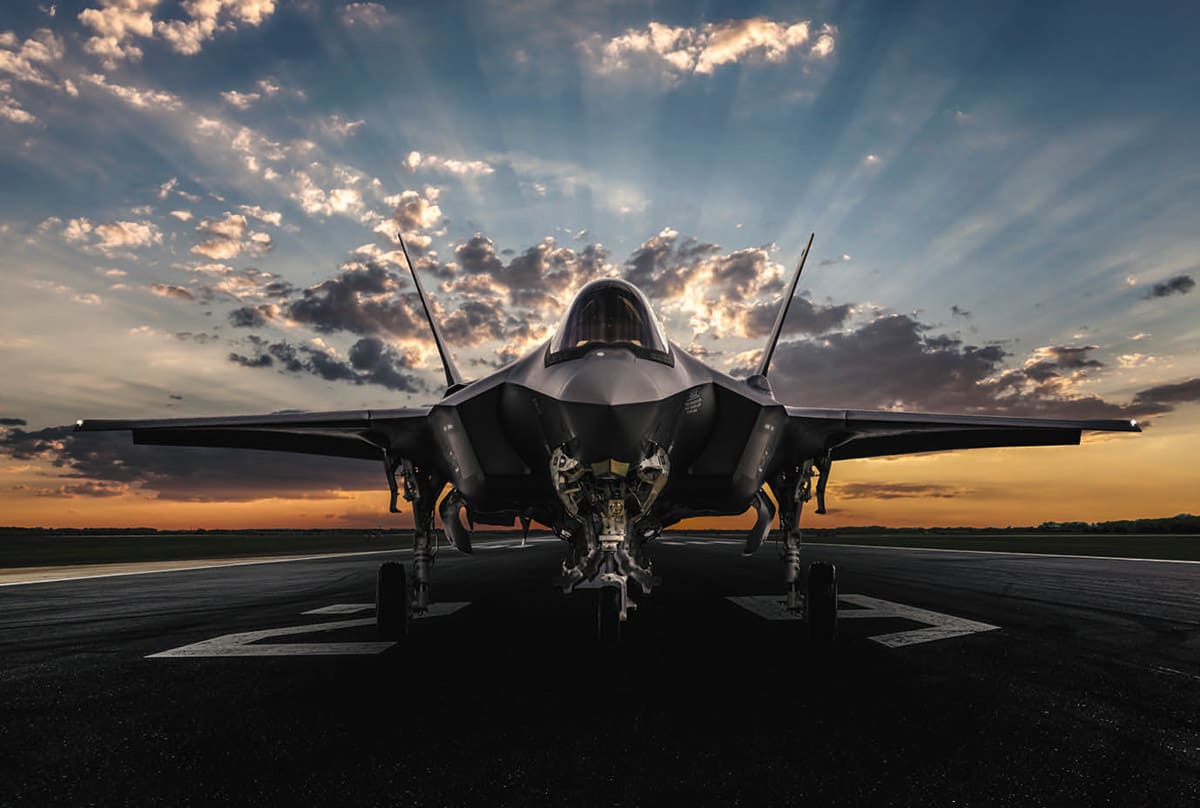
Systems engineering is helping the A&D industry deliver more capability faster by leveraging complexity. Systems engineering techniques allow engineers to take a very complex problem – or in this case a very complex single aircraft – and split it into multiple integrated solutions. CCAs move capabilities from a single complex aircraft to a family of simpler, integrated, aircraft. The parallel development of these uncrewed drones, with their crewed counterparts, allows militaries to deliver capability faster.
CCAs are also less expensive to design, build and operate than crewed aircraft. While nothing can match the instincts and skill of human pilots, it takes a long time to get pilots ready to fly. They must undergo sufficient physical and mental training to understand the aircraft they are meant to fly, and it can take two years and cost $10 million to train a single F-35 pilot. Maintaining their proficiency is expensive as well. A single F-35 flight hour costs $42,000. By contrast, the cost per flight hour of an MQ-9 Reaper drone is just $3,500.
While CCAs are cheaper to operate, the goal of the six-generation CCAs is not to replace human pilots. Instead, these CCAs will extend the capability of the human pilots who will fly with them, positioning sensors in places where it is not safe for human pilots to operate. They bring artificial intelligence (AI) to the battlefield to augment human pilots so that they can focus on more important tasks.
Software-Defined Aviation
CCAs are also able to fulfill multiple purposes thanks to the power of software. Rather than being equipped for every purpose simultaneously, CCAs are designed to be modular, capable of swapping sensors and electronics and then changing their purpose with just a software update. A CCA can be geared for reconnaissance one morning and then be updated and refitted for an entirely different mission later that evening.
CCAs are the ultimate example of software-defined vehicles. Not only does their flexible hardware make them less expensive to produce and quicker to field, but also their software enables them to adapt to whatever mission they are needed for, enabling rapid deployment for a high variety of different functions.
Fueled by Digital Transformation
History has shown how the cost of military aircraft and their development have grown with their complexity. Every new instrument or component can add new challenges to their design or production, as well as unexpected issues that can interfere with the rapid time to capability A&D companies strive to achieve. Additionally, CCAs will need to be produced at higher volumes with multiple variants, something many aerospace factories are not equipped to manufacture.
The fourth generation F-15 first flew in 1972. It reached initial operational capability (IOC) three years later. The fifth generation F-35’s first flight was in 2006, but didn’t reach IOC until 2015. That is three times longer than the F-15. The sixth-generation fighter aircraft and its CCAs will have even more capability, more sensors and far more software than previous generations. Does this mean the F-47 will need 27 years of development between first flight and IOC? If the industry is going to reverse Augustine’s prediction, it must find new ways to transform its development processes.
The solutions to managing this complexity and navigating through these challenges and issues lie in digital transformation. Digital transformation incorporates digital tools A&D companies can use to optimize their design and production processes. At its foundation is the comprehensive digital twin, the virtual representation of a product across its entire lifecycle, ensuring end-to-end data continuity between shareholders and cross-domain collaboration from the earliest design phase to operation.
The comprehensive digital twin can benefit CCA production in numerous ways. Engineers can model and simulate drone designs before ever building a physical prototype, enabling them to spot errors early and give them more time to make their design the best it can be. It can also be used to model and test the manufacturing processes that build the drones, a boon for companies seeking to build or transform factories for the higher volumes and aircraft variants drone production requires. The ability to simulate the entire product lifecycle early allows A&D companies to not only produce the best drones but also produce them as fast and efficiently as possible.
Another key component of digital transformation that can aid in producing future drones is artificial intelligence. Similar to how human pilots will be supported by CCAs, AI can augment engineers and their work, from automating mundane tasks to acting as a copilot in the design process. AI’s role as a copilot in particular is continually advancing. Soon, engineers will speak to their copilot with natural language and have it adjust their drone designs in a virtual design space in real-time, responding to their request in spoken requirements. AI is not just revolutionizing how CCAs are operated, it is also revolutionizing how they are made.
Adapting to a Changing World
The world is ever changing, and technology changes with it. The Collaborative Combat Aircraft is only one example of the transformation of the modern battlefield. Whether by supporting aircraft of the future or providing reconnaissance on their own, CCAs offer a new, inexpensive form of defense with the ability to adapt and deploy to any situation at hand.
To meet the demands of CCAs and new aircraft development across the world, companies must continue investing in digital transformation, utilizing innovative tools like the comprehensive digital twin and artificial intelligence to optimize drone designs and gear their production processes to meet desired volumes. This will ensure Augustine’s prediction of unaffordable, unproduceable aircraft never comes true.
This article was written by Todd Tuthill, Vice President, Aerospace & Defense, Siemens Digital Industries Software (Plano, TX). For more information, visit here .
More From SAE Media Group
Aerospace INSIDER
Helsing Unveils New Autonomous Fighter Jet 'CA-1 Europa'

Aerospace & Defense Tech Briefs
Industry Invited to Participate in AeroTech Aerospace and Defense Technical Program
Tech Briefs
Embracing Agile Product Development
Aerospace INSIDER
Helsing AI Agent Completes Saab Gripen E Test Flight
Motion Design
The Impact of AI Across the Industrial Value Chain


Aerospace & Defense Tech Briefs
Militaries Choose Marvin Test Solutions MTS-3060A with Enhanced Flight-Line Test Capabilities, Cybersecurity
Aerospace INSIDER
AFMC Completes First Ever Flight of F-35 with F-22 Software
Aerospace & Defense Tech Briefs
ANSYS Will Help Airbus Develop AI-Enabled Flight Controls for the FCAS Program’s Autonomous Wingmen
Aerospace & Defense Tech Briefs
Siemens Debuts Capital Load Analyzer Software to Accelerate Certification, Reduce Risk
Aerospace & Defense Tech Briefs
5 Startups Developing AI for Defense Application
Aerospace & Defense Tech Briefs
Textron Systems, Textron Aviation Defense Demonstrate Simulated Manned-Unmanned Teaming Capability
Aerospace INSIDER
Anduril Completes First Semi-Autonomous Flight of CCA Prototype

Aerospace INSIDER
Accelerating Climate-Compatible Aircraft Design with AI
Aerospace INSIDER
AI Algorithms Fly Uncrewed XQ-58A Valkyrie Drone for Three Hour Sortie


Aerospace & Defense Tech Briefs
Embracing the Digital Transformation in Aerospace & Defense

Aerospace INSIDER
L3Harris Starts Low Rate Production Of New F-16 Viper Shield
Aerospace INSIDER
MQ-1C Completes First Air-Launched Effect Flight Demonstration

Aerospace Manufacturing and Machining INSIDER
How Airbus is Leveraging Digital Twins for a Smarter Approach to Manufacturing

Top Stories
INSIDERManufacturing & Prototyping
 How Airbus is Using w-DED to 3D Print Larger Titanium Airplane Parts
INSIDERManned Systems
 FAA to Replace Aging Network of Ground-Based Radars
NewsTransportation
 CES 2026: Bosch is Ready to Bring AI to Your (Likely ICE-powered) Vehicle
NewsSoftware
 Accelerating Down the Road to Autonomy
EditorialDesign
 DarkSky One Wants to Make the World a Darker Place
INSIDERMaterials
 Can This Self-Healing Composite Make Airplane and Spacecraft Components Last...
Webcasts
Defense
 How Sift's Unified Observability Platform Accelerates Drone Innovation
Automotive
 E/E Architecture Redefined: Building Smarter, Safer, and Scalable...
Power
 Hydrogen Engines Are Heating Up for Heavy Duty
Electronics & Computers
 Advantages of Smart Power Distribution Unit Design for Automotive...
Unmanned Systems
 Quiet, Please: NVH Improvement Opportunities in the Early Design...
