




Automotive Engineering - October 2025
Inside this issue
Supplements
Overview
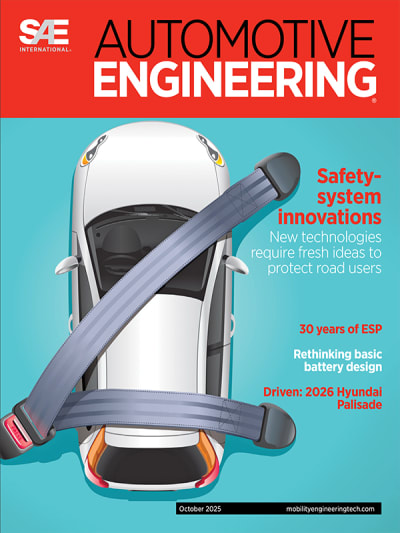
The latest issue of Automotive Engineering delves into the rapidly evolving landscape of the automotive industry, particularly focusing on the transition to electric vehicles (EVs) and the challenges faced by manufacturers and suppliers. The issue highlights key developments, innovative strategies, and the implications of global market dynamics on the North American light vehicle market.
Key Highlights:
-
Transition to Electric Vehicles: The automotive industry is undergoing a significant transformation as manufacturers pivot towards electric mobility. Companies like BMW and Ford are leading the charge with innovative platforms and production strategies aimed at enhancing efficiency and affordability. BMW's Plant Steyr in Austria has begun producing electric motors for its Neue Klasse EVs, marking a significant investment in electrification. Ford has introduced its Universal EV Platform, which aims to streamline production by reducing wiring and fasteners, ultimately targeting a starting price of ,000 for its new electric models.
-
Innovative Manufacturing Approaches: The issue emphasizes the importance of manufacturing simplicity and efficiency. Slate, a new player in the market, is set to produce a low-cost, highly customizable pickup truck with a drastically reduced number of parts—just over 600 compared to the typical 5,000 to 6,000 parts in conventional trucks. This approach not only simplifies the manufacturing process but also enhances reliability and reduces costs, showcasing a shift towards more efficient production methods.
-
Challenges in the Automotive Sector: The magazine discusses the various challenges that the automotive industry faces, including the lingering effects of the COVID-19 pandemic, chip shortages, labor inflation, and uncertainties surrounding U.S. trade policies. These factors have led to a reevaluation of production strategies and a focus on operational efficiency. The industry is urged to adapt to a new normal where high production volumes may not be achievable, necessitating a shift in focus towards efficiency and cost management.
Supplier Strategy Playbook: A significant feature of this issue is the introduction of a new Supplier Strategy Playbook. This playbook outlines a fresh approach for suppliers to navigate the complexities of the current market. It emphasizes the need for scenario planning, better alignment with supply bases, and a deeper understanding of competitors and market dynamics. The playbook encourages suppliers to focus on capital allocation, operational efficiency, and margin optimization to remain competitive in a multi-speed global market.
-
Safety and Security Innovations: The issue also highlights ongoing efforts to enhance safety and security in the EV space. Renault has introduced a Fireman Access system, which aims to improve safety for first responders dealing with EV fires. This innovation reflects the industry's commitment to addressing safety concerns as EV adoption increases.
-
Community Engagement and Job Creation: The magazine features stories of community engagement, particularly in the context of new manufacturing facilities. Slate's factory in Warsaw, Indiana, is set to create jobs and foster local partnerships, demonstrating the potential for revitalization in regions affected by industrial changes. The community's involvement in the production process underscores the importance of local support in the success of new automotive ventures.
-
Future Outlook: As the automotive industry continues to evolve, the issue stresses the importance of adaptability and innovation. The shift towards electrification, coupled with the need for operational efficiency, presents both challenges and opportunities for manufacturers and suppliers. The magazine encourages stakeholders to embrace new technologies and strategies to thrive in an increasingly competitive landscape.
Conclusion:
The latest issue of Automotive Engineering provides a comprehensive overview of the current state of the automotive industry, focusing on the transition to electric vehicles, innovative manufacturing strategies, and the challenges posed by global market dynamics. With the introduction of the Supplier Strategy Playbook, the magazine offers valuable insights for suppliers looking to navigate this complex environment. As the industry moves forward, the emphasis on efficiency, safety, and community engagement will be crucial in shaping the future of automotive manufacturing.
Features
-
Articles
21 Engineering EV, Charger Safety and Security
26 Electronic Stability Control Builds the Foundation for Safer Roads
30 The Factory’s Hidden Power Grid
Regulars
-
Technology Reports
8 BMW Brings EV Motor Production to Steyr in Austria
9 Ford Unveils Its Universal EV Platform
12 EV Battery Safety: Advanced Coatings, Composite Solutions for Fire and Blast Protection
14 Inside Slate's Warsaw Factory
16 Upstream: Better Data Collection, Processing Will Reduce SDV Recalls
18 Sonatus Launches AI Director to Integrate More AI in More Vehicles
19 Simulating Forward Motion at VI-Grade’s Zero Prototypes Day
-
Road Ready
Stories
-
Briefs
22 Built-In Smart Sensors Can Prevent Lithium-Ion Battery Fires Before They Start
23 A Cleaner, Scalable Process to Recycle Lithium-Ion Batteries
24 New AI Tool Predicts Lithium Metal Anode Failures from Just Two Early Cycles
27 Thick Electrodes’ Chemistry Matters More Than Structure for Battery Performance
28 AI Breakthrough Unlocks ‘New’ Materials to Replace Lithium-Ion Batteries
30 Eco-Friendly Upcycling: Turning Spent Batteries into High-Voltage Energy Storage Systems
-
Articles
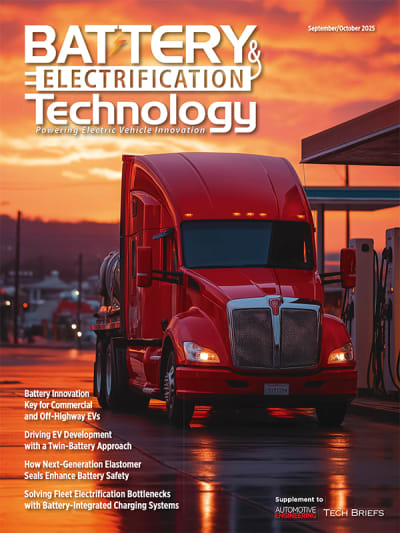
4 Driving EV Development with a Twin-Battery Approach
10 Battery Innovation Key for Commercial and Off-Highway EVs
14 Solving Fleet Electrification Bottlenecks with Battery-Integrated Charging Systems
18 Next-Generation Elastomer Seals: Enhancing Battery Safety and Sustainability in E-Mobility
-
Products
31 New Products
Top Stories
NewsSensors/Data Acquisition
 Microvision Aquires Luminar, Plans Relationship Restoration, Multi-industry Push
INSIDERRF & Microwave Electronics
 A Next Generation Helmet System for Navy Pilots
INSIDERWeapons Systems
 New Raytheon and Lockheed Martin Agreements Expand Missile Defense Production
NewsAutomotive
 Ford Announces 48-Volt Architecture for Future Electric Truck
INSIDERAerospace
 Active Strake System Cuts Cruise Drag, Boosts Flight Efficiency
ArticlesTransportation

Webcasts
Aerospace
 Cooling a New Generation of Aerospace and Defense Embedded...
Energy
 Battery Abuse Testing: Pushing to Failure
Power
 A FREE Two-Day Event Dedicated to Connected Mobility
Automotive
 Quiet, Please: NVH Improvement Opportunities in the Early Design Cycle
Electronics & Computers
 Advantages of Smart Power Distribution Unit Design for Automotive &...
Unmanned Systems
 Sesame Solar's Nanogrid Tech Promises Major Gains in Drone Endurance