




The Factory’s Hidden Power Grid
Why smart electrical distribution is the new frontier in sustainable manufacturing.
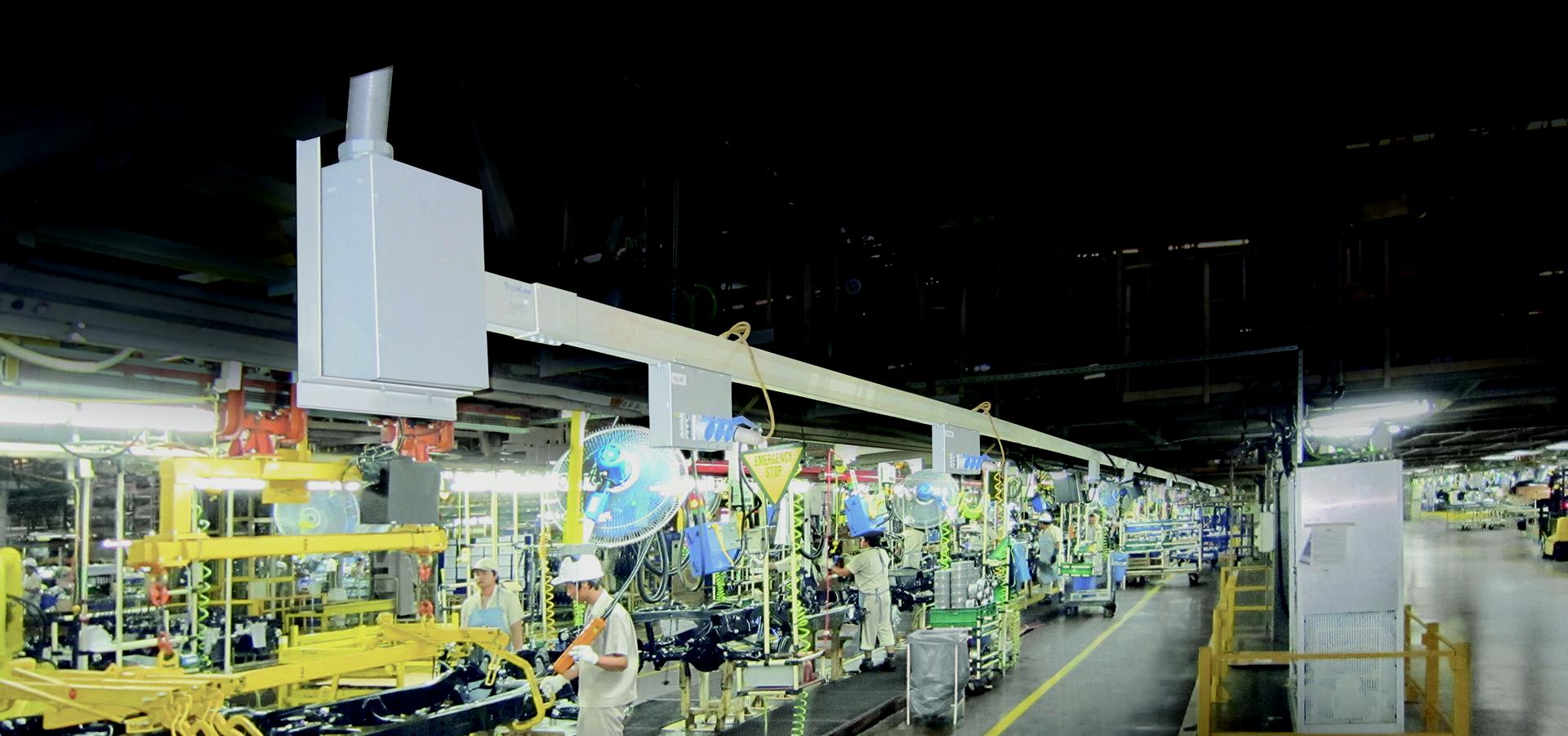
From transitioning to renewable energy, embracing the circular economy and pursuing carbon offsets, today’s automakers are actively working to become more sustainable. Many OEMs have big goals to become fully carbon-neutral by 2050. Some believe they can get there even earlier.
But look past the cars and sources of energy right into the factories in which the vehicles of today and tomorrow are born and focus on a key question: how can carmakers make significant strides inside their plants to cut waste and improve sustainability?
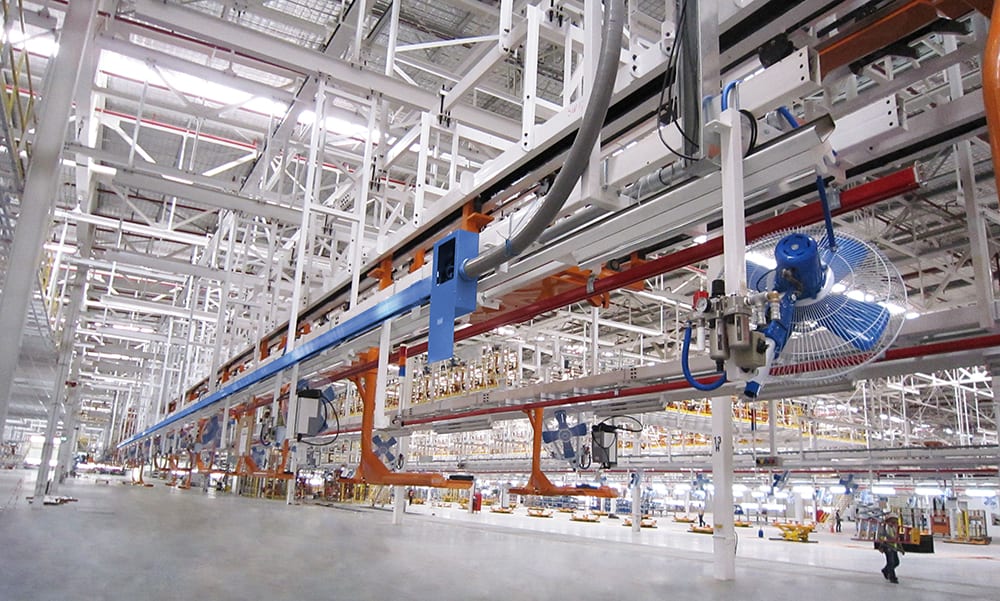
To find real, lasting savings, automotive leaders must look to their plant’s electrical efficiency. That means examining the power distribution technology they use to deliver electrical power to equipment in different areas – from large, robotic assembly lines and conveyor systems to smaller tooling stations and HVAC/environmental systems.
It’s not just about using energy more efficiently. Rather, it’s about using technology that provides a long-term sustainability advantage by reducing waste and offering greater durability and reusability than conventional power distribution methods. In the big picture, it’s about setting automakers up for long-term efficiency and sustainability as they streamline operations over time.
Why do modern auto plants need more power?
The way vehicles are manufactured today is changing fast – and automotive plants are hard-pressed to keep up. From increased use of precision robotics and AI-driven automation to growing global consumer demand for EVs, today’s factories need more electricity than ever before.
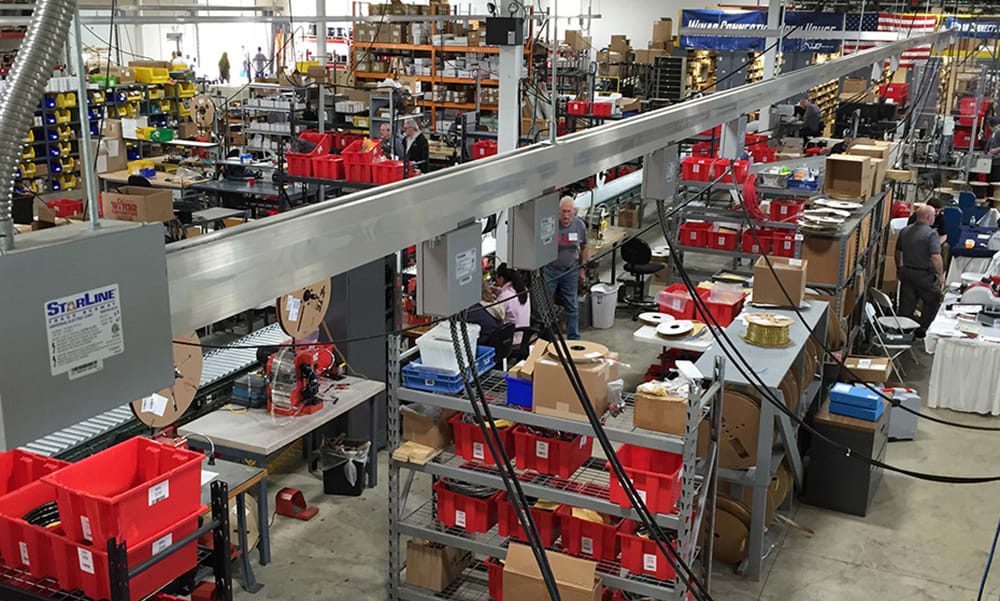
Factories that once only required 100-amp or 225-amp systems now need vastly more powerful ones, up to 1,000 or 1,200 amps. Reasons for this rapid increase include:
- Growth in the capacity of lithium-ion cell manufacturing, keeping pace with the rise in global EV sales.
- OEMs continue to embed more “intelligent” technology in all types of vehicles, from Level 2 ADAS technology to modern infotainment systems.
- Increasing use of AI and automation requires some factories to host their own data centers on-site.
In addition to the growth in battery manufacturing and facilities with on-site data centers, there are several other drivers of heavy upgrades to maximum amperage. For example, in high-density welding bays, dozens of robotic welding arms might run simultaneously. Even if individual mid-frequency direct current (MFDC) welders are efficient, an entire cell of them can have an aggregated energy demand that needs enhanced power distribution capabilities to support it.
Many OEMs are also producing different types of vehicle models on the same line, from internal combustion engine vehicles to hybrids and EVs. This requires modular manufacturing cells that can be reconfigured quickly without rewiring or shutting down power. And that is pushing automakers to seek more flexible power distribution backbones, using systems that allow them to reposition a circuit without shutting down power or rewiring.
When a manufacturing line changes, the existing conduit or pipe and wire is often a headache to remove and cannot be reused. This creates material waste and operational inefficiencies while hampering the industry’s efforts to become more sustainable.
Smarter power distribution design

Open channel track busway, such as Starline Track Busway, is a power distribution system that uses modular plug-in units which can be removed and positioned anywhere along the track without shutting off power to the system. Using a 90-degree turn-and-lock mechanism, each plug-in unit creates a secure electrical connection directly into embedded conductors. With overhead, wall-mount and rack-mounting options, the system’s underlying technology supports flexible configurations and layouts, offering high-amp segments up to 1,200 amps. Automakers can move and rearrange power when and where they need it, eliminating the need for costly rewiring.
When manufacturers choose a smarter power system, the benefits add up quickly. From a sustainability perspective, an open channel track busway system is built to last and reduce waste. The technology is highly durable, made from aluminum and copper. In real-world automotive applications, installations have been in place for over 20 years, still with complete functionality. Unlike conduit, track busway technology is modular and reusable. As factory layouts change, it can be moved and reconfigured, dramatically cutting down on material waste over the plant’s lifecycle.
In addition to its sustainable design and longevity, track busway technology provides several other benefits. Unlike conduit, which is heat-prone and labor-intensive, track busway facilitates continuous access to power with minimized heat loss through reduced electrical resistance. Its open channel design also eliminates the need for supplemental cooling, reducing HVAC loads. By helping automakers utilize energy more efficiently and reduce the load placed on adjacent systems, track busway can provide automakers with significant sustainability benefits right at the foundational layer of their operations.
Making wasted energy visible
Track busway systems also enable greater electrical system efficiency and load balancing through real-time measurement and monitoring. Facility managers can track power at two levels:
- At the end feed, where power enters the busway system
- At the circuit level, directly in the individual plug-in unit
The resulting data can help managers see exactly where energy is going. Operators can monitor machine load profiles and use data to identify abnormal operations. Power data can also be used for load balancing across the factory to prevent waste. With minimized voltage loss, even over hundreds of feet, track busway is a key resource for maximizing power efficiency.
When selecting a track busway product, automakers should also consider the existence of PEPs (product environmental profiles). These documents provide verified transparency into the environmental impact of the product across its lifecycle. Achieving greater sustainability is not just about selecting products that improve operations, but also about selecting products that can help reduce Scope 3 emissions, which are crucial in meeting ambitious carbon-neutral targets. Aligning with an equipment manufacturer with a clear plan for ever-increasing sustainability (e.g., one that aims for net zero by 2050, with a 90% reduction in GHG emissions compared to 2022) ensures that automakers not only get high-performing equipment, but a partner that understands their needs.
The future of factory power
As car technology continues to evolve towards sustainability, the factories that build these new vehicles must keep pace. The choice of a power distribution system is a key decision affecting operational efficiency and sustainability. A facility implementing a track busway not only gains modular flexibility, but also reduces waste and improves operational efficiency.
Mariam Hamadani is global automotive account manager at Starline and wrote this for SAE Media.
More From SAE Media Group


Aerospace & Defense Tech Briefs
Army Researchers Examine Nanotechnology for Climate Solutions


Medical Design Briefs
How Data Can Help Solve Manufacturing’s Waste Problem


Medical Design Briefs
The Role of Sensors in the Big Picture of Sustainability
Automotive Engineering
Are You Prepared for Scope 3?
Tech Briefs
Rising Star Award Winner 2024: Sustainability

Automotive Engineering
On Road to Net Zero, GKN Tackles Easiest Improvements First
Medical Design Briefs
Packaging and Processing: Life Sciences Industry Strives to Become More Sustainable


Automotive Engineering
Engineering Sustainability
Aerospace & Defense Tech Briefs
Industry Invited to Participate in AeroTech Aerospace and Defense Technical Program
Aerospace & Defense Tech Briefs
SAE International Extends Call for Abstracts, Seeks Submissions for AeroTech Conference
Off-Highway Engineering
Addressing Electromagnetic Compatibility in the Context of Aircraft Electrification
Medical Design Briefs
Accelerating Sustainability in the Healthcare Industry
Tech Briefs
New Glass is More Damage Resistant, Greener
Off-Highway Engineering
Steel Sector Aids Sustainability Efforts
Off-Highway Engineering
Smart Engineering for Sustainability
Aerospace & Defense Tech Briefs
Boeing Reports on Its Environmental Efforts

Automotive Engineering
Sustainability in Strong Supply
Automotive Engineering
SAE WCX 2022: Sustainability Is a Lifecycle Mindset
Tech Briefs
Propelling the Future of Sustainable Aviation
Top Stories
NewsRF & Microwave Electronics
 Microvision Aquires Luminar, Plans Relationship Restoration, Multi-industry Push
INSIDERAerospace
 A Next Generation Helmet System for Navy Pilots
INSIDERDesign
 New Raytheon and Lockheed Martin Agreements Expand Missile Defense Production
INSIDERMaterials
 How Airbus is Using w-DED to 3D Print Larger Titanium Airplane Parts
NewsPower
 Ford Announces 48-Volt Architecture for Future Electric Truck
ArticlesAR/AI

Webcasts
Electronics & Computers
 Cooling a New Generation of Aerospace and Defense Embedded...
Automotive
 Battery Abuse Testing: Pushing to Failure
Power
 A FREE Two-Day Event Dedicated to Connected Mobility
Unmanned Systems
 Quiet, Please: NVH Improvement Opportunities in the Early Design Cycle
Automotive
 Advantages of Smart Power Distribution Unit Design for Automotive &...
Energy
 Sesame Solar's Nanogrid Tech Promises Major Gains in Drone Endurance