




Engineering Sustainability
Electrification, and the high-value electronics content in vehicles, is making materials reuse a key tenet of OEM and supplier business strategies.
Watching a junked school bus being fed into a mammoth hammer mill, which loudly pummeled the bus into fragments of metal, rubber, and plastic, was a sight I’ll never forget. I was visiting Huron Valley Metals, a major scrapyard and recycling facility near Detroit, during reporting for an article on automotive recycling. Seeing that big yellow bus chomped up, with practically 100% of its steel, iron and aluminum content collected for reuse, made clear to me the importance of recyclability and materials choice in product design.
But a glance at the refuse and recycling containers awaiting curbside pickup in my small town — all headed for the landfill — reveal how little the public knows, and cares, about product end-use. A lack of ready markets plays a role in what currently gets tossed. So does a hodgepodge infrastructure with myriad definitions and rules. Partly as a result, the U.S. plastics recycling rate is just 5%, according to the Dept. of Energy. Effective materials recycling gets far less attention than tailpipe emissions but is equally deserving of industry focus.
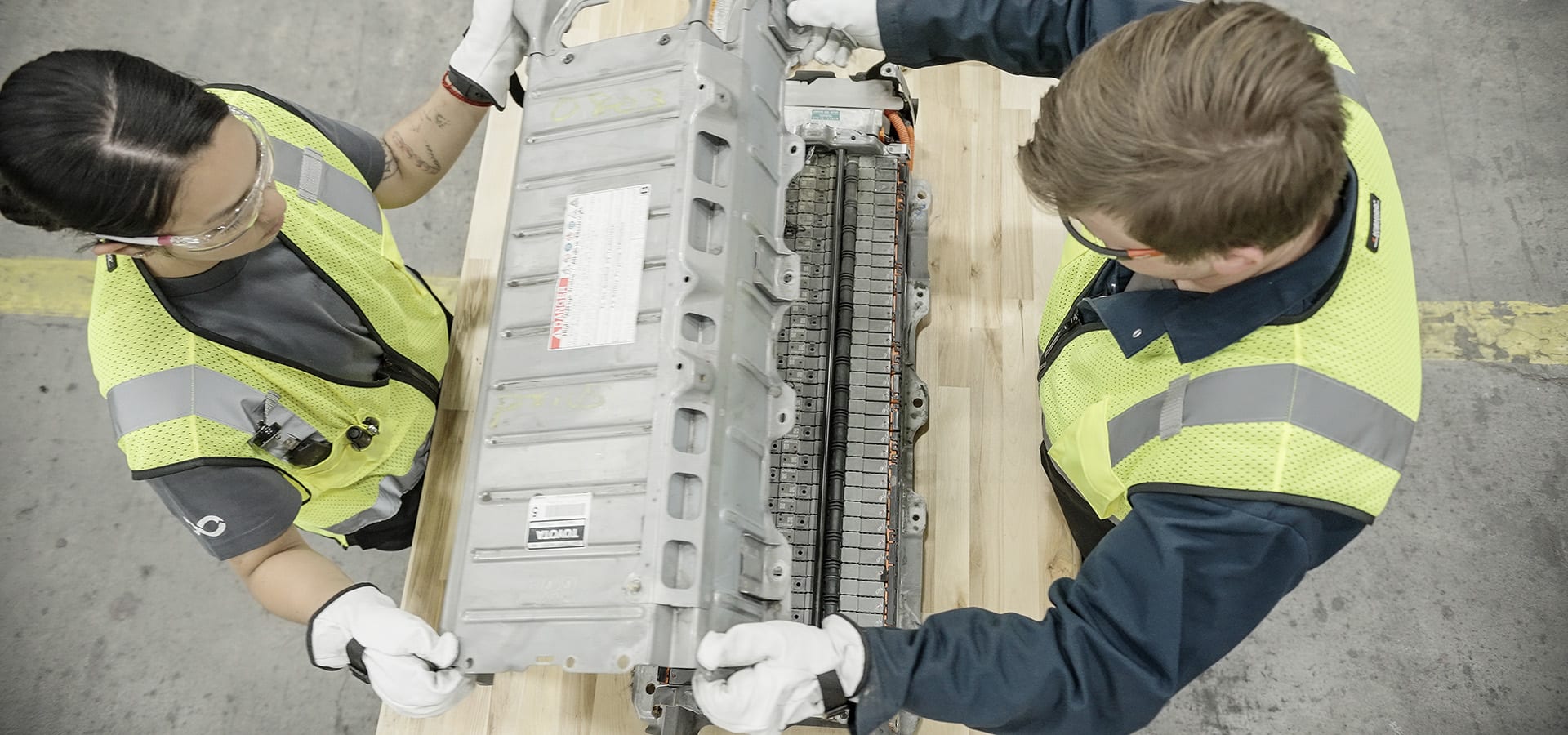
Electrification, and the high-value electronics content in vehicles, are making materials reuse a key tenet of OEM and supplier business strategies. October’s Automotive Engineering print magazine cover feature on EV battery recycling, by veteran environmental reporter Jim Motavalli, details the global enterprise that’s emerging, at scale, and the opportunities and challenges involved. We also look at an innovative “zipper” technology, developed by U.K.-based In2Tec, for reclaiming nearly all the high-value components on discarded PCBs.
Sustainability is the buzzword du-jour. In some corners it’s hyperbole; at others it’s a mission. I define it simply as living responsibly and getting the maximum use out of all that is manufactured. For SAE readers, “sustainable” means developing products, methods, and systems efficiently, aiming for zero waste and environmental impact. Businesses, often under pressure from investors, regulators, and customers, now are making sustainability integral to their guiding principles. Their suppliers are being required to follow suit; witness the Greenhouse Gas Protocol’s new Scope 3 GHG emissions standard that will impact companies at all tiers.
“There’s a strong push from our OEM customers on sustainability, including requirements related to CO2 emissions in their specifications,” Giulio Ornella, VP of global engineering at Dana Corp. told me recently. He sees Scope 3 as “a huge opportunity” for Dana. In a separate interview Andreas Wolf, CEO of powertrain Tier 1 Vitesco, concurred.
Sustainability is being institutionalized across the academic and industry landscapes. Stanford University recently launched its Doerr School of Sustainability; MIT has its Sloan Initiative. In business, chief sustainability officer (CSO) is the hottest new management seat. Fortune 500 companies hired more CSOs in 2020 than in the previous three years combined. Even SAE International is on board, launching its Office of Sustainable Energy to help industry tackle complexities in this area.
So, the bandwagon is rolling. My jaundiced eye sees looming controversy as well as benefits emerging from this movement. Nuclear power, for example, was deemed “unsustainable” in the wake of the Three Mile Island, Chernobyl, and Fukushima disasters. Today, however, “nukes” are widely being reconsidered as a key to meeting net-zero carbon targets; Nucor Steel is investing in a new generation of small, modular reactors. And fossil fuels keep the lights and heat on when renewables can’t deliver. Unexpected externalities have a way of turning ideals into compromise.
More From SAE Media Group
Aerospace & Defense Tech Briefs
Boeing Reports on Its Environmental Efforts
Off-Highway Engineering
SAE WCX 2022: The Road to Zero Emissions Has Many Lanes
Automotive Engineering
Peer-Reviewed Study: Steel-Intensive Vehicles Emit Lower GHG Emissions over the Lifecycle

Automotive Engineering
Are You Prepared for Scope 3?
Automotive Engineering
Fuels to Transition the Global Legacy Fleet
Off-Highway Engineering
Natural Gas Infrastructure Is Scaling Fast for HD Fleets
Off-Highway Engineering
Response to More-Rigid NOx and GHG Regs
Off-Highway Engineering
Zeroing in on Zero-Carbon Fuels
Off-Highway Engineering
Propane Powers Ahead for Medium Duty Sector
Medical Design Briefs
Packaging and Processing: Life Sciences Industry Strives to Become More Sustainable
Off-Highway Engineering
Steel Sector Aids Sustainability Efforts
Automotive Engineering
The Electrofuels That Reduce Amazon’s Fleet Emissions

Automotive Engineering
Quicker Pathways to Reduce Transportation’s Climate Impact
Automotive Engineering
Eaton CTO Assumes SAE VP Post

Automotive Engineering
Tata Steel Europe Innovates to Retain the Automotive Materials Lead
Off-Highway Engineering
Zeroing in on Zero Emissions
Automotive Engineering
Altair Honors Innovations in Sustainability and Lightweighting
Off-Highway Engineering
Cleaner Trucks Initiative Starts NOx-Reduction Journey
Off-Highway Engineering
SAE WCX 2022: All Transportation Modes Targeting Alternative Fuels
Automotive Engineering
Suppliers Prepare for a Drop in EV Market Share
Automotive Engineering
Altair Honors Weight-Saving Innovations
Tech Briefs
The Path to Net-Zero with Green Propane
Automotive Engineering
Handicapping the ‘Race Toward Zero’
Green Design & Manufacturing
Retrofitting for Sustainability: Carbon-Smart and Cost-Effective Solutions
Automotive Engineering
SAE WCX 2022: Internal-Combustion’s Life Extension
Off-Highway Engineering
United Ups Commitment to Sustainable Aviation Biofuel, Extends Contract with World Energy
Automotive Engineering
Engineering the ‘Sustainability Thing’
Top Stories
NewsSensors/Data Acquisition
 Microvision Aquires Luminar, Plans Relationship Restoration, Multi-industry Push
INSIDERRF & Microwave Electronics
 A Next Generation Helmet System for Navy Pilots
INSIDERWeapons Systems
 New Raytheon and Lockheed Martin Agreements Expand Missile Defense Production
NewsAutomotive
 Ford Announces 48-Volt Architecture for Future Electric Truck
INSIDERAerospace
 Active Strake System Cuts Cruise Drag, Boosts Flight Efficiency
ArticlesTransportation

Webcasts
Aerospace
 Cooling a New Generation of Aerospace and Defense Embedded...
Energy
 Battery Abuse Testing: Pushing to Failure
Power
 A FREE Two-Day Event Dedicated to Connected Mobility
Automotive
 Quiet, Please: NVH Improvement Opportunities in the Early Design Cycle
Electronics & Computers
 Advantages of Smart Power Distribution Unit Design for Automotive &...
Unmanned Systems
 Sesame Solar's Nanogrid Tech Promises Major Gains in Drone Endurance