




Engineering EV, Charger Safety and Security
From a quick access port to help firefighters fight EV battery fires faster to preventing public charger vandalism, here are some safety developments that haven’t made the big headlines.
Most of the news surrounding EV technological development in the past year has been around batteries and charging capacity. But engineers have also been busy working on security and safety issues, from charging stations to finding ways for firefighters to better douse fires. We’ve rounded up a few of the most notable and novel efforts below.
Renault’s fire (or water) in the hole
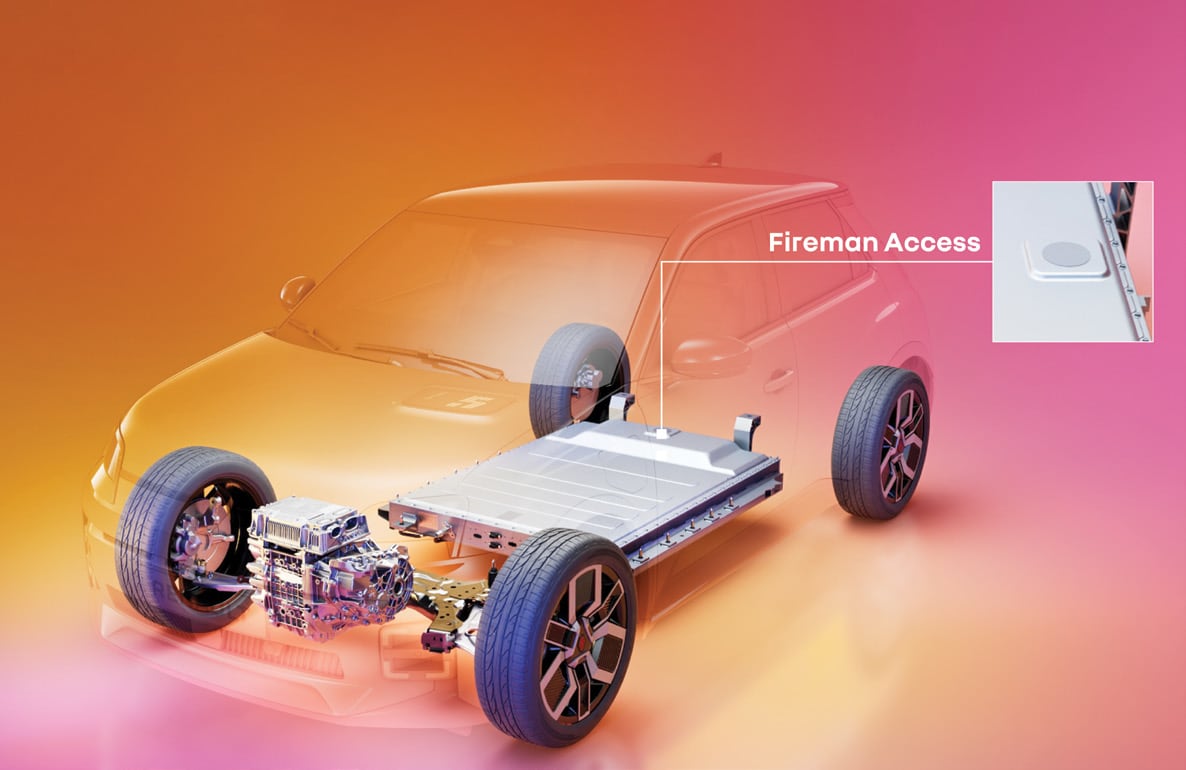
Earlier this year, Renault Group said it is making its Fireman Access system available to the global OEM community via free licensing.
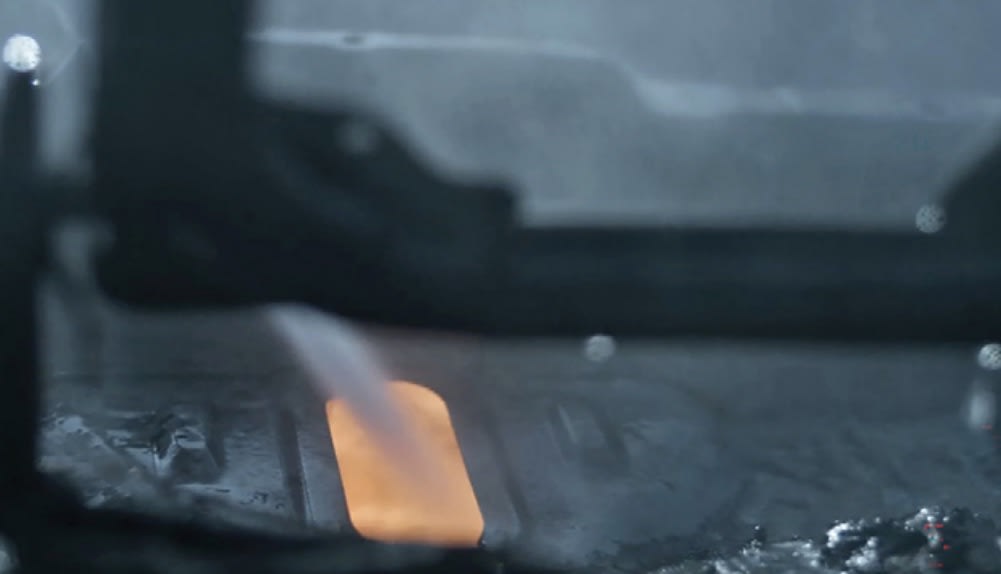
The exclusive system allows emergency responders to put out an EV fire in about the same time they can on an internal combustion vehicle. The crux of the system is an adhesive disc over an opening in the high-voltage battery. Normally, it stays sealed, but when a high-pressure fire hose is attached, the disc dislodges, allowing the cells to be almost immediately flooded with water.
Renault says the system allows a fire to be extinguished in a tenth of the time, and without wasting thousands of gallons of water, compared to keeping a hose on an EV fire at a distance, the standard practice for many fire departments worldwide.
Renault Group CEO Luca de Meo said in a news release that the system was developed with the cooperation of actual firefighters. “Fireman Access is a practical demonstration of what can be achieved by combining our expertise as a manufacturer with the skills of the men and women who keep us safe every day,” he said.
The project was done in conjunction with the United Nations Secretary-General’s Special Envoy for Road Safety, Jean Todt.
EVject: Emergency disconnect for EV charging connections

The world of safety in mobility is filled with what-if questions that, despite a seemingly small use case, deserve an answer. One such question: What happens if you need to leave your charging station extremely quickly? Most EV software prevents the vehicle from moving when plugged into a charger. So what happens if you’re in a situation in which you can’t exit your vehicle to disconnect the charger due to personal safety concerns (for instance, a suspicious person approaching)?
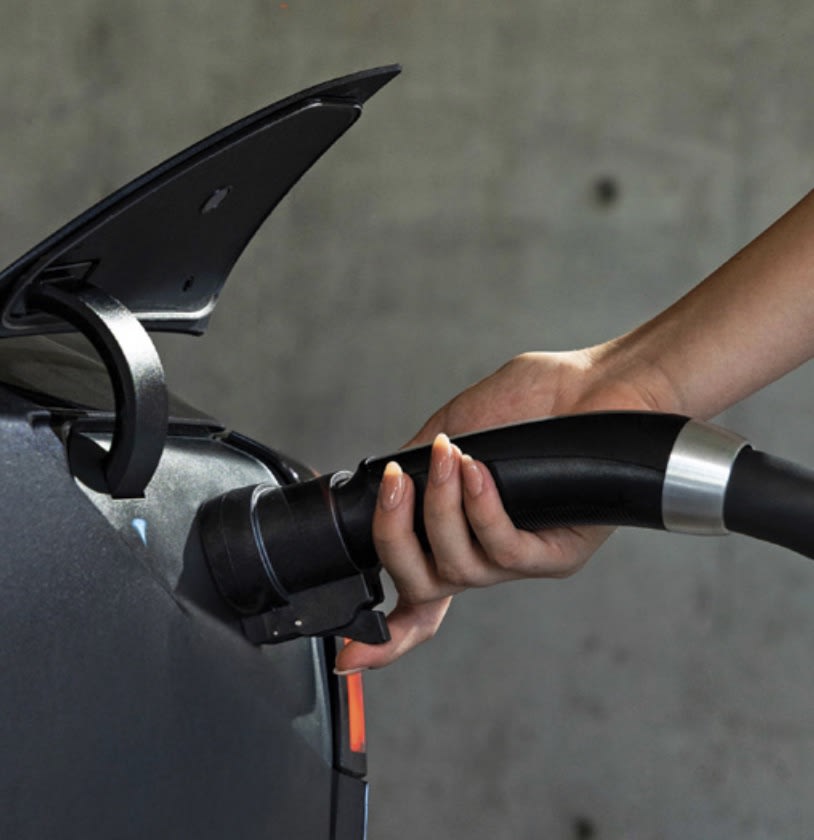
EVject is as simple to use as connecting one end to the charger, the other end to the vehicle and pulling a trigger on the vehicle-end plug. Charging starts normally, but the driver can press the “unlock charge port” button or tap the charging (lightning bolt) icon on the vehicle’s touchscreen or app to perform an emergency disconnect and then shift into drive or reverse. This activates the breakaway feature, where EVject splits into two parts at the on-vehicle port, enabling a getaway with only a small piece of the EVject attached to the charge port.
The company says the technology has been tested at high-power outputs (250kW, 480V, and 520 amps) and in extreme conditions up to 115 F (46 C), ensuring reliability. A key feature of the system is thermal sensing that interrupts charging briefly if the plug becomes too hot (defined by Underwriters Labs as more than 85 C / 185 F).
The company cites a 2022 Consumer Reports study in saying that women are twice as likely to cite safety concerns when using EV chargers. Company officials conclude that the technology is crucial in making public charging stations safer and more user-friendly.
Plugs are available in CCS1 to CCS1, CCS2 to CCS2 and NACS to NACS2 configurations. The system is listed on the company’s site for $299, but the company said that plugs separated in actual emergencies could be replaced at a discount.
And this technology isn’t just for individual drivers. In an interview with EV influencer Kim Java, company founder Kreg Peeler said it’s a concern of fleet owners also, a market the company is already in discussions with.
ChargePoint fights vandalism with hardened cable, software
Inoperable public chargers are one of the biggest problems faced by EV drivers and feared by potential EV buyers. A study by ChargerHelp, the EV charger maintenance company, reported a dismal uptime of 73% late last year.
ChargePoint, operator of the nation’s largest number of public charging points (Tesla leads in fast chargers) announced a two-pronged approach to tackle the problem earlier this year.
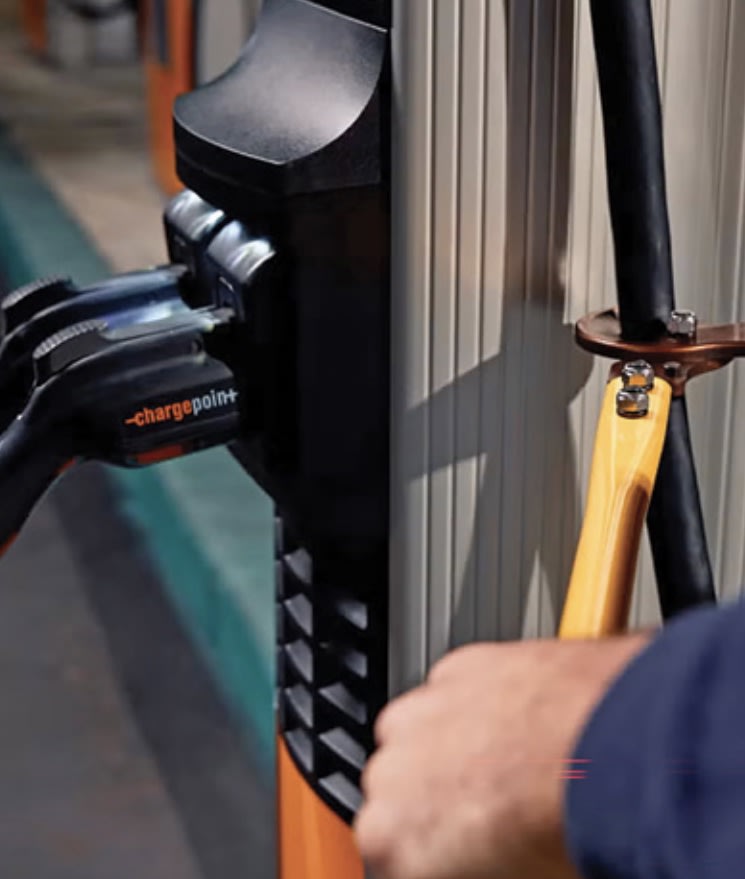
The biggest problem – and a most unsightly PR problem – is chargers that have been vandalized, with cables cut clean through, sometimes for the valuable metal within. In announcing that it would start deploying hardened cut-resistant cabling, ChargePoint CEO Rick Wilmer said the company was not a “victim of vandalism.” Rather, he said, “we are responsible for solving it, not only for our customers but for the industry. We are sharing the technology to combat vandalism in the most aggressive way possible with the aim to eliminate charger reliability as a hindrance to EV adoption.”
The cut-resistant cables are protected by what the company calls novel materials like hardened steel and usespecific polymers, likened to bulletresistant material. They are said to keep the flexibility of original cables despite the added security.

In addition to deploying cables at its own charging stations, ChargePoint said it would sell cables to other companies as part of its effort to improve the industry’s overall uptime.
The company also released ChargePoint Protect, security software that integrates with components already on public chargers, such as speakers and video screens. The software, available for free, detects cable tampering in real time and works to deter vandals and thieves. It also can alert operators via SMS and email to ensure faster intervention.
Tesla protects cables with a *surprise* for vandals

ChargePoint isn’t alone in looking for ways to secure its equipment. In early spring, Electrek and other outlets reported two novel methods EV giant Tesla was testing to secure its chargers and superchargers.
One, in an amusing (unless you’re a vandal) method inspired by those dye packs some banks deploy during robbery attempts, uses cable sheathing that contains blue dye under pressure. The technology, called DyeDefender from a company called CatStrap that originally specialized in protecting catalytic converters, ensures that anyone cutting through the cabling is sprayed with the semipermanent dye, making for easy identification of suspects.
In another, more subtle effort, cables made for Tesla have “property of Tesla Motors” engraved on the wire bundles. Max de Zegher, Tesla’s charging director, said on X that it would indicate to scrapyards that they should not buy scavenged products and notify the company. “It’s a scalable, cost-effective solution that doesn’t impact service operations & customer experience,” he said.
More From SAE Media Group
Off-Highway Engineering
Monarch Unveils AI-Powered Autonomous Platform
Aerospace & Defense Tech Briefs
Creating a Digital Gateway for RF Domain Will Advance Designs That Meet DoD Initiatives
Battery Technology
Using Multiphysics to Predict and Prevent EV Battery Fire
Battery Technology
An Immersive Solution for Thermally Safer EV Batteries
Automotive Engineering
A Lesson in Multiphysics

Tech Briefs
Machine Learning Method for Battery Development
Automotive Engineering
CES 2026: Qualcomm Expands Partnerships For More Snapdragons
Automotive Engineering
Accelerating Down the Road to Autonomy
Motion Control & Automation Technology
Auto Crash Sensor
Tech Briefs
New on the Market: June 2022
Tech Briefs
New on the Market
Tech Briefs
Product of the Month


Photonics & Imaging Technology
Knowing the Right Trigger Strategy Ensures Capture of High-Speed Application With Precision

Motion Design INSIDER
Autonomous Vehicles Could Understand Their Passengers Better With ChatGPT
Motion Design INSIDER
Improving Traffic Signal Timing with a Handful of Connected Vehicles
Off-Highway Engineering
The Role of a Cloud-based Server in Service Workshops
Battery & Electrification Technology
The Rechargeable Renaissance

Sensor Technology
New Products

Automotive Engineering
GM Announces SAE Level 3 Autonomy and SDV Technology
Tech Briefs
New on the Market: August 2022

ADAS & Autonomous Vehicle Engineering
Software-defined... Headache?
Motion Design INSIDER
Physics-Aware Neural Networks Improve Camera-Based Machines
Top Stories
INSIDERDesign
 How Airbus is Using w-DED to 3D Print Larger Titanium Airplane Parts
NewsAutomotive
 Microvision Aquires Luminar, Plans Relationship Restoration, Multi-industry Push
INSIDERRF & Microwave Electronics
 A Next Generation Helmet System for Navy Pilots
ArticlesDesign
 CES 2026: Bosch is Ready to Bring AI to Your (Likely ICE-powered) Vehicle
Road ReadyAutomotive
 2026 Nissan Sentra Review: Putting the Pieces Together
NewsUnmanned Systems

Webcasts
Power
 Hydrogen Engines Are Heating Up for Heavy Duty
Electronics & Computers
 Advantages of Smart Power Distribution Unit Design for Automotive...
Transportation
 Quiet, Please: NVH Improvement Opportunities in the Early Design...
Energy
 Battery Abuse Testing: Pushing to Failure
Connectivity
 A FREE Two-Day Event Dedicated to Connected Mobility
Aerospace
 SiPhog Technology: Enabling GPS‑Independent Flight for Uncrewed Aerial...