




Ford Unveils Its Universal EV Platform
An electric mid-sized pickup will go into production in 2027 and be produced on an assembly "tree" where concurrent lines eventually meet, saving time and helping worker ergonomics.
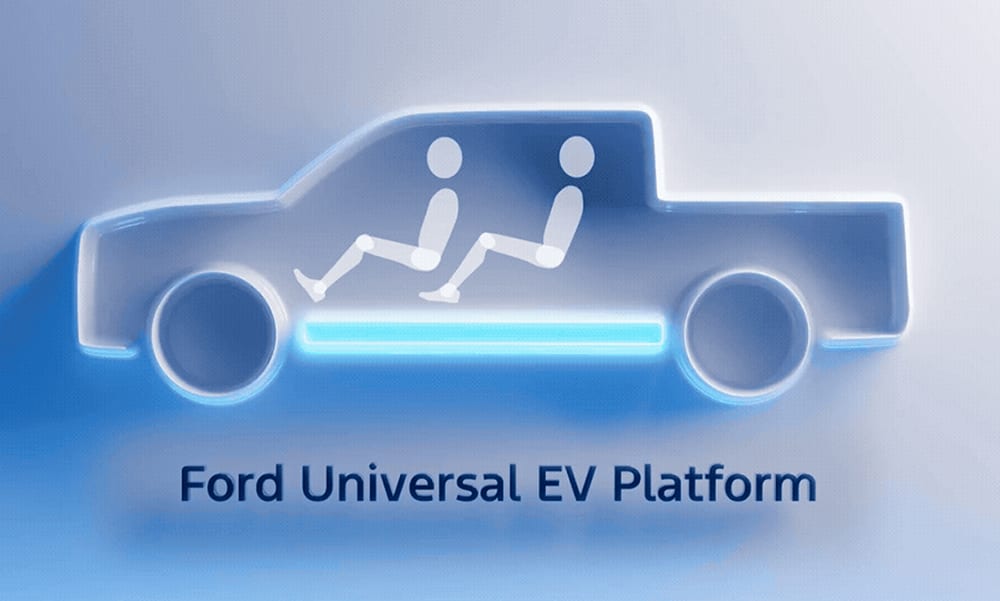
In a briefing ahead of today's announcement, Ford's chief EV, digital and design chief Doug Field used the C word: China. Field said that the company's Universal EV Platform would through, "really radical innovation in things like efficiency and ease of manufacture, to make it affordable and to compete with folks like the Chinese through that innovation, not through just driving individual piece costs down."
Ford has delayed the refresh of the electric F-150 Lightning and E-Transit to focus on its new affordable EV strategy. According to Ford, the Universal EV Platform will have less wiring, will have 25% fewer fasteners, and be built 40% faster than the typical vehicle at the company's Louisville Assembly Plant. For customers, the end result is a four-door mid-sized pickup that targets a starting price of $30,000.
During a press conference, Farley said, "We needed a radical approach and a tough challenge."
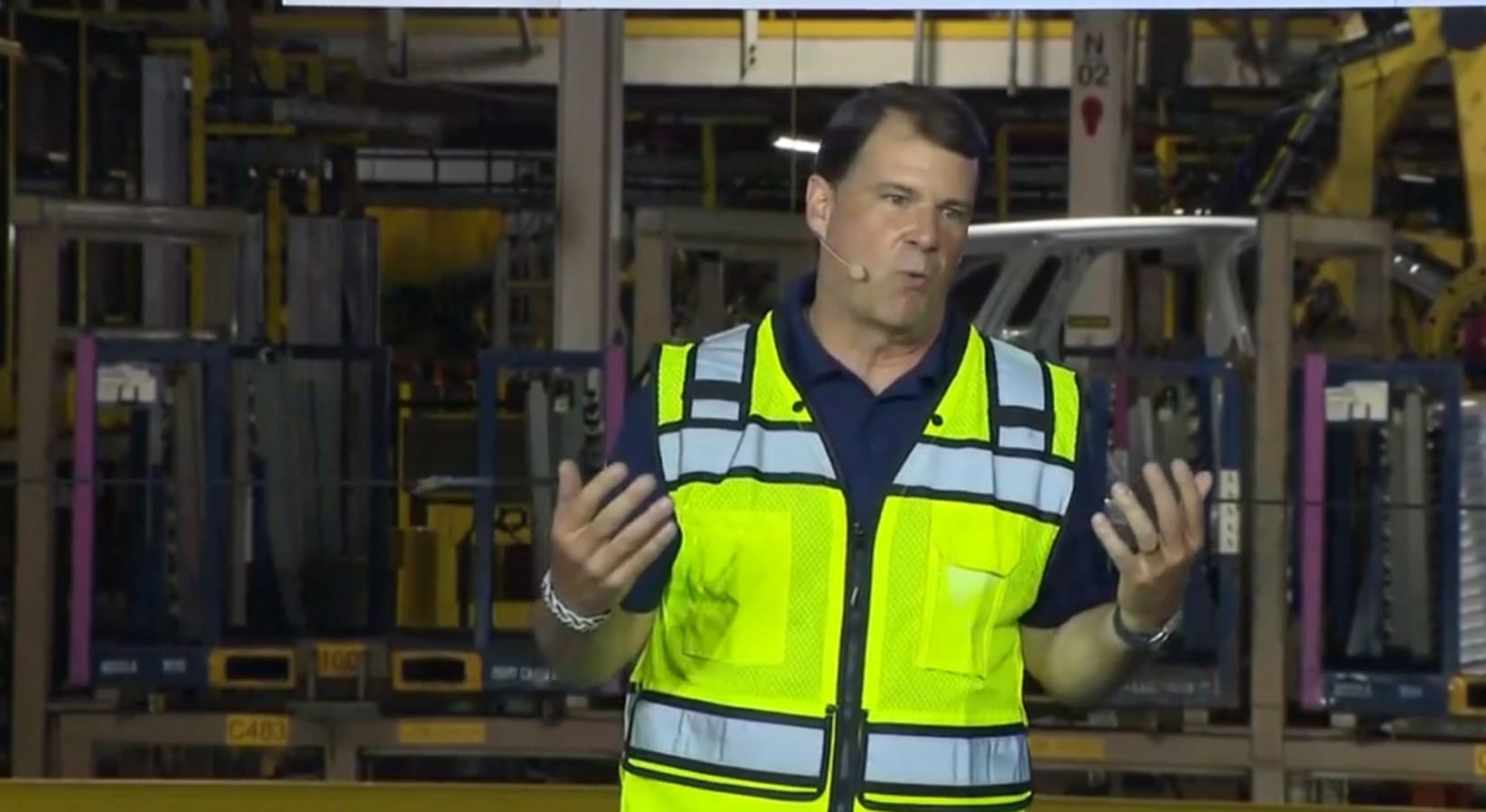
The name of the game for Ford is efficiency and trying to keep ahead of the looming threat of the Chinese EV market. Back in 2024, Ford CEO Jim Farley remarked that he didn't want to give up the electric Xiaomi SU7, he had imported from China. The vehicle built by a company better known in the United States for its phones was a huge success in China. Farley took notice.
"We started with a blank sheet to fight complexity and do something truly new, but we also relied on Ford and all of their experience so that we could make it real," Field said.
The unibody platform vehicle will be powered by prismatic LFP (lithium iron phosphate) batteries built at the automaker's BlueOval battery facility in Marshall, Michigan. The batteries cost less than lithium-ion batteries and are less prone to thermal runaway. Ford says it's the first automaker to build LFP batteries in the United States.
That may be true for now, but the vehicle won't start production or come to market until 2027. That leaves an opening for other automakers to begin production of a vehicle with an LFP battery built in the US.
The yet-to-be-named pickup will be roughly the same size as the Ford Maverick, but Ford says it will have the same passenger space as a Toyota Rav4. The automaker boasted that it will be quicker than the EcoBoost Mustang. In a move likely to keep prices down, the platform will be based on a 400-volt architecture instead of the more efficient 800-volt architecture.
Even the Hyundai Motor Group, which has been ahead of the curve with its 800-volt EGMP architecture, is using a 400-volt variant of that platform for its low-cost EVs. So we expect peak charging to top off somewhere around 200kW.
Ford says that range, battery size, and official charge times will be communicated later. We do know that the vehicle will have power output likely similar to the Pro Power system found on the F-150 Lightning. But, like most other information, we're short on any details.
We'll also have to wait for any information regarding the software platform. Ford does say that the vehicle is software-defined, but doesn't elaborate.
Build it
To achieve its goal, Ford is retooling the Louisville, Kentucky plant, investing $2 billion. To speed up production, Ford has created a three-line system that merges into a single line. Managers called it an “assembly tree.” To reduce parts, the front and rear of the vehicles will be large aluminum unicastings. These castings can be assembled separately and will join the structural battery line. The three lines and sections come together to form the final vehicle.
The result, according to Ford, is a vehicle that's built 40% quicker than the vehicles currently built at the plant. Ford is also working to speed up insourcing and automation and is targeting an overall speed improvement of 15%.
The three-line setup will also mean that workers will no longer have to reach through a door to install a dashboard. "We expect ergonomic breakthroughs and complexity reduction," Bryce Currie, Ford's vice president of Americas manufacturing said.
It's a new system for the automaker, and Farley notes that it's a gamble, "We're doing so many new things I can't tell you with a certainty that everything will go right."
It's a bold undertaking for both the vehicle and the building of that vehicle. Yet it's one that Ford believes it needs to take in order to take on both traditional competitors but also automotive startups and the looming threat from China.
More From SAE Media Group
Automotive Engineering
Ford Starts the Hard Work of EV Battery, Raw Materials Security
Automotive Engineering
The Haters Go After Toyota
Automotive Engineering
Electrification Brings Supplier Value Closer to Home
Automotive Engineering
Battery Leasing Spurs VinFast’s EV Offensive
Automotive Engineering
BMW Takes Multi-Modal Route to Manufacturing
Automotive Engineering
Battery Experts: Solid-State EV Tech Could Be Five Years Out
Automotive Engineering
Cadillac Lyriq Spearheads GM’s EV Assault
Automotive Engineering
EV Battery Manufacturing Commitments Surge in U.S.
Off-Highway Engineering
EV Startup Rivian Gets More Funding from Ford, Amazon
Automotive Engineering
Cadillac Reveals Lyriq Electric Vehicle
Automotive Engineering
The Ford We Didn’t Know
Off-Highway Engineering
Mercedes-Benz Goes Long with EActros 600 Electric Truck
Automotive Engineering
GM’s Ultium Battery System Future-Proofed
Off-Highway Engineering
Bollinger’s Electric Truck Enters Design Validation Phase
Automotive Engineering
Kia’s 2024 EV9 Stands as First Mainstream 3-Row EV
Automotive Engineering
BMW Plans Move to Structural Battery Packs and ‘46120’ Cells
Automotive Engineering
Mercedes-Benz Product Boss: Europe, North America EVs, EV Charging to Rapidly Get Better
Off-Highway Engineering
Mercedes-Benz Details All-New Platform for EV Vans
Automotive Engineering
Cadillac to Launch 2023 Lyriq EV Months Earlier Than Planned
Automotive Engineering
The EV Tech of BMW’s Neue-Klasse IX3
Automotive Engineering
Ford Unveils 2021 Mustang Mach-E Electric Vehicle
Automotive Engineering
Battery Guru: Future of 18650 Cells Unclear Beyond Tesla S
Automotive Engineering
Can Solid-State Batteries Commercialize by 2030?
Automotive Engineering
Honda Pioneering New Manufacturing Tech for Zero Electrified Platform
Automotive Engineering
New Ultium Battery System Underpins GM’s EV Future
Automotive Engineering
Martinrea's New Tech Center Focuses on Subframe Innovation
Automotive Engineering
Mercedes Kicks off Dedicated EV Lineup with Flagship EQS
Automotive Engineering
Hub-Motoring in Lordstown’s Novel Endurance
Automotive Engineering
Rivian R1T Analyzed by Teardown Expert
Automotive Engineering
Volkswagen Readies Its ‘People’s’ EV
Top Stories
NewsRF & Microwave Electronics
 Microvision Aquires Luminar, Plans Relationship Restoration, Multi-industry Push
INSIDERAerospace
 A Next Generation Helmet System for Navy Pilots
INSIDERDesign
 New Raytheon and Lockheed Martin Agreements Expand Missile Defense Production
INSIDERMaterials
 How Airbus is Using w-DED to 3D Print Larger Titanium Airplane Parts
NewsPower
 Ford Announces 48-Volt Architecture for Future Electric Truck
ArticlesAR/AI

Webcasts
Electronics & Computers
 Cooling a New Generation of Aerospace and Defense Embedded...
Automotive
 Battery Abuse Testing: Pushing to Failure
Power
 A FREE Two-Day Event Dedicated to Connected Mobility
Unmanned Systems
 Quiet, Please: NVH Improvement Opportunities in the Early Design Cycle
Automotive
 Advantages of Smart Power Distribution Unit Design for Automotive &...
Energy
 Sesame Solar's Nanogrid Tech Promises Major Gains in Drone Endurance