




Defense Tech Briefs - February 2009
Inside this issue
Supplements
Overview
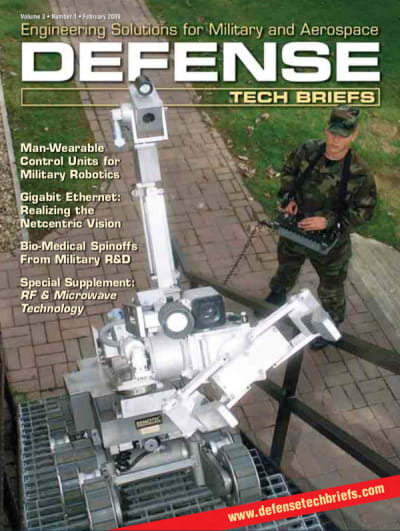
The February 2009 issue of Defense Tech Briefs presents a comprehensive overview of advancements in military technology, focusing on innovative solutions and research that enhance defense capabilities. This edition is particularly notable for its exploration of man-wearable control units for military robotics, the realization of netcentric vision through gigabit Ethernet, and the impact of military R&D on biomedical technologies. Additionally, it includes a special supplement dedicated to RF and microwave technology, highlighting its significance in modern defense applications.
Man-Wearable Control Units for Military Robotics
One of the standout features of this issue is the article on man-wearable control units for military robotics. As military operations become increasingly reliant on unmanned systems, the need for intuitive and effective control mechanisms is paramount. This article discusses the development of wearable devices that allow soldiers to control robotic systems seamlessly. These control units are designed to enhance situational awareness and operational efficiency, enabling troops to manage multiple robotic platforms from a distance. The integration of advanced sensors and user-friendly interfaces is emphasized, showcasing how these technologies can improve mission outcomes and reduce risks to personnel.
Gigabit Ethernet: Realizing the Netcentric Vision
Another key topic covered in this issue is the role of gigabit Ethernet in achieving a netcentric vision for military operations. The article outlines how high-speed networking capabilities are essential for modern warfare, facilitating real-time data sharing and communication among various military assets. The implementation of gigabit Ethernet is presented as a critical step towards creating a more interconnected battlefield, where information can be rapidly disseminated and acted upon. The discussion includes the challenges of integrating these technologies into existing military infrastructure and the potential benefits of enhanced connectivity, such as improved decision-making and operational coordination.
Bio-Medical Spinoffs from Military R&D
The issue also highlights the significant impact of military research and development on the biomedical field. The article on bio-medical spinoffs illustrates how innovations originally designed for military applications have found valuable uses in civilian healthcare. Technologies developed for trauma care, medical imaging, and rehabilitation are discussed, showcasing the dual-use nature of military R&D. This section emphasizes the importance of collaboration between military and civilian sectors, as advancements in one area can lead to breakthroughs in the other, ultimately benefiting society as a whole.
Special Supplement: RF & Microwave Technology
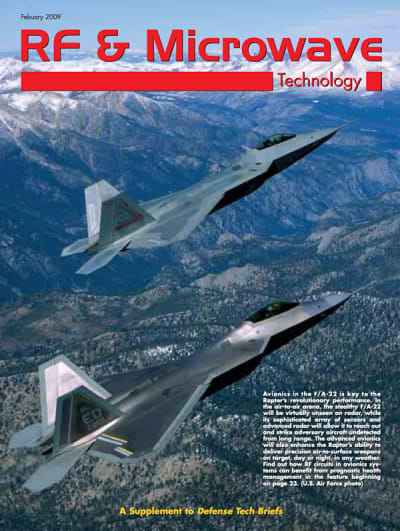
In addition to the main articles, this issue features a special supplement dedicated to RF and microwave technology. This section delves into the critical role that these technologies play in modern defense systems, including communications, radar, and electronic warfare. The supplement provides insights into the latest advancements in RF and microwave components, as well as their applications in enhancing military capabilities. The importance of miniaturization, efficiency, and reliability in these technologies is underscored, reflecting the ongoing demand for high-performance systems in increasingly complex operational environments.
Conclusion
Overall, the February 2009 issue of Defense Tech Briefs serves as a valuable resource for professionals and enthusiasts in the defense technology sector. It not only highlights cutting-edge innovations but also emphasizes the interconnectedness of military advancements and their broader implications for society. The articles provide a glimpse into the future of military operations, where technology continues to evolve and shape the landscape of defense. As the military seeks to leverage new technologies to enhance operational effectiveness, this issue underscores the importance of ongoing research, development, and collaboration across various fields.
In summary, this edition of Defense Tech Briefs encapsulates the dynamic nature of military technology and its potential to transform both defense operations and civilian applications, making it a must-read for anyone interested in the future of defense technology.
Features
-
Tech Transfer Reports
Innovative Mineral Product Stops High-Pressure Arterial Bleeding
DNA Sequencing Technique Can Produce a Genome in Less Than a Minute
-
Articles
Man-Wearable Control Units for Military Robotics
Today’s Gigabit Ethernet Modules: Realizing the Netcentric Vision
Tech Briefs
-
Bio-Medical
Macromolecular Carriers for Nanomedicine and Nano Devices
Genetic Studies of Responses of Bones to Mechanical Stresses
-
Electronics & Computers
AC Coupled Interconnect for Low-Power Spaceborne Electronics
Fuzzy System for Fault Diagnostics in Power Electronics-Based Brake-by-Wire System
-
Information Sciences
-
Materials
Cluster-Assembled Soft Magnets for Power Electronics Applications
Fluidic Flexible Matrix Composites for Autonomous Structural Tailoring
-
Photonics
Evaluation of Performance of WL Fe-Based Spin-LEDs
-
Physical Sciences
Characterization of a MEMS Directional Sound Sensor
Products
Top Stories
NewsRF & Microwave Electronics
 Microvision Aquires Luminar, Plans Relationship Restoration, Multi-industry Push
INSIDERAerospace
 A Next Generation Helmet System for Navy Pilots
INSIDERDesign
 New Raytheon and Lockheed Martin Agreements Expand Missile Defense Production
INSIDERMaterials
 How Airbus is Using w-DED to 3D Print Larger Titanium Airplane Parts
NewsPower
 Ford Announces 48-Volt Architecture for Future Electric Truck
ArticlesAR/AI

Webcasts
Electronics & Computers
 Cooling a New Generation of Aerospace and Defense Embedded...
Automotive
 Battery Abuse Testing: Pushing to Failure
Power
 A FREE Two-Day Event Dedicated to Connected Mobility
Unmanned Systems
 Quiet, Please: NVH Improvement Opportunities in the Early Design Cycle
Automotive
 Advantages of Smart Power Distribution Unit Design for Automotive &...
Energy
 Sesame Solar's Nanogrid Tech Promises Major Gains in Drone Endurance