




Ford Ponies Up a Friskier 2015 Mustang
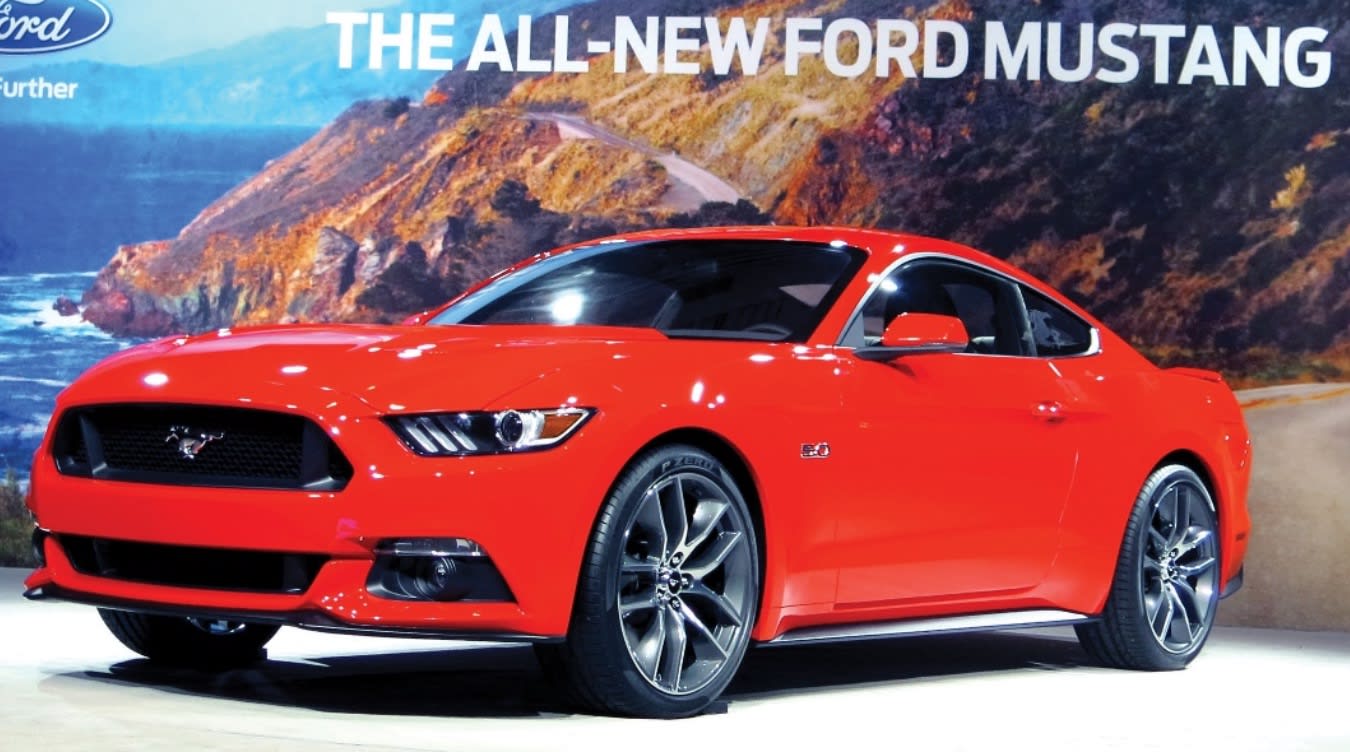
The world’s original “pony car” is entering its 50th year of production, with global recognition that is the envy of all but a few American vehicles. The Ford Mustang is really a brand unto itself, and with the 2015 model (the first new Mustang since 2005) Ford aims to expand the car’s market reach into more than 100 countries in Europe, Asia, and North America. To be built in both left- and right-hand drive (LHD and RHD) configurations, the new ’Stang enters production in 3Q14 at Ford’s Flat Rock, MI, plant.
New technology highlights include a much-anticipated multilink independent rear suspension (IRS) and an optional 2.3-L EcoBoost four-cylinder equipped with a twin-scroll turbocharger — a first for Ford. Engineers claim the direct-injected, boosted four will produce more than 305 hp and 300 lb·ft (223 kW and 413 N·m) when its SAE ratings are finalized.
Aluminum is used in the new Mustang’s front fenders and rear suspension knuckles, supplementing an aluminum hood (also on the current model). Front and rear suspension subframes are solidly mounted. Brake rotors are larger, ranging from 12.6 to 15.0 in (320 to 381 mm) diameter front and 12.6 to 13.0 in (320 to 330 mm) in the rear, depending on model. big-rotor cars are equipped with optional six-piston Brembo fixed calipers.
Significant upgrades have been made to the optional 5.0-L DOHC V8. A new electronics suite includes four selectable drive modes and launch control. And convertible models get new electrically actuated, double-insulated cloth tops.
Automotive Engineering has received conflicting information about the 2015 car’s architecture. Ford chassis engineering sources tell us the new Mustang’s platform is a further evolution of the previous D2C-based model. But Frank Davis, Executive Director of North American Engineering, adamantly denied that during the car’s recent unveiling. He said the floor pan and lower structure are clean sheet — “entirely new with no carryover.” Davis noted that the rear-drive platform is unique to Ford vehicles.
The new car retains the incumbent model’s 107.1-in (2720-mm) wheelbase, and the overall length of 188.3 in (4783 mm) is essentially unchanged. Overall height has been lowered by 1.5 in (38 mm). The hood and decklid are also 1.3 and 2.8 in (33 and 71 mm) lower than the outgoing model, respectively.
Front and rear track changes drive significant investment, and on the 2015 GT 5.0-L and EcoBoost models (with 18-in wheels), front and rear track are 62.3 and 64.9 in (1582 and 1648 mm) — increases of 0.8 and 2.8 in (20 and 71 mm).
V6 and V8 models have different track dimensions due to differing offsets (V8 cars have more negative offset). The wider track for 2015 provides added dynamic stability and enables the cars to put their power to the pavement more effectively. It also helps provide additional extra hip and shoulder room for back-seat passengers — a particular benefit in the convertible. Plus, as an engineer observed, the car’s wider stance “just looks a lot more bad-ass.”
IRS and a turbo four

The new IRS is the first in Mustang since the 1999-2004 SVT Cobra, which was a bolt-in setup that could be swapped out for a live axle if the owner wanted to go drag racing. The new multilink module, with aluminum knuckles, provides twice the anti-squat and anti-dive of the incumbent live-axle car, Davis claimed. Front suspension is by McPherson struts, steel knuckles with two ball joints, a tension link, and a tubular lateral link per side.
The 2015 Mustang carries over the 2014 car’s 3.7-L V6 base engine, which Davis expects to be SAE-rated at more than 300 hp (223 kW) and 270 lb·ft (366 N·m). the 5.0-L Coyote V8 is upgraded with new porting, a higher-lift camshaft, and larger-diameter valves. Standard valve springs and connecting rods come from the boss 302 bill of materials. Davis expects the V8 to produce more than 420 hp (313 kW) and 390 lb·ft (529 N·m). Top speed for the GT model will be electronically limited at 155 mph (249 km/h), Davis said.
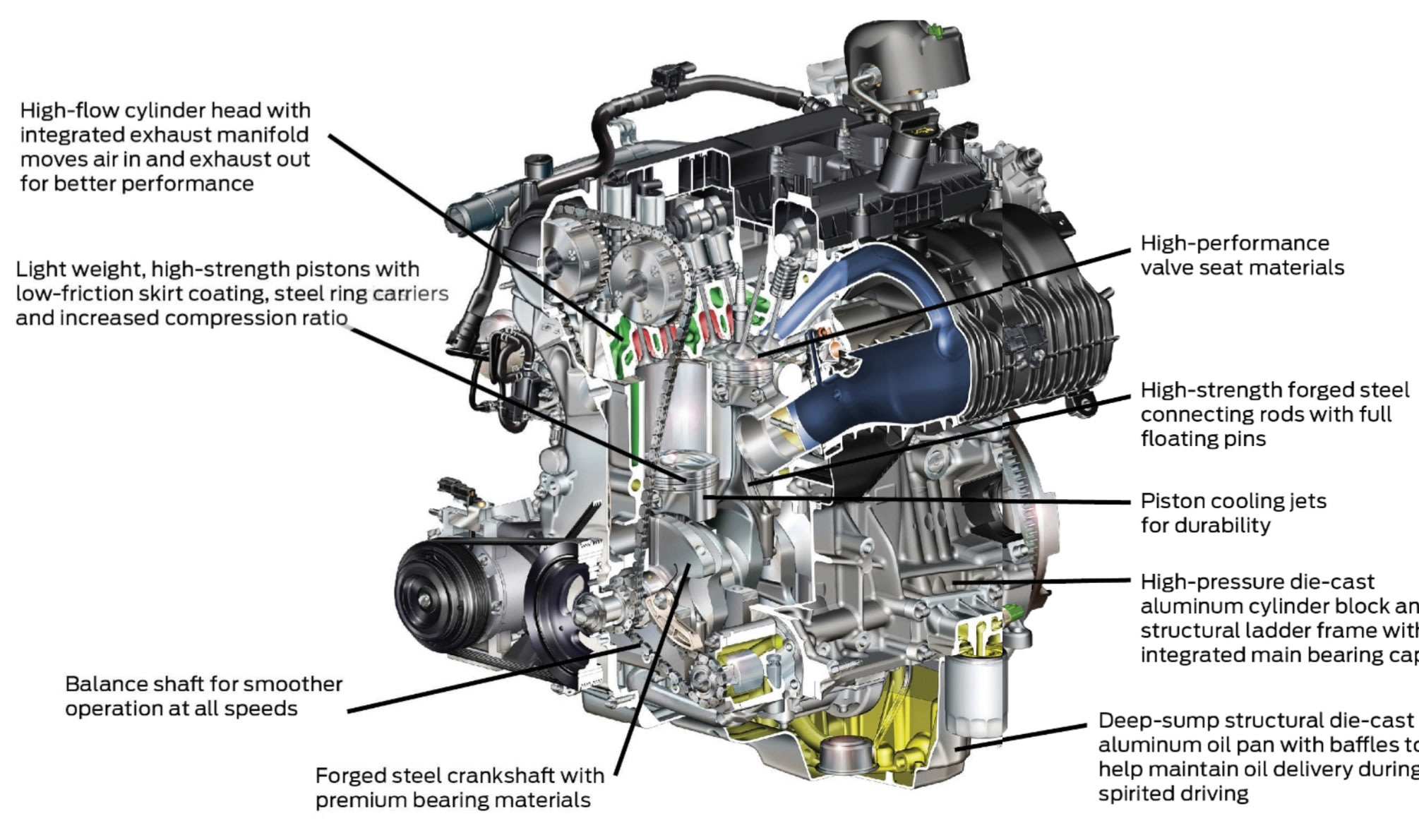
The big powertrain news is Ford’s new 2.3-L direct-injected EcoBoost four with twin-scroll turbo (see cutaway illustration) — the first Mustang to offer a four since 1993. The new engine will serve the mid-performance role, capable of producing V6 levels of power and torque [estimated 305 hp (227 kW) and 300 lb·ft (407 N·m); SAE ratings to come], but with up to 15% greater fuel efficiency than a six, Davis said.
Two six-speed transmissions — a getrag manual and Ford 6R80 planetary automatic — will be available at launch.
Davis would not divulge the base car’s production curb weight, only indicating that engineering in the IRS was a netweight gain and that the aluminum-intensive front-end sheet metal is designed as a mass offset.
Forget Camaro — BMW is the target
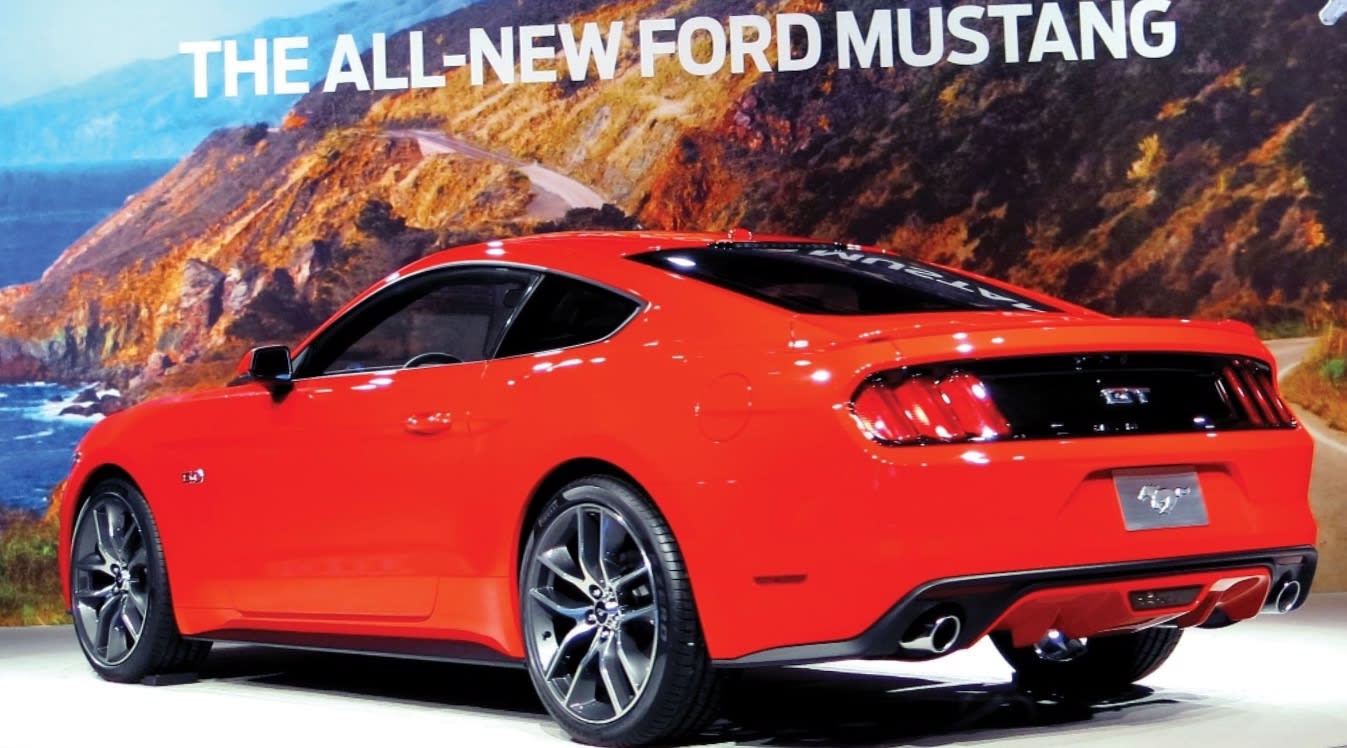
As the accompanying images show, Ford Design has given the 2015 Mustang its own version of the Aston Martin-esque grille that is becoming one of the company’s global design cues. Complementing the new grille are wraparound headlamps that look fresh (in a “squinty” sort of way) but are also unmistakenly Mustang. The A-pillar touchdowns are more rearward, and the body-color B-pillar has been blacked out for the new coupe’s DLO (daylight opening). The overall form of the greenhouse is now defined by a curvaceous sail panel reminiscent of the 1967 fastback.
The classic side-scoop bodyside contours that defined the original Mustangs are gone. The car’s most interesting angle is arguably its rear end, highlighted by the “tribar” taillamps that, as turn signals, will be activated sequentially. Trunk space is expanded and engineers claim the Mustang can now accommodate two full golf bags.
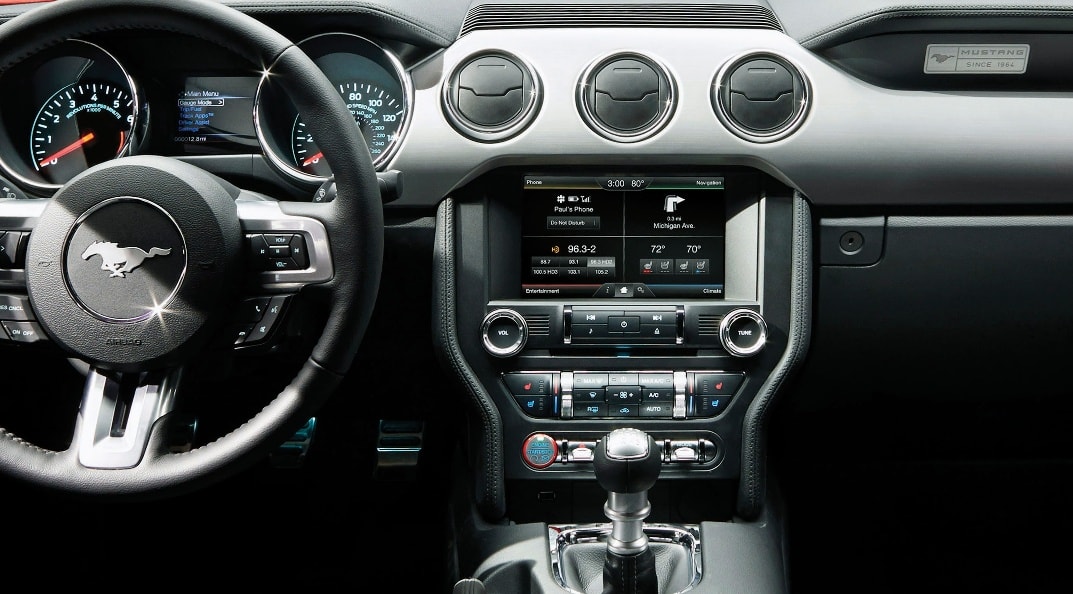
Inside, the new Mustang’s redesigned cabin is incrementally roomier than the 2014 car; Ford did not have official interior dimensions available when this article was published. The IP is designed for RHD and LHD and now contains a starter button rather than a key. Gauges are analog and easy to read, and the console-mounted gearchange lever is moved closer to the driver.
Davis said the Mustang program team focused on “significantly improved NVH” but said it was too early to provide details.
Ford’s trackApps software, which enables recording of key performance metrics, is available. That option will be useful for Mustang owners who want to pit their cars against the Chevrolet Camaro, which has outperformed Mustang in the sales arena for the last three years and is poised to do so again in 2013. But General Motors engineers on the Camaro team are keen to see whether their revamped nemesis — particularly when equipped with the EcoBoost four — has what it takes to climb back on top.
Ford engineers say their real benchmark isn’t Camaro but the BMW M3 (now M4) and even the Porsche 911.
More From SAE Media Group
Automotive Engineering
Ford and University of Michigan Unveil Automated-vehicle Testbed
Off-Highway Engineering
FEV Simplifies Off-Highway Electrification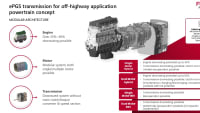
Automotive Engineering
Accelerating Down the Road to Autonomy
Off-Highway Engineering
Digital Tech a Las Vegas Headliner
Tech Briefs
EVs Are Growing Up—and Getting Practical
Off-Highway Engineering
Reshaping the Mobile-hydraulic Ecosystem
Automotive Engineering
Donut Lab and Verge Unveil Solid-state Battery-powered Motorcycle
Automotive Engineering
A Proactive Approach to Hydraulic Health in Class 8 Trucks
Automotive Engineering
Manufacturers Must Take the Wheel to Scale SDV Success
Off-Highway Engineering
Magazine Archives
Automotive Engineering
AVSC Develops Best Practices for Traceable AV Safety Inspection Protocols
Off-Highway Engineering
Cummins Unveils New B7.2 Diesel Engine
Off-Highway Engineering
Autonomous Quarry Haulage in High Demand
Automotive Engineering
Wrecking Ball
Automotive Engineering
Taiwan Suppliers Look Around the World for Solutions
Automotive Engineering
Sharper Testing Delivers Better AV Performance
Automotive Engineering
Welcome to the Automotive Engineering Podcast

Tech Briefs
Rising Star Awards 2025 Judges


Tech Briefs
Making Diesel Engines Nearly Emission-Free
Automotive Engineering
2026 Nissan Sentra Review: Putting the Pieces Together
Automotive Engineering
2026 Nissan Leaf First Drive: Fun and More Efficient
Automotive Engineering
2026 Toyota RAV4 Review: All Hybrid, All the Time
Automotive Engineering
Mobileye Ready to Meet FMVSS 127 with Vision-Only System
Off-Highway Engineering
ZM Trucks Starts Production in Fontana, California

Off-Highway Engineering
Komatsu Augments Intelligent Machine Control in New Excavator
Off-Highway Engineering
First Drive: Drifting in the Electric 2027 Mercedes GLC 400
Top Stories
INSIDERManufacturing & Prototyping
 How Airbus is Using w-DED to 3D Print Larger Titanium Airplane Parts
INSIDERManned Systems
 FAA to Replace Aging Network of Ground-Based Radars
NewsTransportation
 CES 2026: Bosch is Ready to Bring AI to Your (Likely ICE-powered) Vehicle
NewsSoftware
 Accelerating Down the Road to Autonomy
EditorialDesign
 DarkSky One Wants to Make the World a Darker Place
INSIDERMaterials
 Can This Self-Healing Composite Make Airplane and Spacecraft Components Last...
Webcasts
Defense
 How Sift's Unified Observability Platform Accelerates Drone Innovation
Automotive
 E/E Architecture Redefined: Building Smarter, Safer, and Scalable...
Power
 Hydrogen Engines Are Heating Up for Heavy Duty
Electronics & Computers
 Advantages of Smart Power Distribution Unit Design for Automotive...
Unmanned Systems
 Quiet, Please: NVH Improvement Opportunities in the Early Design...
