




Donut Lab and Verge Unveil Solid-state Battery-powered Motorcycle
Over 370 miles of range and 10-minute charging
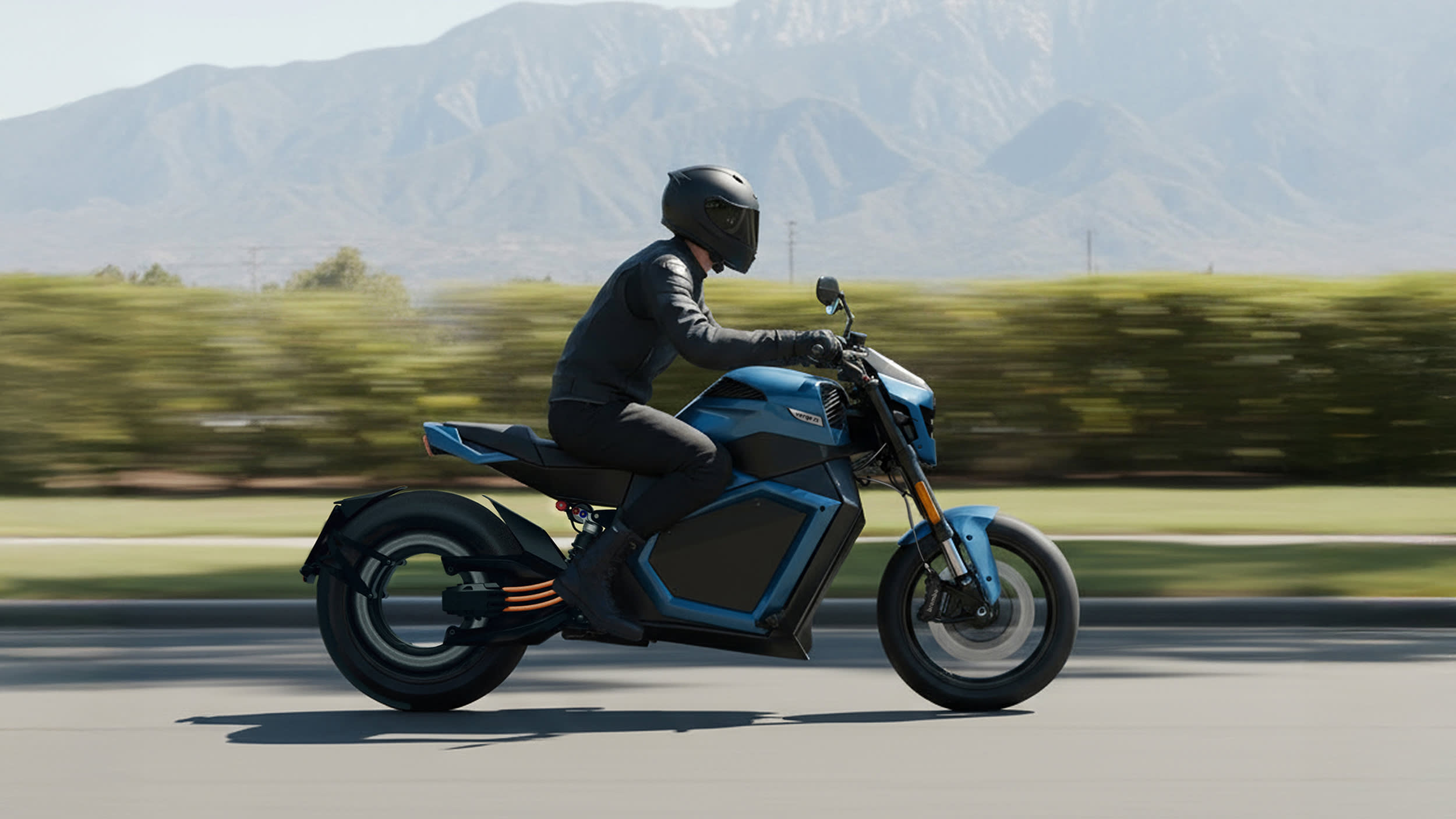
Verge Motorcycles and Donut Lab have announced that a solid-state battery will be the centerpiece of the new TS PRO electric motorcycle, expected in the first quarter of 2026.
The Verge TS Pro will herald the beginning of a new era in EVs when it hits the road with a solid-state battery available to the public. It's a huge win for the company and an impressive accomplishment for Donut Lab. More importantly, it's the beginning of a move to solid-state batteries that will transform not just EVs but other battery-storage industries.
Quicker, Powerful, and… Cheaper?
The promise of a solid-state battery has been a few years away for about two decades. A technology that essentially introduces parity between gas-powered and electricity-powered vehicles. Solid-state has more energy density and is therefore lighter, which means more range from a battery with the same kWh because the vehicle has less heft to drag around. It charges far quicker – on par with filling up a gas vehicle at the pump – and is less likely to catch fire than lithium-ion batteries.
The main change between solid-state and other battery types currently in use is the electrolyte. Lithium-ion and others use a liquid electrolyte, while with solid-state that electrolyte is solid. The issue that researchers have been dealing with is dendrites. Tiny little spikes in the electrolyte that pop up while the solid-state batteries are charging and discharging. These small peaks create short circuits that create battery degradation much quicker during charge cycles than the batteries currently in EVs. Unless those charge cycles are extended, solid-state batteries are still not ready for prime time.
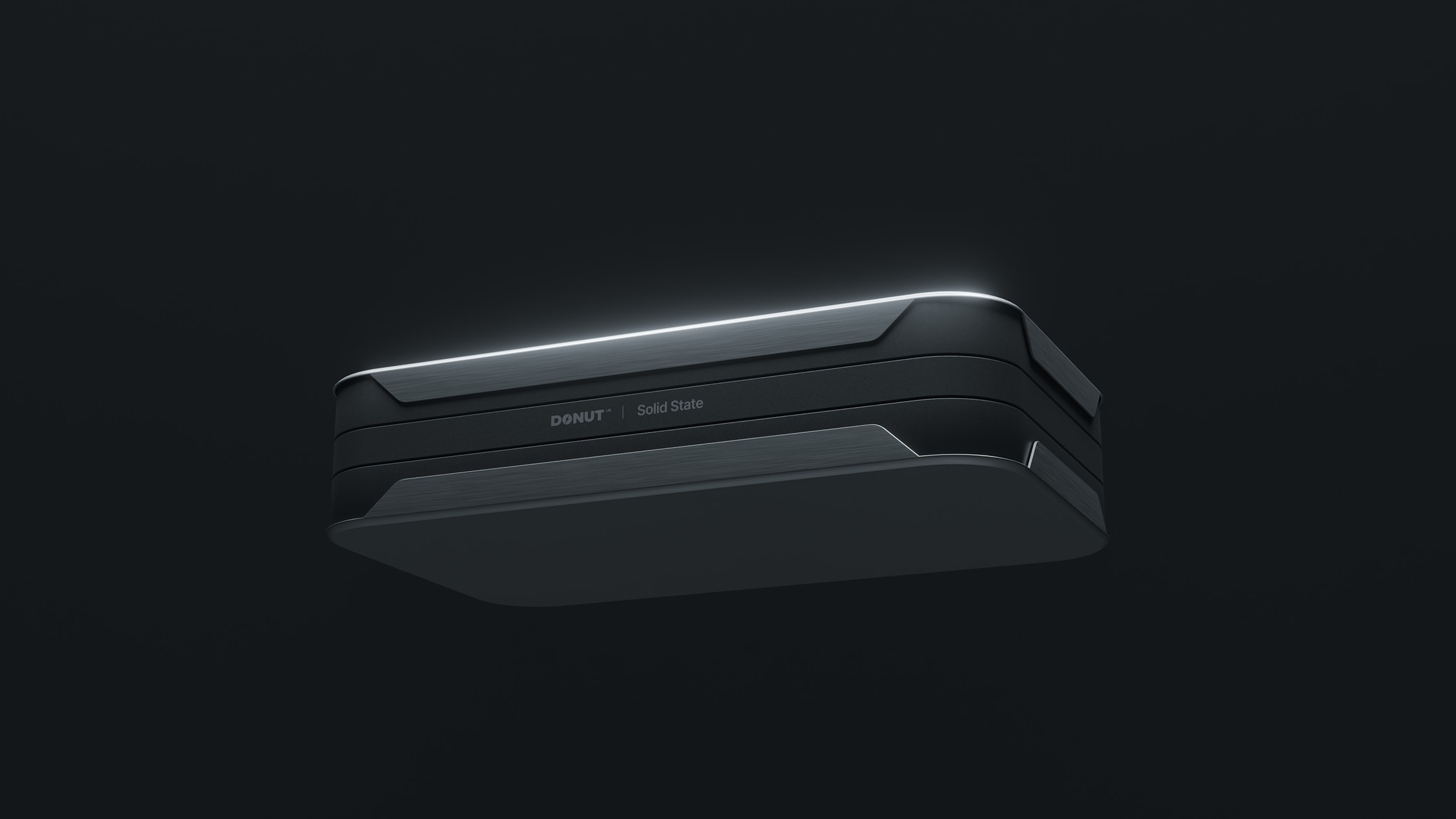
Donut Lab tells SAE Media that those dendrites, that have been the biggest obstacle to deploying solid-state batteries at scale, don't exist in their batteries. The company says it has eliminated them.
Donut Lab wouldn't get into specifics on how it eliminated the dendrites. "There's no easy way to answer it without, like, spilling the beans on the chemistry and everything," Ville Piippo, co-founder and CTO at Donut Lab said.
As for charge cycles, Piippo said that Verge is officially saying 10,000 cycles but Donut Labs cells are targeting 100,000 cycles. Even half that number would mean the batteries would outlast multiple vehicles in a row.
The technology isn't exclusive to vehicles. These batteries in personal electronics, home battery systems, and large-scale battery facilities used to balance the grid could fundamentally change how we view batteries as a whole. Instead of the item in a product that requires replacement first, solid-state batteries could be the piece that outlasts the product itself.
Which brings us to price and mineral sourcing. Donut Lab says these batteries are on par with lithium-ion for price and that the mineral sourcing can be done in the United States and Europe without having to rely on China, which currently has a stranglehold on minerals used in batteries and EVs. At scale that would result in cheaper battery packs since companies wouldn't have to build such large protective packs and because of the far lower chance of thermal runaway, those protective cases won't have to be built quite as protective.
"This is just the beginning — our battery technology can be used in all types of vehicles, from motorcycles and passenger cars to trucks, robotics, and stationary energy storage," Piippo said in a press statement.
Donut Lab has been working on this since 2018 and is partnering with companies beyond Verge Motorcycles to use both its solid-state batteries and Donut motor. One includes a large truck trailer company out of Finland. Other partnerships are likely to be announced in the future, but for now, there's the bike.
The Bike
Verge CEO Tuomo Lehtimaki has heard the solid-state spiel time and time again from third-party companies. Lehtimaki explains that researchers have known how to build a battery, but scalability and affordability hadn't been cracked. Then Donut Lab did exactly that.
Last year, Donut Lab and Verge Motorcycles split from one company into two. Both companies can now focus on their respective businesses while Verge can trust the work of Donut Lab, "These guys, who are my guys, are not selling me snake oil."
It's a partnership that benefits both companies, and it turns out, TS Pro reservation holders as well.
The announcement should come as a pleasant surprise for those reservation holders. Verge will honor those reservations and deliver solid-state powered bikes without raising the price, which starts at $29,900. In addition to the 217-mile standard range bikes, there will be a high-range option with additional battery modules that increases the range from 217 to 370 miles.
The 217-mile version of the TS Pro will have a smaller pack than what's installed in the current lithium-ion-powered bike. One of the benefits of solid-state batteries is energy density. Less space is needed for the same amount of kWh in a pack.
The long-range 370-mile bike will take up about the same space as the current lithium-ion pack. Regardless of the pack, the bike will be lighter.
The Donut motor that resides in the rear wheel is losing some weight as well. Verge says it will be 50% lighter than its predecessor. The tire will also be thinner, which will increase the nimbleness of the bike.
Both bikes will reside on a 400-volt architecture and be outfitted in the United States with SAE J3400, NACS port for charging.
The standard-range bike will have a 20.2 kWh battery pack and DC fast charge up to 100kW. Charge time from 20% to 80% is 10 minutes.
The extended-range bike will sport a 33.3kWh pack and DC fast charge up to 200kW. It will also go from 20% to 80% in 10 minutes.
Both bikes have 137hp (102kW) and 737lb-ft (1,000Nm) and can go from zero to 62 in 3.5 seconds.
I've ridden the current version of the bike and found it to be solidly built and impressive on straights, curvy, and more importantly, rough roads. Startups and new companies typically have issues with their first motorcycles. The dynamics are far more complex than most realize. Adding the heft of a battery pack increases the complexities.
My main issue with the bike was that regenerative braking was either off or at 100% based on the ride mode. Chill mode offered up the best transition. In addition to making the bike I rode lighter and more nimble, Verge is doing something new with braking.
The updated TS Pro also ships with an updated dash display. The display housed in what's traditionally the gas tank is also getting an upgrade with more information, and you'll be able to wear polarized sunglasses and see it. But the big news on the riding front is braking. The front brake is still controlled by the right handlebar. The rear brake now has two controls. The front left handlebar, which typically houses the clutch on a gas bike, is a friction brake. The new footbrake is a recuperative braking control.
This opens up a new way of controlling a bike, and it'll be interesting to try out the system and the bike once it becomes available.
For Lehtimaki, this is the bike that changes everything but also, there's something deeper about bringing this vehicle to market. "We are wanting to do a business we can sleep well with" the CEO said.
Lehtimaki points to dirty mining and human rights abuses that have been found in the battery supply chain. This bike and its battery can be manufactured from sources in the United States and Europe.
The motorcycle maker plans on producing 350 bikes this year. Half to Europe and half to California. For a small company, that's a good start. For the rest of the industry, it'll be a test case. All eyes will be on these two companies from Finland. The bikes will likely be bought and torn apart by other OEMs hoping to see what makes them tick.
2026 is going to be a big year for Donut Lab and Verge Motorcycle. They've been building and riding test bikes for months. Now they need to show the world that solid-state is finally here and on the road.
More From SAE Media Group

Battery Technology
Advancing Battery Technology: THE 2021 BATTERY SHOW Preview
Off-Highway Engineering
Commercial-Vehicle Battery Producer Sets up in U.S. as Electrification Takes Hold
Battery Technology
An Immersive Solution for Thermally Safer EV Batteries
Tech Briefs
Machine Learning Method for Battery Development
Off-Highway Engineering
Thor Lets Campers Go Further Off Grid With Electric Embark RV

Battery & Electrification Technology
Ultracapacitor Solutions to Address Energy-Storage Needs of Vehicles
Automotive Engineering
Electrifying the Two-Wheeler
Automotive Engineering
Battery-Size Standards Technical Information Report Available
Automotive Engineering
The Battery Man Speaks
Off-Highway Engineering
Battery Innovation Key for Commercial and Off-Highway EVs
Battery Technology
Using Electric Vehicle Batteries for Solar Energy Farms

Battery & Electrification Technology
Can Solid-State Batteries Commercialize by 2030?
Battery & Electrification Technology
Leading the Charge: Fast 40

Off-Highway Engineering
How Battery Technology Will Drive Truck Electrification
Battery Technology
New Materials Move Li-Ion Batteries Toward the Solid-State Endgame

Battery & Electrification Technology
The Rechargeable Renaissance
Off-Highway Engineering
eCitaro to Replace Conventional City Buses
Automotive Engineering
Who Wants Afreecar?
Power Electronics INSIDER
New Smart Charger May Pave the Way for More EVs
Green Design & Manufacturing
Develop Wireless Chargers for Electric Vehicles
Power Electronics INSIDER
Fast Charging of Electric Cars Without Cables
Green Design & Manufacturing
Crash-Resistant Battery Housing for Electric Cars
Autonomous Vehicle Engineering
Autonomy and Electrification: A Perfect Match?
Top Stories
NewsRF & Microwave Electronics
 Microvision Aquires Luminar, Plans Relationship Restoration, Multi-industry Push
INSIDERAerospace
 A Next Generation Helmet System for Navy Pilots
INSIDERDesign
 New Raytheon and Lockheed Martin Agreements Expand Missile Defense Production
INSIDERMaterials
 How Airbus is Using w-DED to 3D Print Larger Titanium Airplane Parts
NewsPower
 Ford Announces 48-Volt Architecture for Future Electric Truck
ArticlesAR/AI

Webcasts
Electronics & Computers
 Cooling a New Generation of Aerospace and Defense Embedded...
Automotive
 Battery Abuse Testing: Pushing to Failure
Power
 A FREE Two-Day Event Dedicated to Connected Mobility
Unmanned Systems
 Quiet, Please: NVH Improvement Opportunities in the Early Design Cycle
Automotive
 Advantages of Smart Power Distribution Unit Design for Automotive &...
Energy
 Sesame Solar's Nanogrid Tech Promises Major Gains in Drone Endurance
Similar Stories
NewsTransportation
 Army, SAE’s DATC Team to Fast-Track New Combat-Vehicle Development