




Cummins Unveils New B7.2 Diesel Engine
Cummins has announced details on its new B engine with more displacement and features from its HELM platform.
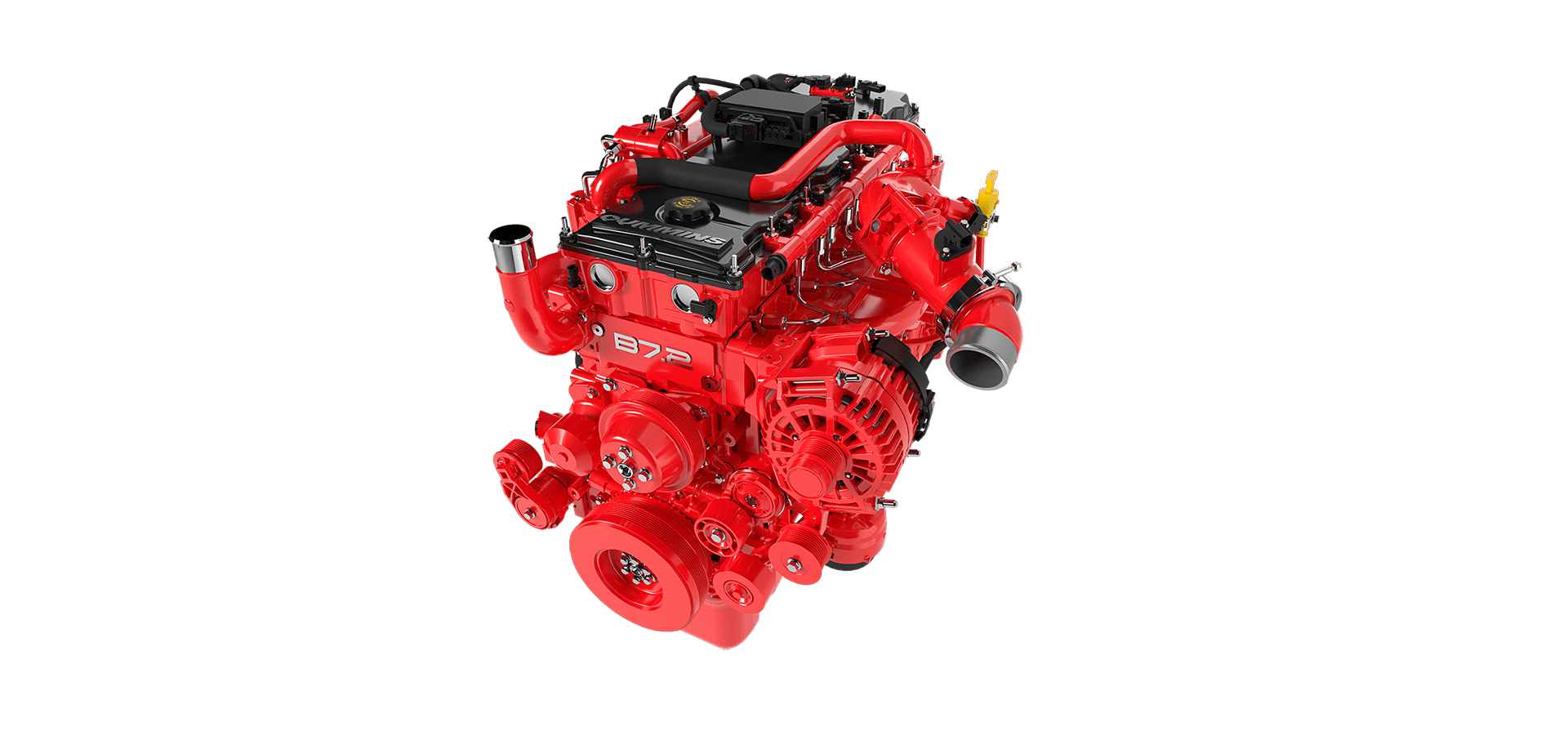
Cummins has unveiled the latest iteration of its renowned B series engine at its press conference during NTEA’s Work Truck Week 2025 in Indianapolis. The new B7.2 diesel is the latest engine to be developed using Cummins’ HELM platform and will serve a variety of medium-duty applications.
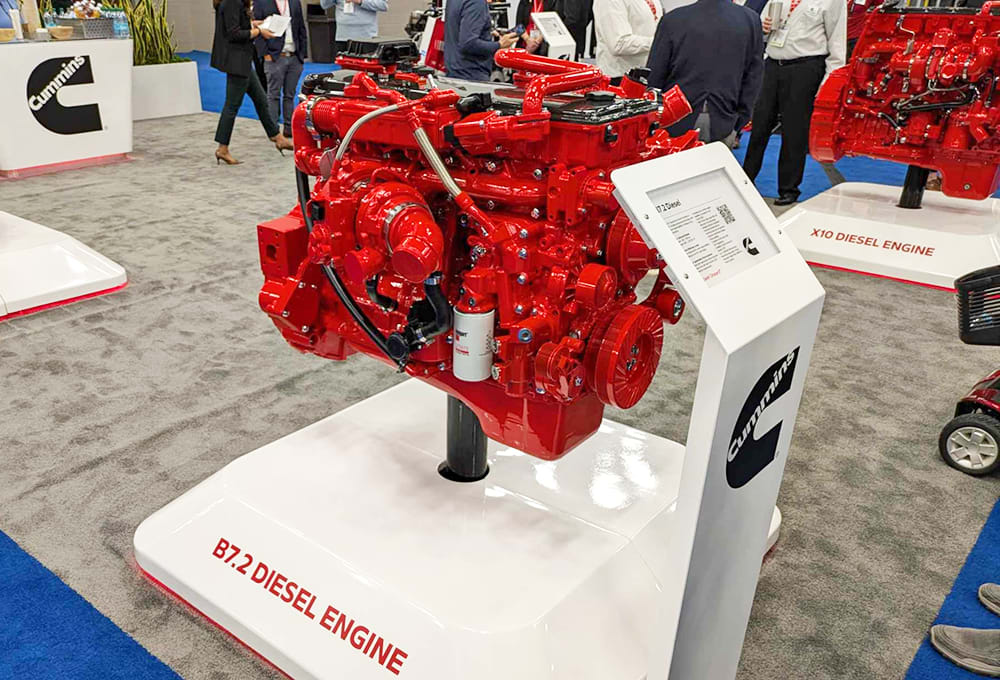
“Our B engine is a legend known around the world. We are proud to unveil the newest version, the B7.2 diesel engine, right here in our backyard,” said Brett Merritt, vice president and president – Engine Business. “The B7.2 brings the latest technology and advancements to one of our most proven platforms. Combined with the rest of our medium-duty lineup, our customers will have the right engine choices to fit their business needs.”

“By many measures, the B engine has been one of the most successful franchises that we have in the Cummins history,” said José Samperio, vice president and general manager for Cummins On-Highway Business in North America. “This engine is the next evolution of the commitment we have for making our products more efficient, cleaner and more durable.”
The new B engine has increased in displacement from 6.7 to 7.2 liters – with a 107-mm (4.213-in) bore and 133-mm (5.236-in) stroke – which allows for a wider range of torque offerings, creating flexibility for different applications and duty cycles.
The B7.2 will reportedly improve unrestricted top-end power ratings, providing a range of 240-340 hp (179-254 kW) and 650-1,000 lb-ft (881-1,356 Nm) of torque with a maximum governed speed of 2,400 rpm. It is an inline-six architecture with a DOHC cylinder head and four valves per cylinder with high-pressure direct common rail injection. At launch the B7.2 will not feature any form of cam phasing, but this technology can reportedly be added later if necessary. Total dry weight of the engine is 1,359 lb (616 kg) with a system weight of 1,607 lb (729 kg).
The B7.2 will also be capable of automatic shutdown and stop-start operation and, for the first time, offer a compression release engine brake. It is equipped with a Holset turbo and a “next generation” aftertreatment and EGR (exhaust gas recirculation) system with an integrated cooler that meets current EPA 2027 requirements. It also features the same belt-driven 48-volt alternator as other HELM engines and an improved oil drain interval over the outgoing 6.7-L.
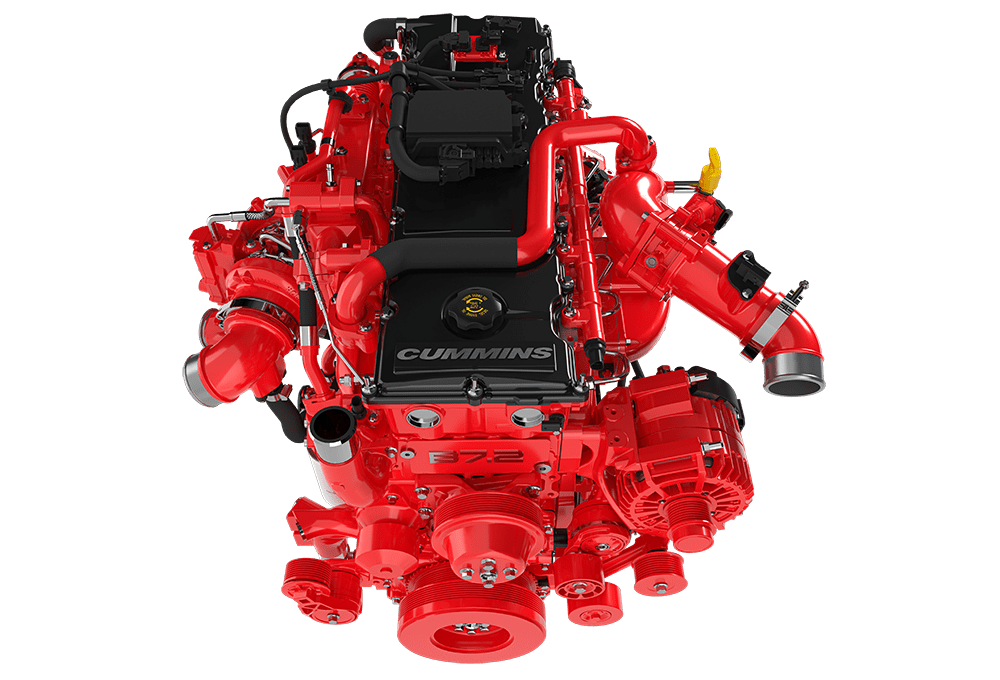
“From a performance point of view, the additional torque from the increased displacement is going to ensure we don’t have a gap between the B and the L engine,” Gary Beshears, product strategy manager at Cummins, told SAE Media at Work Truck Week. “Our goal was going to give customers who may be on the bubble between the B or the L engine being the right choice. This new engine is going to allow us to raise the gross vehicle weight of the B engine across the board. Not orders of magnitude, but enough to make a difference.”
Beshears also discussed further details on the B7.2 and some of the ongoing testing that Cummins is performing before commercial launch. “There are a few things that have been carried over from the larger HELM architectures down to this size, like the 48-volt alternator and the 5-kW heaters on the two different cans of the aftertreatment,” he shared. “We are working to determine if we need an intake heater. There’s ongoing testing that looks promising enough to potentially not need one. Of course, we will still have optional pan and block heaters for cold climates that need them.”
The B7.2 engine is slated to be manufactured at Cummins’ Rocky Mount Engine Plant in North Carolina. Cummins states that series production of the B7.2 will begin in North America in 2027.
More From SAE Media Group
Off-Highway Engineering
Cummins New X15 Engine Meets Upcoming Regs While Boosting Efficiency
Off-Highway Engineering
Komatsu Logs a New Timber Machine
Off-Highway Engineering
AGCO Goes Clean and Green with CORE75 Engine
Off-Highway Engineering
Cummins’ New Mid-Displacement Turbos Quieter and More Efficient
Off-Highway Engineering
Cummins’ X15 Is a Model of Design Efficiency
Off-Highway Engineering
FPT Reveals Compact F28 Off-Road Diesel, Hybrid Variant
Off-Highway Engineering
Freightliner’s Medium-Duty Makeover
Off-Highway Engineering
Detroit DD15 Gen 5 Showcases Durability of New Diesel Tech
Off-Highway Engineering
Cummins Cylinder Deactivation Saves on Fuel and Emissions
Off-Highway Engineering
Westport Awarded LNG Development Program
Automotive Engineering
Spawning an All-New Gasoline Engine, Stellantis’ Hurricane Is Coming
Automotive Engineering
2020 Ford Super Duty Debuts All-New 7.3-Liter Pushrod V8, 10-Speed Automatic
Off-Highway Engineering
Scania Adapts On-Highway Diesel for New Off-Highway Engine Platform
Off-Highway Engineering
Hexagon Bullish on CNG for Long-Haul Trucks
Automotive Engineering
Advancing the OP Engine on Three Fronts
Off-Highway Engineering
FPT Reveals Stage V Engine on Genset Frame Concept
Off-Highway Engineering
Caterpillar Unveils New C13D Off-Highway Engine Platform
Automotive Engineering
Ford Puts More ‘Super’ into the All-New 2023 Super Duty
Automotive Engineering
Achates Aims at 2025 Light-truck Power
Off-Highway Engineering
Kubota Enters Stand-On Track-Loader Segment with New SCL1000
Off-Highway Engineering
MTU Training Facility Helps Keep Complex Engines up and Running
Automotive Engineering
Bentley Develops W12 Cylinder Deactivation
Off-Highway Engineering
Hybrid Powertrains in the Product Mix
Off-Highway Engineering
Combustion Engines Carry on in Construction
Automotive Engineering
Extending the ICE Age: Hyundai Optimizing Engines and Fuels
Automotive Engineering
Engine Researchers: 50% Gasoline-Engine Efficiency in Sight
Automotive Engineering
Cooled EGR Shows Benefits for Gasoline Engines
Automotive Engineering
2022 Nissan Rogue Gets a VC Turbo Triple
Off-Highway Engineering
Navistar’s ‘Ground Up’ Approach to All-New Diesel Engine
Off-Highway Engineering
Delphi Injects Life into Diesel
Top Stories
NewsSensors/Data Acquisition
 Microvision Aquires Luminar, Plans Relationship Restoration, Multi-industry Push
INSIDERRF & Microwave Electronics
 A Next Generation Helmet System for Navy Pilots
INSIDERWeapons Systems
 New Raytheon and Lockheed Martin Agreements Expand Missile Defense Production
NewsAutomotive
 Ford Announces 48-Volt Architecture for Future Electric Truck
INSIDERAerospace
 Active Strake System Cuts Cruise Drag, Boosts Flight Efficiency
ArticlesTransportation

Webcasts
Aerospace
 Cooling a New Generation of Aerospace and Defense Embedded...
Energy
 Battery Abuse Testing: Pushing to Failure
Power
 A FREE Two-Day Event Dedicated to Connected Mobility
Automotive
 Quiet, Please: NVH Improvement Opportunities in the Early Design Cycle
Electronics & Computers
 Advantages of Smart Power Distribution Unit Design for Automotive &...
Unmanned Systems
 Sesame Solar's Nanogrid Tech Promises Major Gains in Drone Endurance