




Sharper Testing Delivers Better AV Performance
As autonomous vehicle development programs grow in complexity, testing complexity and efficiency have become focal points. The Certus project offers a data-driven approach to scenario selection and risk analysis – increasing developers ’confidence in the performance of the vehicle, reducing testing time, and accelerating validation confidence.

As self-driving car technology moves towards commercial deployment, engineers encounter a scaling challenge that mirrors issues seen in other complex critical safety systems: validation. Demonstrating that autonomous vehicles operate safely and robustly across diverse real-world conditions requires testing capabilities that challenge conventional automotive validation methods.
Project Certus delivers a targeted response to this challenge. Established in 2023 with funding from the Centre for Connected & Autonomous Vehicles, this research and development project focuses on enhancing both the effectiveness and depth of autonomous vehicle testing while maintaining rigorous safety standards. The collaboration brings together HORIBA MIRA as the lead organization, working alongside Polestar, IPG Automotive, the Connected Places Catapult, and Coventry University. Recent developments have centred on advancing how confidence in system performance is quantified and integrated into engineering decision-making. Certus’ core principles include extracting greater understanding from reduced test quantities, facilitating superior engineering judgment, and minimizing both development timelines and expenses associated with deploying reliable autonomous vehicle technology.
The problem of coverage in scenario-based testing

Validating autonomous systems is not simply a matter of clocking more and more miles. Unlike conventional vehicles, where safety-critical features are relatively well-contained, automated driving functions must demonstrate dependable performance across a highly variable operational design domain (ODD). This includes everything from complex traffic patterns to shifting weather conditions and nuanced driver interactions.
Given the number of permutations involved, it becomes impractical to rely on large-scale scenario sampling alone. Even well-resourced teams can struggle to generate meaningful test coverage using traditional methods.
Certus introduces a more targeted strategy. Instead of attempting to test every possible scenario, it focuses on targeting testing in areas where there are high levels of uncertainty in
system performance. The project has built a toolchain that can identify gaps in scenario coverage, flag areas where uncertainty remains high, and generate new scenarios that are most likely to reveal meaningful performance insights.
Improving efficiency through scenario prioritization
During recent evaluations, the Certus methodology was compared with a conventional statistical approach that generated a broad spread of 2,500 scenarios. This conventional model delivered a 56% confidence rating in the performance of the system under test. Using the Certus toolchain, a sequence of just 550 intelligently-selected scenarios raised that confidence rating to 77%.
The approach begins with a randomized sample to establish an initial understanding of system performance. Subsequent test batches are then shaped by the results of earlier iterations, with the algorithm selecting scenarios that target the most uncertain areas of system behavior. This process ensures that every additional test makes a meaningful contribution to the process of evaluating system robustness.
For developers, the result is significant. With fewer test scenarios, they can achieve a higher level of confidence in system performance. In practical terms, this can reduce total test time by around 40%.
Moving beyond simple performance metrics
Isolated, key performance indicators (KPIs) alone are not enough. To make these results actionable, Certus introduces a set of evaluation tools that look beyond single performance indicators. These tools, referred to as oracles, bring together multiple key performance metrics to assess how the system is behaving from both a safety and operational standpoint.
The safety oracle combines multiple metrics – for example, the Time To Collision, Time Headway and Lane Offset – to evaluate and provide contextual understanding around the performance of a vehicle system. By using oracles in this way, developers can look beyond simple 'pass' and 'fail' criteria and harness fresh insights that allow them to assess whether a system's response was suitable for the specific circumstances it encountered. In some cases, it may be physically impossible to avoid an incident. But the vehicle system can still mitigate the impact as much as possible, meaning it behaved in the safestOracles that assess progression, on the other hand, focus on how efficiently a vehicle completes its journey and its compliance with the rules of the road. Progression metrics include the progress rate (PR) towards a goal before the termination of a scenario, mission time efficiency (MTE), which is based on when a vehicle arrives at its destination and how efficient it is in doing so, and rule compliance (RC), which measures how safely the vehicle follows the rules of the road. These oracles help evaluate how well an autonomous system meets tInstead of operating on a binary pass-fail basis against one benchmark, the system receives evaluations across multiple performance criteria. This approach facilitates more sophisticated analysis and empowers engineers to identify specific improvement opportunities while maintaining balance across different operational characteristics.
Understanding residual risk
A further strand of the Certus project involves determining residual risk, defined as the uncertainty that remains after a given set of tests. This aspect is especially important for developers who need to make decisions about whether to release a system into the market, invest in further development, or alter the scope of its intended use.

The system approaches this by comparing the outcomes of similar scenarios. When minor variations in scenario parameters trigger significant shifts in system response, this can indicate inconsistency in performance and suggest additional development or validation work is necessary. On the other hand, when performance demonstrates stability across comparable test conditions, engineers can establish that the system operates predictably, giving confidence in the system’s performance.
This concept is useful not only for simulation-based validation but also for managing physical test programs. In both contexts, Certus brings automation that helps engineers to identify the 'high value' scenarios that need to be targeted. The tool chain also identifies appropriate scenarios for correlation activity to ensure engineers gain confidece in the simulation results.
Knowing what isn’t already known
One of the most valuable insights for developers isn’t what a system can do, but where limitations remain. Having the ability to quantify residual risk gives engineers the ability to identify where uncertainty may still remain within the system after a series of tests. This is the valuable insight that enables ‘system readiness ’evaluations to be made.
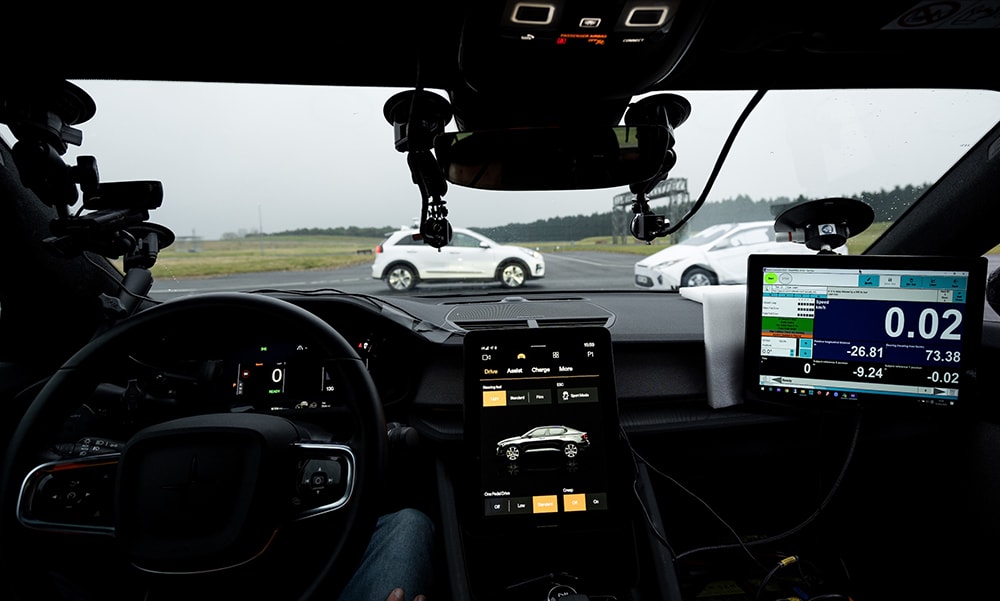
Certus also uncovers how predictably a system behaves when exposed to similar, but not identical, scenarios. If small changes in traffic flow, road layout or vehicle dynamics lead to inconsistent responses, that signals a need for further investigation. If outcomes are stable, confidence that the system will perform as expected in the real world grows.
This approach supports a more targeted engineering approach. Teams can decide where to focus development, where additional testing is justified, or where limitations should be enforced within the ODD. In regulated environments, it also gives developers a defensible position backed by evidence.
Benefits for developer
From a commercial perspective, Certus offers a way to accelerate development without increasing risk. By providing clearer insights into where a system is performing well and where uncertainty remains, developers can make more strategic decisions about test planning, resource allocation and product readiness.
There is also a benefit in how Certus enables teams to better justify their decisions. When a product is released, stakeholders – from technical leads to certification bodies – need a defensible position on system safety. Confidence ratings and residual risk metrics provide the evidence base for these conversations.
Driving into the autonomous future
As vehicle autonomy becomes more ambitious, the tools required to support the technology’s development must evolve. The Certus tool chain is designed to scale with those ambitions. Its modular architecture and focus on adaptability make it well suited to support next-generation autonomous systems, including those operating at higher
Aaron Mandalia is HORIBA MIRA’s technical sales lead for connected and autonomous vehicles (CAV) and wrote this article for SAE Media.
More From SAE Media Group
Off-Highway Engineering
Arctic Autonomy
Automotive Engineering
Soft Tests for Autonomous Vehicles
Aerospace & Defense Tech Briefs
SAE International Extends Call for Abstracts, Seeks Submissions for AeroTech Conference
Automotive Engineering
Multimatic Opening New Michigan Virtual Vehicle-Dynamics Development Center
Aerospace & Defense Tech Briefs
Industry Invited to Participate in AeroTech Aerospace and Defense Technical Program
Automotive Engineering
Designing and Assessing Vehicle Safety Functions with a Use Case Approach
Automotive Engineering
Automated Vehicle Safety Series Addresses Design, Testing, Verification, and Validation
Automotive Engineering
As Early Autonomy Questions Roil the Industry, Toyota Hews to Driver-Enhancement Philosophy
Autonomous Vehicle Engineering
Purpose, Perceptions for Driver-Assist Tech Solidify
Autonomous Vehicle Engineering
'Level 2+': Making Automated Driving Profitable, Mainstream
Off-Highway Engineering
Commercial Vehicle ADAS: Testing, Testing and More Testing
Motion Design INSIDER
Can Self-Driving Cars Navigate Roundabouts?
Off-Highway Engineering
Autonomous Construction Sites
Autonomous Vehicle Engineering
Horiba MIRA’s Vision for World-Class AV Testing
Autonomous Vehicle Engineering
Navigating the Language of Vehicle Autonomy
Autonomous Vehicle Engineering
The Key to Autonomous Vehicle Safety Is ODD
Automotive Engineering
SAE Rolls out Introduction to Automated Vehicle Safety in Shanghai
Autonomous Vehicle Engineering
'Road Race' for AV Testing May Be Slowing
Motion Design INSIDER
Autonomous Bus Sounds: It’s All About When, Not How

Autonomous Vehicle Engineering
Foretellix Building Precise Software Language for Validating Self-Driving Scenarios
Autonomous Vehicle Engineering
Making the Strategic Move into AV Testing
Automotive Engineering
Nissan’s Reed Is Not Your Typical R&D Boss
Aerospace & Defense Tech Briefs
SAE International Issues, Revises Technical Reports for Aerospace Engineering
Automotive Engineering
AVSC Develops Best Practices for Traceable AV Safety Inspection Protocols
Off-Highway Engineering
Lifelike Simulation Accelerates Middle-Mile Autonomous Trucking
Autonomous Vehicle Engineering
Horiba to Expand Virtual AV Vetting with Physical-Body Testing
Automotive Engineering
Emulating 5G Networks for AV Testing

Automotive Engineering
Department of Transportation Asks for Public Input Regarding Relaxing AV Regulations
Top Stories
NewsRF & Microwave Electronics
 Microvision Aquires Luminar, Plans Relationship Restoration, Multi-industry Push
INSIDERAerospace
 A Next Generation Helmet System for Navy Pilots
INSIDERDesign
 New Raytheon and Lockheed Martin Agreements Expand Missile Defense Production
INSIDERMaterials
 How Airbus is Using w-DED to 3D Print Larger Titanium Airplane Parts
NewsPower
 Ford Announces 48-Volt Architecture for Future Electric Truck
ArticlesAR/AI

Webcasts
Electronics & Computers
 Cooling a New Generation of Aerospace and Defense Embedded...
Automotive
 Battery Abuse Testing: Pushing to Failure
Power
 A FREE Two-Day Event Dedicated to Connected Mobility
Unmanned Systems
 Quiet, Please: NVH Improvement Opportunities in the Early Design Cycle
Automotive
 Advantages of Smart Power Distribution Unit Design for Automotive &...
Energy
 Sesame Solar's Nanogrid Tech Promises Major Gains in Drone Endurance