




Automotive Engineering - November 2014
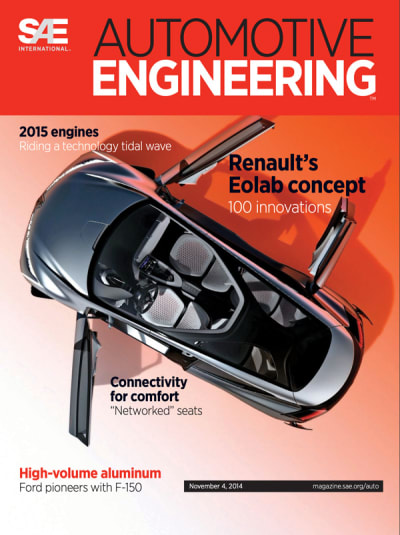
Inside this issue
Overview
The November 4, 2014 issue of Automotive Engineering presents a comprehensive overview of the latest advancements and trends in the automotive industry, focusing on innovation, efficiency, and the integration of new technologies. This edition features a variety of articles that highlight significant developments in vehicle design, engineering, and manufacturing.
Key Highlights:
-
2015 Ford F-150 Launch: The issue opens with insights from the first drive of the 2015 Ford F-150, which has garnered attention for its aluminum body. This design choice not only reduces weight but also enhances fuel efficiency and performance. The article emphasizes the truck's capabilities both on and off-road, showcasing Ford's commitment to innovation in the pickup segment.
-
Schaeffler's New Torque Converter: Another significant development discussed is Schaeffler's new iTC torque converter, set to debut in 2017. This component is designed to be smaller, lighter, and more functional than its predecessor, addressing the needs of vehicles with downsized engines and automatic transmissions. The elimination of the thick piston plate in previous models marks a notable advancement in torque converter technology.
-
Volkswagen XL Sport Concept: The magazine also covers Volkswagen's XL Sport concept, which was revealed at the 2014 Paris Motor Show. This vehicle is notable for its use of a motorcycle engine, showcasing a unique approach to performance and efficiency. Dubbed a "sister model" to the XL1, the XL Sport represents Volkswagen's exploration of innovative powertrains.
-
Challenges in Engineering: A panel discussion featured in the issue highlights the challenges engineers face in an increasingly connected and autonomous automotive landscape. Bret Greenstein from IBM Corp. notes that the growing volume of data presents significant challenges for analytics. The need for engineers to design for feedback and manage complex variables is emphasized, indicating a shift in engineering practices.
Talent Development in STEM: The issue stresses the importance of fostering interest in science, technology, engineering, and mathematics (STEM) from a young age. Sharafat Khan from Deloitte Consulting advocates for initiatives that engage children in these fields to ensure a pipeline of skilled workers for the future. This focus on education is seen as crucial for the automotive industry's growth and innovation.
-
Connectivity and Comfort: The magazine explores advancements in vehicle interiors, particularly the trend towards "networked" seats. Suppliers like Continental, Johnson Controls, and Faurecia are developing seats that enhance safety, personalization, and comfort through connectivity. This trend reflects a broader movement towards integrating technology into the driving experience.
-
Aluminum Vehicle Manufacturing: Ford's approach to high-volume mass production of aluminum vehicles is another focal point. The 2015 F-150 serves as a case study for how manufacturers can effectively implement lightweight materials in vehicle production, which is essential for improving fuel efficiency and meeting regulatory standards.
-
Innovations in Powertrain Technology: The issue features a section on powertrain innovations, highlighting how engineers are working to enhance the efficiency of light-duty engines without sacrificing performance. This ongoing quest for improved powertrain technology is critical as the industry moves towards stricter emissions regulations and consumer demand for better fuel economy.
-
Renault's Eolab Concept: The Renault Eolab concept is presented as a significant innovation aimed at achieving fuel consumption of just 1.0 liter per 100 kilometers. This vehicle incorporates a range of technologies designed to optimize efficiency, showcasing Renault's commitment to sustainable automotive solutions.
-
Future Outlook: The issue concludes with a look at upcoming trends and technologies in the automotive sector. The integration of electric and hybrid vehicles, advancements in autonomous driving, and the continued push for sustainability are all highlighted as key areas of focus for the industry moving forward.
In summary, the November 4, 2014 issue of Automotive Engineering encapsulates the dynamic nature of the automotive industry, showcasing how manufacturers are leveraging new technologies and materials to enhance vehicle performance, efficiency, and safety. The emphasis on education and talent development underscores the industry's recognition of the need for a skilled workforce to navigate the challenges of an evolving landscape. As the automotive sector continues to innovate, this issue serves as a valuable resource for professionals seeking to stay informed about the latest trends and advancements.
Features
-
Articles
Ferrari Changes Course on Track Simulation Software
GM Unveils More Efficient 2016 Volt Powertrain
Regulars
-
Global Vehicles
-
Technology Reports
Broader Data Sharing for Connected Transportation Will Require Widespread Collaboration
Renault Applies Model-Based Systems Engineering to Dual-Clutch Transmission
Racecar with Composite-Intensive Suspension Gets Track Tested in 2015
Stories
-
News
DSPACE Supplying In-Lab GPS Simulation System to DOT/NHTSA
SAE Offers Free Summary Document on Levels of Vehicle Automation
Dassault Systèmes and AKKA Partner on Driverless-Vehicle Technology (Video)
VW’s Carbon-Fiber XL Sport Concept Sports Ducati V2 Motorcycle Engine
Toyota Reveals New Platform, Hybrid Powertrain in C-HR Concept
Q80 Inspiration Concept Previews Future Top-Range Infiniti, New Engine Family
Schaeffler Electrifies Its Fuel-Efficiency Demonstrator, Aims for 35 Mpg Combined Rating
Chrysler Makes Personnel Moves
Trade-Off for Convenience of Voice Control Is Driver Distraction, Study Says
Peugeot Seeks International Appeal with Quartz Concept
Divine Concept Hints at DS Brand Future
Discovery Sport Introduces Evoque-Based Land Rover
Mazda Trickles out More New MX-5 Details
Mercedes-Benz Applies Full Sport to GLA
New-Gen Torque Converter Aims at 2017 Vehicle Intro
Alfa Romeo Finally Returns to U.S. with 4C
New Ford S-Max to Get Class-Leading Driver Assistance Features
GKN Spins a New Compact AWD Disconnect System for Small SUVs
Renault Reboots Espace with Crossover Leanings
New XC90 Burnishes Volvo's Safety Credentials
Waste-To-CNG Technology Enables Chevy to Go Bi-Fuel with Impala (Video)
Novelis Opens Aluminum Sheet Plant in China
SAE 2014 Convergence: Chrysler's Gilles Rallies Engineers to Think like Futurists
Personalization, Autonomy Create Many Challenges for Engineers
Volvo "Triple Boost" Engine Uses Twin Turbos plus E-Compressor
SAE 2014 Convergence: Adapting to Millennials Important to Workforce
Autonomous Vehicle Challenge Ramps up Competition at Convergence
Helping Overloaded Engineers, Attracting Talent a Growing Concern
Security Issues Are Quickly Becoming a Central Aspect of Vehicle Design
Eaton Names New VP of Technology for Vehicle Group
Lexus Tops Consumer Reports' Reliability Survey
Fiat Chrysler Names New Quality Chief
Congestion, Autonomy, and Connectivity Key Issues for MY 2054 Cars
New Book Spotlights Latest Turbocharging Technologies
Fiat-Chrysler to Spin off Ferrari
SAE Comes out with "Green Racing" Protocols
Chinese Suppliers Shift Focus to Services as Market Growth Slows
Changing the Oil and the Mysteries of OW-16
Flex4 System Leads Magna's Wave of New Fuel-Saving Technologies
Top Stories
INSIDERManufacturing & Prototyping
 How Airbus is Using w-DED to 3D Print Larger Titanium Airplane Parts
INSIDERManned Systems
 FAA to Replace Aging Network of Ground-Based Radars
NewsTransportation
 CES 2026: Bosch is Ready to Bring AI to Your (Likely ICE-powered) Vehicle
NewsSoftware
 Accelerating Down the Road to Autonomy
EditorialDesign
 DarkSky One Wants to Make the World a Darker Place
INSIDERMaterials
 Can This Self-Healing Composite Make Airplane and Spacecraft Components Last...
Webcasts
Defense
 How Sift's Unified Observability Platform Accelerates Drone Innovation
Automotive
 E/E Architecture Redefined: Building Smarter, Safer, and Scalable...
Power
 Hydrogen Engines Are Heating Up for Heavy Duty
Electronics & Computers
 Advantages of Smart Power Distribution Unit Design for Automotive...
Unmanned Systems
 Quiet, Please: NVH Improvement Opportunities in the Early Design...
