




Flex4 System Leads Magna's Wave of New Fuel-Saving Technologies
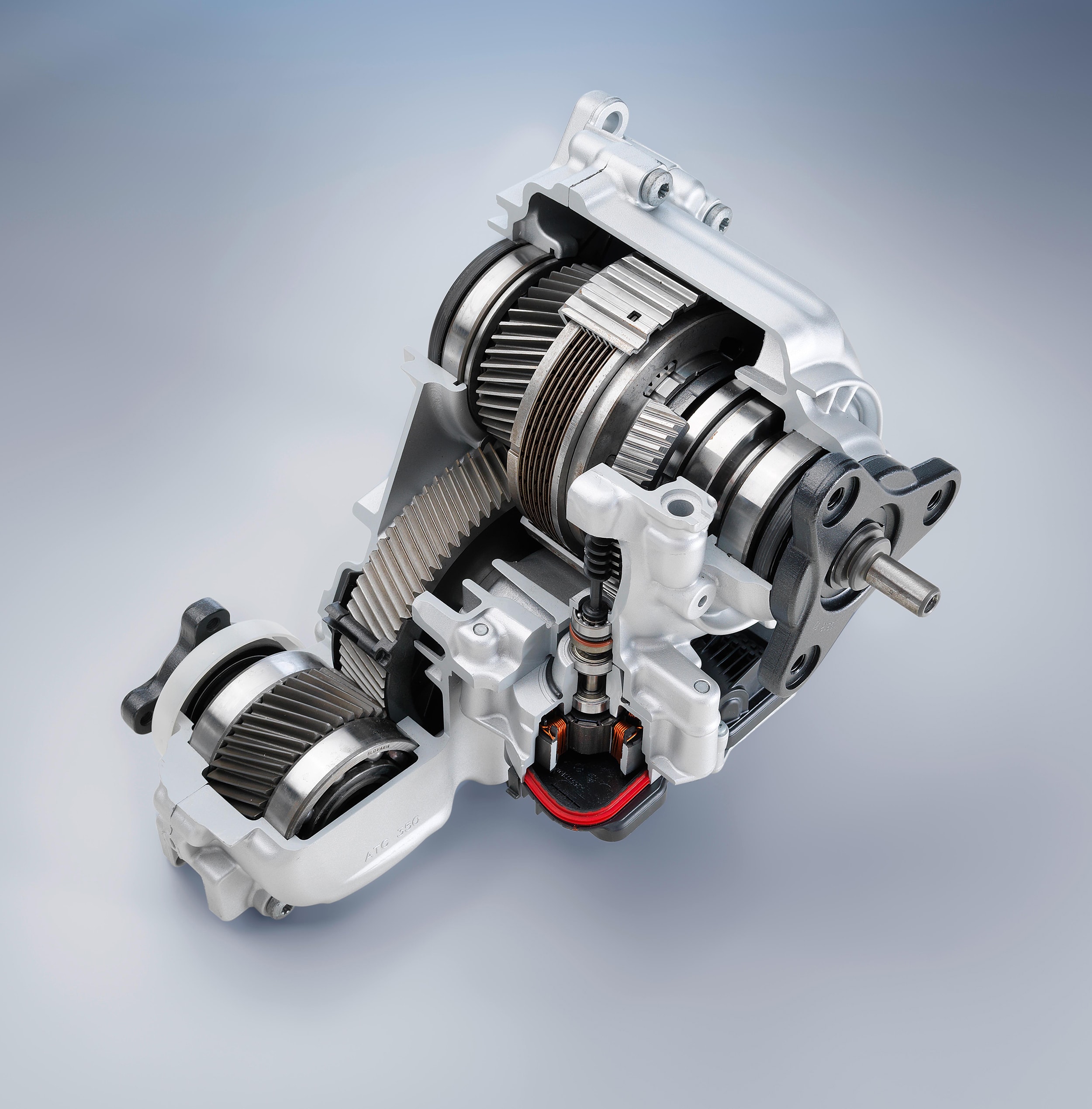
A new drivetrain technology that's soon to enter production will provide truck- and car-based platform vehicles a fuel efficiency boost.
The next evolution of Magna Powertrain’s fully active Actimax 4WD technology, providing variable torque distribution between the front and rear axles, will have a fuel-savvy attitude.

“We recently secured our first customer for Flex4, a fast-acting active disconnect system that uses our Actimax active clutch technology," reported John Zalewski, the company's Global Product Manager of Axle Drives and Chassis Modules. The Flex4 system enables the traction-coupling clutch to be opened all the way, disconnecting the axle from the driveshaft. According to Zalewski, the patent-pending system can deliver a 4-7% fuel economy gain, depending on vehicle type.
The system debuts in 2016 on a front-drive-based AWD vehicle.
Automotive Engineering recently spoke with Magna engineers and tested various production 4WD and AWD systems during a media event at The Mounds Off-Road Vehicle Park near Flint, MI.
Since a typical 4WD system weighs approximately 110 lb (50 kg), trimming weight in ways that will not adversely affect performance is important.
“Although this isn’t something we’ve applied to production drivetrain products yet, we’re looking at using the patented High-Q-Cast vacuum high-pressure aluminum die casting process from Magna’s Cosma group to produce the Flex4’s housing," Zalewski told Automotive Engineering. "If the process proves to be production-feasible for this application, it will allow us to make 2-mm (.07-in) walls instead of the typical 3-mm to 3.5-mm (.11- to .13-in) walls,” he said.
Magna Powertain and Magna Electronics engineers are joining forces to put 4WD/AWD into the realm of semi-autonomous vehicle activity. “We’re in the R&D stage now with using the vehicle’s camera-based vision system to engage or disengage automatically the 4WD/AWD system,” Zalewski said.

The supplier’s commercially available vision system features a proprietary camera, developed and produced by Magna, and an image processing sub-system.
According to Chris Van Dan Elzen, Director of Machine Vision Systems at Magna Electronics, “The image processing takes the video stream from the camera and mines it for information, (such as) lane position, objects ahead, traffic signs, headlights/taillights.”
An advanced image processing vision system that networks with the vehicle’s chassis controls could expand the active safety scope and provide a fuel efficiency payback.
Said Zalewski, “If the vehicle is in 2WD and is approaching black ice, the vision system’s detection of glare on the roadway could prompt an automatic switch into AWD to prevent a skid issue. The ability to determine whether or not AWD is the best option, based on the terrain’s condition, also could yield fuel economy gains.”
Added Van Dan Elzen, “Curves, speed limits, and other information can be taken into consideration with the ultimate goal of maximizing the use of 2WD whenever conditions permit.”
More From SAE Media Group
Off-Highway Engineering
First Drive: Drifting in the Electric 2027 Mercedes GLC 400
Automotive Engineering
Toyota Stretches SUV Line-Up with World Debut of Grand Highlander
Off-Highway Engineering
Freightliner’s Medium-Duty Makeover
Automotive Engineering
Getting a Grip on AWD Efficiency
Automotive Engineering
Bentley Takes SUV to Super Premium Level
Automotive Engineering
Top Transmission Engineers Project Big Future for E-Axles, Advanced Motors
Automotive Engineering
2019 Vehicle Technology Review
Automotive Engineering
Integrated and Open Development Platform (IODP)
Automotive Engineering
2019 Chevrolet Silverado 2.7L
Automotive Engineering
Mid-engine History of The Future
Automotive Engineering
New Toyota Avalon Gains Advanced Suspension, Lighting Systems
Automotive Engineering
TRD Spells Capability for Toyota’s Latest Tundra
Automotive Engineering
2019 Audi E-tron Quattro
Automotive Engineering
2026 Toyota RAV4 Review: All Hybrid, All the Time
Off-Highway Engineering
ZM Trucks Starts Production in Fontana, California
Off-Highway Engineering
EV Startup Prepares to Enter Commercial Market with Novel EAxle
Automotive Engineering
M3 Sedan, M4 Coupé Benefit from BMW’s Racing, CFRP Experience
Off-Highway Engineering
Western Star Adds ‘Weight Sensitive’ 47X to Vocational Lineup
Automotive Engineering
Packaging Honda’s all-new Insight
Automotive Engineering
Kia Reveals Electric AWD Trail'ster Concept
Automotive Engineering
Ford Refines Interior, Exterior on 2025 Explorer
Off-Highway Engineering
Kia Takes Aim at Commercial Vans with PBV Concepts
Automotive Engineering
2017 Cadillac XT5 Brings Superior Dynamics to Luxo-Crossover Segment
Automotive Engineering
Returning Jeep to the Midsize-pickup Market
Automotive Engineering
Electrifying ‘The Ultimate Driving Machine’
Off-Highway Engineering
AxleTech Develops Electric Independent Suspension Concept for Vehicles Up to 58,000-lb GCWR
Automotive Engineering
Jeep's B-Segment Renegade: U.S. Developed, Built in Italy
Automotive Engineering
VW’s Carbon-Fiber XL Sport Concept Sports Ducati V2 Motorcycle Engine
Automotive Engineering
Jeep Debuts Desert Rated Badge with Gladiator Mojave
Automotive Engineering
Lighter Volvo XC90 Is Engineered for "Premium Cool"
Top Stories
INSIDERManufacturing & Prototyping
 How Airbus is Using w-DED to 3D Print Larger Titanium Airplane Parts
INSIDERManned Systems
 FAA to Replace Aging Network of Ground-Based Radars
NewsTransportation
 CES 2026: Bosch is Ready to Bring AI to Your (Likely ICE-powered) Vehicle
NewsSoftware
 Accelerating Down the Road to Autonomy
EditorialDesign
 DarkSky One Wants to Make the World a Darker Place
INSIDERMaterials
 Can This Self-Healing Composite Make Airplane and Spacecraft Components Last...
Webcasts
Defense
 How Sift's Unified Observability Platform Accelerates Drone Innovation
Automotive
 E/E Architecture Redefined: Building Smarter, Safer, and Scalable...
Power
 Hydrogen Engines Are Heating Up for Heavy Duty
Electronics & Computers
 Advantages of Smart Power Distribution Unit Design for Automotive...
Unmanned Systems
 Quiet, Please: NVH Improvement Opportunities in the Early Design...
