




Mid-engine History of The Future
Highlighting the many benefits of a century-old vehicle layout whose golden era is with today’s performance cars.
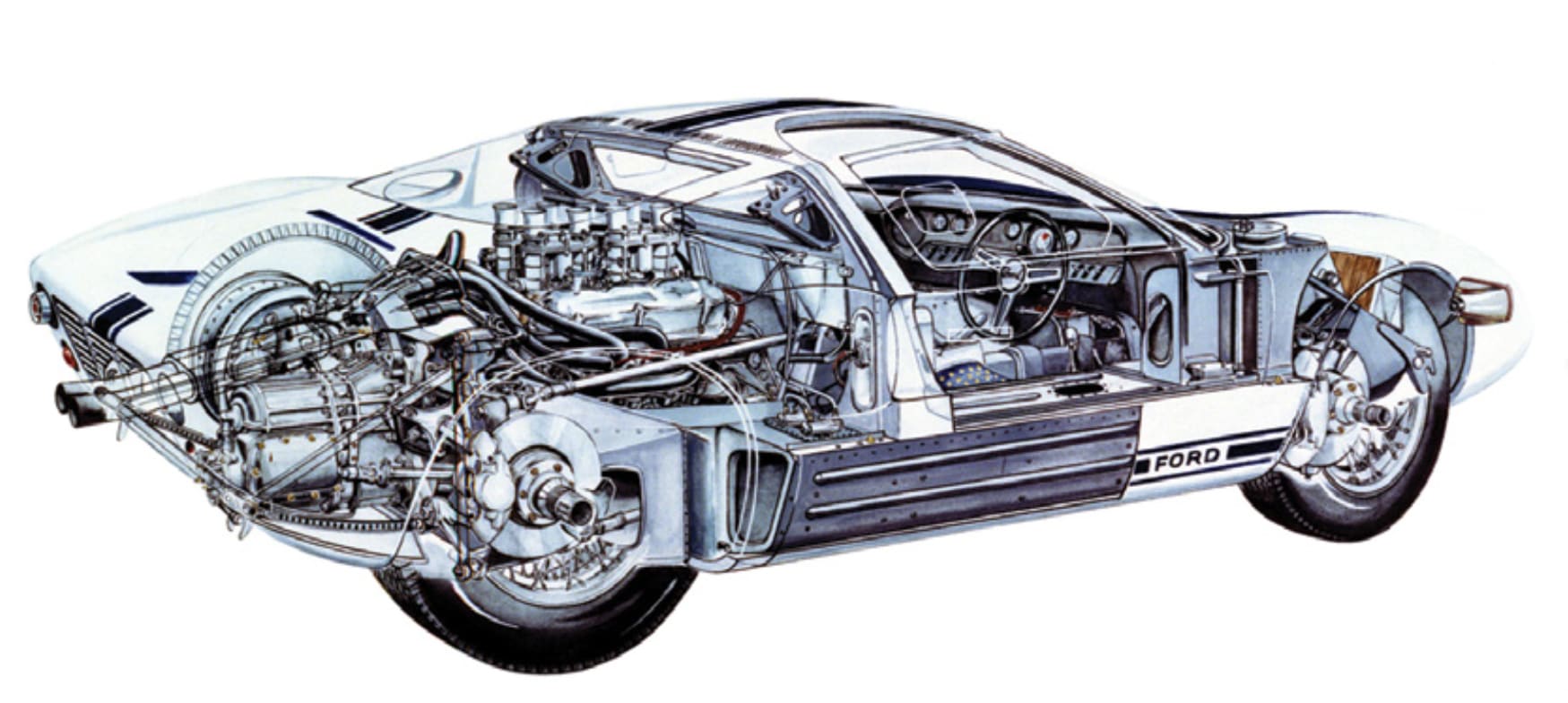
What do a 1901 Curved-Dash Oldsmobile, a 1936 Auto Union Grand Prix car and the 2020 Acura NSX Hybrid and the new 2020 Chevrolet Corvette have in common?
Their engines are located between the front and rear axles, behind the driver. The so-called ‘mid-engine’ drivetrain layout has found favor in passenger cars, mostly at low volume, since the beginning of the automotive age. It’s been popular in various transit and school buses and fire apparatus as well.
Leading-edge racecar engineers, such as those at Auto Union and Mercedes-Benz in the 1930s, chose mid-engine over alternative powertrain layouts to minimize the vehicle’s polar moment of inertia (or rotational inertia)—a physical object’s resistance to rotation about any axis. In cars, a larger polar moment of inertia is typically created by a large distance between the vehicle’s major masses. In such layouts, higher forces are required to stop and start any turning maneuver. The vehicle is less agile as a result.
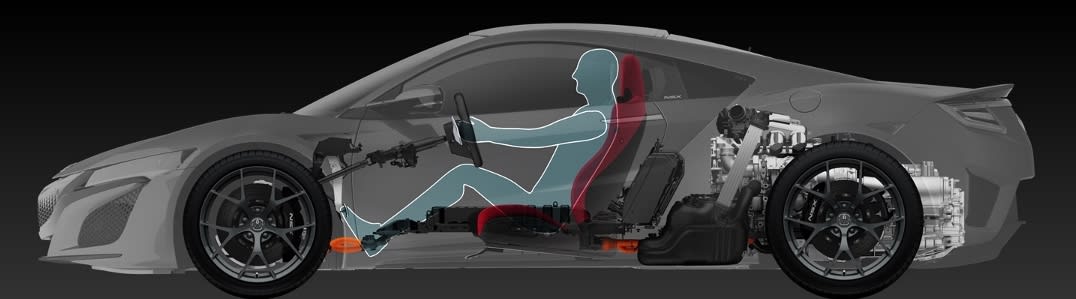
By adopting mid-engine layouts, handling, braking and acceleration are improved via substantially increased rear tire loading — as GM engineers note in our C8 Corvette development feature on page 30. There are weight distribution and cooling benefits in some applications, too. By contrast, mid-engine commercial vehicle designs offer packaging benefits.
Mid-engine mania was slated to be a highlight of WCX 2020, until the event was cancelled due to the COVID-19 pandemic. What potential SAE show-goers missed was the SAE Mobility History Committee’s “History of the Future: Mid-Engine Revolution” — an engaging showcase of early-to-modern mid-engine vehicle examples.
“Although mid-engine vehicles have recently been in the news, our display demonstrated that this design configuration is not new, and perhaps the original drivetrain layout,” noted Len Kata, the MHC chair. The WCX display, he said, aimed to “enlighten visitors regarding the history of mid-engine technology,” spanning 1903 to the present. Vehicles to have been displayed included a 1903 Olds chassis; 1909 Buick Model F; 1948 Citroen Traction Avant; 2006 Ford GT; 1970 Porsche 914, and an extensive Acura NSX Hybrid display with a chassis and full vehicle.
“As always, our mission is to present the history of mobility in a manner that engages interest and inspires further study and interpretation of our heritage,” Kata said.
More From SAE Media Group
Off-Highway Engineering
First Drive: Drifting in the Electric 2027 Mercedes GLC 400
Automotive Engineering
Flex4 System Leads Magna's Wave of New Fuel-Saving Technologies
Automotive Engineering
2019 Vehicle Technology Review
Automotive Engineering
M3 Sedan, M4 Coupé Benefit from BMW’s Racing, CFRP Experience
Automotive Engineering
Bentley Takes SUV to Super Premium Level
Automotive Engineering
Readying Ferrari Car for Endurance Racing
Automotive Engineering
Daimler and Renault-Nissan Marriage Bears Rear-Engined Offspring
Automotive Engineering
Toyota Stretches SUV Line-Up with World Debut of Grand Highlander
Automotive Engineering
2019 Chevrolet Silverado 2.7L
Automotive Engineering
GM Announces LT1 Crate Engine Availability at 2014 SEMA Show
Automotive Engineering
Integrated and Open Development Platform (IODP)
Off-Highway Engineering
ZM Trucks Starts Production in Fontana, California
Off-Highway Engineering
Freightliner’s Medium-Duty Makeover
Automotive Engineering
New Toyota Avalon Gains Advanced Suspension, Lighting Systems
Automotive Engineering
Volkswagen's New Euro Passat Switches to MQB Matrix
Automotive Engineering
Cadillac ATS-V Bulks up for Track Duty
Automotive Engineering
Racecar with Composite-Intensive Suspension Gets Track Tested in 2015
Automotive Engineering
Past as Prelude to the Future
Automotive Engineering
Ford Approved for Hands-Off Driving on German Autobahn
Battery & Electrification Technology
Ultracapacitor Solutions to Address Energy-Storage Needs of Vehicles
Automotive Engineering
Packaging Honda’s all-new Insight
Automotive Engineering
VW’s Carbon-Fiber XL Sport Concept Sports Ducati V2 Motorcycle Engine
Automotive Engineering
LEAF Turns to the 2020s
Automotive Engineering
Democratizing Hybrid Technologies
Automotive Engineering
Getting a Grip on AWD Efficiency
Automotive Engineering
Ford Aims 2017 GT Supercar at the Street and Le Mans
Automotive Engineering
Domino's Tasty New Pizza Delivery Vehicle Designed by Crowdsourcing, Developed by Roush
Off-Highway Engineering
Daimler Trucks' Lessons Learned from SuperTruck Program

Automotive Engineering
2019 Audi E-tron Quattro
Top Stories
INSIDERManufacturing & Prototyping
 How Airbus is Using w-DED to 3D Print Larger Titanium Airplane Parts
INSIDERManned Systems
 FAA to Replace Aging Network of Ground-Based Radars
NewsTransportation
 CES 2026: Bosch is Ready to Bring AI to Your (Likely ICE-powered) Vehicle
NewsSoftware
 Accelerating Down the Road to Autonomy
EditorialDesign
 DarkSky One Wants to Make the World a Darker Place
INSIDERMaterials
 Can This Self-Healing Composite Make Airplane and Spacecraft Components Last...
Webcasts
Defense
 How Sift's Unified Observability Platform Accelerates Drone Innovation
Automotive
 E/E Architecture Redefined: Building Smarter, Safer, and Scalable...
Power
 Hydrogen Engines Are Heating Up for Heavy Duty
Electronics & Computers
 Advantages of Smart Power Distribution Unit Design for Automotive...
Unmanned Systems
 Quiet, Please: NVH Improvement Opportunities in the Early Design...
