




VW’s Carbon-Fiber XL Sport Concept Sports Ducati V2 Motorcycle Engine
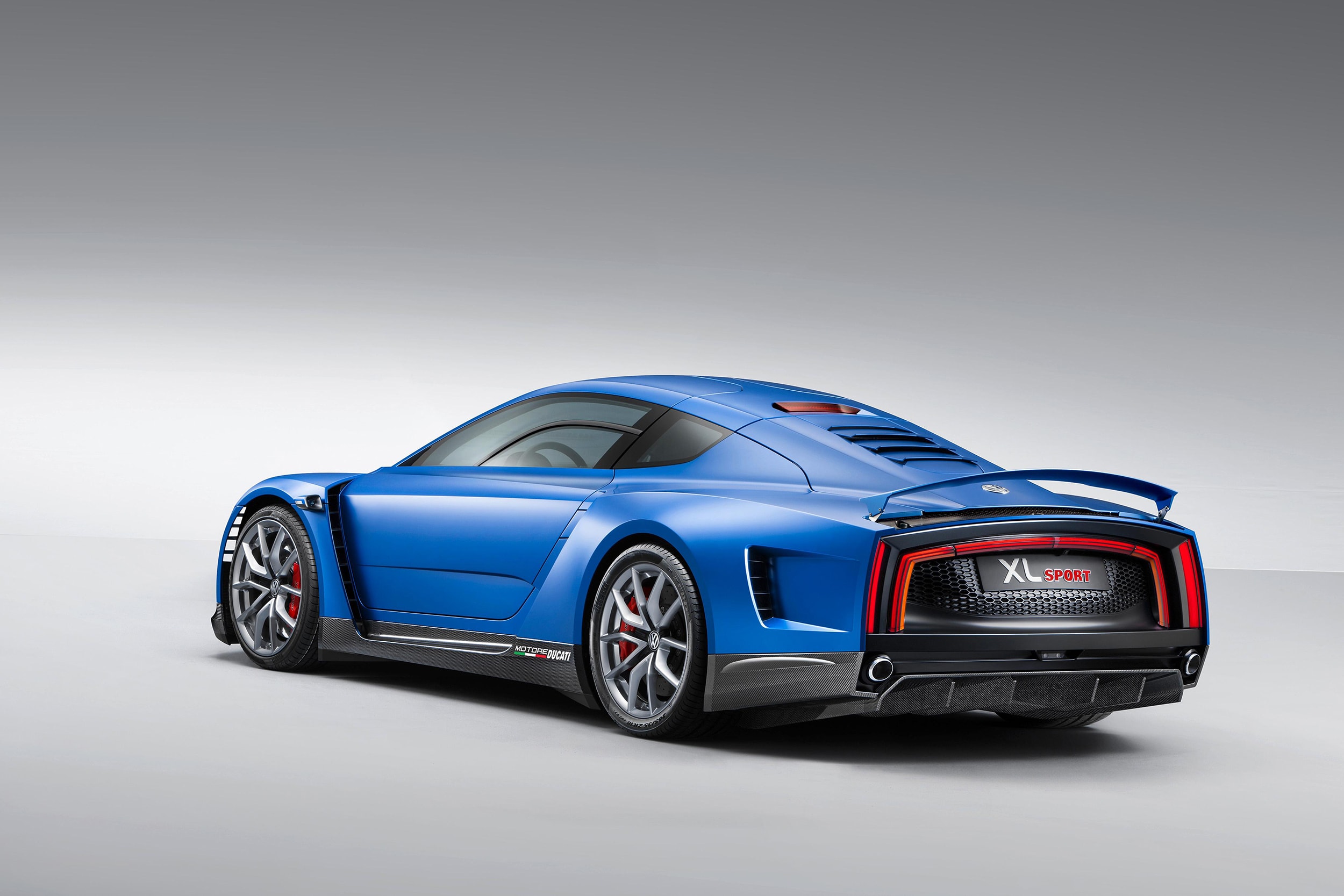
Volkswagen refers to the XL Sport concept vehicle that it revealed at the 2014 Paris Motor Show as a “sister model” of the XL1. As with most siblings, some similarities are evident—but the differences can be striking.
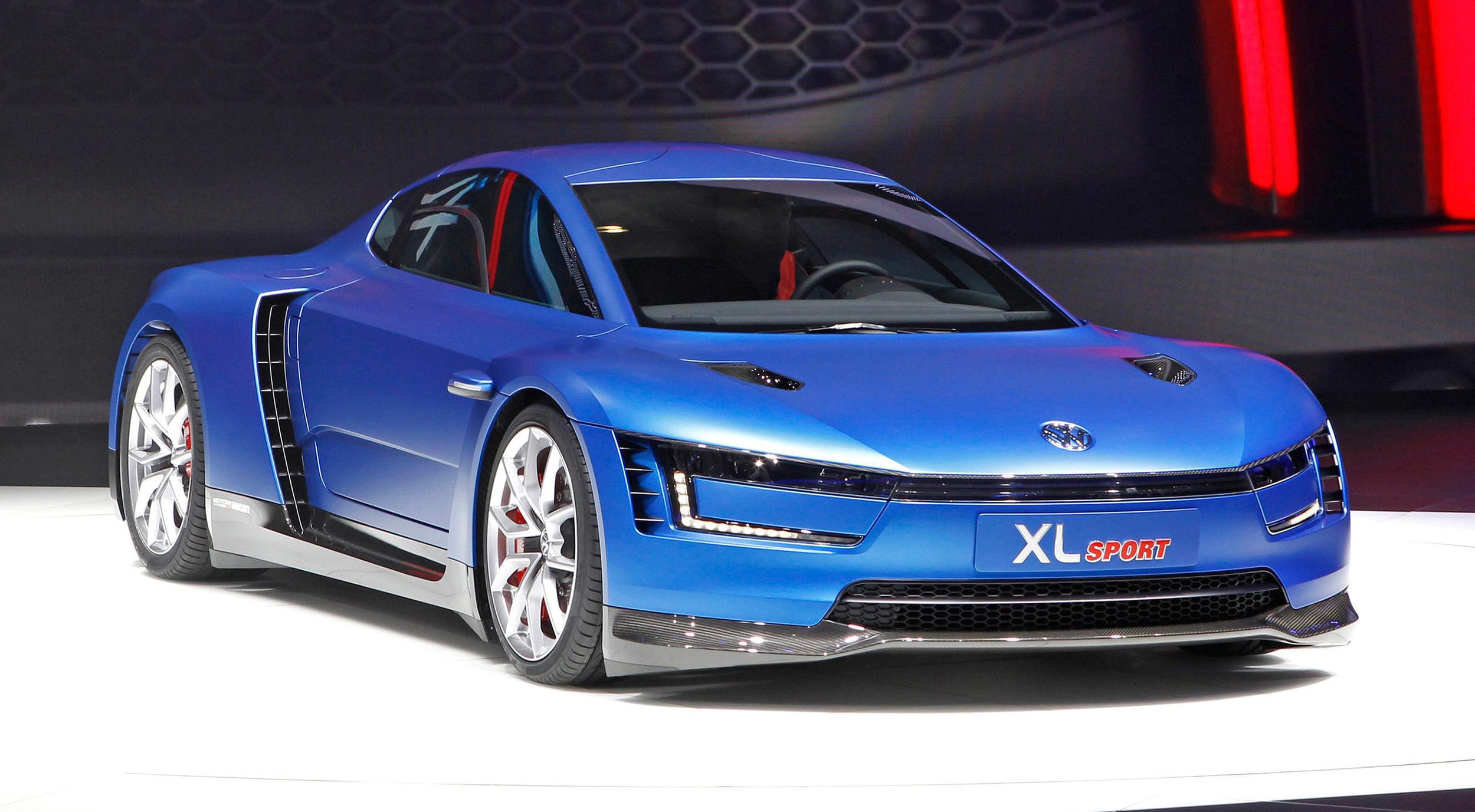
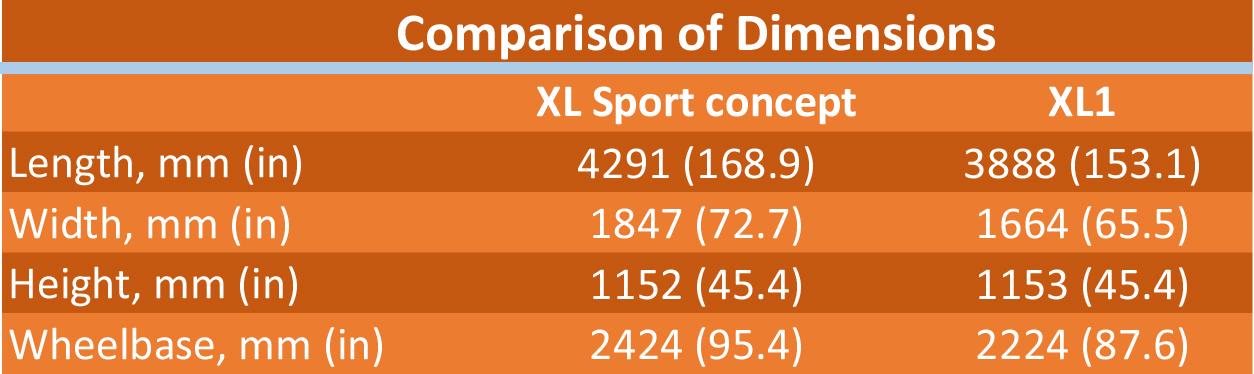
First, the similarities. Like the XL1, the XL Sport is extremely aerodynamic. The performance car concept has a drag coefficient of 0.258 (vs. 0.189 for the XL1) and its frontal area is 1.7 m² (18.3 ft² ). Design features contributing to cooling and downforce include air curtains that direct air in the frontal area into specific channels, wheel arch ventilation, an optimized underbody, lift-reducing air ducts in the hood, an extendible rear spoiler similar to that on the Lamborghini Aventador, and adaptive waste heat vents incorporated in the rear hatch that can open automatically to cool the drive unit.
Another shared attribute is a lightweight monocoque (albeit differently shaped) made largely of carbon-fiber-reinforced polymer (CFRP), featuring slightly offset driver and passenger seats. Both cars sport wing doors that extend into the roof and are hinged at two points—low on the A-pillars and just above the windshield—allowing them to swing upward and slightly forward. Door windows are made of polycarbonate, and the windshield is a special type of thin glass.


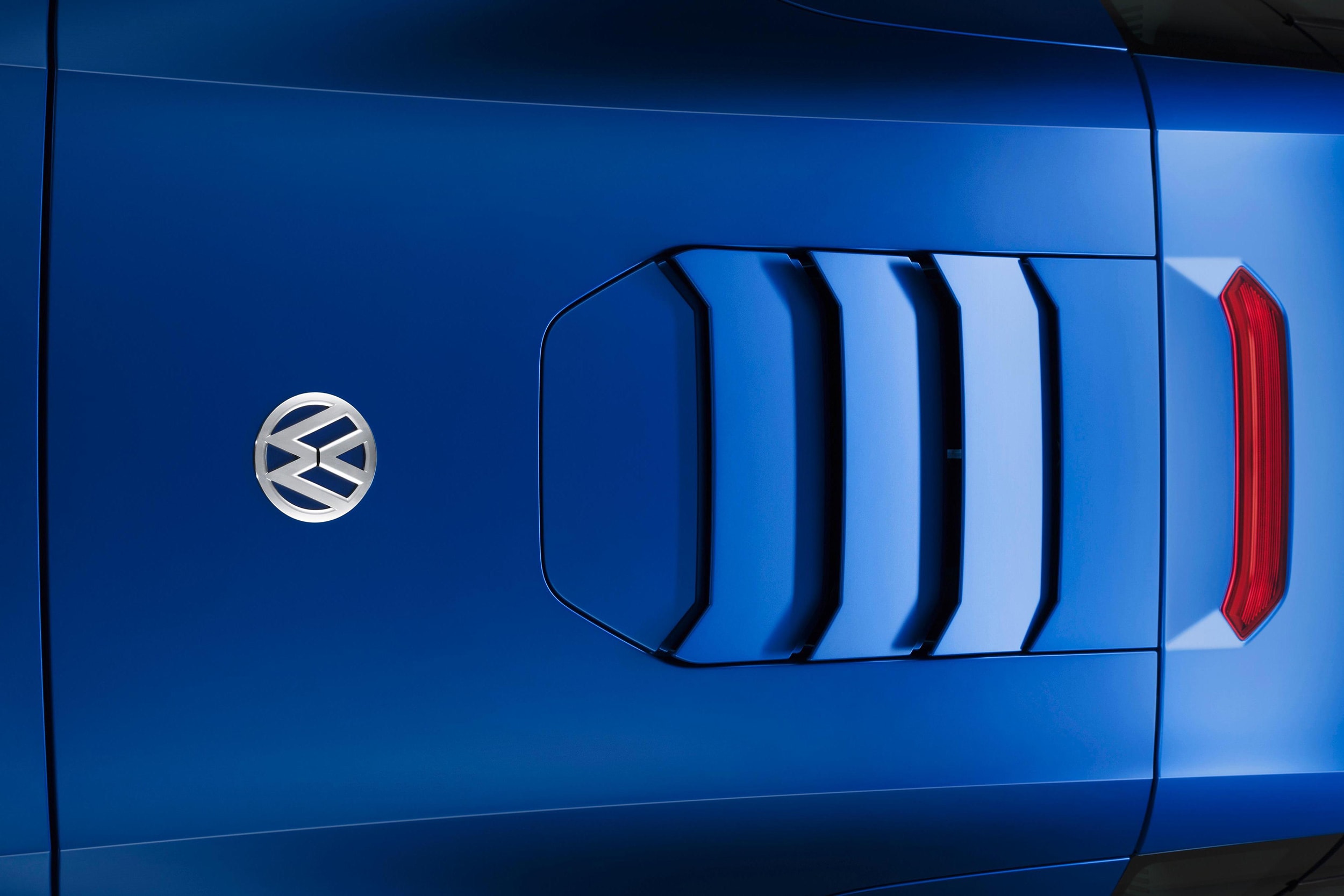
At 890 kg (1962 lb), the XL Sport weighs more than the XL1 [795 kg (1753 lb)]. The concept is longer and wider than the XL1, and also has an increased wheelbase (see chart for dimensions). Whereas the XL1 tapers toward the rear, the XL Sport maintains its width front to back. The sport concept inherits the XL1’s e-mirrors—cameras integrated in the doors that send images of the surroundings to two interior displays.
Now to the fun part: the differences. Most notable is the powertrain. Under the rear hatch of the XL Sport is what VW claims is the world’s most powerful two-cylinder engine: the Ducati 1199 Superleggera’s V2 engine. The 1199-cm³ DOHC powerplant generates 147 kW (197 hp) and 134 N·m (99 lb·ft), can propel the concept car to 270 km/h (168 mph), and revs to 11,000 rpm. The unit was slightly modified for use in the XL Sport, according to VW, but is basically the same as the motorcycle engine.
The Ducati engine’s high speeds are possible thanks to titanium connecting rods, its bore/stroke ratio of 112 mm (4.41 in)/60.8 mm (2.39 in), respectively, and the “exceptionally short” crankshaft stroke associated with it. The two four-valve cylinders are arranged 90° to each other and feature a desmodromic valve control system (positive valve closure) typical of high-revving Ducati engines. Other features include a magnesium-alloy clutch, cylinder head and oil pan covers, the two disks of the throttle valves, and the two injectors per cylinder.
The XL Sport’s newly developed intermediate gearbox reduces engine speeds by a factor of 1.86. Torque is transmitted to the rear axle via a seven-speed dual-clutch gearbox (DSG).
The car accelerates from 0-100 km/h (0-62 mph) in 5.7 s.


True to its moniker, the XL Sport gets a significantly redesigned, racing-inspired chassis incorporated in a high-strength steel spaceframe. Its double wishbone front axle sees the dampers connected below in a pull-rod configuration, and a double wishbone rear axle has the dampers connected above in a push-rod setup.
High-speed 205/40 R18 (front) and 265/35 R18 (rear) tires wrap forged magnesium wheels, which are reportedly 23.9 kg (52.7 lb) lighter than aluminum wheels combined. The brake system features ceramic discs.
More From SAE Media Group
Automotive Engineering
M3 Sedan, M4 Coupé Benefit from BMW’s Racing, CFRP Experience
Automotive Engineering
Ford Refines Interior, Exterior on 2025 Explorer
Off-Highway Engineering
First Drive: Drifting in the Electric 2027 Mercedes GLC 400
Automotive Engineering
Mercedes' Concept Stresses Connectivity, Record-Breaking Aerodynamics
Automotive Engineering
Ford Aims 2017 GT Supercar at the Street and Le Mans
Automotive Engineering
Mr. Bond, Your DB11 Is Ready with Aston Martin's Latest Aero Advancements
Automotive Engineering
Chevrolet Ups the Performance Ante with MY2015 Corvette Z06
Automotive Engineering
Alfieri Concept Marks Maserati Centenary
Automotive Engineering
McLaren Upgrades 12C with 650S Performance Variant
Automotive Engineering
Mercedes-AMG’s SLS Departure Opens Door to New GT
Automotive Engineering
Bentley Takes SUV to Super Premium Level
Automotive Engineering
GM Announces LT1 Crate Engine Availability at 2014 SEMA Show
Automotive Engineering
2019 Chevrolet Silverado 2.7L
Off-Highway Engineering
ZM Trucks Starts Production in Fontana, California
Automotive Engineering
2021 Toyota Supra 2.0
Automotive Engineering
Most Powerful Production Mini Shows in Detroit
Automotive Engineering
Honda Surprises with Civic Concept
Automotive Engineering
Volkswagen's New Euro Passat Switches to MQB Matrix
Off-Highway Engineering
Freightliner’s Medium-Duty Makeover
Automotive Engineering
Porsche Practices the Art of Updating with the Eighth-Generation 911
Automotive Engineering
Packaging Honda’s all-new Insight

Automotive Engineering
Concept Car to Production in Six Months Fits 007’s Timeline
Automotive Engineering
2020 Chevrolet Corvette Stingray Coupe
Automotive Engineering
2026 Nissan Sentra Review: Putting the Pieces Together
Automotive Engineering
Toyota Stretches SUV Line-Up with World Debut of Grand Highlander
Automotive Engineering
Dodge Debuts Charger Daytona SRT Concept Electric Musclecar
Automotive Engineering
Lightweighting Tour-De-Force: 2021 Ducati Superleggera V4
Automotive Engineering
Ford’s Max Mustang Brings ‘World Class’ into the Sports Coupe Conversation
Automotive Engineering
2019 Audi E-tron Quattro
Top Stories
INSIDERManufacturing & Prototyping
 How Airbus is Using w-DED to 3D Print Larger Titanium Airplane Parts
INSIDERManned Systems
 FAA to Replace Aging Network of Ground-Based Radars
NewsTransportation
 CES 2026: Bosch is Ready to Bring AI to Your (Likely ICE-powered) Vehicle
NewsSoftware
 Accelerating Down the Road to Autonomy
EditorialDesign
 DarkSky One Wants to Make the World a Darker Place
INSIDERMaterials
 Can This Self-Healing Composite Make Airplane and Spacecraft Components Last...
Webcasts
Defense
 How Sift's Unified Observability Platform Accelerates Drone Innovation
Automotive
 E/E Architecture Redefined: Building Smarter, Safer, and Scalable...
Power
 Hydrogen Engines Are Heating Up for Heavy Duty
Electronics & Computers
 Advantages of Smart Power Distribution Unit Design for Automotive...
Unmanned Systems
 Quiet, Please: NVH Improvement Opportunities in the Early Design...
