




Dodge Debuts Charger Daytona SRT Concept Electric Musclecar
Charger Daytona SRT previews a future of all-electric Dodge musclecars.

If it looks like a Dodge, sounds like a Dodge, and drives like a Dodge, it must be a Dodge. That “must-be” vision has been the perpetual mantra behind the development of a future electrified Dodge musclecar.
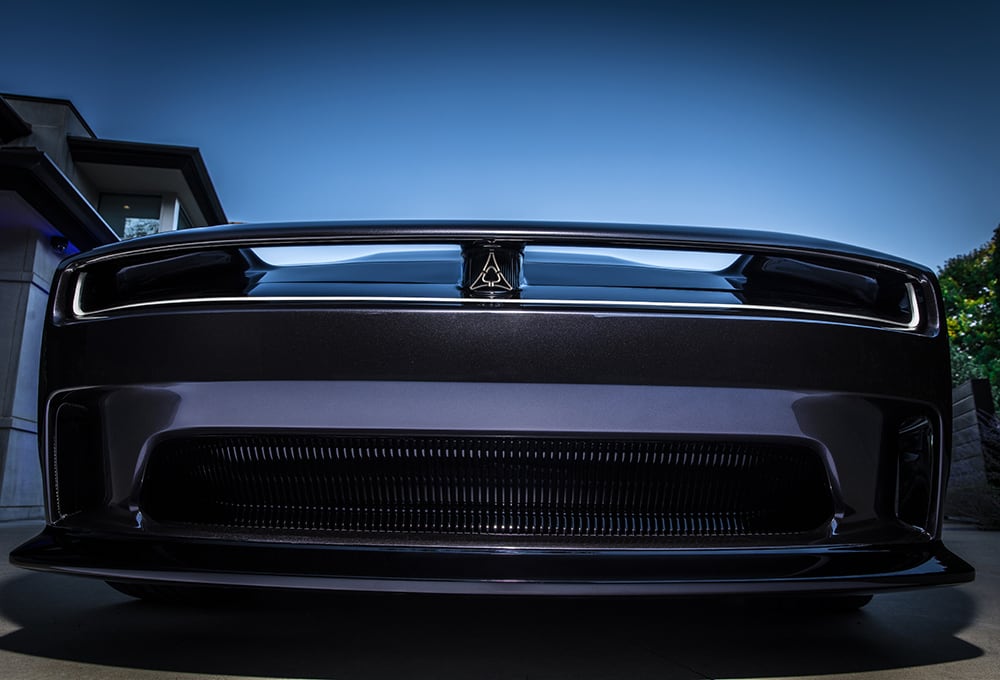
“This concept is true to what a Dodge musclecar is, but with an alternative propulsion system,” Tim Kuniskis CEO of Dodge Brand, said about the battery electric Dodge Charger Daytona SRT Concept. The car’s global debut occurred in August during Dodge Speed Week at the M1 Concourse in Pontiac, Michigan.
The target date for a production version of an all-electric Dodge musclecar is 2024, providing ample talk-time for the brand’s electrified future. “We want enough soak time that by the time we get to production, it’s not ‘new’ news that people have to get used to,” Kuniskis said in an SAE Media interview. “We want it to be totally known, totally accepted and totally understood. But to do that, I can’t show a bunch of our secrets two years in advance unless I protect those secrets.”

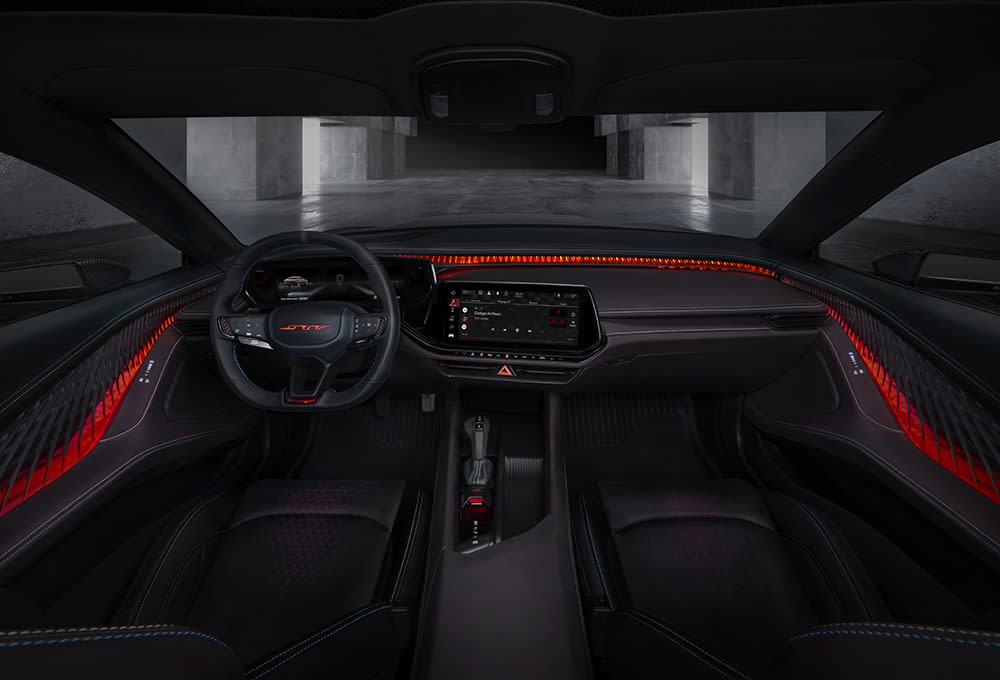
That’s a primary reason why certain design and technology elements on the concept Dodge Charger Daytona SRT are in invention-protection mode. The concept musclecar’s throaty sound source is addressed via a pending patent, as is the all-electric car’s transmission and the two-door hatchback’s aerodynamic front end. The patents-pursuit also underscores the scramble to stand out from competitors as the automotive industry begins to transition from ICE-power to EVs. “It’s the next space race,” said Kuniskis in the same week that the company confirmed it is ending production of its ICE-powered Dodge Challenger and Charger icons after the 2023 model year.
NASCAR visuals
The concept Daytona’s front end features an aerodynamic device referred to as an R-wing (a tribute to Gary Romberg’s enormous rear wing on NASCAR’s 1970 Plymouth Superbird racecar). The concept car’s front aero component is functional: air flows through this front opening to enhance downforce. The exterior design also tucks carbon fiber intakes into both sides of the front and rear lower fascias. “The car’s profile is very swept with a lot of aerodynamics,” said Scott Krugger, head of Dodge exterior design. Although Dodge officials are not releasing the concept’s Cd, it is claimed to represent a double-digit percentage improvement from current Dodge musclecars.
Meanwhile, the Fratzonic Chambered Exhaust is a patent-pending acoustic design that involves actual pipes, chambers and ducting. “We’re not achieving the sound artificially. We’re taking the road, vehicle speed, throttle position, shift points and movement of air and running that through our proprietary exhaust system,” said Kuniskis. During a media event inside Stellantis’ design dome in Auburn Hills, the concept musclecar was driven onto a 360-degree rotating display. At one point, the car’s exhaust system kicked out 126 decibels. “That’s as loud as today’s Hellcat,” Kuniskis said.
eRupt-ing performance
While most light-duty EVs use a single-speed transmission, the Daytona concept features a patent-pending, multi-speed electro-mechanical transmission. Micky Bly, Stellantis senior vice president – head of global propulsion systems, said the transmission befits an electrified musclecar. “The eRupt system launches the car really, really hard by getting a lot of torque multiplications, then it can be slowed down to get the EDM (electric drive module) in a more efficient spot to get a longer driving range. So it’s a high-performance launch and good range,” Bly told SAE Media. The company executives weren’t pinned down about horsepower and torque figures, but media material said the 800V “Banshee” electric propulsion system makes “Dodge’s first electric vehicle faster than a Hellcat in all key performance measures.”
Other features on the all-wheel drive concept musclecar include steering wheel-mounted paddle shifters, an 8-in by 3-in (203-mm by 76-mm) head-up display, 12.3-in (312-mm) center screen, 16-in (406-mm) curved instrument cluster and 21-in (533-mm) wheels with a turbine-like design. Auto, sport, track and drag modes – each providing specific driving dynamics, display graphics, sound and interior lighting – are selected by a steering-wheel button. The concept Daytona also offers the PowerShot, a Dodge power-boost feature that debuts on the 2023 Dodge Hornet.
Power levels for the electrified production musclecar will tally nine, with three of the levels available through Dodge and six available through Direct Connection, Dodge’s factory-backed performance-parts operation. “This car, we believe, will redefine muscle,” Kuniskis said.
More From SAE Media Group
Automotive Engineering
2019 New York Auto Show Wrap Up
Automotive Engineering
What We’re Driving: 2018 Chrysler 300 S AWD
Automotive Engineering
NAIAS 2019: Nissan Debuts IMs EV Sport-Sedan Concept
Automotive Engineering
2018 Lexus LS500
Automotive Engineering
First Electrified Dodge Arrives for 2023 MY
Automotive Engineering
Lincoln Aviator: New Rear-Drive Platform, Plug-In Option
Automotive Engineering
2019 Suzuki Jimny
Automotive Engineering
Bentley's Technology Future: Stone Trim, Smaller SUV and EVs
Automotive Engineering
Toyota Muscles-Up 4-Cylinder for Revised 2022 GR 86 Coupe
Automotive Engineering
What We’re Driving: 2020 Kia Telluride
Automotive Engineering
Ferrari Reveals SF90, First-Ever Plug-In Hybrid
Automotive Engineering
New Lexus SUVs: GX for Show, TX for Dough?
Automotive Engineering
2025 Ram 1500 REV Driving Range Would Jump to Head of Class
Automotive Engineering
Dodge Ready with a Sting for the Compact-SUV Market
Automotive Engineering
Tuning the 2024 Corvette E-Ray for Exceptional Drivability
Automotive Engineering
2019 Volvo S60 T6
Automotive Engineering
2018 Volvo XC40 T5 AWD
Automotive Engineering
Lincoln Unveils Redesigned 2024 Nautilus SUV
Automotive Engineering
Porsche Names First-Ever Electric Car: ‘Taycan’
Automotive Engineering
2019 Hyundai Kona Ultimate AWD
Automotive Engineering
A Brief History of Chevrolet Corvette Concepts
Automotive Engineering
VW Introduces Singular ID.Buzz in Three-Row Layout

Automotive Engineering
2026 Escalade IQL Is Cadillac’s Biggest, Roomiest EV Yet
Automotive Engineering
Mazda’s 2024 CX-90 Offers Turbo I-6, PHEV Propulsion
Automotive Engineering
What We’re Driving: 2020 Acura RDX
Automotive Engineering
What We’re Driving: 2020 Volvo V60 T5 Cross Country
Automotive Engineering
Cadillac Lyriq Spearheads GM’s EV Assault
Automotive Engineering
Mercedes-Benz EQS Concept: The S-Class of Electric Vehicles?
Automotive Engineering
2025 Hyundai Ioniq 5 N Makes E-Shift Feel Real
Top Stories
NewsRF & Microwave Electronics
 Microvision Aquires Luminar, Plans Relationship Restoration, Multi-industry Push
INSIDERAerospace
 A Next Generation Helmet System for Navy Pilots
INSIDERDesign
 New Raytheon and Lockheed Martin Agreements Expand Missile Defense Production
INSIDERMaterials
 How Airbus is Using w-DED to 3D Print Larger Titanium Airplane Parts
NewsPower
 Ford Announces 48-Volt Architecture for Future Electric Truck
ArticlesAR/AI

Webcasts
Electronics & Computers
 Cooling a New Generation of Aerospace and Defense Embedded...
Automotive
 Battery Abuse Testing: Pushing to Failure
Power
 A FREE Two-Day Event Dedicated to Connected Mobility
Unmanned Systems
 Quiet, Please: NVH Improvement Opportunities in the Early Design Cycle
Automotive
 Advantages of Smart Power Distribution Unit Design for Automotive &...
Energy
 Sesame Solar's Nanogrid Tech Promises Major Gains in Drone Endurance