




Porsche Names First-Ever Electric Car: ‘Taycan’
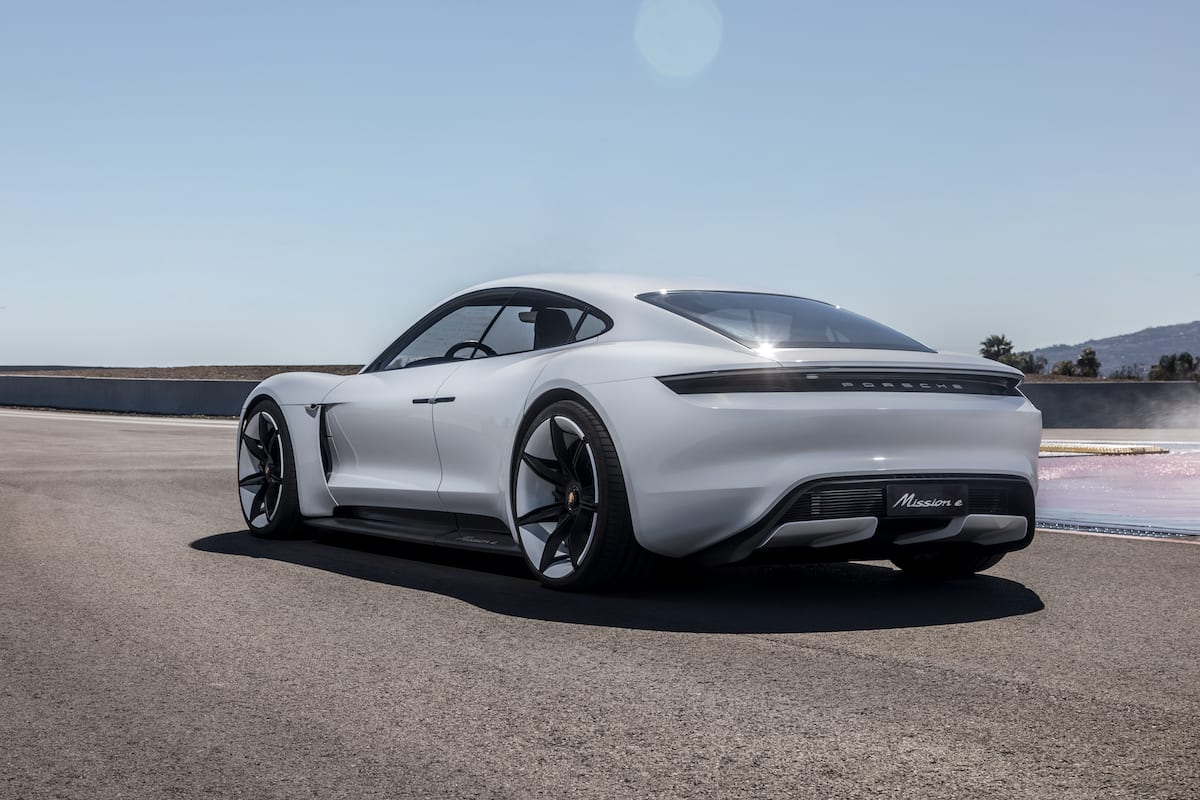
In a somehow-ironic decision on a day Porsche chose to celebrate the 70th anniversary of its 911 sports car, Porsche also announced the official name of its first-ever battery-electric model—based on the widely-acclaimed Mission E concept car—is Taycan.
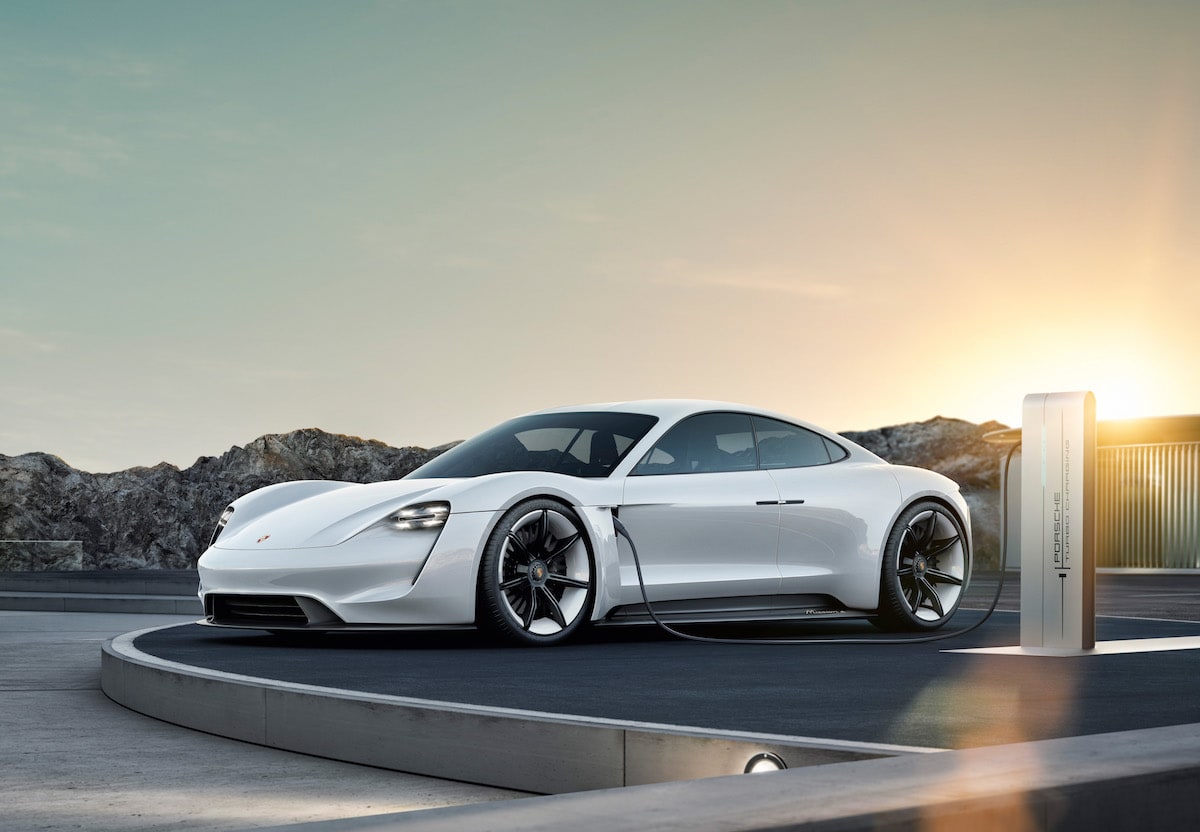
The company said the name, loosely interpreted to English, means “spirited young horse” and is said to refer to the stallion represented in the company crest since 1952.
Production of the Taycan is scheduled to begin in 2019, but Porsche was vague, however, as to whether—or how much—the design of the Mission E concept would change to become the Taycan production model: the company presented images of a car still wearing Mission E signifiers and said in a press release, “the vehicle previously operating under the working title ‘Mission E’ has now been given its official name: Taycan.”
In a press release, the company also seemed to address potential concerns about electric vehicles, with chairman of the executive board Olive Blume employing terms not typically associated with Porsche, such as “strong” and “dependable.”
Big performance, more electromobility investment
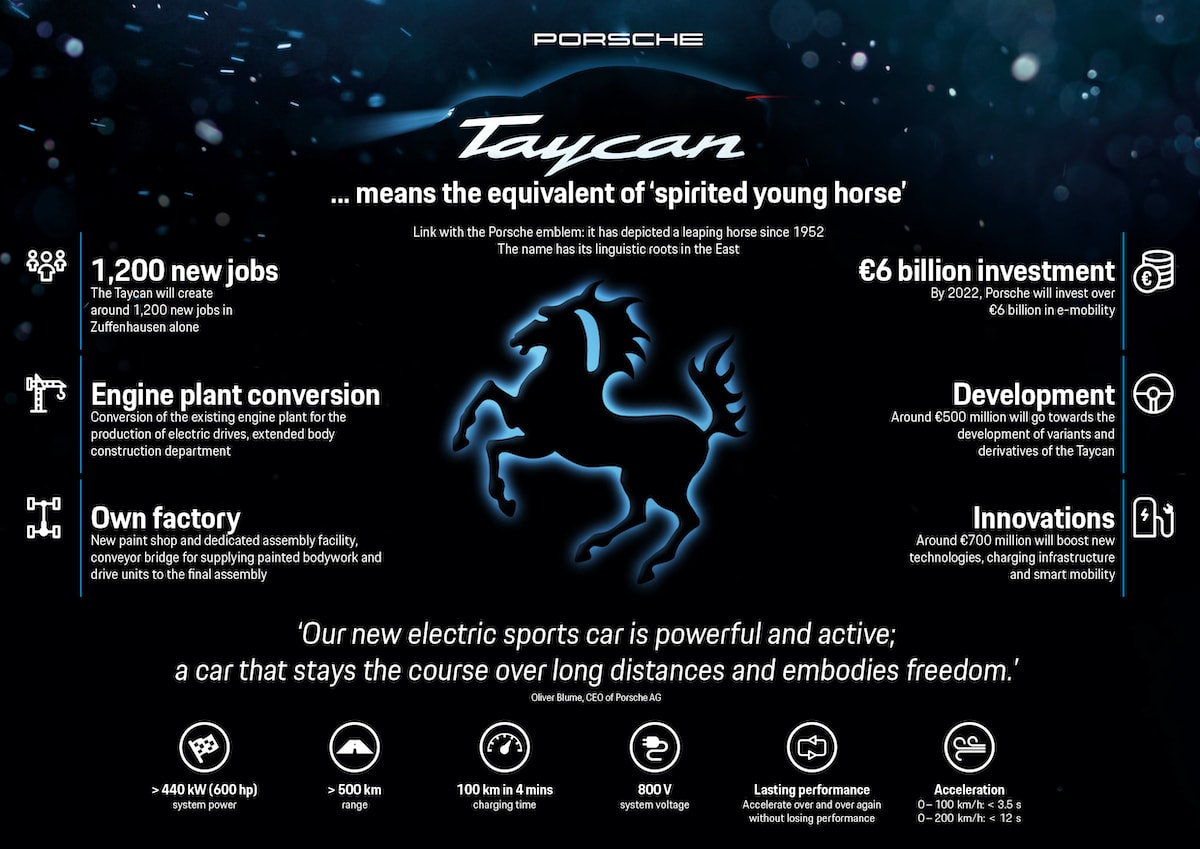
The Taycan drivetrain features two permanent synchronous motors that jointly develop 600 hp and impart all-wheel drive. The car will accelerate from 0-60 mph (0-97 km/h) in “well under” 3.5 s, Porsche said, and has a maximum driving range of 500 km (311 miles).
Using an 800-volt onboard electrical system and a high-power charging network Porsche has nominally begun installing in Europe and the U.S., the company claims 100 km (62 miles) of worth of charge can be delivered in just 4 minutes.
Porsche also said it is adding an additional 3 billion euros worth of electromobility investment to the 3 billion euros initially announced. The added investment includes 500 billion euros for development of the Taycan variants and derivatives and 1 billion euros to electrify the existing Porsche product range. Additional money also will be directed toward building out EV infrastructure and other aspects of smart mobility.
Several hundred-million euros will be directed towards adapting existing Porsche manufacturing facilities. The Taycan will be built at Porsche’s Zuffenhausen, Germany, assembly plant; there will be a new body shop and the car will have a “dedicated assembly area,” a new paint shop and an expanded engine-build area to incorporate the manufacture of electric motors. Porsche said additional of the Taycan alone will bring 1,200 new jobs to the site.
More From SAE Media Group
Off-Highway Engineering
Mercedes-Benz Details All-New Platform for EV Vans
Automotive Engineering
BMW Brings EV Motor Production to Steyr in Austria
Automotive Engineering
Mercedes-Benz Product Boss: Europe, North America EVs, EV Charging to Rapidly Get Better
Automotive Engineering
Cadillac Lyriq Spearheads GM’s EV Assault
Automotive Engineering
Mercedes-Benz EQS Concept: The S-Class of Electric Vehicles?
Automotive Engineering
Electrification Brings Supplier Value Closer to Home
Automotive Engineering
2018 Geneva Auto Show: Porsche Unveils 600-Hp Electric Crossover
Automotive Engineering
The EV Tech of BMW’s Neue-Klasse IX3
Automotive Engineering
BMW Engineers for the EV-Transition Reality
Automotive Engineering
2021 ID.4 Is Volkswagen’s First U.S.-Market Dedicated EV
Automotive Engineering
SAE WCX 2022: Driveline Flexibility Is Key for Electrification
Automotive Engineering
EV Confidence
Automotive Engineering
Volkswagen Signals New EV Era with Launch of ID.3
Automotive Engineering
Mazda’s 2024 CX-90 Offers Turbo I-6, PHEV Propulsion
Automotive Engineering
NAIAS 2019: Infiniti Debuts QX Inspiration SUV Concept
Automotive Engineering
Schaeffler Heads Back to CES with New Acquisition, Capabilities
Automotive Engineering
Tuning the 2024 Corvette E-Ray for Exceptional Drivability
Automotive Engineering
2026 Escalade IQL Is Cadillac’s Biggest, Roomiest EV Yet
Off-Highway Engineering
Mercedes-Benz Goes Long with EActros 600 Electric Truck
Automotive Engineering
CES 2021: Magna Execs Warn of Impending EV Complexities
Automotive Engineering
Audi Unveils Production Version of First-Ever EV: E-Tron
Automotive Engineering
Jeep Engineers a Wrangler EV with Manual Gearbox
Automotive Engineering
2025 Hyundai Ioniq 5 N Makes E-Shift Feel Real
Automotive Engineering
Hyundai Details First EV-Dedicated Vehicle Architecture
Automotive Engineering
All-Electric Nissan Ariya Handles Ultra-Cold Temps on Pole to Pole Trek
Automotive Engineering
Dodge Debuts Charger Daytona SRT Concept Electric Musclecar
Automotive Engineering
Lotus Breaks out with New Eletre Electric SUV
Automotive Engineering
Hub-Motoring in Lordstown’s Novel Endurance
Automotive Engineering
BorgWarner Demos Next-Step Electrification Components
Automotive Engineering
Sourcing the Multi-Energy Platform
Top Stories
NewsRF & Microwave Electronics
 Microvision Aquires Luminar, Plans Relationship Restoration, Multi-industry Push
INSIDERAerospace
 A Next Generation Helmet System for Navy Pilots
INSIDERDesign
 New Raytheon and Lockheed Martin Agreements Expand Missile Defense Production
INSIDERMaterials
 How Airbus is Using w-DED to 3D Print Larger Titanium Airplane Parts
NewsPower
 Ford Announces 48-Volt Architecture for Future Electric Truck
ArticlesAR/AI

Webcasts
Electronics & Computers
 Cooling a New Generation of Aerospace and Defense Embedded...
Automotive
 Battery Abuse Testing: Pushing to Failure
Power
 A FREE Two-Day Event Dedicated to Connected Mobility
Unmanned Systems
 Quiet, Please: NVH Improvement Opportunities in the Early Design Cycle
Automotive
 Advantages of Smart Power Distribution Unit Design for Automotive &...
Energy
 Sesame Solar's Nanogrid Tech Promises Major Gains in Drone Endurance